

Tag Archives: Historical Jesus

Has the Creator of the universe ever spoken to us?

Has God every reached out to humanity?

People often ask the question, “why must I believe in Jesus and only Jesus in order to be rightly related to God?”

Indeed. Why should we care about the teachings of Jesus more than any other religious leader. Well, we know from scientific evidence that the universe had a beginning, and hence a Creator. We know from the fine-tuning argument that there is a Designer of the cosmos, as well. So the question becomes, has there ever been a human being who could give us accurate information about who the Creator and Designer is?

It turns that there is such a person, and we know it because we have evidence that this person rose from the dead – a feat only possible if the Creator and Designer wanted to draw attention to this person, and to his teachings. The account of this is recorded in a collection of ancient writings called the New Testament, which can be investigated using the ordinary rules of ancient historiography. Although much of what is written in the New Testament cannot be proven historical, a few facts that are reported there pass the mainstream historical tests. From those facts, we can infer that God was putting his stamp of approval on the teachings of a very important person.

The man who returned from the dead

Dr. Craig’s famous minimal facts case for the resurrection has been posted at the Christian Apologetics Alliance. He presents 4 facts admitted by the majority of New Testament historians, and then he supplies multiple pieces of evidence for each fact.

Here are the four facts:

  • FACT #1: After his crucifixion, Jesus was buried in a tomb by Joseph of Arimathea. 
  • FACT #2: On the Sunday following the crucifixion, Jesus’ tomb was found empty by a group of his women followers.
  • FACT #3: On multiple occasions and under various circumstances, different individuals and groups of people experienced appearances of Jesus alive from the dead.
  • FACT #4: The original disciples believed that Jesus was risen from the dead despite their having every predisposition to the contrary.

He shows how each fact is supported reasons which pass the standard historical rules used by ancient historians.

Here’s the detail on fact #3, the post-mortem appearances.

FACT #3: On multiple occasions and under various circumstances, different individuals and groups of people experienced appearances of Jesus alive from the dead.

This is a fact which is almost universally acknowledged among New Testament scholars, for the following reasons:

1. The list of eyewitnesses to Jesus’ resurrection appearances which is quoted by Paul in I Cor. 15. 5-7 guarantees that such appearances occurred. These included appearances to Peter (Cephas), the Twelve, the 500 brethren, and James.

2. The appearance traditions in the gospels provide multiple, independent attestation of these appearances. This is one of the most important marks of historicity. The appearance to Peter is independently attested by Luke, and the appearance to the Twelve by Luke and John. We also have independent witness to Galilean appearances in Mark, Matthew, and John, as well as to the women in Matthew and John.

3. Certain appearances have earmarks of historicity. For example, we have good evidence from the gospels that neither James nor any of Jesus’ younger brothers believed in him during his lifetime. There is no reason to think that the early church would generate fictitious stories concerning the unbelief of Jesus’ family had they been faithful followers all along. But it is indisputable that James and his brothers did become active Christian believers following Jesus’ death. James was considered an apostle and eventually rose to the position of leadership of the Jerusalem church. According to the first century Jewish historian Josephus, James was martyred for his faith in Christ in the late AD 60s. Now most of us have brothers. What would it take to convince you that your brother is the Lord, such that you would be ready to die for that belief? Can there be any doubt that this remarkable transformation in Jesus’ younger brother took place because, in Paul’s words, “then he appeared to James”?

Even Gert Ludemann, the leading German critic of the resurrection, himself admits, “It may be taken as historically certain that Peter and the disciples had experiences after Jesus’ death in which Jesus appeared to them as the risen Christ.”3

Yes, Gerd Ludemann is actually an atheist new Testament historian, and he has even debated Dr. Craig on the resurrection – not once, but twice. That’s the kind of evidence Dr. Craig uses in his case.

So, if you are undertaking an investigation to see if the God who creates and designs the universe has anything to say to you, a good place to start is seeing what this guy Jesus had to say to you. No faith required.

What are the arguments for the historicity of the empty tomb story?

Investigating the historical Jesus

I wanted to go over this article by William Lane Craig which includes a discussion of the empty tomb, along with the other minimal facts that support the resurrection.

The word resurrection means bodily resurrection

The concept of resurrection in use among the first converts to Christianity was a Jewish concept of resurrection. And that concept of resurrection is unequivocally in favor of a bodily resurrection. The body (soma) that went into the grave is the body (soma) that came out.

Craig explains what this means with respect to the fast start of Christian belief:

For a first century Jew the idea that a man might be raised from the dead while his body remained in the tomb was simply a contradiction in terms. In the words of E. E. Ellis, “It is very unlikely that the earliest Palestinian Christians could conceive of any distinction between resurrection and physical, ‘grave emptying’ resurrection. To them an anastasis without an empty grave would have been about as meaningful as a square circle.”

And:

Even if the disciples had believed in the resurrection of Jesus, it is doubtful they would have generated any following. So long as the body was interred in the tomb, a Christian movement founded on belief in the resurrection of the dead man would have been an impossible folly.

It’s significant that the belief in the resurrection started off in the city where the tomb was located. Anyone, such as the Romans or Jewish high priests, who wanted to nip the movement in the bud could easily have produced the body to end it all. They did not do so, because they could not do so, although they had every reason to do so.

There are multiple early, eyewitness sources for the empty tomb

Paul’s early creed from 1 Corinthians 15:3-7, dated to within 5 years of the crucifixion, implies the empty tomb.

Craig writes:

In the formula cited by Paul the expression “he was raised” following the phrase “he was buried” implies the empty tomb. A first century Jew could not think otherwise. As E. L. Bode observes, the notion of the occurrence of a spiritual resurrection while the body remained in the tomb is a peculiarity of modern theology. For the Jews it was the remains of the man in the tomb which were raised; hence, they carefully preserved the bones of the dead in ossuaries until the eschatological resurrection. There can be no doubt that both Paul and the early Christian formula he cites pre-suppose the existence of the empty tomb.

The dating of the resurrection as having occurred “on the third day” implies the empty tomb. The date specified for the resurrection would have been the date that the tomb was discovered to be empty.

The phrase “on the third day” probably points to the discovery of the empty tomb. Very briefly summarized, the point is that since no one actually witnessed the resurrection of Jesus, how did Christians come to date it “on the third day?” The most probable answer is that they did so because this was the day of the discovery of the empty tomb by Jesus’ women followers. Hence, the resurrection itself came to be dated on that day. Thus, in the old Christian formula quoted by Paul we have extremely early evidence for the existence of Jesus’ empty tomb.

A few quotes from atheist historians not from Dr. Craig’s article: (thanks to Eric of Ratio Christi OSU)

Michael Goulder (Atheist NT Prof. at Birmingham) “…it goes back at least to what Paul was taught when he was converted, a couple of years after the crucifixion.” [“The Baseless Fabric of a Vision,” in Gavin D’Costa, editor, Resurrection Reconsidered (Oxford, 1996), 48.]

Gerd Lüdemann (Atheist Prof of NT at Göttingen): “…the elements in the tradition are to be dated to the first two years after the crucifixion of Jesus…not later than three years… the formation of the appearance traditions mentioned in I Cor.15.3-8 falls into the time between 30 and 33 CE.” [The Resurrection of Jesus, trans. by Bowden (Fortress, 1994), 171-72.]

Robert Funk (Non-Christian scholar, founder of the Jesus Seminar): “…The conviction that Jesus had risen from the dead had already taken root by the time Paul was converted about 33 C.E. On the assumption that Jesus died about 30 C.E., the time for development was thus two or three years at most.” [Roy W. Hoover, and the Jesus Seminar, The Acts of Jesus, 466.]

The early pre-Markan burial narrative mentions the empty tomb. This source pre-dates Mark, the earliest gospel. The source has been dated by some scholars to the 40s. For example, the atheist scholar James Crossley dates Mark some time in the 40s. (See the debate below)

The empty tomb story is part of the pre-Markan passion story and is therefore very old. The empty tomb story was probably the end of Mark’s passion source. As Mark is the earliest of our gospels, this source is therefore itself quite old. In fact the commentator R. Pesch contends that it is an incredibly early source. He produces two lines of evidence for this conclusion:

(a) Paul’s account of the Last Supper in 1 Cor. 11:23-5 presupposes the Markan account. Since Paul’s own traditions are themselves very old, the Markan source must be yet older.

(b) The pre-Markan passion story never refers to the high priest by name. It is as when I say “The President is hosting a dinner at the White House” and everyone knows whom I am speaking of because it is the man currently in office. Similarly the pre-Markan passion story refers to the “high priest” as if he were still in power. Since Caiaphas held office from AD 18-37, this means at the latest the pre-Markan source must come from within seven years after Jesus’ death. This source thus goes back to within the first few years of the Jerusalem fellowship and is therefore an ancient and reliable source of historical information.

So we are dealing with very early sources for the empty tomb.

Lack of legendary embellishments

The empty tomb narrative in the gospels lacks legendary embellishments, unlike later 2nd century forgeries that originated outside of Jerusalem.

The eyewitness testimony of the women

This is the evidence that has been the most convincing to skeptics, and to me as well.

The tomb was probably discovered empty by women. To understand this point one has to recall two facts about the role of women in Jewish society.

(a) Woman occupied a low rung on the Jewish social ladder. This is evident in such rabbinic expressions as “Sooner let the words of the law be burnt than delivered to women” and “Happy is he whose children are male, but woe to him whose children are female.”

(b) The testimony of women was regarded as so worthless that they were not even permitted to serve as legal witnesses in a court of law. In light of these facts, how remarkable must it seem that it is women who are the discoverers of Jesus’ empty tomb. Any later legend would certainly have made the male disciples to discover the empty tomb. The fact that women, whose testimony was worthless, rather than men, are the chief witnesses to the empty tomb is most plausibly accounted for by the fact that, like it or not, they were the discoverers of the empty tomb and the gospels accurately record this.

The earliest response from the Jewish high priests assumes the empty tomb

This report from Matthew 28 fulfills the criteria of enemy attestation, although Matthew is not the earliest source we have. Oh, well.

In Matthew 28, we find the Christian attempt to refute the earliest Jewish polemic against the resurrection. That polemic asserted that the disciples stole away the body. The Christians responded to this by reciting the story of the guard at the tomb, and the polemic in turn charged that the guard fell asleep. Now the noteworthy feature of this whole dispute is not the historicity of the guards but rather the presupposition of both parties that the body was missing. The earliest Jewish response to the proclamation of the resurrection was an attempt to explain away the empty tomb. Thus, the evidence of the adversaries of the disciples provides evidence in support of the empty tomb.

Note how careful Craig is not to imply that the guard tradition is historical, because we can’t prove the guard as a “minimal fact”, since it doesn’t pass the standard historical criteria.

See it used in a debate

You can see the arguments made and defended from criticism in this debate with the atheist scholar James Crossley.

This my favorite resurrection debate.

What do ancient non-Christian sources tell us about the historical Jesus?

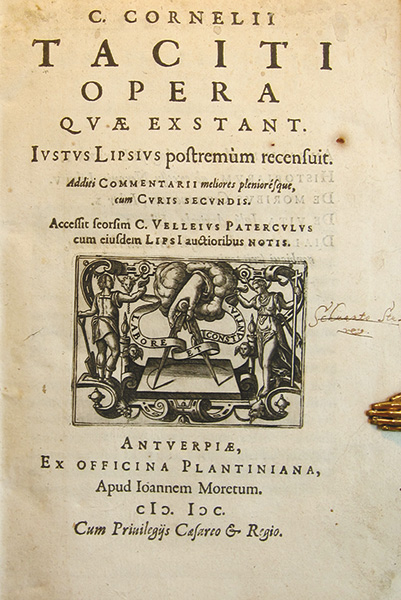
The Annals, by Roman historian Tacitus

This article from Biblical Archaeology covers all the non-Christian historical sources that discuss Jesus.

About the author:

Lawrence Mykytiuk is associate professor of library science and the history librarian at Purdue University. He holds a Ph.D. in Hebrew and Semitic Studies and is the author of the book Identifying Biblical Persons in Northwest Semitic Inscriptions of 1200–539 B.C.E. (Atlanta: Society of Biblical Literature, 2004).

Here are the major sections:

  • Roman historian Tacitus
  • Jewish historian Josephus
  • Greek satirist Lucian of Samosata
  • Platonist philosopher Celsus
  • Roman governor Pliny the Younger
  • Roman historian Suetonius
  • Roman prisoner Mara bar Serapion

And this useful excerpt captures the broad facts about Jesus that we get from just the first two sources:

We can learn quite a bit about Jesus from Tacitus and Josephus, two famous historians who were not Christian. Almost all the following statements about Jesus, which are asserted in the New Testament, are corroborated or confirmed by the relevant passages in Tacitus and Josephus. These independent historical sources—one a non-Christian Roman and the other Jewish—confirm what we are told in the Gospels:31

1. He existed as a man. The historian Josephus grew up in a priestly family in first-century Palestine and wrote only decades after Jesus’ death. Jesus’ known associates, such as Jesus’ brother James, were his contemporaries. The historical and cultural context was second nature to Josephus. “If any Jewish writer were ever in a position to know about the non-existence of Jesus, it would have been Josephus. His implicit affirmation of the existence of Jesus has been, and still is, the most significant obstacle for those who argue that the extra-Biblical evidence is not probative on this point,” Robert Van Voorst observes.32 And Tacitus was careful enough not to report real executions of nonexistent people.

2. His personal name was Jesus, as Josephus informs us.

3. He was called Christos in Greek, which is a translation of the Hebrew word Messiah, both of which mean “anointed” or “(the) anointed one,” as Josephus states and Tacitus implies, unaware, by reporting, as Romans thought, that his name was Christus.

4. He had a brother named James (Jacob), as Josephus reports.

5. He won over both Jews and “Greeks” (i.e., Gentiles of Hellenistic culture), according to Josephus, although it is anachronistic to say that they were “many” at the end of his life. Large growth
in the number of Jesus’ actual followers came only after his death.

6. Jewish leaders of the day expressed unfavorable opinions about him, at least according to some versions of the Testimonium Flavianum.

7. Pilate rendered the decision that he should be executed, as both Tacitus and Josephus state.

8. His execution was specifically by crucifixion, according to Josephus.

9. He was executed during Pontius Pilate’s governorship over Judea (26–36 C.E.), as Josephus implies and Tacitus states, adding that it was during Tiberius’s reign.

Some of Jesus’ followers did not abandon their personal loyalty to him even after his crucifixion but submitted to his teaching. They believed that Jesus later appeared to them alive in accordance with prophecies, most likely those found in the Hebrew Bible. A well-attested link between Jesus and Christians is that Christ, as a term used to identify Jesus, became the basis of the term used to identify his followers: Christians. The Christian movement began in Judea, according to Tacitus. Josephus observes that it continued during the first century. Tacitus deplores the fact that during the second century it had spread as far as Rome.

I remember reading the 1996 book by Gary Habermas entitled “The Historical Jesus: Ancient Evidence for the Life of Christ“. This book is a little before the time of most of you young Christian apologists, but back before the time of Lee Strobel and J. Warner Wallace, this is the stuff we all read. Anyway, in the book he makes a list of all that can be known about Jesus from external sources. And fortunately for you, you don’t have to buy the book because you can read chapter 9 of it right on his web site.

From Tacitus he gets this:

From this report we can learn several facts, both explicit and implicit, concerning Christ and the Christians who lived in Rome in the 60s A.D. Chronologically, we may ascertain the following information.

(1) Christians were named for their founder, Christus (from the Latin), (2) who was put to death by the Roman procurator Pontius Pilatus (also Latin), (3) during the reign of emperor Tiberius (14 37 A.D.). (4) His death ended the “superstition” for a short time, (5) but it broke out again, (6) especially in Judaea, where the teaching had its origin.

(7) His followers carried his doctrine to Rome. (8) When the great fire destroyed a large part of the city during the reign of Nero (54 68 A.D.), the emperor placed the blame on the Christians who lived in Rome. (9) Tacitus reports that this group was hated for their abominations. (10) These Christians were arrested after pleading guilty, (11) and many were convicted for “hatred for mankind.” (12) They were mocked and (13) then tortured, including being “nailed to crosses” or burnt to death. (14) Because of these actions, the people had compassion on the Christians. (15) Tacitus therefore concluded that such punishments were not for the public good but were simply “to glut one man’s cruelty.”

And from Josephus he gets this:

(1) Jesus was known as a wise and virtuous man, one recognized for his good conduct. (2) He had many disciples, both Jews and Gentiles. (3) Pilate condemned him to die, (4) with crucifixion explicitly being mentioned as the mode. (5) The disciples reported that Jesus had risen from the dead and (6) that he had appeared to them on the third day after his crucifixion. (7) Consequently, the disciples continued to proclaim his teachings. (8) Perhaps Jesus was the Messiah concerning whom the Old Testament prophets spoke and predicted wonders. We would add here two facts from Josephus’ earlier quotation as well. (9) Jesus was the brother of James and (10) was called the messiah by some.

So when you are reading the New Testament, these facts are the framework that you read within. It’s a good starting point when dealing with people who have never looked into who Jesus was and what he taught and what his followers believed about him, right from the start.