
Tag Archives: Hezbollah

IAEA report expected to show that Iran now has the ability to build a nuclear bomb

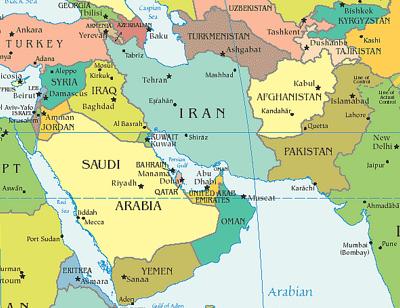
Map of the Middle East

From Fox News.

 Pakistan, North Korea and a former weapons scientist from the Soviet Union reportedly all helped Iran with its nuclear weapons quest, according to an impending U.N. nuclear watchdog report expected to show the Islamic regime has mastered the science of building a bomb.

The International Atomic Energy Agency’s report due out this week will lay out findings collected over years of intelligence gathering. It is expected to reinforce concerns that Iran didn’t actually abandon its weapons-related research in 2003, as indicated by a 2007 National Intelligence Estimate given to then-President George W. Bush.

U.S. intelligence agencies reported in 2007 that they believed Tehran halted its experiments in response to international and domestic pressures. But an ongoing investigation by the Fox News Specials Unit concludes that more than 600 entities were working inside Iran to support its program, and at least 40 sites where the work is taking place are suspected to exist across the country.

For British, French and American investigators, one of the most concerning sites is the Qom uranium enrichment construction site, hidden deep in the mountains. The latest intelligence shows that security walls have doubled around the site. Its scale cannot be explained by any known civilian nuclear energy use.

David Albright, a former IAEA official and president of the Washington-based Institute for Science and International Security who reviewed the intelligence files, told The Washington Post that Iran’s nuclear weapons program “never really stopped” and also concluded that Iran “has sufficient information to design and produce a workable implosion nuclear device.”

Western diplomats and nuclear experts briefed on the findings in the IAEA report also told the Post that foreign scientists offered assistance in overcoming key technical hurdles.

The documents reportedly show that a former Soviet weapons scientist named Vyacheslav Danilenko allegedly tutored Iranians for several years on building high-precision detonators needed to trigger a nuclear chain reaction. The Post reported that Pakistani and North Korean officials also gave to Iran mathematical formulas and codes as well as a so-called neutron initiator, which shoots a stream of atomic particles into the weapon’s fissile core at the start of the chain reaction.

There are two things to point out about this story. The first thing is that it was a strategic disaster for us to back out of Iraq, because that’s where we need to be to be able to gather intelligence, mount covert ops, run interdiction on attempts to transfer WMDs to Syria, etc. We really need to be in theater in order to deal with Iran, Syria and groups like Hezbollah, Iran’s Quds force and Muqtada Al Sadr’s Mahdi Army.

Unfortunately, I think that David Axelrod is running our national security now, which is why Obama pulled out forces out of Iraq.

Excerpt:

Three years, two abject failures. The first was the administration’s inability, at the height of American post-surge power, to broker a centrist nationalist coalition governed by the major blocs — one predominantly Shiite (Maliki’s), one predominantly Sunni (Ayad Allawi’s), one Kurdish — that among them won a large majority (69 percent) of seats in the 2010 election.

Vice President Biden was given the job. He failed utterly. The government ended up effectively being run by a narrow sectarian coalition where the balance of power is held by the relatively small (12 percent) Iranian-client Sadr faction.

The second failure was the SOFA [Status of Forces Agreement] itself. U.S. commanders recommended nearly 20,000 troops, considerably fewer than our 28,500 in Korea, 40,000 in Japan and 54,000 in Germany. The president rejected those proposals, choosing instead a level of 3,000 to 5,000 troops.

A deployment so risibly small would have to expend all its energies simply protecting itself — the fate of our tragic, missionless 1982 Lebanon deployment — with no real capability to train the Iraqis, build their U.S.-equipped air force, mediate ethnic disputes (as we have successfully done, for example, between local Arabs and Kurds), operate surveillance and special-ops bases, and establish the kind of close military-to-military relations that undergird our strongest alliances.

The Obama proposal was an unmistakable signal of unseriousness. It became clear that he simply wanted out, leaving any Iraqi foolish enough to maintain a pro-American orientation exposed to Iranian influence, now unopposed and potentially lethal. Message received. Just this past week, Massoud Barzani, leader of the Kurds — for two decades the staunchest of U.S. allies — visited Tehran to bend a knee to both President Mahmoud Ahmadinejad and Ayatollah Ali Khamenei.

The second thing to point out is the question of what we should be doing to restrain Iran’s nuclear ambitions. Click here for a run-down of some of our options. There are a lot of things we could do short of all-out war, but that would require that we had a statesman in the White House – someone who takes foreign policy seriously and treats it as more than a political issue.

A previous post I wrote showed how arms that China sells to Iran make their way to Hezbollah to be used against Israeli assets. That’s what we can expect will happen with nuclear weapons that Iran develops. Are we willing to accept that? There is also the matter of the Mexican drug cartels, the Quds force, Hugo Chavez in Venezuela and our porous border with Mexico. Are we willing to risk that?

We need to take the gloves off our national security agencies, especially the CIA, and do what has to be done.

Obama’s decision to retreat in Iraq is a disaster for American foreign policy

Let’s see what everyone thinks about Obama’s decision withdraw 40,000 troops from Iraq, effectively handing control of much of the Middle East to Iran.

Disregards the advice of his own generals

From the Wall Street Journal.

Excerpt:

No doubt this will be politically popular—at least in the short-term. Mr. Obama can say he honored a campaign pledge, Congress will move to spend the money on domestic programs, and a war-weary American public will be relieved to carry fewer overseas burdens. Or at least Americans will feel such relief as long as this total withdrawal doesn’t cost the hard-fought political and strategic gains that our intervention has won.

There are serious risks in this complete withdrawal. Iraq has made great progress in providing its own security, with some 600,000 Iraqi troops gradually taking the handoff from U.S. forces. But the Iraqis still lack vital military assets in intelligence and logistics, not to mention naval and air power. Mr. Obama said the U.S. will continue to discuss “how we might help Iraq train and equip its forces,” but this is no substitute for a more robust, long-term presence of the kind we retain in South Korea and Japan 60 years after the end of the Korean War.

The U.S. commander in Iraq, General Lloyd Austin, had requested between 15,000 and 18,000 troops, before reducing it to 10,000 under pressure. Such a U.S. presence would reassure Iraq and its neighbors of our continuing commitment to the region. It would help play the role of honest broker among Iraq’s ethnic factions as it continues to build a more durable political system.

And above all it would reduce Iran’s ability to meddle in Iraq, building local militias on the Hezbollah model with a goal of making its neighbor a Shiite vassal state. Iran’s Quds force—the same outfit that wanted to assassinate a Saudi ambassador on U.S. soil—is the biggest winner from Mr. Obama’s pullout.

Bungled negotiations

From Foreign Policy magazine. (H/T The Washington Post)

Excerpt:

“Iraq is not a normal country, the security environment is not normal, the embassy is not a normal embassy,” said Marisa Cochrane Sullivan, managing director at the Institute for the Study of War, who traveled to Iraq this summer and has been sounding the alarm about what she saw as the mishandling of the negotiations ever since.

For more evidence that the administration actually wanted to extend the troop presence in Iraq, despite today’s words by Obama and McDonough, one only has to look at the statements of Defense Secretary Leon Panetta.

In July, Panetta urged Iraqi leaders to, “Dammit, make a decision” about the U.S. troop extension. In August, he told reporters that, “My view is that they finally did say, ‘Yes.'” On Oct. 17, he was still pushing for the extension and said, “At the present time I’m not discouraged because we’re still in negotiations with the Iraqis.”

Sullivan was one of 40 conservative foreign policy professionals who wrote to Obama in September to warn that even a residual force of 4,000 troops would “leave the country more vulnerable to internal and external threats, thus imperiling the hard-fought gains in security and governance made in recent years at significant cost to the United States.”

She said that the administration’s negotiating strategy was flawed for a number of reasons: it failed to take into account Iraqi politics, failed to reach out to a broad enough group of Iraqi political leaders, and sent contradictory messages on the troop extension throughout the process.

“From the beginning, the talks unfolded in a way where they largely driven by domestic political concerns, both in Washington and Baghdad. Both sides let politics drive the process, rather than security concerns,” said Sullivan.

Emboldens Syria and their puppet-master, Iran

From National Review.

Excerpt:

The announcement of our total withdrawal comes just weeks after the revelation of an Iranian plot to execute the Saudi ambassador to the U.S. on our soil. It comes as Iran’s key Arab ally, the Assad regime in Syria, is rocked by a revolt. Just as Tehran’s dangerousness is put in stark relief and as events in Syria threaten to deal it a strategic setback, it gets this windfall.

[…][Obama’s] commanders on the ground wanted to keep more than 20,000 troops in Iraq (the administration had bid this number down to several thousand, perhaps convincing Iraqi political players that cutting a painful deal on immunity wouldn’t have enough of a corresponding upside). Such a force would have enhanced our political leverage in Baghdad, checked Iran’s already considerable influence, ensured against a return of al-Qaeda, and helped keep a lid on Arab–Kurdish tensions in the north. Now, we’ll simply have to hope for the best. Deputy National Security Advisor Dennis McDonough said Iraq is “secure, stable, and self-reliant.” It is none of these things. Its government is still inchoate and it is not capable of defending itself from Iran in the air or on the ground.

Our pullout is a bonanza for Tehran. Its militias were already active in Iraq. Now, it can use Iraq for bases for its proxy forces to spread its tentacles in the rest of the Persian Gulf. Independent ayotollahs in Iraq will have an incentive to keep their heads down. Political decisions of the Iranian-influenced Shiite bloc running the country are sure to begin to tilt more and more Iran’s way. Our diplomatic leverage will diminish, even as maintain our largest embassy in the world in Baghdad. The Iranians will crow in Iraq and throughout the region that they were right that the Americans would eventually leave.

We expended a great deal of blood and treasure to topple Saddam Hussein, and then to establish enough order so that George W. Bush’s successor would only have to consolidate our gains. President Obama is careless enough to risk throwing it all away, and shameless enough to call it success.

For those who are not aware of the looming storm in the Middle East, you should read in full this article from the Washington Times. It is authored by Frank Gaffney, the President of the Center for Security Policy. He covers several troubling data points in Libya, Egypt, Afghanistan, Iraq, China, Russia and Mexico. As if that were not bad enough, it looks as if the debt limit super-committee is now deadlocked in negotiations, which will trigger automatic cuts to our defense budget, at the worst possible moment.

Syrian armed forces murder 16 innocent protestors

Political map of the Middle East

Syria is really beginning to get on my nerves. This new violence against their own citizens is coming after several  assassinations of key political figures in nearby Lebanon, e.g. – Rafik Hariri, Pierre Gemayel, etc.

Excerpt:

Syrian security forces killed at least 16 people Friday, including a teenage boy, as thousands of people poured into the streets across the country calling for the downfall of President Bashar Assad’s autocratic regime, activists said.

The unrest also appeared to be spilling over into neighboring Lebanon. A senior member of a Lebanese political party allied with Syria and an off-duty soldier were killed Friday after gunmen opened fire and lobbed a grenade near hundreds of people holding an anti-Assad protest in northern Lebanon, a security official said in Beirut.

The protests in Syria came hours after Syrian troops backed by tanks and helicopter gunships seized control early Friday of another northwestern town in the latest military operation to quell the dissent.

Since the protests erupted in mid-March, Assad has unleashed the military to crush street demonstrations. Human rights activists say more than 1,400 Syrians have been killed and 10,000 detained.

“What is our guilt? We just demanded freedom and democracy nothing else,” said Mohamed, who spoke to The Associated Press from a refugee camp in neighboring Turkey and asked to be identified only by his first name. He and other refugees offered fresh accounts of summary executions to suppress the pro-democracy movement.

“I saw people who were beheaded with machine-gun fire from helicopters,” and a man tortured to death when security forces “poured acid on to his body,” he said.

Mohamed fled with his family as the military besieged Jisr al-Shughour, a rebellious town the government recaptured last Sunday.

He said a sugar factory in the city was turned into a jail where they “hold quick trials and execute anyone who they believe participated in protests.”

He is among some 9,600 people are seeking shelter in Turkish refugee camps.

We are wasting $9.5 million PER DAY in a pointless war in Libya. We should stop that war immediately, and pull our troops out of South Korea, Japan and Western Europe, and attack Syria, while we have our forces already deployed in Iraq. A two-pronged assault from the West and the East would be ideal, and we would not even have to use ground forces. I don’t mind spending money on war, but we have no strategic goal in Libya. Syria makes a lot more sense as a target. We should take advantage of Syria’s aggression towards peaceful protesters to target and destroy their military power. It would be difficult, but it would certainly take the pressure off of Lebanon and Israel in the Middle East region.