Tag Archives: Freedom

Did Australia’s ban on guns lower violent crime rates and lower suicide rates?

Gun ownership up, gun violence down

Someone asked me about what I thought of Australia’s experience banning the use of handguns for self-defense against criminals, and so I thought I would link to an article from The Federalist, then explain what peer-reviewed studies say about the issue.

Let’s start with The Federalist.

It says:

The argument, as Vox’s headline puts it, is “Australia confiscated 650,000 guns. Murders and suicides plummeted.”

The piece, along with many gun control advocates, cites a Harvard University study whose conclusion begins with this line: “It does not appear that the Australian experience with gun buybacks is fully replicable in the United States.” Not a great start for Vox’s angle, but I digress.

The study doesn’t conclude that “murders and suicides plummeted” in Australia after the 1996 gun ban, as Vox claims in its headline. Instead, it focuses solely on firearm-related murders and suicides.

After the gun ban, violent crime rates were up:

Yes, as with the gun-happy United States, the murder rate is down in Australia. It’s dropped 31 percent from a rate of 1.6 per 100,000 people in 1994 to 1.1 per 100,000 in 2012.But it’s the only serious crime that saw a consistent decline post-ban.

In fact, according to the Australian government’s own statistics, a number of serious crimes peaked in the years after the ban. Manslaughter, sexual assault, kidnapping, armed robbery, and unarmed robbery all saw peaks in the years following the ban, and most remain near or above pre-ban rates. The effects of the 1996 ban on violent crime are, frankly, unimpressive at best.

It’s even less impressive when again compared to America’s decrease in violent crime over the same period. According to data from the U.S. Justice Department, violent crime fell nearly 72 percent between 1993 and 2011. Again, this happened as guns were being manufactured and purchased at an ever-increasing rate.

So although you have fewer firearm-related deaths when you disarm law-abiding civilians, violent crime increases, because there is now NO deterrence to criminals. Even a criminal with a knife can rob, rape and murder someone who is unarmed.

What about suicide rates?

Look:

The Australian gun ban’s effect on suicide in the country isn’t any better. While Vox repeats the Harvard study’s claim that firearm-related suicides are down 57 percent in the aftermath of the ban, Lifeline Australia reports that overall suicides are at a ten-year high. The Australian suicide prevention organization claims suicide is the leading cause of death for Australians 15 to 44 years old. So, while Australians kill themselves with firearms less often, it seems they don’t actually take their own lives any less often than before the ban.

So, overall suicides are not down, people simply found other ways to kill themselves. So the gun ban had no effect on the overall suicide rate. But it did raise the violent crime rate. Should we be surprised by this? Actually, this is consistent with peer-reviewed research.

The peer-reviewed research

Whenever I get into discussions about gun control, I always mention two academic books by John R. Lott and Joyce Lee Malcolm.

Here is a paper by Dr. Malcolm that summarizes one of the key points of her book.

Excerpt:

Tracing the history of gun control in the United Kingdom since the late 19th century, this article details how the government has arrogated to itself a monopoly on the right to use force. The consequence has been a tremendous increase in violent crime, and harsh punishment for crime victims who dare to fight back. The article is based on the author’s most recent book, Guns and Violence: The English Experience (Harvard University Press, 2002). Joyce Malcom is professor of history at Bentley College, in Waltham, Massachusetts. She is also author of To Keep and Bear Arms: The Origins of an AngloAmerican Right (Harvard University Press, 1994).

Upon the passage of The Firearms Act (No. 2) in 1997, British Deputy Home Secretary Alun Michael boasted: “Britain now has some of the toughest gun laws in the world.” The Act was second handgun control measure passed that year, imposed a near-complete ban on private ownership of handguns, capping nearly eighty years of increasing firearms restrictions. Driven by an intense public campaign in the wake of the shooting of schoolchildren in Dunblane, Scotland, Parliament had been so zealous to outlaw all privately owned handguns that it rejected proposals to exempt Britain’s Olympic target-shooting team and handicapped target-shooters from the ban.

And the result of the 1997 gun ban:

The result of the ban has been costly. Thousands of weapons were confiscated at great financial cost to the public. Hundreds of thousands of police hours were devoted to the task. But in the six years since the 1997 handgun ban, crimes with the very weapons banned have more than doubled, and firearm crime has increased markedly. In 2002, for the fourth consecutive year, gun crime in England and Wales rose—by 35 percent for all firearms, and by a whopping 46 percent for the banned handguns. Nearly 10,000 firearms offences were committed.

[…]According to Scotland Yard, in the four years from 1991 to 1995 crimes against the person in England‟s inner cities increased by 91 percent. In the four years from 1997 to 2001 the rate of violent crime more than doubled. The UK murder rate for 2002 was the highest for a century.

I think that peer-reviewed studies – from Harvard University, no less – should be useful to those of us who believe in the right of self-defense for law-abiding people. The book by economist John Lott, linked above,compares the crime rates of all U.S. states that have enacted concealed carry laws, and concludes that violent crime rates dropped after law-abiding citizens were allowed to carry legally-owned firearms. That’s the mirror image of Dr. Malcolm’s Harvard study, but both studies affirm the same conclusion – more legal firearm ownership means less crime.

For a couple of useful graphs, check out this post over at the American Enterprise Institute.

Harvard Journal of Law & Public Policy paper: gun control doesn’t lower murder rate

Guns are for self-defense against criminals
Guns provide effective self-defense against violent criminals

Doug Ross linked to this study published in the Harvard Journal of Law & Public Policy.

He writes:

The Harvard study attempts to answer the question of whether or not banning firearms would reduce murders and suicides. Researchers looked at crime data from several European countries and found that countries with HIGHER gun ownership often had LOWER murder rates.

Russia, for example, enforces very strict gun control on its people, but its murder rate remains quite high. In fact, the murder rate in Russia is four times higher than in the “gun-ridden” United States, cites the study. ”Homicide results suggest that where guns are scarce other weapons are substituted in killings.” In other words, the elimination of guns does not eliminate murder, and in the case of gun-controlled Russia, murder rates are quite high.

The study revealed several European countries with significant gun ownership, like Norway, Finland, Germany and France – had remarkably low murder rates. Contrast that with Luxembourg, “where handguns are totally banned and ownership of any kind of gun is minimal, had a murder rate nine times higher than Germany in 2002.

The study found no evidence to suggest that the availability of guns contributes to higher murder rates anywhere in the world. ”Of course, it may be speculated that murder rates around the world would be higher if guns were more available. But there is simply no evidence to support this.”

The authors also took a look at the effect of gun control laws in various U.S. states, gun ownership in rural and urban areas, and across racial lines. The long and short of it is that a small number of extremely active criminals with lengthy criminal records are responsible for the overwhelming super-majority of all gun crimes, and these criminals are psychopaths that ignore all laws.

The study also cited a previous report that was unable to find a single gun control law implemented in the United States that is proven to have reduced violent crime.

This is not the first time that a study in a presitigious journal has challenged the liberal gun control narrative. People who oppose guns oppose them because of feelings. Guns are scary and guns are loud, they say. That’s their reasoning. But if you actually look at the data, you’ll find that guns do reduce crime rates.

The peer-reviewed research

Whenever I get into discussions about gun control, I always mention two academic books by John R. Lott and Joyce Lee Malcolm.

Here is a paper by Dr. Malcolm that summarizes one of the key points of her book.

Excerpt:

Tracing the history of gun control in the United Kingdom since the late 19th century, this article details how the government has arrogated to itself a monopoly on the right to use force. The consequence has been a tremendous increase in violent crime, and harsh punishment for crime victims who dare to fight back. The article is based on the author’s most recent book, Guns and Violence: The English Experience (Harvard University Press, 2002). Joyce Malcom is professor of history at Bentley College, in Waltham, Massachusetts. She is also author of To Keep and Bear Arms: The Origins of an AngloAmerican Right (Harvard University Press, 1994).

Upon the passage of The Firearms Act (No. 2) in 1997, British Deputy Home Secretary Alun Michael boasted: “Britain now has some of the toughest gun laws in the world.” The Act was second handgun control measure passed that year, imposed a near-complete ban on private ownership of handguns, capping nearly eighty years of increasing firearms restrictions. Driven by an intense public campaign in the wake of the shooting of schoolchildren in Dunblane, Scotland, Parliament had been so zealous to outlaw all privately owned handguns that it rejected proposals to exempt Britain’s Olympic target-shooting team and handicapped target-shooters from the ban.

And the result of the 1997 gun ban:

The result of the ban has been costly. Thousands of weapons were confiscated at great financial cost to the public. Hundreds of thousands of police hours were devoted to the task. But in the six years since the 1997 handgun ban, crimes with the very weapons banned have more than doubled, and firearm crime has increased markedly. In 2002, for the fourth consecutive year, gun crime in England and Wales rose—by 35 percent for all firearms, and by a whopping 46 percent for the banned handguns. Nearly 10,000 firearms offences were committed.

[…]According to Scotland Yard, in the four years from 1991 to 1995 crimes against the person in England‟s inner cities increased by 91 percent. In the four years from 1997 to 2001 the rate of violent crime more than doubled. The UK murder rate for 2002 was the highest for a century.

I think that peer-reviewed studies – from Harvard University, no less – should be useful to those of us who believe in the right of self-defense for law-abiding people. The book by economist John Lott, linked above,compares the crime rates of all U.S. states that have enacted concealed carry laws, and concludes that violent crime rates dropped after law-abiding citizens were allowed to carry legally-owned firearms. That’s the mirror image of Dr. Malcolm’s Harvard study, but both studies affirm the same conclusion – more legal firearm ownership means less crime.

If you still think that guns are somehow bad for reducing crime, why not check out a formal academic debate featuring 3 people on each side of the debate?

If you want to know why the Democrat parts of the United States have such high rates of violence, then you need to look at the enormously high out-of-wedlock birth rates in the Democrat parts of the United States. Democrats have no problem with having fatherless children, and they support paying people welfare in order to do it. No wonder they have a crime problem that’s caused by the fatherlessness that is caused by their own values and policies. When Democrats stop paying single mothers money to have fatherless kids, then the crime rates in the Democrat parts of the United States will go down.

Atheist Jerry Coyne explains why morality is impossible for atheists

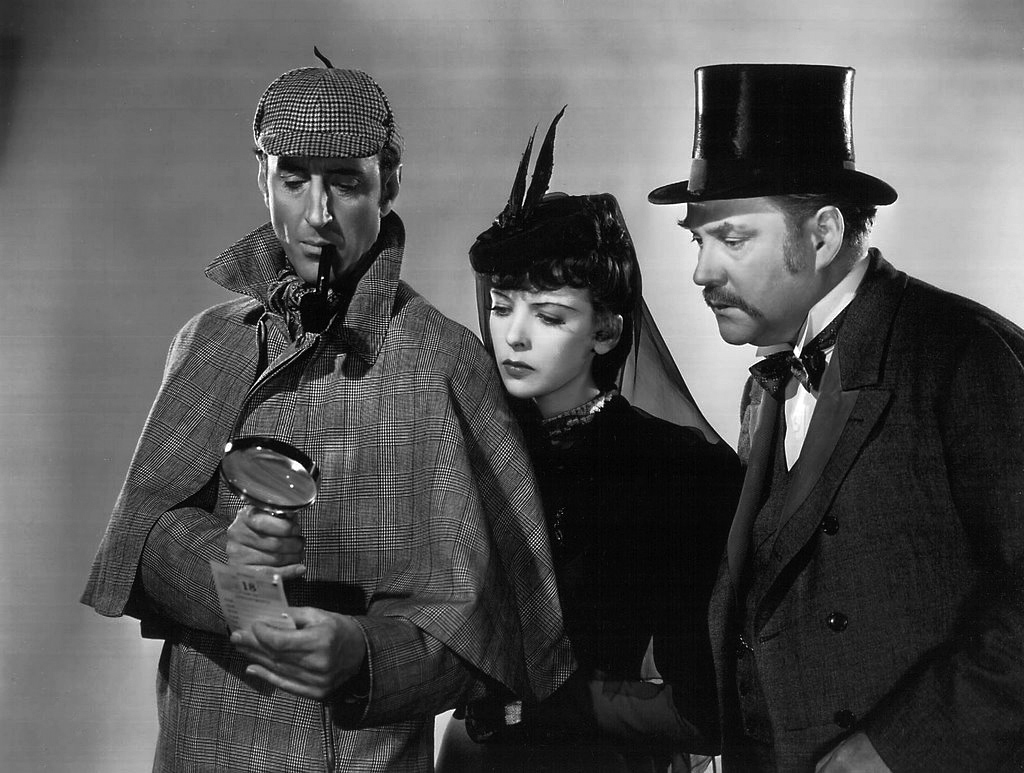
Sherlock Holmes and John Watson about to do philosophy

Let’s review what you need in your worldview in order to have a rationally grounded system of morality.

You need 5 things:

1) Objective moral values

There needs to be a way to distinguish what is good from what is bad. For example, the moral standard might specify that being kind to children is good, but torturing them for fun is bad. If the standard is purely subjective, then people could believe anything and each person would be justified in doing right in their own eyes. Even a “social contract” is just based on people’s opinions. So we need a standard that applies regardless of what people’s individual and collective opinions are.

2) Objective moral duties

Moral duties (moral obligations) refer to the actions that are obligatory based on the moral values defined in 1). Suppose we spot you 1) as an atheist. Why are you obligated to do the good thing, rather than the bad thing? To whom is this obligation owed? Why is rational for you to limit your actions based upon this obligation when it is against your self-interest? Why let other people’s expectations decide what is good for you, especially if you can avoid the consequences of their disapproval?

3) Moral accountability

Suppose we spot you 1) and 2) as an atheist. What difference does it make to you if you just go ahead and disregard your moral obligations to whomever? Is there any reward or punishment for your choice to do right or do wrong? What’s in it for you?

4) Free will

In order for agents to make free moral choices, they must be able to act or abstain from acting by exercising their free will. If there is no free will, then moral choices are impossible. If there are no moral choices, then no one can be held responsible for anything they do. If there is no moral responsibility, then there can be no praise and blame. But then it becomes impossible to praise any action as good or evil.

5) Ultimate significance

Finally, beyond the concept of reward and punishment in 3), we can also ask the question “what does it matter?”. Suppose you do live a good life and you get a reward: 1000 chocolate sundaes. And when you’ve finished eating them, you die for real and that’s the end. In other words, the reward is satisfying, but not really meaningful, ultimately. It’s hard to see how moral actions can be meaningful, ultimately, unless their consequences last on into the future.

Theism rationally grounds all 5 of these. Atheism cannot ground any of them.

Let’s take a look at #4: free will and see how atheism deals with that.

Atheism and free will?

Here’s prominent atheist Jerry Coyne’s editorial in USA Today to explain why atheists can’t ground free will.

Excerpt:

And that’s what neurobiology is telling us: Our brains are simply meat computers that, like real computers, are programmed by our genes and experiences to convert an array of inputs into a predetermined output. Recent experiments involving brain scans show that when a subject “decides” to push a button on the left or right side of a computer, the choice can be predicted by brain activity at least seven seconds before the subject is consciously aware of having made it. (These studies use crude imaging techniques based on blood flow, and I suspect that future understanding of the brain will allow us to predict many of our decisions far earlier than seven seconds in advance.) “Decisions” made like that aren’t conscious ones. And if our choices are unconscious, with some determined well before the moment we think we’ve made them, then we don’t have free will in any meaningful sense.

If you don’t have free will, then you can’t make moral choices, and you can’t be held morally responsible. No free will means no morality.

Here are some more atheists to explain how atheists view morality.

William Provine says atheists have no free will, no moral accountability and no moral significance:

Let me summarize my views on what modern evolutionary biology tells us loud and clear — and these are basically Darwin’s views. There are no gods, no purposes, and no goal-directed forces of any kind. There is no life after death. When I die, I am absolutely certain that I am going to be dead. That’s the end of me. There is no ultimate foundation for ethics, no ultimate meaning in life, and no free will for humans, either.

Richard Dawkins says atheists have no objective moral standards:

In a universe of blind physical forces and genetic replication, some people are going to get hurt, other people are going to get lucky, and you won’t find any rhyme or reason in it, or any justice. The universe that we observe has precisely the properties we should expect if there is, at bottom, no design, no purpose, no evil and no good, nothing but blind, pitiless indifference… DNA neither knows nor cares. DNA just is. And we dance to its music. (Richard Dawkins, River Out of Eden: A Darwinian View of Life (1995))

When village atheists talk about how they can be moral without God, it’s important to ask them to justify the minimum requirements for rational morality. Atheists may act inconsistently with their worldview, believing in free will, expecting praise and blame for complying with the arbitrary standards of their peer group, etc. But there is nothing more to morality on atheism that imitating the herd – at least when the herd is around to watch them. And when the herd loses its Judeo-Christian foundation – watch out. That’s when the real atheism comes out, and you can see it on display in the Planned Parenthood videos. When God disappears from a society, anything is permissible.