
Tag Archives: Free Will

William Lane Craig explains the doctrine of penal substitutionary atonement

I have a key that will unlock a puzzling mystery

Probably one of the most common questions that you hear from people who don’t fully understand Christianity is this question: “why did Jesus have to die?”. The answer that most Christians seem to hold to is that 1) humans are rebelling against God, 2) Humans deserve punishment for their rebellion, 3) Humans cannot escape the punishment for their rebellion on their own, 4) Jesus was punished in the place of the rebellious humans, 5) Those who accept this sacrifice are forgiven for their rebelling.

Are humans rebellious?

Some people think that humans are not really rebellious at all, but it’s actually easy to see. You can see it just by looking at how people spend their time. Some of us have no time for God at all, and instead try to fill our lives with material possessions and experiences in order to have happy feelings. Some of us embrace just the parts of God that make us feel happy, like church and singing and feelings of comfort, while avoiding the hard parts of that vertical relationship; reading, thinking and disagreeing with people who don’t believe the truth about God. And so on.

This condition of being in rebellion is universal, and all of us are guilty of breaking the law at some point. All of us deserve to be separated from God’s goodness and love. Even if we wanted to stop rebelling, we would not be able to make up for the times where we do rebel by being good at other times, any more than we could get out of a speeding ticket by appealing to the times when we drove at the speed limit, (something that I never do, in any case).

This is not to say that all sinners are punished equally – the degree of punishment is proportional to the sins a person commits. However, the standard is perfection. And worse than that, the most important moral obligation is a vertical moral obligation. You can’t satisfy the demands of the moral law just by making your neighbor happy, while treating God like a pariah. The first commandment is to love God, the second is to love your neighbor. Even loving your neighbor requires you to tell your neighbor the truth – not just to make them feel good. The vertical relationship is more important than the horizontal one, and we’ve all screwed up the vertical relationship. We all don’t want God to be there, telling us what’s best for us, interfering with our fun. We don’t want to relate to a loving God if it means having to care what he thinks about anything that we are doing.

Who is going to pay for our rebellion?

The Christian answer to the problem of our rebellion is that Jesus takes the punishment we deserve in our place.

However, I’ve noticed that on some atheist blogs, they don’t like the idea that someone else can take our punishment for us to exonerate us for crimes that we’ve committed. So I’ll quote from this post by the great William Lane Craig, to respond to that objection.

Excerpt:

The central problem of the Penal Theory is, as you point out, understanding how punishing a person other than the perpetrator of the wrong can meet the demands of justice. Indeed, we might even say that it would be wrong to punish some innocent person for the crimes I commit!

It seems to me, however, that in other aspects of human life we do recognize this practice. I remember once sharing the Gospel with a businessman. When I explained that Christ had died to pay the penalty for our sins, he responded, “Oh, yes, that’s imputation.” I was stunned, as I never expected this theological concept to be familiar to this non-Christian businessman. When I asked him how he came to be familiar with this idea, he replied, “Oh, we use imputation all the time in the insurance business.” He explained to me that certain sorts of insurance policy are written so that, for example, if someone else drives my car and gets in an accident, the responsibility is imputed to me rather than to the driver. Even though the driver behaved recklessly, I am the one held liable; it is just as if I had done it.

Now this is parallel to substitutionary atonement. Normally I would be liable for the misdeeds I have done. But through my faith in Christ, I am, as it were, covered by his divine insurance policy, whereby he assumes the liability for my actions. My sin is imputed to him, and he pays its penalty. The demands of justice are fulfilled, just as they are in mundane affairs in which someone pays the penalty for something imputed to him. This is as literal a transaction as those that transpire regularly in the insurance industry.

So, it turns out that the doctrine of substitionary atonement is not as mysterious or as objectionable as everyone seems to think it is.

Why doesn’t God make his existence more obvious to people?

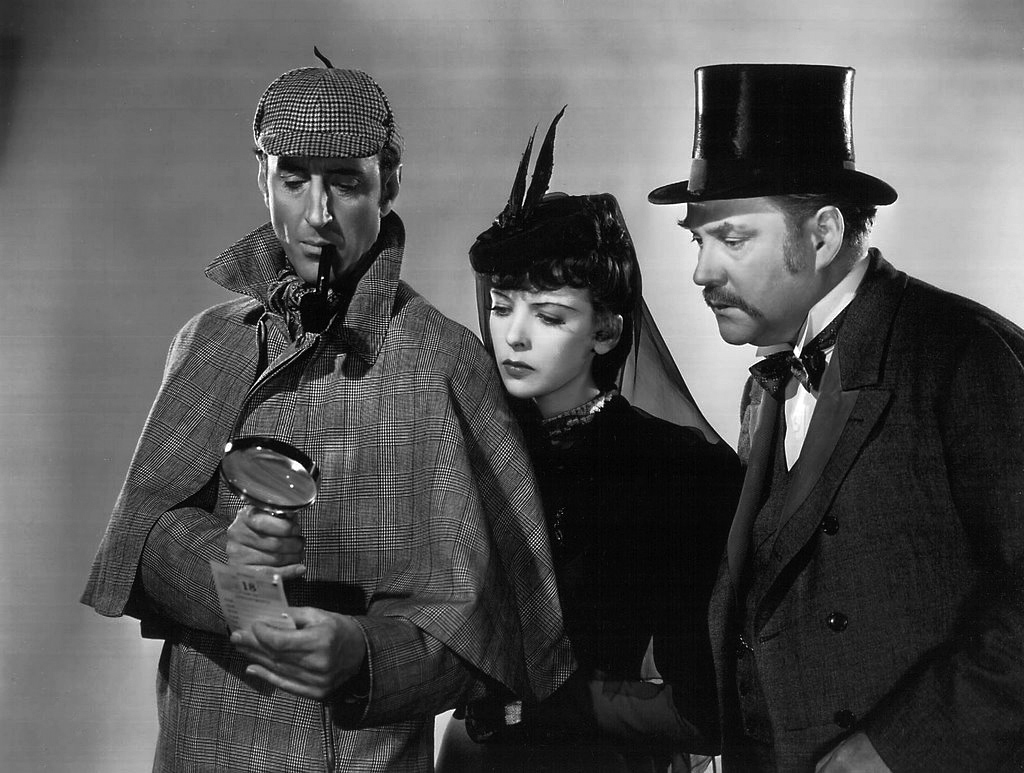
Sherlock Holmes and John Watson are going to take a look at the data

Have you ever heard someone say that if God existed, he would give us more evidence? This is called the “hiddenness of God” argument. It’s also known as the argument from “rational non-belief”.

Basically the argument is something like this:

  1. God is all powerful
  2. God is all loving
  3. God wants all people to know about him
  4. Some people don’t know about him
  5. Therefore, there is no God.

In this argument, the atheist is saying that he’s looked for God real hard and that if God were there, he should have found him by now. After all, God can do anything he wants that’s logically possible, and he wants us to know that he exists. To defeat the argument we need to find a possible explanation of why God would want to remain hidden when our eternal destination depends on our knowledge of his existence.

What reason could God have for remaining hidden?

Dr. Michael Murray, a brilliant professor of philosophy at Franklin & Marshall College, has found a reason for God to remain hidden.

His paper on divine hiddenness is here:
Coercion and the Hiddenness of God“, American Philosophical Quarterly, Vol 30, 1993.

He argues that if God reveals himself too much to people, he takes away our freedom to make morally-significant decisions, including responding to his self-revelation to us. Murray argues that God stays somewhat hidden, so that he gives people space to either 1) respond to God, or 2) avoid God so we can keep our autonomy from him. God places a higher value on people having the free will to respond to him, and if he shows too much of himself he takes away their free choice to respond to him, because once he is too overt about his existence, people will just feel obligated to belief in him in order to avoid being punished.

But believing in God just to avoid punishment is NOT what God wants for us. If it is too obvious to us that God exists and that he really will judge us, then people will respond to him and behave morally out of self-preservation. But God wants us to respond to him out of interest in him, just like we might try to get to know someone we admire. God has to dial down the immediacy of the threat of judgment, and the probability that the threat is actual. That leaves it up to us to respond to God’s veiled revelation of himself to us, in nature and in Scripture.

(Note: I think that we don’t seek God on our own, and that he must take the initiative to reach out to us and draw us to him. But I do think that we are free to resist his revelation, at which point God stops himself short of coercing our will. We are therefore responsible for our own fate).

The atheist’s argument is a logical/deductive argument. It aims to show that there is a contradiction between God’s will for us and his hiding from us. In order to derive a contradiction, God MUST NOT have any possible reason to remain hidden. If he has a reason for remaining hidden that is consistent with his goodness, then the argument will not go through.

When Murray offers a possible reason for God to remain hidden in order to allow people to freely respond to him, then the argument is defeated. God wants people to respond to him freely so that there is a genuine love relationship – not coercion by overt threat of damnation. To rescue the argument, the atheist has to be able to prove that God could provide more evidence of his existence without interfering with the free choice of his creatures to reject him.

Murray has defended the argument in works published by prestigious academic presses such as Cambridge University Press, (ISBN: 0521006104, 2001) and Routledge (ISBN: 0415380383, 2007).

Positive arguments for Christian theism

Atheist Jerry Coyne explains why morality is impossible for atheists

Sherlock Holmes and John Watson about to do philosophy

Let’s review what you need in your worldview in order to have a rationally grounded system of morality.

You need 5 things:

1) Objective moral values

There needs to be a way to distinguish what is good from what is bad. For example, the moral standard might specify that being kind to children is good, but torturing them for fun is bad. If the standard is purely subjective, then people could believe anything and each person would be justified in doing right in their own eyes. Even a “social contract” is just based on people’s opinions. So we need a standard that applies regardless of what people’s individual and collective opinions are.

2) Objective moral duties

Moral duties (moral obligations) refer to the actions that are obligatory based on the moral values defined in 1). Suppose we spot you 1) as an atheist. Why are you obligated to do the good thing, rather than the bad thing? To whom is this obligation owed? Why is rational for you to limit your actions based upon this obligation when it is against your self-interest? Why let other people’s expectations decide what is good for you, especially if you can avoid the consequences of their disapproval?

3) Moral accountability

Suppose we spot you 1) and 2) as an atheist. What difference does it make to you if you just go ahead and disregard your moral obligations to whomever? Is there any reward or punishment for your choice to do right or do wrong? What’s in it for you?

4) Free will

In order for agents to make free moral choices, they must be able to act or abstain from acting by exercising their free will. If there is no free will, then moral choices are impossible. If there are no moral choices, then no one can be held responsible for anything they do. If there is no moral responsibility, then there can be no praise and blame. But then it becomes impossible to praise any action as good or evil.

5) Ultimate significance

Finally, beyond the concept of reward and punishment in 3), we can also ask the question “what does it matter?”. Suppose you do live a good life and you get a reward: 1000 chocolate sundaes. And when you’ve finished eating them, you die for real and that’s the end. In other words, the reward is satisfying, but not really meaningful, ultimately. It’s hard to see how moral actions can be meaningful, ultimately, unless their consequences last on into the future.

Theism rationally grounds all 5 of these. Atheism cannot ground any of them.

Let’s take a look at #4: free will and see how atheism deals with that.

Atheism and free will?

Here’s prominent atheist Jerry Coyne’s editorial in USA Today to explain why atheists can’t ground free will.

Excerpt:

And that’s what neurobiology is telling us: Our brains are simply meat computers that, like real computers, are programmed by our genes and experiences to convert an array of inputs into a predetermined output. Recent experiments involving brain scans show that when a subject “decides” to push a button on the left or right side of a computer, the choice can be predicted by brain activity at least seven seconds before the subject is consciously aware of having made it. (These studies use crude imaging techniques based on blood flow, and I suspect that future understanding of the brain will allow us to predict many of our decisions far earlier than seven seconds in advance.) “Decisions” made like that aren’t conscious ones. And if our choices are unconscious, with some determined well before the moment we think we’ve made them, then we don’t have free will in any meaningful sense.

If you don’t have free will, then you can’t make moral choices, and you can’t be held morally responsible. No free will means no morality.

Here are some more atheists to explain how atheists view morality.

William Provine says atheists have no free will, no moral accountability and no moral significance:

Let me summarize my views on what modern evolutionary biology tells us loud and clear — and these are basically Darwin’s views. There are no gods, no purposes, and no goal-directed forces of any kind. There is no life after death. When I die, I am absolutely certain that I am going to be dead. That’s the end of me. There is no ultimate foundation for ethics, no ultimate meaning in life, and no free will for humans, either.

Richard Dawkins says atheists have no objective moral standards:

In a universe of blind physical forces and genetic replication, some people are going to get hurt, other people are going to get lucky, and you won’t find any rhyme or reason in it, or any justice. The universe that we observe has precisely the properties we should expect if there is, at bottom, no design, no purpose, no evil and no good, nothing but blind, pitiless indifference… DNA neither knows nor cares. DNA just is. And we dance to its music. (Richard Dawkins, River Out of Eden: A Darwinian View of Life (1995))

When village atheists talk about how they can be moral without God, it’s important to ask them to justify the minimum requirements for rational morality. Atheists may act inconsistently with their worldview, believing in free will, expecting praise and blame for complying with the arbitrary standards of their peer group, etc. But there is nothing more to morality on atheism that imitating the herd – at least when the herd is around to watch them. And when the herd loses its Judeo-Christian foundation – watch out. That’s when the real atheism comes out – the atheism that we’ve seen before in countries that turned their backs on God, and the moral law. When God disappears from a society, anything is permissible.