
Tag Archives: Free Trade

Why are Egyptians wealthier in America than they are in Egypt?

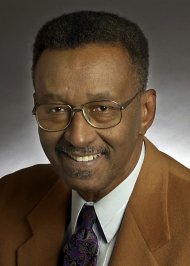
Walter Williams
Walter Williams

This is from Walter Williams, my second most favorite economist after Thomas Sowell.

Excerpt:

Why is it that Egyptians do well in the U.S. but not Egypt? We could make that same observation and pose that same question about Nigerians, Cambodians, Jamaicans and others of the underdeveloped world who migrate to the U.S. Until recently, we could make the same observation about Indians in India, and the Chinese citizens of the People’s Republic of China, but not Chinese citizens of Hong Kong and Taiwan.

[…]Much of Egypt’s economic problems are directly related to government interference and control that have resulted in weak institutions vital to prosperity. Hernando De Soto, president of Peru’s Institute for Liberty and Democracy (www.ild.org.pe), laid out much of Egypt’s problem in his Wall Street Journal article (Feb. 3, 2011), “Egypt’s Economic Apartheid.” More than 90 percent of Egyptians hold their property without legal title.

De Soto says, “Without clear legal title to their assets and real estate, in short, these entrepreneurs own what I have called ‘dead capital’ — property that cannot be leveraged as collateral for loans, to obtain investment capital, or as security for long-term contractual deals. And so the majority of these Egyptian enterprises remain small and relatively poor.”

Egypt’s legal private sector employs 6.8 million people and the public sector 5.9 million. More than 9 million people work in the extralegal sector, making Egypt’s underground economy the nation’s biggest employer.

Why are so many Egyptians in the underground economy? De Soto, who’s done extensive study of hampered entrepreneurship, gives a typical example: “To open a small bakery, our investigators found, would take more than 500 days. To get legal title to a vacant piece of land would take more than 10 years of dealing with red tape. To do business in Egypt, an aspiring poor entrepreneur would have to deal with 56 government agencies and repetitive government inspections.”

Poverty in Egypt, or anywhere else, is not very difficult to explain. There are three basic causes: People are poor because they cannot produce anything highly valued by others. They can produce things highly valued by others but are hampered or prevented from doing so. Or, they volunteer to be poor.

Some people use the excuse of colonialism to explain Third World poverty, but that’s nonsense. Some the world’s richest countries are former colonies: United States, Canada, Australia, New Zealand and Hong Kong. Some of the world’s poorest countries were never colonies, at least for not long, such as Ethiopia, Liberia, Tibet and Nepal. Pointing to the U.S., some say that it’s bountiful natural resources that explain wealth. Again nonsense. The two natural resources richest continents, Africa and South America, are home to the world’s most miserably poor. Hong Kong, Great Britain and Japan, poor in natural resources, are among the world’s richest nations.

What is necessary for wealth is a capitalist economy, that emphasizes the rule of law, private property, judicial restraint, limited government, etc. Egypt has none of those, and that’s why Egypt is poor. India and Chile used to be like Egypt, but then they revamped their societies to be more like America. Now India and Chile are more prosperous. Economics is not rocket science.

Capitalism creates wealth, and raises the standard of living of the poor and the wealthy. It doesn’t matter what rung of the social ladder someone is on – as long as they can keep what they earn, instead of having it redistributed by socialists, then they will work hard to create something of value to share with others. Poverty is caused by economic ignorance.

More Walter Williams stuff here, and more Thomas Sowell stuff here. These are the clearest-thinking economists operating today.
New report finds that America is falling behind on international trade

This is a good editorial on why Obama’s policies haven’t led to more exports.

Excerpt:

President Obama claims he’ll double U.S. exports in five years. But a new report from Congress shows U.S. firms losing major ground to competitors because he won’t act on free trade pacts with Colombia and Panama.

In a report titled “Losing Jobs and Alienating Friends: The Consequences of Falling Behind on Free Trade With Colombia and Panama,” the Senate Foreign Relations Committee’s Richard Lugar presents a bleak picture of Latin American markets and allies slipping away as the administration fails to enact the Colombia and Panama free-trade agreements.

While President Obama tries to get on the good side of business by saying he’d go forward with the U.S.-Korea free-trade deal, he’s making only vague statements of support for the other two treaties.

“What the president says matters a lot less than what he does,” Senate Minority Leader Mitch McConnell said Monday in calling for the passage of the long-languishing other two pacts.

Staffer Carl Meacham visited Colombia and Panama in late January and has returned with a long list of horror stories for the Foreign Relations Committee report to be released Tuesday. He tells of lost contracts, evaporating market share and unhappy allies writing off America as a partner in favor of new relationships with more trade-friendly partners like China.

The trend also affects other Latin states. Obama is getting ready to visit Brazil and Chile next month and will tout those new relationships. But he’s unlikely to note that both have quietly made China, instead of the U.S., their top trading partner.

In 10 years, China will also become the top trade partner of Colombia and Panama, nations that would rather have America in that spot. Without the trade pacts, however, it won’t happen.

Meacham found that the contractual losses to American companies in the absence of the pacts are already mounting. They include $5.25 billion for Panama Canal expansion, $1.5 billion for Panama City Metro construction and millions in highway contracts in both Panama and Colombia.

These contracts are going to foreigners from countries where duty-free trade has given their companies a competitive advantage as U.S. companies pay tariffs.

Meacham also found market-share losses in the same grim league, as Colombia signs off on free-trade deals with Canada (expected in two or three months), Europe (expected this summer) and South Korea (in third-stage negotiations in Los Angeles now).

Free trade is not only good for jobs, but also for foreign policy. It gives you leverage with a country because you’re more tightly coupled to them. Unfortunately, Obama is a socialist and he opposes free trade. So not only will be lose jobs, but also influence and goodwill abroad.

What happened when Chile privatized its retirement program?

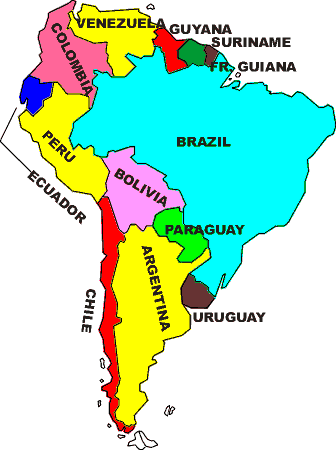
Map of South America

Here’s an editorial about how Chile privatized their government-run retirement program.

Excerpt:

Nearly 30 years ago, on the very day Ronald Reagan was sworn in as U.S. president, Chile became the first nation to privatize its social security system. Three decades hence, it has surpassed all expectations.

[…]Thirty years on, Pinera’s plan, adapted from the ideas of Milton Friedman, is, along with free trade, one of the two pillars of Chile’s success story, surpassing all predictions.

Pinera’s proposal began with scrapping the payroll tax on the country’s social security system and inviting all workers to take the money they were contributing and move it into a private pension.

Workers would be free to choose the fund, how much to put in, and at what age they would retire, with a minimal safety net built into the design. Past contributions would be refunded to workers by government bond. And anyone who didn’t like the idea was free to remain with the system as it was. It was a huge success: 95% of Chile’s workers chose the private system.

Pinera told the public to expect a compounded 4% rate of return under the private plan. But as of 2010, the average annual rate of return was 9.23%, far higher than promised.

By contrast, the U.S. social security system, which today accounts for a quarter of the U.S. government budget, is slated to give retiring workers in the next decade a 1% to 2% rate of return. And those entering the system today will see a negative return.

Chile’s implicit pension debt fell to just 6% of GNP — compared with 100% in the U.S., 300% in France and 450% in Italy, leaving Chile with no net debt.

Better still, the accumulated savings in the pension funds fueled Chile’s spectacular economic ascent, taking real incomes from about $4,000 per capita in the early 1980s to $15,000 today, and GDP to the 6% range most years for nearly 20 years. With that record, is it any surprise that Chile this year earned itself a membership card into the club of rich nations, the OECD?

The U.S. could have similar result if it had started on Chile’s path 30 years ago, with no debt and a phenomenal rate of growth.

But U.S. politicians, just like Chile’s fascist generals, have insisted the public is too stupid to fend for itself without big government. Given U.S. politicians’ fraudulent mismanagement and abuse of Social Security in recent years, such claims are outrageous.

And it even works in Canada – they privatized their air traffic control program.

Excerpt:

In 1996, Canada privatized its air traffic control system, in part due to the long waits endured by passengers. Today, it should take the same approach to improve its miserable health care waiting times.

Canada’s air traffic control might not have been a major embarrassment — though its health-care system might be — but it was performing poorly enough that policymakers felt they had to do something about it. So they sold it for $1.5 billion.

In turning over its air traffic control system to Nav Canada, the country relieved itself of a multitude of air travel issues.

Lengthy delays have been minimized, flight times have been cut, circling while awaiting a landing slot has been decreased and routes are more efficient. The overall flying experience has improved as has the business environment for airlines.

According to a Christmas Eve story in the Financial Post, privatization of the air traffic control system has “cut the fuel bill of airlines flying into Canada and above it by an estimated $1.4 billion collectively.” Nav Canada “estimates it will be able to save airlines a further $2.9 billion on fuel by 2016.”

At the same time, the private company, which does not operate through a command-and-control arrangement like a state-run system would, has kept airlines’ landing fees stable “and in some cases, like in 2006,” even reduced them.

Taxpayers have benefited. The system is no longer being propped up by $100 million to $200 million a year in public funds.

Though Nav Canada is a nonprofit company, it still makes money. Its profits go to pay down debt and are plowed back into the company for new innovations — an incentive that the clumsy government-owned air traffic control system didn’t have.

Why don’t we try things that we know will work – like privatizing wasteful government agencies and social programs? If it works for Chile and Canada, then it should work for us. If massive government spending did not work for Japan, then it shouldn’t work for us, either. Why govern by rhetoric and demonizing the opposition, when we can easily do what has worked for others? They are not really so different from us, are they?