
Tag Archives: Free Market

The pilgrims experiment with communism before the second Thanksgiving

The First Thanksgiving
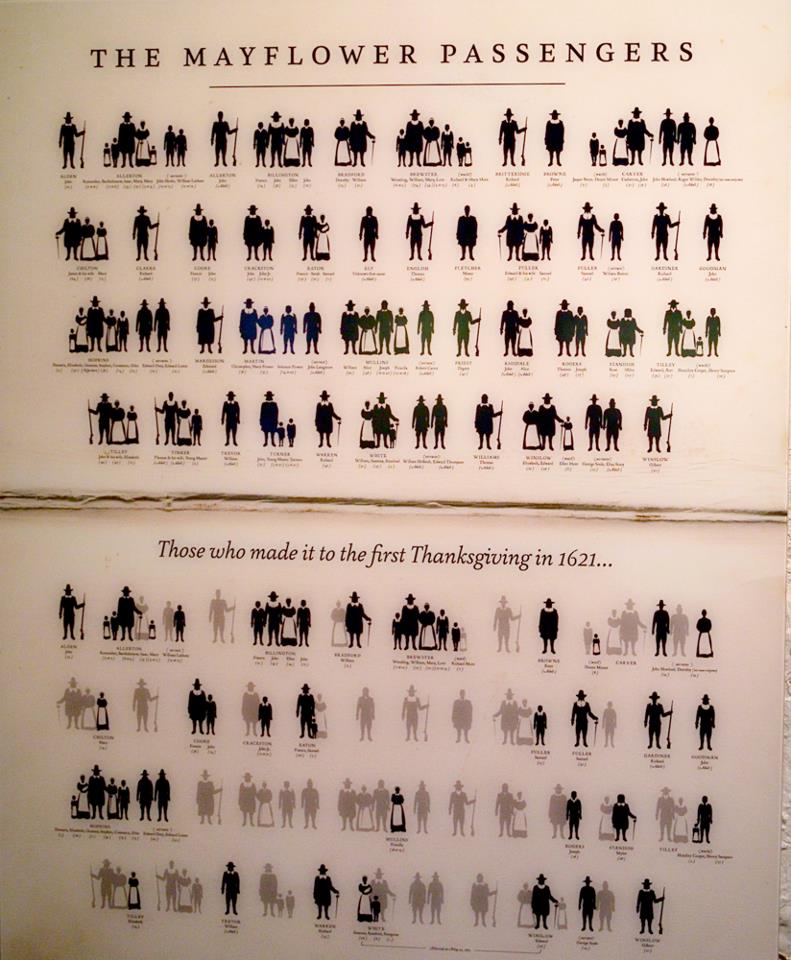
Less than half the original pilgrims made it to the the first Thanksgiving

Here’s an article from The Stream about the second Thanksgiving, by Dante Witt. I like this article because it tells us so much about the character of the United States of America. Why are we so conservative about economics?

She briefly retells the story of how the pilgrims were helped by Squanto, which I blogged about in my previous post, then she talks about the troubles they had next.

Excerpt:

Although Squanto’s farming techniques worked better than their old ones, the pilgrims still could not produce enough food. Was it bad luck? Bad soil? No. The Mayflower pilgrims were part of a joint stock company which stipulated that the pilgrims would pool their resources, and receive a share of the profit.

The strategy turned out to be deeply misguided, working about as well as various communist economic schemes hundreds of years later. The sad state of the colony after two years of communism, wrote William Bradford, “may well evidence the vanity of that conceit of Plato’s and the other ancients applauded by some of later times; that the taking away of property and the bringing of community into a commonwealth would make them happy and flourishing; as if they were wiser than God” (p. 121).

So the pilgrims amended their contract so that each family was now responsible for its own provision. The difference was stark. Bradford explained:

This had good success, for it made all hands very industrious, so that more corn was planted than could have been by any other means the Governor could use, and saved him a great deal of trouble, and gave far better content. The women now went willingly into the field, and took their little ones with them to set corn; which before would allege weakness and inability; whom to have compelled would have been thought great tyranny and oppression.

In fact, it’s estimated the colonists planted about six times the crops they would have planted otherwise.

That shows where Americans get their views of economics, but what about the praying and the gratitude?

More:

With new farming techniques and an amended government, the pilgrims did all they humanly could to ward off starvation. But they could not control the weather. A drought settled on the colony and threatened to kill the corn before the harvest. Recognizing with the Psalmist that “except the Lord build the house, they labor in vain that build it,” the colonists turned to God. According to Bradford, they “set apart a solemn day of humiliation to seek the Lord by humble & fervent prayer, in this great distress.” What was the outcome?

And he was pleased to give them a gracious & speedy answer, both to their own & the Indians admiration, that lived amongst them. For all the morning, and greatest part of the day, it was clear weather & very hot, and not a cloud or any sign of rain to be seen, yet toward evening it began to overcast, and shortly after to rain, with such sweet and gentle showers, as gave them cause of rejoicing, & blessing God. It came, without either wind, or thunder, or any violence, and by degrees in that abundance, as that the earth was thoroughly wet and soaked therewith. Which did so apparently revive & quicken the decayed corn & other fruits, as was wonderful to see, and made the Indians astonished to behold. (p. 131)

Seeing the speedy results of the Puritans’ prayers, an Indian named Hobanak said, “Now I see that the Englishman’s God is a good God, for he hath heard you, and sent you rain, and that without storms and tempests and thunder, which usually we have with our rain, which breaks down our corn, but yours stands whole and good still; surely your God is a good God.” (pp. 64-5)

Then William Bradford again proclaimed a day of Thanksgiving to God, the forerunner of the American tradition of Thanksgiving.

So, this story explains why the United States has this character that values the free enterprise system, hard work, individual achievement, prayer, and gratitude. These are the values that make us American, that made us into such a great nation.

Wayne Grudem debates Richard Glover on the Bible, poverty and foreign aid

Two horses fight it out, may the best horse win!

A great episode of the Unbelievable podcast. This is a great debate. I really enjoyed it. All three speakers were excellent putting forward their points. It’s nice to hear an American voice, a British voice and an Australian voice debating an important issue. HIGHLY RECOMMENDED.

Details:

Wayne Grudem is a theologian known for his conservative approach to both doctrine and economics. His new book “The Poverty of Nations: A Sustainable Solution” (co-authored with economist Barry Asmus) makes the case that pouring aid into developing countries is a failed strategy. Grudem debates whether the Bible supports free market, capitalist economics with Australian economist and theologian Richard Glover who wrote a critique of the book for the Australian Bible Society.

 The MP3 file is here.

Summary:

Grudem:

  • The Bible speaks to all of life, including economics, stewardship, government
  • The study of economics helps us to understand how to take care of the poor
  • My job is to apply the teachings of the Bible to all of life

Brierley:

  • What’s your thesis in the book?

Grudem:

  • A good system is one where the poor have the opportunity to earn and save from their labor
  • Book is a response to a Kenyan couple Grudem met at a London conference on business and Christianity
  • Book is not concerned with how individuals and groups can do charity to help the poor
  • Our church already does that and we support individuals and groups doing charity
  • The book is concerned with how should nations be transformed in order to grow economically
  • What should the laws, policies and cultural beliefs of a nation be in order for it to not be poor?
  • The book lists factors that have moved nations from poverty to prosperity in different times and places
  • The thesis of the book is this: government should set their people free to be able to produce more
  • We advocate freedom in economics: freedom to work, freedom to save, freedom to start businesses
  • We believe that this free enterprise view is consistent with the Bible in a number of places
  • E.g. – private property is good for prosperity (thou shall not steal) but forbidden by communism

Brierley:

  • What about the church sharing in communities in Acts 2 and Acts 4?

Grudem:

  • That is not redistribution of wealth among individuals and businesses by a secular government
  • Those passages showed that there was voluntary sharing among Christians, which is not communism

Brierley:

  • What’s wrong with Grudem’s book?

Glover:

  • The book emphasizes the Bible and the goal is to help the poor in poor countries
  • Criticism 1: the book doesn’t engage with non-free-market perspectives on economics
  • Criticism 2: the book doesn’t survey all that the Bible says about economics

Brierly:

  • For 1) what is one of the views that is not considered?

Glover:

  • Jeffrey Sachs says that nations need a leg up before they can grow economically
  • Ha-Joon Chang says that free enterprise was not how the wealthy nations became wealthy

Grudem:

  • We do engage with other points of view, especially Jeffrey Sachs in the book
  • The trouble with leftist views on economic development is that it does not work in practice
  • NO COUNTRY has even been lifted out of poverty by foreign aid
  • He says we don’t cite enough from the wisdom literature: we have 64 citations in the index
  • He says we don’t cite enough from the gospels: we have 42 citations in the index
  • He says we don’t cite enough from the epistles: we cite 22 of 27 epistles in the index
  • Some economists won’t criticize cultural and moral values that hurt prosperity
  • As Christians, we think that moral and cultural values are part of the problem that needs solving

Brierley:

  • What about foreign aid?

Grudem:

  • Foreign aid doesn’t help: a lot of the money goes into government and rulers can be corrupt
  • Instead of encouraging people to start businesses, it tells people to go into government to get aid money
  • Economists (lists 3) are saying that foreign aid entrenches corrupt government in power, does no good

Brierley:

  • If it’s not working, should we keep doing it?

Glover:

  • When there is an immediate need, we should do it, even if it is not a long-term solution: we need both

Brierley:

  • Should we stop foreign aid completely?

Grudem:

  • Voluntary charitable giving from individuals and churches to help poor countries is good
  • Me and my co-author are both active on our church board that helps poor countries with urgent needs
  • Food and doctors are urgent needs, and we should help, but it doesn’t lift countries out of poverty
  • We need a long-term solution that helps poor countries produce their own food and doctors
  • We are criticizing 1) government to government aid and 2) IMF/World bank to government aid
  • We have had pushback because 500,000 people make a living from this foreign aid industry
  • No country has ever been lifted out of poverty into sustainable prosperity
  • That’s the definition of insanity: continuing to do the same thing that has never worked

Brierley:

  • Does the Bible support free enterprise as a way of creating sustainable prosperity?

Glover:

  • When I said the Bible was absent from his book, absent was a bad choice of words
  • But the hundreds of references he listed were not dealth with *in depth*
  • In the Scriptures, God is the one who provides (e.g. – in Ephesians, Sermon on the Mount)
  • The Bible is less focused on his people making money, and more focus on sharing basics, like food
  • Secular governments should just take it from people who have food and give it to hungry people
  • In 2 Cor 8-9, Paul talks about voluntary sharing so everyone will be equal

Brierley:

  • Does 2 Cor 8-9 undermine the free enterprise system you champion in the book?

Grudem:

  • The sharing in the Bible solves cases of urgent need, it does not lift countries from poverty to sustainable prosperity
  • Some older translations say “equality” in 2 Cor 8:13-14, but newer translations (e.g. – ESV) say “fairness”
  • The Greek word is translated as “fairly” the only other place it appears in the NT (Col 4:1), in every translation
  • God uses the means of human work and productivity to provide (daily bread is baked, doesn’t just fall from Heaven)
  • In general, there’s no provision in Scripture for a person to be dependent on donations for their entire lives
  • God promises Israel fields and mountains to tend and mine, but prosperity is from work, not depending on others

Brierley:

  • Does the Bible support this focus on work?

Grudem:

  • Working is highly praised in Scripture, (lists Bible passages that favor work over dependency)
  • Countries that were exposed to this notion of work and productivity have been more prosperous

Glover:

  • Jeffrey Sachs and other development economists don’t say you can be prosperous through dependence
  • They say that it is a necessary part of leading to nations out of poverty into poverty

Grudem:

  • It’s never worked. What nation has become prosperous through foreign aid?

Glover:

  • There are lots of nations, especially in Africa, where foreign aid has helped lift them out of poverty

Grudem:

  • Name one country in Africa where foreign aud has lifted them out of poverty into sustainable prosperity

Glover:

  • I can’t think of one right now.

Grudem:

  • Our book contains a map of Africa and we looked at every nation’s per capita income
  • No nation has been able to rise out of poverty through dependence on foreign aid
  • The only close one is Botswana, but they have abundant freedoms, Christian morals, less corrupt government
  • So Botswana is the best case and they became prosperous through becoming productive, not foreign aid

Brierley:

  • Is he right to say that charity is a short-term solution, but that it’s not good long-term for prosperity?

Glover:

  • Yes, and work is a very important focus in the Scriptures as he says.
  • But since the Fall work has been much harder, and may not have the outcomes that we would like

Grudem:

  • I also believe in emergency aid for when catastrophies happen, like floods and famines
  • But dependence on foreign aid enriches corrupt rulers and does not create the productivity that leads to sustained prosperity

Brierley:

  • Can foreign aid be used to give poor nations a leg up on becoming prosperous?

Grudem:

  • Dambisa Moyo, Oxford-educated economist from Zambia, says stop the aid, it’s doing more harm than good
  • Jeffrey Sachs’ view is that foreign aid hasn’t worked yet, but just keep trying a bit more
  • What works: limited government, rule of law, fair courts, documented property rights, low taxes, stable currency
  • People are creative and want to work, we just have to get government out of the way and let people work, earn and save

Brierley:

  • Is this free enterprise system supported by the Bible?

Glover:

  • The wealthy nations of the world did not become wealthy through productive work and free enterprise policies
  • Ha-Joon Chang: free enterprise policies have never brought a country from poverty to wealth
  • E.g. – wealth is created through tariffs (not by innovating and by economic freedom?)

Grudem:

  • I’ve read Ha-Joon Chang’s book, and his examples are very selective and limited
  • Index of Economic Freedom: the freest countries are the most prosperous, the least free countries are the most poor
  • When you look at macro data, instead of very selective examples, the free enterprise system is best for prosperity

Glover:

  • The book doesn’t do enough to engage with leftist economists (he doesn’t say which ones)
  • Just because nations who are free are rich, doesn’t mean freedom causes productivity
  • There are parts of the Bible that doesn’t support the free enterprise system (he names none)

Grudem:

  • The Bible is focused on work not dependency, and charity not government redistribution
  • The best way to help the poor in other countries is by encouraging work and productivity

How Christianity shaped Margaret Thatcher’s conservative politics

Margaret Thatcher and Ronald Reagan

This is from the Daily Signal, and is really recommended for Christians who are tempted by the policies of the left.

Check it:

Few people are aware that former British Prime Minister Margaret Thatcher, one of the foremost politicians of the 20th century, was a lay Methodist preacher before she entered politics.

There has been very little examination into the role that her Christian faith played in her politics.

“Economics is the method; the object is to change the soul,” Thatcher once declared, revealing that the way she conceived her free-market ideology was as much about transforming values as about improving Britain’s ailing GDP.

More profoundly, there was a strong religious basis to Thatcher’s politics—one that stemmed from her strict Methodist upbringing and, more specifically, the chief influence in her life, her father, who was a greengrocer, councilor, and Wesleyan lay preacher.

In sourcing the origins of her free-market ideology, it is not in the pages of Frederick von Hayek’s “Road to Serfdom” or Milton Friedman’s monetarist theory where we find the answer, but in the sermon notes of her father, Alf Roberts.

Contained within his sermons, one finds the theological basis of what would later become the cornerstones of Thatcherism: an individualistic interpretation of the Bible, a nod to the spiritual dangers of avarice, praise of the Protestant work ethic, virtues of thrift and self-reliance, and finally, a divine justification for individual liberty and the free market.

In short, Thatcherism always owed more to Methodism than to Monetarism.

Thatcher herself was a preacher before she formally entered politics while a student at Oxford University. Even though she later transferred this missionary energy from the pulpit to the podium, her religious values remained an underlying core.

Indeed, on becoming leader of the Conservative Party in 1975, Thatcher (much like Ronald Reagan) saw it as her chief mission to completely undermine the moral credibility of socialism and communism and reconnect the broken link between Protestant and capitalist values in Britain.

Preaching from the pulpit on several occasions, Thatcher unashamedly asserted the Biblical case for the sovereignty of individual liberty and the “invisible hand.”

“Do not be tempted to identify virtue with collectivism,” she preached from the pulpit of St. Lawrence Jewry Church in London in 1978. “I wonder whether the State services would have done as much for the man who fell among the thieves as the Good Samaritan did for him.” According to Thatcher, “[i]t was to individuals that the Ten Commandments were addressed.” She continued, “We are called on to repent our own sins, not each others’.”

“What mattered,” in her words, “was Man’s relationship to God.”

Thatcher’s interpretation was that as Christianity was a call to men individually, so it should follow that political choices reside with the citizen rather than the state.

“The Road to Serfdom” and “Free to Choose” are two of my favorite economics books, and very suitable for laymen. If an understanding of the free enterprise system isn’t yet part of your Christian worldview, it might be a good idea to get studying! After all, Christians are not concerned with policies that make us feel good regarding the poor. We are concerned with policies that actually do good for the poor. There is a big difference.