
Tag Archives: Food Stamp President

What is the greatest achievement of the Obama administration?

Newsbusters reports on the greatest accomplishment of the Obama administration.

Excerpt: (links removed)

It is clear that a huge amount of growth in SNAP happened under Obama’s watch.

Increases in the size of SNAP were “unprecedented” since 2008, according to a report by the Manhattan Institute, the conservative, New York City-based think tank. The authors of the report, Diana Furchtgott-Roth, Senior Fellow, and Claire Rogers, Research Assistant, attributed this expansion to a combination of “the difficult job market” and an “expansion of benefits” starting in October 2008.

Statistics released by USDA also showed the huge expansion of food stamps under Obama. In 2013, 20 percent of American households were enrolled in SNAP. Enrollment had increased from 32.2 million individuals in January 2009, to at least 46 million individuals during the last 35 straight months for available data. This upsurge represented a jump of more than 42 percent.

Meanwhile, spending on SNAP benefits rose by nearly 120 percent, from $34.6 billion to $76.1 billion, between 2008 and 2013. The increase in spending far outpaced enrollment, and could be attributed to greater benefits handed out per person. “SNAP began to pay more generous benefits to people who enrolled” between 2007 and 2011, according to an analysis published on The New York Times’ Economix blog Aug. 29, 2011.

Economist Peter Ferrara agreed with labeling Obama the “food stamp President,” calling out the administration’s “anti-growth, economic policies, which are precisely crippling the poor and the middle class” in a Forbes article Dec. 31, 2013.

While these increases were partly attributed to Obama’s economic policies, they could also be linked to lax enrollment policies implemented by the president. These policies included waivers for healthy individuals with no dependents and who were not actively seeking work.

“The food-stamp work waiver is part of a larger agenda. Poverty advocates have long sought to convert food stamps into a no-strings-attached entitlement,” Heather MacDonald, Thomas W. Smith Fellow at the Manhattan Institute, wrote in a New York Post op-ed on May 15, 2014.

Two Heritage Foundation fellows said that while part of the growth in SNAP could be attributed to the country’s poor economic conditions, Obama has also increased the size of the program through his budget proposal.

“Part of that growth is due to the recession, but under Obama’s proposed budget, food stamp spending will not return to pre-recession levels when the economy recovers. Instead, it will remain well above historic norms for the foreseeable future,” Robert Rector, Senior Research Fellow, and Katherine Bradley, Research Fellow, at Heritage wrote.

Of course, if you’re a Democrat, this is a feature, not a bug. They like Americans to be dependent on government, because then more of them vote for bigger government – and that means Democrats get to raise taxes and spend even more money they didn’t earn. That’s good news, but it gets even better – because then they give speeches about how generous they are! With your money.
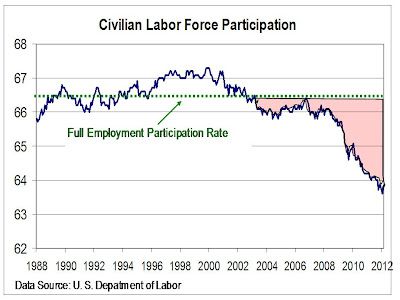
U.S. GDP growth slows to 1.5% in second quarter

Remember, Democrats took the House and Senate in 2007
Democrats took the House and Senate in January 2007

From CBS Marketwatch.

Excerpt:

The U.S. economy slowed sharply in the second quarter, growing just 1.5% as consumers slashed spending and businesses grew more cautious about hiring and investing, underscoring that an already wobbly recovery is losing even more steam.

In the U.S., though, new government figures showed that growth in gross domestic product, the broadest measure of goods and services churned out by the economy, slowed sharply from the first quarter’s 2% annual rate and the fourth quarter’s 4.1%.

That downward slope in growth is worrisome to economists. As the economy loses steam, a pullback can become self-reinforcing as businesses and consumers worry about the future.

The slowing economy, along with government data showing the recovery has been weaker than thought, raises the specter that a sudden shock—such as an escalation of Europe’s crisis, or next year’s looming tax increases and spending cuts—could shove the U.S. back into recession.

[…]One of the biggest obstacles to recovery is a dearth of consumer spending, which accounts for two-thirds of demand in the economy.

Spending rose 1.5% in the second quarter, lower than 2.4% in the first, reflecting weaker demand for cars and big-ticket items. A big reason is the stagnant labor market. Employers added fewer jobs in the second quarter than they have since the labor market began recovering in 2010.

“The economy is kind of being strangled,” said Bob Baur, chief global economist at Principal Global Investors. “We underestimated how much uncertainty may have contributed to a lack of desire to expand and hire.” Mr. Baur expects 2% to 2.5% growth in the second half of the year but has “grown more cautious,” he said.

[…]Businesses, meanwhile, appear to have grown more cautious about spending. The new GDP report showed that nonresidential fixed investment expanded 5.3% in the second quarter, less than the 7.5% in the first, though spending on equipment and software was healthy. Joseph Carson, an economist at Alliance Bernstein, said: “Uncertainty surrounding U.S. tax laws has created confusion and concern among companies, which has probably depressed investment spending.”

Remember, the Obama administration thinks that higher government dependency “stimulates” the economy:

House Minority Whip Steny Hoyer (D-Md.) said Tuesday that food stamps and unemployment insurance are the two “most stimulative” things you can do for the economy.

During a pen and pad briefing with reporters on Capitol Hill, Hoyer was asked if any Democrats are “reconsidering the wisdom” of letting the Bush tax cuts expire at year’s end for the top income earners given the still struggling U.S. economy.

“I haven’t talked to any who are of that mind,” said Hoyer. “If you talk to economists, they will tell you there are two things that are the most stimulative that you can do — one’s unemployment insurance, the other’s food stamps, okay?”

Of course, all that spending on unemployment and food stamps costs money, so they just borrowed that money from future generations of Americans – your children. The national debt is nearly $16 trillion, but they just keep borrowing. They don’t know what else to do, because they have no idea how jobs are created in the first place.

Republicans think that the best way to stimulate the economy is to create jobs by encouraging businesses to risk their capital in business ventures. But the Republicans aren’t in charge, so we are following the Democrat playbook. Many companies have responded to the Democrat plan to punish “the rich” by expanding their businesses in other countries that are less hostile to job creators. When you introduce burdensome regulations (EPA, Obamacare, Dodd-Frank, etc.) and high corporate taxes (35% – highest in the world!), that means that businesses can hire fewer people at home, and they are forced to expand elsewhere.

Democrat Steny Hoyer: unemployment checks and food stamps stimulate the economy

Why are we in a recession? Maybe it’s because the people running the country believe that unemployment checks and welfare are better than earned paychecks for “stimulating” the economy.

Here’s CNS News to explain what Democrats are trying to achieve:

House Minority Whip Steny Hoyer (D-Md.) said Tuesday that food stamps and unemployment insurance are the two “most stimulative” things you can do for the economy.

During a pen and pad briefing with reporters on Capitol Hill, Hoyer was asked if any Democrats are “reconsidering the wisdom” of letting the Bush tax cuts expire at year’s end for the top income earners given the still struggling U.S. economy.

“I haven’t talked to any who are of that mind,” said Hoyer. “If you talk to economists, they will tell you there are two things that are the most stimulative that you can do — one’s unemployment insurance, the other’s food stamps, okay?”

“Why is that?” he said.  “Because those folks who receive those resources must spend them. And they’ll spend them almost upon receipt. Most economists with whom I talk believe that those with significant discretionary income, that that’s not the case.”

Unless action is taken by Congress, the Bush tax cuts will expire on Jan. 1, 2013.  Originally enacted in 2001 and 2003, President Barack Obama and Congress renewed the cuts for all income-brackets for two years in 2010.

[…]The Congressional Budget Office (CBO has projected that if the Bush tax cuts are allowed to expire at the end of 2012, coupled with the defense cut sequester, it will lead to a 1.3 percent contraction in GDP after Jan. 1, 2013.

If the Bush tax cuts are allowed to expire, it is expected that 710,000 people will lose their jobs. This will achieve the Democrats goal of “stimulating the economy” with higher unemployment and more food stamps. This continues the Democrat plan of increasing the record number of people on welfare and food stamps. They will pay for this “stimulus” by adding more debt to the $8 trillion they have already run up since January 2007. The debt will be paid by young people and children. The real plan behind making millions of people dependent on government is, of course, to be able to buy their votes and to control them. Democrats are the anti-freedom party. You have too much freedom when you have a job. It leads to “inequality”. If everyone received their daily bread from the government, and rode on mass transit to labor camps instead of driving in cars, and slept in identical apartments with identical furniture and identical television programs to watch, then the world would be more equal. And equality is what Democrats want most.

So what is the Republican alternative plan for the economy? To let job creating businesses keep their own money and hire people to do work. Republicans want to stop taxing and regulating job creating businesses so that people can be put back to work, and have the confidence to spend money. That’s how you stimulate the economy – we know this because it has worked for Reagan and Bush before. Obama’s approach has never worked. The Democrats have been running the show since January 2007. And that’s why we are down 5 million jobs since Steny Hoyer became the House Whip in January of 2007. This is not going to end until the Democrats are voted out.