Tag Archives: Feminism

The downside of the soul mate / fairy tale view of relationships


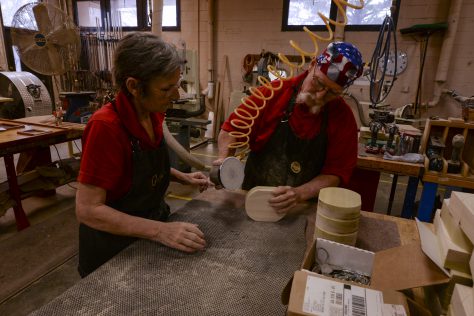
Husband and wife doing some woodworking together

(Image: Husband and wife doing some woodworking together)

Astonishing article from the leftist Huffington Post, of all places. (links removed)

Excerpt:

As millennial women, we were groomed for a white knight fantasy. From childhood favorites such as Snow White to adult rom-com staples such as How to Lose a Guy in Ten Days or Sleepless in Seattle, the media perpetuates a romantic storyline in which compatibility and lasting romance is something effortless, built on chance, sustained by good looks, fun dates and electric sexual chemistry. These story lines shape our expectations for romantic happiness. It is not enough to find someone with whom we are mostly compatible, who would make a good parent, with whom we could learn and grow wrinkly; now, we expect a perfect fit and an easy, instantaneous “connection.” In short, we want a soul mate. But it is this desire for a soul mate that is actually the undoing of our happy ending.

A “soul mate” is defined as one who is ideally suited to us, perfectly completes us, one with whom the relationship feels easy and natural. With them, a relationship is just “meant to be”… A survey of young adults conducted by the National Marriage Project found that while 84% of young adults report finding a marriage partner “very important,” a full 94% of young adults say they would like to marry a soul mate, and 73% of people ages 18 – 29 believe that there is a soul mate out there for them.

Wow. That doesn’t sound like a good approach to me. My approach has always been to pick the girl who was most willing to learn new things. And then to explain to her my vision for marriage and see if I could get her to work independently on that plan before I married her. I don’t favor this soul mate approach at all.

Does the “soul mate” approach work?

We heard that those who get married later and possess a college degree have fewer divorces and more stable marriages. So we spend our twenties trying to find ourselves through travel, accumulating degrees and building a career. Marriage will be the capstone of our achievements, and nothing less than tying the knot with a soul mate will suffice. But the tragic irony is that soul mate thinking makes us increasingly likely to divorce. A study of 1,400 married men and women shows that people who hold soul mate orientations are 150% more likely to end up divorced than those who do not.

The widespread cultural belief in “soul mate ideology” undermines our chances at happiness because it makes us passive receivers of idyllic romantic expectations. Further, it fosters self-centeredness; one rarely longs to be a soul mate for someone else, which would require effort. For this reason, believing in soul mates is one of the most dis-empowering belief systems we can adopt. As millennials, we pride ourselves on actively pursuing the life we want to live, rather than simply accepting whatever hand we are dealt. We are innovative, passionate, proactive and not afraid to take risks. Yet, there is a disconnect when it comes to our desire for lasting love. Though there are prospects around us, we forgo taking the concrete steps needed to build happy compatible relationships because we do not “feel a spark.” We are passively waiting on the sidelines for love to “happen,” and then wonder why it is so difficult.

I’ve always felt that the soul mate approach was like the evil villain in opposition to my noble plan-based approach. My approach is to pick a woman who wants to learn and work hard. Explain your marriage plan to her, and how your marriage plan serves God. My marriage plan accomplishes four goals, for example. 1) Influence the university with apologetics, 2) influence the church with apologetics, 3) provide a model of a good marriage to people in the community, including co-workers, college students and neighbors, and 4) raise effective, influential children who will have an impact for God. Now if you are a Christian woman raised in a church that affirms the soul mate / fairy tale view of marriage with this “God has a wonderful plan for your life” stuff, then a specific, non-emotional plan from a man is the last thing you want to hear about.

Their solution is for people to work at compatibility:

Compatibility is something co-created through intentionality and conscious choice. It involves mutual sacrifice, effort and commitment for the sake of the other’s benefit. A recent study found that of the couples who demonstrate above average daily generosity, 50% of them report being “very happy” in marriage; among the low generosity scores, only 14% can say the same. As studies indicate, selflessness is required to create mutual compatibility. It is not instantaneous, nor does it usually begin with true love’s kiss.

We both know from experience that there are some you naturally connect with and others you do not. This is not a call towards forced attraction or companionship. But, our romantic futures should not be placed in the hands of blind chance. It is time we roll up our sleeves and shift our expectations from unattainable perfection to realistic romance, one that accounts for imperfection. We must understand that work in a relationship is a necessary key to success, rather than an indication of imminent failure. We will be letting go of a tired plot line that sets us up for disappointment and embracing an active role in our own unique story.

How refreshing to know that we do not have to be perfect to be lovable, and that our romantic success is not solely dependent on finding the “right” fit, but instead built through cultivating daily moments of generosity, sacrifice and conscious coupling.

So in my case, I am looking for a woman who listens to the plan, develops the skills for the plan and then independently engages in activities to achieve the goals of the plan. In the past, I have had women listen to the plan carefully, including my motivations and experiences that caused me to choose this plan. And they have been willing to read books, listen to lectures, watch debates, to gain the skills needed to make a difference. And they have even engaged independently with activities like public speaking, teaching classes, and so forth. But none of the women who had done that accepted the soul mate / fairy tale view of marriage. They all wanted to hear a good plan, learn useful skills and then get to work. Big difference.

54-year-old feminist angry at dating agency for not finding her a rich husband

Kate Mulvey at age 53 expects that rich men will want to marry her

A little while ago, I blogged about a 47-year-old mother of three who sued a dating agency for failing to find her a rich husband. That was pretty bad, but I found something even worse. A 54-year-old woman who spend all her savings on a dating agency. She expected them to find her loads of rich men who want to marry her – despite her never having invested anything in them.

The UK Telegraph reports:

Glass of wine in hand, the man sitting opposite me in the restaurant was in full flow. While he was droning on about his work commitments, I zoned in and out trying to work out how on earth I was going to get to through this first date. I had expected to meet an eligible bachelor, but he had turned out to be so boring that he made me want to stick asparagus up my nostrils.

This memory came flooding back when I read about, Tereza Burki, a City financier who, last week, successfully sued a Knightsbridge-based elite matchmaking service, for the return of her £12,600 annual fee after they failed to find her the man of her dreams.

A couple of years ago, I too joined an expensive matchmaking agency. I had just come out of a seven year relationship, and was on the wrong side of 50.

I soon tired of online dating and receiving messages from over weight baldies who peppered their emails with childish emojis. I hankered to find Mr Right-for-me, a man who was suitably educated and a successful professional.

And so this is how I found myself, throwing money (my entire savings to be precise) to an upmarket matchmaking agency in central London. The agency claimed to filter out the undesirables, the mediocre and give clients the personal touch, so I handed over the hefty sum of £6,000.

As I waited to be matched with someone from their ‘extensive database’, I idly imagined my handsome date, cashmere polo neck, a bit academic and kind. We’d eat steak tartare and swap notes on our latest clever box-set find and favourite novels.

The first indication that all was not as I had expected came when I met personal matchmaker at a Park Lane hotel for ‘tea and an interview’…  told her how I loved folk music, my favourite film was The Deer Hunter, and enjoyed weekends in the countryside.

[…]A few days later she emailed me with the details of W, “a successful entrepreneur who had travelled extensively and also liked folk music”. When I met him at a pub in Richmond, I was shocked. I was expecting a cultured and dynamic man, instead I got a man in a pair of jeans, a moth eaten jumper and the table manners of a modern day Baldrick.

And therein lies the rub. These agencies trade on their exclusivity, yet the men I met were far from the international super elite they promised.

Isn’t this terrible? Clearly the dating agency is to blame. It should be easy for a penniless, feminist hedonist to find rich men who want to spend all their money taking care of a 54-year-old woman who had literally nothing to do with the process by which they earned all that money.

One thing we know about her for sure is that she is impractical. She is 54 years old and has just spent her last savings on a dating agency. From her other comments about the type of men she is looking for, we can infer that she wasted a lot of money on travel, fine dining, and other frivolous experiences designed to produce feelings of sophistication without any practical plan for preparing for the financial demands of old age. What’s the point of having fun “in the moment” if you don’t have any plan to allow sustainable recreation in the future, when you’re too old to work?

I spent some time reading articles by Kate Mulvey, and here is what I was able to determine:

  • she has no useful degrees – she paid for useless degrees in Italian and French, instead of studying something useful, like computer science or nursing or petroleum engineering. Her “writing” is all about fashion, dating and “lifestyles”
  • her opinion on children: “uppity children take your time, emotions and energy” – she sees children as a detriment to her highest priority (her career). She says “I, however, have lived a life of unfettered freedom to take on projects, write books and travel”
  • she had loads of entertaining men “beating a path to [her] door” when she was younger
  • she spend thousands of pounds on plastic surgery
  • she blames her lack of marriage success on her being “brainier” than men
  • she turned down men who wanted to marry her, as late as age 33
  • her book is called “Accidental Singleton” because she thinks that her approach to life – anti-marriage hedonism – has “accidentally” left her single and penniless at age 54 (as if it wasn’t her fault!)

Although she talks a lot about being intelligent, it seems to me that an intelligent woman would have practical degrees, savings and an awareness of what men actually want from a woman – and WHEN they want it. Men want a woman to support them in their most difficult period, just after they graduate and hit the job market. Starting out in a career is hard because the man doesn’t have savings or a resume or references. The support of a young, attractive, virtuous woman means everything during those difficult years. This is when a wife has the most impact on her husband’s ability to earn and save, on his mental health, on his physical health, etc.

Somehow, this narcissist thinks that she can just show up in a man’s life, after he has done all his earning alone, and grab hold of the things that she never helped build. She wasted all her youth and beauty chasing experiences with attractive bad boys, but she thinks that it’s reasonable for a man to invest all his wealth in her. A woman has value to a man at the time when he is attempting to do difficult things, but lacks support.

What exactly is it that a woman like Kate has to offer a man, given her life choices? Does anyone think that this woman has marriage-character? Does anyone think that her life of selfishness and hedonism has prepared her to be a good wife? What kind of conversation about moral obligations could you have with someone who has only ever done what felt good to her in the moment? Has her string of failed relationships with hot bad boys prepared her to be trusting and unselfish? How about to be faithful? Or even to be content? What is it that she thinks that she is offering that would justify the heavy investment that she is asking for, especially in an age of no-fault-divorce and anti-male divorce courts?

I think people really underestimate how much goes into making a good wife. The character she has to develop. The skills that she has to develop. The way she treats her husband, which often comes from carefully cultivating virtues like chastity and sobriety. Her worldview, which affects whether she has practical abilities like love, forgiveness and self-control. Her ability to be good with money. Her ability to nurture others and make social connections consistent with marriage and homemaking. Her ability to bear children, and then nurture them during the critical first 5 years after – not to mention homeschooling, which is increasingly valuable in a time when underperforming government-run schools seek to indoctrinate, rather than educate, children.

Nothing about this woman makes me think that she has any marriage-related character traits or abilities. Any idiot can spend someone else’s money on their own feelings, fun and thrills. But it takes a carefully crafted woman to really do the work of a wife. Marriage isn’t there so that women can be happy. Marriage is an enterprise. Being selfish – doing what is easy, and what feels good moment by moment – doesn’t prepare a woman for the enterprise.

Gay marriage debate: Michael Brown debates Eric Smaw on same-sex marriage

About the debate:

On April 21, 2011 at 7:30pm at UCF’s Health and Public Affairs Building (Room 119), Rollins College professor, Dr. Eric Smaw and author and seminary professor Dr. Michael L. Brown will debate the question “Should same sex marriage be legalized in America?” The event will be held at 4000 Central Florida Blvd and is open to the public. After the formal portion of the debate, Brown and Smaw will field questions from the audience.

About the speakers:

Dr. Smaw will be responding in the affirmative. He earned his Ph.D. in Philosophy of Law from the University of Kentucky in 2005. His areas of expertise are philosophy of law, international law, human rights, ethics, and modern philosophy. He has published articles on human rights, terrorism, and cosmopolitanism. His most recent publication is “Swaying in the Balance: Civil Liberties, National Security, and Justice in Times of Emergency”.

Dr. Brown will be responding in the negative. He earned his Ph.D. in Near Eastern Languages and Literatures from New York University and is a nationally known evangelical lecturer and radio host. He is the author of numerous scholarly articles and twenty books, including the recently published study “A Queer Thing Happened to America”, which is quickly being recognized as the definitive work on the history and effects of gay activism on American culture.

Here are the first two parts:

Part 1 of 10:

Part 2 of 10:

The rest of the segments are here.

Summaries of the opening speeches

Summary of Dr. Brown’s opening speech:

There is no compelling reasons by the state should change the definition of marriage

The reason the state conveys benefits for marriage is because marriage is beneficial for the state

Traditional marriage is recognized by the state for several reasons:
– it domesticates men
– it protects women
– it provides a stable, nurturing environment for children

Marriage has three public purposes:
– to bind men and women together for RESPONSIBLE procreation
– to get the benefit
– to provide children with two parents who are bonded to them biologically
– to create the next generation of people to keep the society going

Normally, opposite sex couples create children

Homosexual couples can NEVER create children together

Men and women are differences that are complementary

Monogamy is the norm for opposite sex couples.

For gay men, open relationships / cheating is the norm.
This is because women have a tempering effect on sexuality.

There is no evidence that recognizing same-sex civil unions and marriages have changed this trend.

Same-sex marriage guarantees that children will either not have a father or a mother
So which of the sexes is dispensable when raising children?

For example, consider Dawn Stefanowicz, who grew up with a gay father and no mother
She never got a chance to see a man model love and protect a women within a marriage
That makes an enormous difference in a woman’s life – in the way she relates to men

Even with scientific advancements, every baby has a mother and a father

If we change the definition of marriage so that it is based on consent, then why limit it to just two people
If marriage is not the union of male and female, then why have only TWO people
In Canada, you have civil liberties lawyers arguing for for polygamy
In the United States, Professor David Epstein was in a consensual relationship with his daughter
Should incestuous relationships also be celebrated as marriage? Why not?
Should polyamorous relationships also be celebrated as marriage? Why not?

Sexual orientation is not the same as race
Men are women are different in significant ways, but different races are not
You need separate bathrooms for men and women, but not for people of different races

Summary of Dr. Smaw’s opening speech: (He ended his speech after only 10 minutes)

You can redefine marriage so that it no longer based on the public purposes he mentioned (controlling procreation, fusing complementary male and female natures, providing children with mothers and fathers who are biologically linked to them, providing children with a comparatively stable development environment that offers comparatively less instability, promiscuity and domestic violence rates compared to cohabitation, etc.), but is instead based on consent and feelings, and that redefinition of marriage won’t open marriage up to polygamy, polyamory, etc.

If you like feminism, then you should allow same-sex marriage

If you like abortion rights, then you should allow same-sex marriage

Homosexuals participate in society by working at various jobs, so they are participating in society

Homosexuals should be given the same tax breaks as married people because they work at various jobs for money

Working at a job for money achieves the same public purpose as procreating and staying together to raise children in a stable environment

You can listen to the rest for the rebuttals, and cross-examination. Oh yes – there was cross-examination! It starts two thirds of the way through Part 5, if you want to jump to it. And sparks were flying! There is also Q&A from the audience of students.

This is such a great debate – I love to hear two passionate guys disagreeing about something. I love to hear both sides of the issues. There is always something to learn by listening to the other side. It makes me more effective and more tolerant when I stand up to defend my side of the argument.

By the way, my own secular case against same-sex marriage is right here, if you want to see how I would debate this issue. Also check out the recent studies on the effects of gay parenting on children.