Tag Archives: Evidence

Why doesn’t God make his existence more obvious to people?

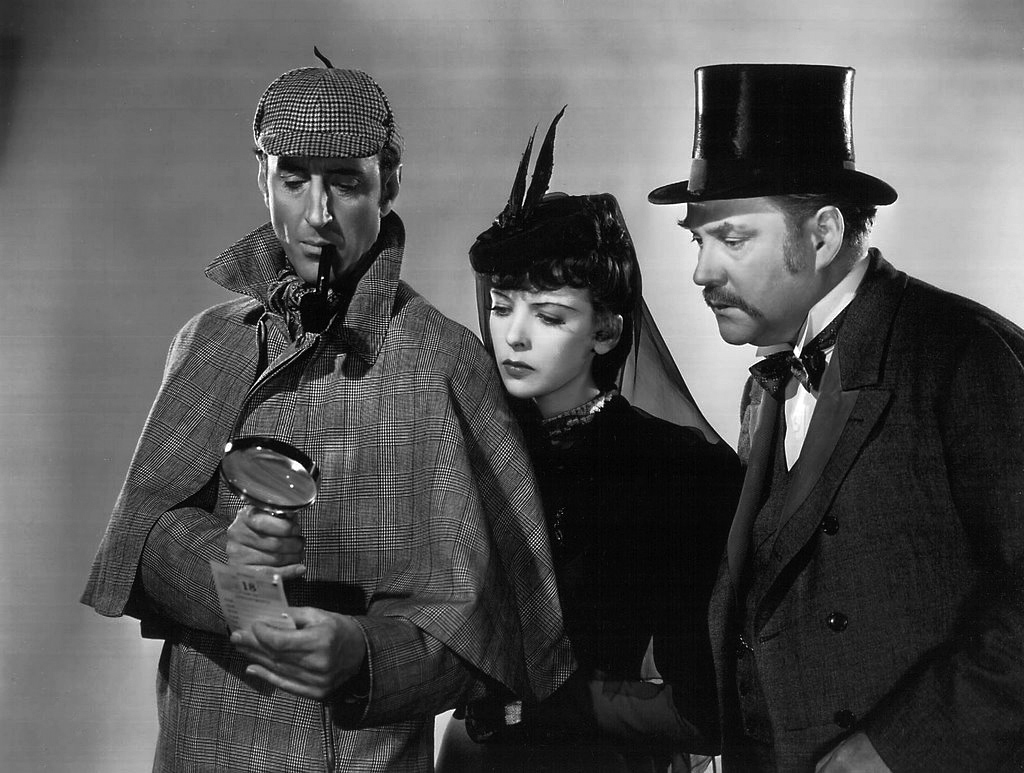
Sherlock Holmes and John Watson about to do philosophy

Have you ever heard someone say that if God existed, he would give us more evidence? This is called the “hiddenness of God” argument. It’s also known as the argument from “rational non-belief”.

Basically the argument is something like this:

  1. God is all powerful
  2. God is all loving
  3. God wants all people to know about him
  4. Some people don’t know about him
  5. Therefore, there is no God.

In this argument, the atheist is saying that he’s looked for God real hard and that if God were there, he should have found him by now. After all, God can do anything he wants that’s logically possible, and he wants us to know that he exists. To defeat the argument we need to find a possible explanation of why God would want to remain hidden when our eternal destination depends on our knowledge of his existence.

What reason could God have for remaining hidden?

Dr. Michael Murray, a brilliant professor of philosophy at Franklin & Marshall College, has found a reason for God to remain hidden.

His paper on divine hiddenness is here:
Coercion and the Hiddenness of God“, American Philosophical Quarterly, Vol 30, 1993.

He argues that if God reveals himself too much to people, he takes away our freedom to make morally-significant decisions, including responding to his self-revelation to us. Murray argues that God stays somewhat hidden, so that he gives people space to either 1) respond to God, or 2) avoid God so we can keep our autonomy from him. God places a higher value on people having the free will to respond to him, and if he shows too much of himself he takes away their free choice to respond to him, because once he is too overt about his existence, people will just feel obligated to belief in him in order to avoid being punished.

But believing in God just to avoid punishment is NOT what God wants for us. If it is too obvious to us that God exists and that he really will judge us, then people will respond to him and behave morally out of self-preservation. But God wants us to respond to him out of interest in him, just like we might try to get to know someone we admire. God has to dial down the immediacy of the threat of judgment, and the probability that the threat is actual. That leaves it up to us to respond to God’s veiled revelation of himself to us, in nature and in Scripture.

(Note: I think that we don’t seek God on our own, and that he must take the initiative to reach out to us and draw us to him. But I do think that we are free to resist his revelation, at which point God stops himself short of coercing our will. We are therefore responsible for our own fate).

The atheist’s argument is a logical/deductive argument. It aims to show that there is a contradiction between God’s will for us and his hiding from us. In order to derive a contradiction, God MUST NOT have any possible reason to remain hidden. If he has a reason for remaining hidden that is consistent with his goodness, then the argument will not go through.

When Murray offers a possible reason for God to remain hidden in order to allow people to freely respond to him, then the argument is defeated. God wants people to respond to him freely so that there is a genuine love relationship – not coercion by overt threat of damnation. To rescue the argument, the atheist has to be able to prove that God could provide more evidence of his existence without interfering with the free choice of his creatures to reject him.

Murray has defended the argument in works published by prestigious academic presses such as Cambridge University Press, (ISBN: 0521006104, 2001) and Routledge (ISBN: 0415380383, 2007). The book chapter from the Cambridge book is here. The book chapter from the Routledge book is here.

Positive arguments for Christian theism

Brian Auten of Apologetics 315 interviewed by… the Wintery Knight!

Brian Auten interviewed by Wintery Knight

Click here for the interview on Apologetics 315. Yes, it’s really me. That’s what I sound like!

Summary:

Questions for WK:
• Why not use your real name?
• What’s the focus on WinteryKnight.com?
• What’s your goal in interviewing Brian?

Questions for Brian:
• How did you come to be in Northern Ireland?
• How did you get interested in apologetics?
• What would you do with unlimited funding to propagate apologetics resources?
• What arguments are the most persuasive for you?
• What arguments should we use with others?
• Do we need a million “one dollar” apologists, or one “million-dollar” apologist?
• How important do you think it is for apologists to focus on scientific evidences?
• How can the lay person get up to speed on these evidences?
• What’s the best way to make the case for the resurrection?
• Use a sledgehammer approach, or a velvet glove approach?
• What about psychological reasons for rejecting the arguments ?
• How does apologetics benefit Christians?
• What about dealing with fear when speaking with people?
• What are the unique resources on the blog?

The audio is 53 minutes long!

Did the city of Nazareth exist at the time of the birth of Jesus?

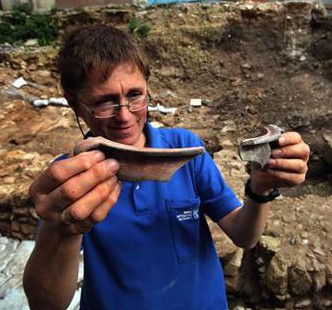
Israeli archaeologist Yardena Alexandre inspects Roman 1st-century pottery found from the city of Nazareth.

I was discussing a recent debate that a friend attended between an atheist musician named Dan Barker and a Christian with a doctorate in New Testament Studies named Justin Bass.

According to my friend’s report, the atheist questioned the existence of Nazareth, and then went on from there to assert that everything we know about Jesus is legendary.

This is what the atheist’s argument sounds like:

  1. If the New Testament contains reliable history about Jesus, then Nazareth must exist.
  2. Nazareth does not exist.
  3. Therefore, the New Testaments does not contain reliable history about Jesus. (M.T. 1,2)

I was able to find a web site where an atheist was making the claim that Nazareth did not exist at the time of Jesus. So this is not completely outside the realm of mainstream atheism. I doubled checked with two more people who attended the debate that Barker indeed made an argument like the one above.

Two things to say about this 3-step argument. First off, when speaking to atheists, Christians only care about making a case for the resurrection. This is for two reasons. One, our goal is to disprove atheism, and the historical argument for the resurrection is the most evidenced miracle claim in the New Testament. Nazareth is not part of that core of minimal facts about the resurrection of Jesus. Second, it’s possible to be a Christian by accepting a core of Christian dogma (e.g. – the Apostle’s Creed), while remaining agnostic or even skeptical of other things in the Bible. Nazareth is not part of that core of minimal facts that must be affirmed in order to become a Christian.

The problem I have with atheists is that they pick and choose from the Bible according to their own agenda. Every Christian has read basic books on the resurrection by people like Lee Strobel, Michael Licona, William Lane Craig, J. Warner Wallace and so on. This is like table stakes for living a Christian life. We all know how to make a case based off of minimal facts for the resurrection. When Christians get into debates about Jesus, we want to make a case for the core of historical knowledge about him, minimal facts that almost no one disagrees with. But many atheists aren’t like that. They want to pick and choose a few verses out of the Old Testament and the New Testament that they personally find distasteful to them, and then deny the minimal facts about Jesus on that basis. I don’t think that it makes sense to deny evidence for widely-accepted facts by bringing up minor problems that are irrelevant to the well-attested core facts.

But it’s worse than that – we actually DO know that Nazareth existed, and we know it not from some fundamentalist preacher, but from atheist Bart Ehrman.

Ehrman writes in his book:

One supposedly legendary feature of the Gospels commonly discussed by mythicists is that the alleged hometown of Jesus, Nazareth did not exist but is itself a myth. The logic of this argument, which is sometimes advanced with considerable vehemence and force, appears to be that if Christians made up Jesus’ hometown, they probably made him up as well.  I could dispose of this argument fairly easily by pointing out that it is irrelevant.  If Jesus existed, as the evidence suggests, but Nazareth did not, as this assertion claims, then he merely came from somewhere else.  Whether Barack Obama was born in the U.S. or not (for what it is worth, he was) is irrelevant to the question of whether he was born.

Since, however, this argument is so widely favored among mythicists, I want to give it a further look and deeper exploration.  The most recent critic to dispute the existence of Nazareth is René Salm, who has devoted an entire book to the question, called The Myth of Nazareth.  Salm sees this issue as highly significant and relevant to the question of the historicity of Jesus: “Upon that determination [i.e., the existence of Nazareth] depends a great deal, perhaps even the entire edifice of Christendom.”

So that seems like a fair representation of the argument I outlined above.

Bart’s response is long, but here’s part of it:

There are numerous compelling pieces of archaeological evidence that in fact Nazareth did exist in Jesus’ day, and that like other villages and towns in that part of Galilee, it was built on the hillside, near where the later rock-cut kokh tombs were built.  For one thing, archaeologists have excavated a farm connected with the village, and it dates to the time of Jesus.  Salm disputes the finding of the archaeologists who did the excavation (it needs to be remembered, he himself is not an archaeologist but is simply basing his views on what the real archaeologists – all of whom disagree with him — have to say).  For one thing, when archaeologist Yardena Alexandre indicated that 165 coins were found in this excavation, she specified in the report that some of them were late, from the fourteenth or fifteenth centuries.  This suits Salm’s purposes just fine.  But as it turns out, there were among the coins some that date to the Hellenistic, Hasmonean, and early Roman period, that is, the days of Jesus.  Salm objected that this was not in Alexandre’s report, but Alexandre has verbally confirmed (to me personally) that in fact it is the case: there were coins in the collection that date to the time prior to the Jewish uprising.

Aalm also claims that the pottery found on the site that is dated to the time of Jesus is not really from this period, even though he is not an expert on pottery.  Two archaeologists who reply to Salm’s protestations say the following:  “Salm’s personal evaluation of the pottery … reveals his lack of expertise in the area as well as his lack of serious research in the sources.”  They go on to state: “By ignoring or dismissing solid ceramic, numismatic [that is, coins], and literary evidence for Nazareth’s existence during the Late Hellenisitic and Early Roman period, it would appear that the analysis which René Salm includes in his review, and his recent book must, in itself, be relegated to the realm of ‘myth.’”

Read Bart’s whole excerpt from his book in his post.

I did a quick double check on the archaeologist Ehrman mentioned, and found an Associated Press story about another archaelogical discovery made by archaeologists in Nazareth. This time, it’s not the coins, but pottery fragments. The date range on the pottery is 100 before Jesus’ birth to 100 years after Jesus’ birth.

Even though Ehrman is an atheist, I think that he understands how to do history. You can’t be a credentialed historian and throw out the early proclamation of Jesus’ resurrection because of doubts about Old Testament violence. You can’t be a credentialed historian and throw out the conversions of Paul and James because you don’t know whether there was one angel or two angels at the empty tomb. Denying the core facts about Jesus by bringing up concerns about peripheral issues is not a responsible way to investigate the historical Jesus.

One final point. This happens when discussing scientific evidence with atheists, too. I was discussing the scientific evidence for the origin of the universe and the cosmic fine-tuning with an atheist – mentioning names, dates and places related to the discoveries – and she cut me off with “Am I going to Hell?”