Tag Archives: Electricity

Democrat who has served 38 years in Congress down 14 points in latest poll

Michael Barone reports on it in the Washington Examiner.

Excerpt:

Here’s an astonishing poll: David Freddoso at Conservative Intelligence Briefing links to a report by the Washington Post’s Aaron Blake that West Virginia 3rd district incumbent Rep. Nick Rahall trails Republican challenger state Sen. Evan Jenkins by a 54-percent to 40-percent margin. The poll was conducted by the Tarrance Group, a Republican firm which, like several Democratic and other Republican firms, has had a good record for reliability over the years.

This is astonishing for several reasons. Rahall, first elected in 1976, is now the seventh most senior member of the House, with three of the more senior members retiring (John Dingell, Henry Waxman, George Miller) and another with a serious primary challenge (Charlie Rangel). Moreover, his district in southern West Virginia has historically been very Democratic; in its previous boundaries it voted for Walter Mondale overRonald Reagan in 1984. Rahall won in 1976 by 46 percent to 37 percent over Ken Hechler, his predecessor in the seat, who after losing a Democratic primary for governor ran as a write-in candidate; the Republican nominee received only 18 percent of the vote. From 1978 to 2008, Rahall was re-elected with at least 64 percent of the vote, except in 1990 when he beat Republican Marianne Brewster by only 52 percent to 48 percent.

But this is coal country, and Rahall’s margins have gone down after President Obama was elected president. In 2010, Rahall won by a reduced margin of 56 percent to 44 percent, and in 2012, his margin was only 54 percent to 46 percent. Obama’s unpopularity surely cost him: John McCain carried the district within its then-boundaries by a 56-percent to 42-percent margin in 2008, and Mitt Romney carried the current district 65 percent to 33 percent in 2012. Rahall is ranking Democrat on the Transportation and Infrastructure Committee and was Chairman of the Natural Resources Committee when Democrats had a majority in the House; these are committee positions of importance to a mountainous coal district, but apparently they are not enough to help him now.

So, this time the culprit isn’t Obama’s terrible health care policy, it’s Obama’s terrible energy policy. Remember, the Environmental Protection Agency basically banned construction on all future coal plants which cost a lot of jobs. Not only that, but coal plants have been closing because of Democrat energy policies. Lastly, restrictions on coal production by Democrats have made energy prices go up, especially in the South. So people who are connected to the coal industry in Ohio, Pennsylvania, West Virginia, etc. should really be thinking a second time about supporting the Democrats in 2014 – and 2016, too.
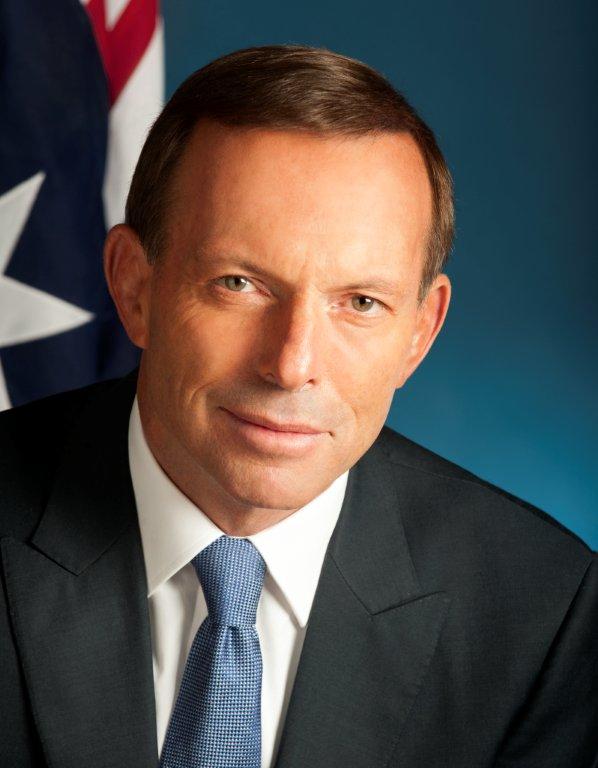
American Spectator praises Australia’s bold new conservative leader

Tony Abbott, Prime Minister of Australia

Well, I think we can get some encouragement from this article from the American Spectator.

Let’s take a look at his policies and appointments:

On economic policy, his government has moved in the opposite direction of those who favor Dodd-Frank-like behemoth approaches to the financial industry. Instead it’s opted to simplify regulation. As the minister responsible for the reform bluntly pointed out, “no amount of legislation will ever be a guarantee against another Storm Financial.” Indeed it’s often excessive regulation that creates opportunities for financial shenanigans by industry insiders.

Regarding the welfare state, Abbott’s minister for Social Security, Kevin Andrews (another conservative politician-thinker), has announced a major overhaul of a welfare system that was starting to drift in a distinctly European-direction. Predictably the left are up in arms. But so too are those rent-seeking Australian businesses who now find themselves dealing with a government uninterested in subsidizing them. That’s nothing, however, to the fury that greeted Abbott’s disbanding of the climate-change bureaucracy established by the preceding Labor government.

[…]The first sign of Abbott’s seriousness about obstructing the left’s long march through the institutions was his government’s appointment of the policy-director of the center-right Institute of Public Affairs to the nation’s Human Rights Commission. This was widely seen as the beginning of an effort to re-balance an organization long criticized as monolithically left-wing. Since then Abbott has indicated that major changes are coming to the ABC: Australia’s government-funded institutional — and ideological — equivalent of the BBC.

[…]Along the same lines, Abbott’s education minister, Christopher Pyne, has initiated a review of the national curriculum implemented by the previous government. A moment’s glance at the curriculum’s treatment of history soon illustrates the extent to which it seeks to downplay Australia’s indisputably Western heritage. In the words of Sydney’s Cardinal George Pell, “Europe, Britain and the United States are mentioned 76 times, while Asia is referred to on more than 200 occasions.” This disparity is odd because although Australia is certainly in Asia, no objective observer could say that Australia is “of” Asia. Moreover, while Australian students learn about “Gaia” and other deep-green fantasies in grade 9, many Australian universities find they need to put the same students through remedial English classes once they begin college.

Then there are Abbott’s initial steps on the international stage. Take, for instance, his recent remarks at Davos. Much of the address was devoted to pushing a strong free trade agenda and insisting that governments should let business do what it does best: promote lasting economic growth. “After all,” Abbott said, “government doesn’t create wealth; people do, when they run profitable businesses.”

In the same speech, however, Abbott made the conservative point that economic prosperity and freedom can’t be sustained in a value-neutral world. Nor did Abbott shy away from relentlessly pressing one of the most important moral arguments for free trade articulated long ago by Adam Smith: that economic freedom, combined with the right institutions, radically reduces poverty faster than any other approach. “No country,” Abbott added, “has ever taxed or subsidized its way to prosperity.”

All in all, the address added up to a solid integration of sound economics with conservative principles. That’s what makes Abbott different from, say, Canada’s Stephen Harper or Spain’s Mariano Rajoy. Abbott happily engages in the indispensable task of moral suasion in favor of conservative positions. What’s more, he’s quite good at it. With his rare combination of plain-speaking and intellectual substance, Abbott makes conservative ideas sound, well, reasonable to the average voter.

Now, I personally thought that prime minister Stephen Harper of Canada was the best leader of any nation out there, but I had not been following Australian politics as much as I should be, and now I think I’ll give the crown to Abbott. He seems to have a good fusionist view that integrates economic policy and social policy, and that makes him better than Harper, in my view. I would like to see Abbott flex his muscles on foreign policy, as well. Something to look forward to.

Conservative Christian Tony Abbott wins majority in Australia

Tony Abbott, future Prime Minister of Australia

Timothy Stanley of the UK Telegraph reports that Australia has elected a Stephen Harper of their own.

Excerpt:

Tony Abbott has won the Australian election – a blow not only to the Australian Labor Party but to Left-wingers everywhere who presumed that he was too “Neanderthal” to win. Well, us Neanderthals will be having a barbie tonight and sculling some beers to celebrate. “Good on yer, mate!”

Abbott won for two reasons. First, the Australian Labor Party is going through a long-term identity crisis. The ALP was once the party of the working man (and Sheila) but in recent years it’s succumbed to the worst aspects of factional politics, becoming a magnet for liberal pressure groups desperate for their slice of the taxpayers’ pie. The party contained plenty of factions in the past but it always managed to steer a sensible middle course between them – so while it was the ALP in the 1970s that established Australia as an outward-looking, Pacific power it was also the ALP in the 1980s that recognised the need for economic reform and rejected protectionism. It’s the party of both Gough Whitlam and Les Patterson.

However, in recent years the Left gained an ascendance over the Right that undid that delicate balance. Under Gillard and Rudd, the ALP “bought” off Australia’s metropolitan elites by embracing issues like gay marriage and the green agenda – the latter threatening the livelihoods of ordinary Australians trying to drill, mine and log their way through the global recession. It invested in silly, expensive projects that turned into giveaways to client companies and unions. And it displayed all of its internal bickering in public, reducing national politics to student union shenanigans. The ALP is now severed from the base that it once represented so well, leaving the ordinary blokes and blokesses looking around for something new.

[…]On the quiet, Abbott has picked up some of the politics that the ALP abandoned. He is said to be a devotee of BA Santamaria, the Catholic thinker who tried to build a Christian Democratic movement that combined social justice and social conservatism. Abbott’s conservatism is plain to see: he rejects doctrinaire environmentalism and favours a far freer and competitive market than the ALP’s clients would ever tolerate. But he also has Santamaria’s concern for social justice: Abbott wants to introduce a scheme that would pay for parental leave to encourage mothers and fathers not only to spend more time with their children but to have more of them, too. Dig beneath that hard man image and you’ll find a politician who is considerably softer and complex. Whereas some Western conservatives seem to be entirely motivated by the desire to win (Romney, Cameron), Abbott has a philosophy and – almost unique in our materialist age – a theology.

This puts him in the George W Bush, Stephen Harper compassionate conservative tradition – the tradition that tends to attract the most votes. For while British Tories might look at Abbott’s politics and language and sneer, they would do well to remember this important distinction. Tony Abbott wins elections; David Cameron has yet to do even that.

Congratulations, Conservative Coalition!

My previous post on Tony Abbott is here, if you want to know more about his policies.