
Tag Archives: Deterrence

Lessons from the UK on how to reduce crime

From Ed West, writing in the UK Telegraph.

Excerpt:

A year after the riots, things are looking up in London. As the Economist reported last week, gun crime is down considerably, while overall crime continues to fall, and homicide is down to its lowest level since the early 1980s.

In fact Britain is following the example of the United States, where crime rose sharply from the 1960s to the early 1990s, when it began to fall almost as steadily. The US crime explosion had several causes, but the most prominent was the huge drop in the average length of sentences in the mid-1960s, largely as a result of political fashion. That trend was already reversed by the 1980s, but it took a while before Americans began to see that handing out tough sentences was effective – even at the cost of incarcerating one per cent of the population.

Today even Guardian writers accept that this “contentious” policy reduces crime, although for many years those advocating it were called everything under the sun. The most prominent of those advocates was the late James Q Wilson,who before he died wrote about the fall in crime he had helped to bring about:

One obvious answer is that many more people are in prison than in the past. Experts differ on the size of the effect, but I think that William Spelman and Steven Levitt have it about right in believing that greater incarceration can explain about one-quarter or more of the crime decline. Yes, many thoughtful observers think that we put too many offenders in prison for too long. For some criminals, such as low-level drug dealers and former inmates returned to prison for parole violations, that may be so. But it’s true nevertheless that when prisoners are kept off the street, they can attack only one another, not you or your family.

As Wilson pointed out, there are many other factors, such as a more competent and technically sophisticated police force, while rehabilitation programmes also make a difference (although longer stretches also make these more effective, since prisoners serving short sentences are out on the streets before they have finished their education). But prison still works pretty effectively.

So in London, and across Britain, crime is falling largely because our prison population has topped 86,000; a terrible waste for those inside, but better that their lives are wasted than those of their victims on the outside. And the benefits are considerable.

This dovetails nicely with Stephen Harper’s tough-on-crime measures.

Excerpt:

And while the overall homicide rate was up seven per cent — there were 598 homicides in Canada in 2011, 44 more than the previous year — the number in Ontario actually hit record lows.

Altogether, police services reported nearly 2 million incidents last year, about 110,000 fewer than in 2010, the agency reported.

The decline in the crime rate was driven mostly by decreases in property offences, mischief, break-ins and car theft. But the severity of crime index — a tool used to measure the extent of serious crime in Canada — also declined by six per cent.

“Overall, this marked the eighth consecutive decrease in Canada’s crime rate,” the study said. “Since peaking in 1991, the crime rate has generally been decreasing, and is now at its lowest point since 1972.”

Not surprisingly, the Conservatives took credit for the decline Tuesday, attributing falling crime rates over the last four decades to the government’s tough-on-crime agenda, which is just six years old.

“These statistics show that our tough on crime measures are starting to work. Our government is stopping the revolving door of the criminal justice system,” said Julie Carmichael, a spokeswoman for Public Safety Minister Vic Toews.

“The fact of the matter is that when the bad guys are kept in jail longer, they are not out committing crimes and the crime rate will decrease. However, there is still more work to do.”

The Democrats will never embrace measures like this here at home, even though they work. They are soft on crime.

Friday night movie: The First of the Few (1942)

Description:

Biopic of aircraft designer R.J. Mitchell whose Spitfire became one of the mainstays of the RAF in World War II. Mitchell worked for Supermarine who specialized for many years on developing seaplanes. He enjoyed a good deal of success winning prestigious air races with the help of his test pilot Geoffrey Crisp. Money was always in short supply however and the government was always hesitant to invest. When Supermarine is bought out by Vickers, Mitchell has a bit more leeway. After a visit to Germany in the 1930s, he sees the Nazi threat first-hand and decides to design a fighter with a completely new engine. The result was the famed Spitfire.

Here’s the Spitfire:

Supermarine Spitfire

The speech by Prime Minister Churchill

What does the title of the movie refer to? It’s from a speech by the Conservative prime minister of Britain during the war – Sir Winston Churchill.

Excerpt:

The great air battle which has been in progress over this Island for the last few weeks has recently attained a high intensity. It is too soon to attempt to assign limits either to its scale or to its duration. We must certainly expect that greater efforts will be made by the enemy than any he has so far put forth. Hostile air fields are still being developed in France and the Low Countries, and the movement of squadrons and material for attacking us is still proceeding. It is quite plain that Herr Hitler could not admit defeat in his air attack on Great Britain without sustaining most serious injury. If after all his boastings and bloodcurdling threats and lurid accounts trumpeted round the world of the damage he has inflicted, of the vast numbers of our Air Force he has shot down, so he says, with so little loss to himself; if after tales of the panic-stricken British crushed in their holes cursing the plutocratic Parliament which has led them to such a plight-if after all this his whole air onslaught were forced after a while tamely to peter out, the Fuhrer’s reputation for veracity of statement might be seriously impugned. We may be sure, therefore, that he will continue as long as he has the strength to do so, and as long as any preoccupations he may have in respect of the Russian Air Force allow him to do so.

On the other hand, the conditions and course of the fighting have so far been favorable to us. I told the House two months ago that, whereas in France our fighter aircraft were wont to inflict a loss of two or three to one upon the Germans, and in the fighting at Dunkirk, which was a kind of no-man’s-land, a loss of about three or four to one, we expected that in an attack on this Island we should achieve a larger ratio. This has certainly come true. It must also be remembered that all the enemy machines and pilots which are shot down over our Island, or over the seas which surround it, are either destroyed or captured; whereas a considerable proportion of our machines, and also of our pilots, are saved, and soon again in many cases come into action.

[…]The gratitude of every home in our Island, in our Empire, and indeed throughout the world, except in the abodes of the guilty, goes out to the British airmen who, undaunted by odds, unwearied in their constant challenge and mortal danger, are turning the tide of the World War by their prowess and b~ their devotion. Never in the field of human conflict was so much owed by so many to so few.

But before you can have “the few” fighter pilots who saved Britain, you have to have the fighter! That’s why R.J. Mitchell, the inventor of the fighter, is the First of the Few.

It’s very important that we in the West understand the importance of investing in defense research, so we can develop new weapons, so that we can deter aggression. This is the doctrine of peace through strength.

The few mentioned in Shakespeare’s Henry V

You may also be interested in a famous speech by Henry V.

Excerpt:

WESTMORELAND: O that we now had here
But one ten thousand of those men in England
That do no work to-day!

KING HENRY V: What’s he that wishes so?
My cousin Westmoreland? No, my fair cousin;
If we are mark’d to die, we are enow
To do our country loss; and if to live,
The fewer men, the greater share of honour.
God’s will! I pray thee, wish not one man more.
By Jove, I am not covetous for gold,
Nor care I who doth feed upon my cost;
It yearns me not if men my garments wear;
Such outward things dwell not in my desires.
But if it be a sin to covet honour,
I am the most offending soul alive.
No, faith, my coz, wish not a man from England.
God’s peace! I would not lose so great an honour
As one man more methinks would share from me
For the best hope I have. O, do not wish one more!
Rather proclaim it, Westmoreland, through my host,
That he which hath no stomach to this fight,
Let him depart; his passport shall be made,
And crowns for convoy put into his purse;
We would not die in that man’s company
That fears his fellowship to die with us.
This day is call’d the feast of Crispian.
He that outlives this day, and comes safe home,
Will stand a tip-toe when this day is nam’d,
And rouse him at the name of Crispian.
He that shall live this day, and see old age,
Will yearly on the vigil feast his neighbours,
And say ‘To-morrow is Saint Crispian.’
Then will he strip his sleeve and show his scars,
And say ‘These wounds I had on Crispian’s day.’
Old men forget; yet all shall be forgot,
But he’ll remember, with advantages,
What feats he did that day. Then shall our names,
Familiar in his mouth as household words-
Harry the King, Bedford and Exeter,
Warwick and Talbot, Salisbury and Gloucester-
Be in their flowing cups freshly rememb’red.
This story shall the good man teach his son;
And Crispin Crispian shall ne’er go by,
From this day to the ending of the world,
But we in it shall be remembered-
We few, we happy few, we band of brothers;
For he to-day that sheds his blood with me
Shall be my brother; be he ne’er so vile,
This day shall gentle his condition;
And gentlemen in England now-a-bed
Shall think themselves accurs’d they were not here,
And hold their manhoods cheap whiles any speaks
That fought with us upon Saint Crispin’s day.

Henry V is on the short list of approved Wintery Knight movies.

Happy Friday!

Related posts

Iran, the Zetas drug cartel and our porous Southern border

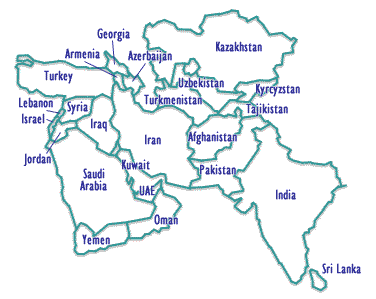
Map of the Middle East

Here’s an excellent assessment of the threat from the American Enterprise Institute.

Excerpt:

The revelation that the Iranian Revolutionary Guards Corps and its Quds Force had plotted to kill Saudi Arabia’s ambassador to the United States–by blowing him up as he dined at a Washington restaurant–is a stark reminder of the nature of the Tehran regime and its ambitions. But perhaps the most disturbing aspect of the story is that Iran’s thugs are developing a strategic partnership with Mexico’s most violent thugs: Los Zetas may only be the second-largest drug cartel in the Drug Enforcement Administration’s rankings, but they’re probably the most lethal. The gang is said to have formed around a platoon’s worth of deserters from Mexico’s special operations forces, and became the elite troops of another Mexican drug organization, the Gulf Cartel. The leader of that cartel got himself arrested, and the Zetas moved out on their own.

[…]The alliance with the Zetas is only the tip of the Iranian iceberg in Latin America. As Roger Noriega and Jose Cardenas have recently written, “Iran has made the Western Hemisphere a priority….The real game changer has been the alliance developed between Iran’s Mahmoud Ahmedinejad and Venezuela’s Hugo Chavez.” In addition to the Quds Force, Iran often operates through Hezbollah, which has established networks in the Lebanese communities that have long-standing enclaves in the trading and port cities of South America. In addition to Chavez, Iran has established closer ties to the Bolivian government of Evo Morales’s and Rafael Correa’s regime in Ecuador.

[…]We underestimate the Quds-Zeta partnership at our peril. The distinction between law enforcement and warfare is increasingly blurred; the Mexican government claims it had a hand in exposing the plot and it was a DEA agent who foiled the attack. While the Obama administration was right to bring charges against the operatives who plotted to kill the Saudi ambassador, this is a response to symptoms, not the disease. The larger problem is the maturing anti-America coalition governments and extremely rich, powerful, and violent groups; thinking of these organizations simply as criminals obscures their political interests–in keeping governments like Mexico’s or Colombia’s weak, in securing sanctuary, in access to the “international commons,” and the like. An appropriate response demands an integrated strategy. The biggest danger is not “militarizing” U.S. policy but in failing to address the fundamental security issues at stake.

The Obama administration’s lack of concern about border security is very disturbing, but they don’t dare to offend their open-borders constituency for a little thing like national security. Even so, the best defense might be a good offense – but is Obama willing to go on the offensive? Not so much. Instead, Obama seems to be resigned to letting Iran have nuclear weapons.

Excerpt:

Khamenei probably approved a strike in Washington because he no longer fears American military might. Iran’s advancing nuclear-weapons program has undoubtedly fortified his spine, as American presidents have called it “unacceptable” yet done nothing about it. And neither George W. Bush nor Barack Obama retaliated against Iran’s murderous missions in Iraq and Afghanistan.

President Obama has clearly shown he wants no part—or any Israeli part—in a preventive military strike against Iran’s nuclear sites. And Mr. Obama has pulled almost all U.S. troops out of Iraq and clearly wants to do the same in Afghanistan. Many Americans may view that as a blessing, but it is also clearly a sign that Washington no longer has the desire to maintain hegemony in the Middle East.

That’s an invitation to someone like Khamenei to push further, to attack both America and Iran’s most detested Middle Eastern rival, the virulently anti-Shiite Saudi Arabia. In the Islamic Republic’s conspiracy-laden world, the Saudis are part of the anti-Iranian American Arab realm, which is currently trying to down Iran’s close ally, Bashar al-Assad’s Syria, and squash the Shiites of Bahrain. Blowing up the Saudi ambassador in Washington would be an appealing counterstroke against the two foreign forces that Khamenei detests most.

The Obama administration will be tempted to respond against Iran with further unilateral and multilateral sanctions. More sanctions aren’t a bad idea—targeted sanctions against the Revolutionary Guards and the sale of gasoline made from Iranian crude can hurt Tehran financially. But they will not scare it. The White House needs to respond militarily to this outrage. If we don’t, we are asking for it.

The longer Obama leaves this, the worse the eventual war in the Middle East is going to be. We should at the very least be pursuing aggressive covert operations against Syrian and Iranian targets. I hope everyone remembers the slap on the wrist that Obama is giving Iran now, so that when we get attacked more and more, with more dangerous weapons, the correct people get the blame.