Tag Archives: Debate

Bart Ehrman debates the reliability of the gospels with Craig Evans

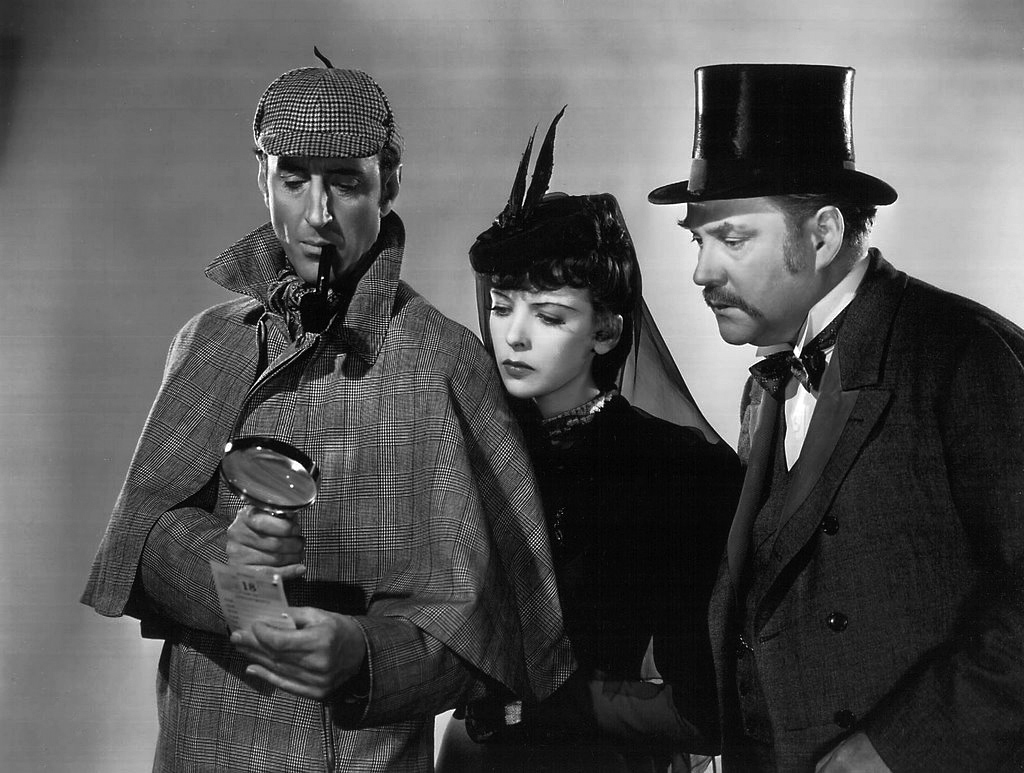
Sherlock Holmes and John Watson

This is the first debate ever between these two top-ranked scholars. Both Evans and Ehrman are probably 2 of the 10 most recognized historical Jesus scholars.

The MP3 audio and a link to the video is here. (From Brian Auten at Apologetics 315)

Speakers

Bart Ehrman

Dr. Ehrman, is a graduate of Wheaton College (Illinois), Professor Ehrman received both his Masters of Divinity and Ph.D. from Princeton Theological Seminary, where his 1985 doctoral dissertation was awarded magna cum laude. Since then he has published extensively in the fields of New Testament and Early Christianity, having written or edited twenty-one books, numerous scholarly articles, and dozens of book reviews. Among his fields of scholarly expertise are the historical Jesus, the early Christian apocrypha, the apostolic fathers, and the manuscript tradition of the New Testament.

Craig Evans

Dr. Evans received his B.A. degree in History and Philosophy from Claremont McKenna College, his M.Div. degree from Western Baptist Seminary in Portland, Oregon, and his M.A. and Ph.D. degrees in Biblical Studies from Claremont Graduate University in southern California. Author and editor of more than fifty books and hundreds of articles and reviews, Professor Evans has given lectures at Cambridge, Durham, Oxford, Yale, and other universities, colleges, seminaries, and museums, such as the Field Museum in Chicago and the Canadian Museum of Civilization in Ottawa.

Note: This is a very snarky summary, and I am just paraphrasing things to be silly and funny. Reader discretion is advised.

Summary

Snarky things I made up are in italics.

Question 1: are the gospels historically reliable?

Bart Ehrman opening speech:

  • I used to be an ignorant fundamentalist like you!
  • but then I went to Princeton, and now I know better
  • to Craig: are there errors in the Bible
  • the gospels have some reliable and some unreliable info
  • only careless readers don’t see contradictions in the gospels
  • contradictions in the genealogies
  • contradictions in timing of recognizing Jesus as the Messiah
  • contradiction about when Jesus died
  • contradiction about when the stone was rolled away
  • contradiction about who was at the empty tomb
  • contradiction about when the disciples went to Galilee
  • contradictions in minor details means the gospels are unreliable

Craig Evans opening speech:

  • the question is “do the gospels tell us enough about Jesus for faith?”
  • the gospels don’t tell us everything, but they tell enough for faith
  • the extremely early creed in 1 Cor 15:3-7 has an outline of the gospel
  • it contains the burial, the appearances to eyewitnesses
  • and it agrees with the early sermons of Peter in Acts 2
  • the gospels agree with these extremely early summaries
  • the gospels are based on earlier sources
  • the gospels are corroborated by the Jewish historian Josephus

Question 2: Do the gospels accurately preserve the teachings of Jesus Christ?

Bart Ehrman

  • are there any discrepancies in the gospels?
  • the gospels have things Jesus said, and things he didn’t say
  • if the Bible is inaccurate in some minor details, then it’s all unreliable
  • in the latest gospel, John, Jesus calls himself God and sees himself as divine
  • but these high-Christology statements are not in the synoptics
  • therefore, Jesus really didn’t say these things
  • why didn’t the synoptics record these claims to divinity
  • the author of John changed the words of Jesus and John the Baptist?

Craig Evans

  • E.P. Sanders (a non-Christian scholar) says we can know what Jesus taught
  • cites E.P.’s list of Jesus’ core teachings that are agreed on by most scholars
  • Jesus’ focus was talking about the Kingdom of God – the rule of God
  • Jesus’ followers were expected to record and understand the words of Jesus
  • It is permissible for the followers of Jesus to have some editorial license

Question 3: Do the gospels accurately preserve the activities of Jesus Christ?

Bart Ehrman

  • E.P. Sanders agrees with me that there are discrepancies in the gospels
  • E.P. Sanders agrees with me that there are mistakes in the gospels
  • If Jesus’ followers changed his words a little, then we can’t know anything he said
  • If the author changes the story a little, then the story was changed a lot
  • If there not 100% accurate, then they’re not accurate at all
  • contradiction of the ordering of Jesus’ temptations
  • contradiction of the number of animals Jesus rode into Jerusalem
  • contradiction of whether Jesus spoke or didn’t speak in some instance
  • contradiction of what Jesus said on the cross
  • contradiction of the number of robbers who speak to Jesus
  • Jesus can only say ONE THING when he’s on the cross
  • the gospel writers have to be in complete agreement

Craig Evans

  • E.P. Sanders (non-Christian) lists 7 virtually indisputable facts about Jesus
  • just because there are discrepancies, doesn’t mean there are no minimal facts
  • in additional to E.P. Sanders, there are other facts that are widely-accepted
  • many assertions in the gospels are embarrassing to the author
  • many liberal scholars think that Jesus was a healer and an exorcist
  • all scholars agree on the crucifixion
  • most scholars accept the “King of the Jews” placard placed over the cross
  • this means that Jesus was viewed by his followers as the Messiah

Question 4: Do the gospels contain eyewitness tradition?

Bart Ehrman

  • I used to be an ignorant uninformed fundie, like you all
  • but then I started to study seriously, not like Craig Evans
  • I changed my mind based on intense research, not peer pressure
  • My apostasy has nothing to do with the problem of evil and suffering!
  • I use my brain, and Craig Evans and you fundies don’t use your brains
  • the gospels don’t claim to be written by eyewitnesses
  • the titles of the gospels were added later
  • the gospels don’t claim to be written by the authors attributed to them
  • the gospels were written anonymously
  • the gospels only had names attached in 120-140 AD
  • even if gospels were written by eyewitnesses, they are not always accurate
  • written 40-60 years after Jesus died
  • written in Greek, not Aramaic
  • written in different countries
  • based on stories that were told and retold and changed over time

Craig Evans

  • Richard Bauckham says the gospels are largely based on eyewitness accounts
  • the gospels were written while there were still eyewitnesses alive
  • the people who met Jesus were there to correct the written accounts
  • there were many disputes about things in the early church, so if the early church invented sayings, then why not invent sayings of Jesus to resolve the disputes?
  • there is no evidence of things being invented wholesale by the early church
  • Pappias says that he talked to Christians who knew the eyewitnesses to Jesus

Question 5: Do archaeologists and historians use the gospels as sources?

Bart Ehrman

  • archaeologists do not use the gospels, they just dig things up
  • historians do use gospels
  • Jesus is not mentioned by any Greek or Roman non-Christian source for 80 years after Jesus’ death
  • The earliest Jewish source is Josephus, writing 60 years after Jesus’ death
  • Paul is the earliest source, but says nothing about Jesus’ words and deeds
  • the earliest sources for words and deeds are the discrepancy-filled gospels
  • the gospels are based on telling and re-telling of the stories

Craig Evans

  • James Charlesworth has a 700-book about archaeology and the Bible
  • the book contains hundreds of references to the four gospels
  • the four gospels and Acts are viewed as the best sources for archaeologists
  • they provide accurate information about the way things were
  • the gospels and Acts helps archaeologists to know where to dig for things
  • the Biblical sources are early and based on eyewitnesses
  • the gospels and Acts fit well in the first century culture
  • the gospels and Acts talk about real events and real places and real customs
  • the gospels and Acts talk about real buildings and real public figures and real groups
  • the language of the gospels traces back nicely to Aramaic
  • the gospels talk about geography and climate
  • archaeologists discover many things discussed in the gospels

Question 6: Have the gospels been accurately preserved done through the centuries

Bart Ehrman

  • if God inspired the Bible without error, he should have preserved it without error
  • but the originals have NOT been preserved without error
  • so I no longer accept the inerrancy of the autographs (the originals)
  • we don’t have the originals
  • we only have copies of copies… of copies… of copies… of copies
  • and the copiers all made mistakes
  • the first manuscripts are decades later
  • and the manuscripts we have are different from one another
  • the earliest copies have the most mistakes
  • even if we have many copies, they are late, so we don’t know what the original said
  • we don’t have early manuscripts

Craig Evans

  • we know where the discrepancies in the manuscripts are
  • the discrepancies are marked in your Bible
  • the discrepancies affect peripheral issues
  • some discrepancies are supported by other verses
  • Mark doesn’t have the appearances, but 1 Cor 15 does, and it’s earlier
  • the errors are things like spelling and grammar errors, typos, etc.
  • we have fragments that are earlier than the full manuscripts
  • some early manuscripts have errors, but other early manuscripts are correct

Question 7: Do scribal errors and textual variants significantly impact any teaching of Jesus or any important Christian teaching?

Bart Ehrman

  • the woman caught in adultery is a late addition
  • the ending of Mark is a late addition
  • can we handle snakes or can’t we?
  • did Jesus sweat blood or didn’t he?
  • some manuscripts have errors – that should not be allowed by God
  • some scribes are careless – that should not be allowed by God
  • we have to have perfect copies of the originals, or I won’t believe!
  • if God really inspired it, it all has to be perfect! Perfect! I was lied to!!!!
  • if the snake-handling verse isn’t there, then the whole Bible is lies! Lies!

Craig Evans

  • no variants impact any teaching of Jesus or significant Christian teaching
  • the vast majority of the manuscripts agree on 98-99% of the text
  • often, the theology gives rise to a variant, which is introduced later
  • variants aren’t central enough to affect any theological doctrines

And then there are concluding speeches by each speaker.

I made this summary based on the video, which is here on Apologetics 315.

Mike Licona debates Bart Ehrman on the reliability of the gospels

Two ninjas face off at sundown

From the Unbelievable radio show.

Details:

Bart Ehrman is well known as a US New Testament Scholar who lost his Christian faith and now questions many core precepts of Christianity, including the Resurrection of Jesus.  When Mike Licona had doubts he devoted himself to investigating the evidence and became convinced that Jesus resurrection is the only rational explanation for the facts.

They debate key historical facts about the resurrection – are the letters of Paul that report the resurrection and the Gospel accounts trustworthy or theologised and changed with time?  What about apparent contradictions between the Gospels? Does the consensus of scholars count as evidence, or is there a Christian bias?  Can a miracle count as an explanation for historical data?

The MP3 file is here. (Note: this link works)

Snarky summary of the radio debate: (items with * are my made-up paraphrases/clarifications)

Ehrman:
– Bart’s new book is about forgeries in the ancient world
– some books were falsely attributed to prominent Christian figures
– there are mistakes in the Bible
– there are mistakes in the resurrection narratives
– the defeat of inerrancy led to his conversion to liberal Christianity
– the problem of evil and suffering caused him to become a non-Christian

Licona:
– there are minimal facts that are agreed to by a broad spectrum of scholars
– the minimal facts are accepted because they pass standard historical criteria
– Fact 1: Jesus died by crucifixion
– Fact 2: Individuals and groups had visions of Jesus after his death
– Fact 3: Paul, a skeptic and an enemy, had an appearance of Jesus that converted him
– these facts are agreed to atheist scholars, liberal scholars, etc.
– virtually 100% of scholars agree with these three facts
– there is no naturalistic explanation of these three facts
– therefore, the best explanation of these three facts is that God raised Jesus from the dead

Ehrman:
– all historians would accept these three facts, except for maybe the group appearances
– the death of Jesus is irrelevant to the resurrection
– the second and third point can be collapsed together
– so really there is only one fact

Moderator:
– the crucifixion is relevant because Muslims don’t admit that fact
– the crucifixion important because it establishes a resurrection, not a resuscitation

Ehrman:
– well, if the point is that he died, then yes, this does require a resurrection

Licona:
– the crucifixion refutes Muslims who deny that Jesus died
– the crucifixion refutes the apparent death theory (swoon theory)
– the death is required for a bodily resurrection
– it’s important to know what facts most scholars, regardless of worldview, agree on
– it’s important to emphasize that Licona is working from historical bedrock facts
– the resurrection is the best explanation for the historical bedrock facts

Ehrman:
– you are trying to list 3 things, but really it is just one thing – the appearances
– and not ALL scholars agree that the group visions occurred

Licona:
– name one prominent scholar who denies the group appearances

Ehrman:
– the radically leftist atheist nutcase John Dominic Crossan denies the group appearances
* Crossan is so far on the left that I look like a nutcase for even citing him
* Crossan believes in the Secret Gospel of Mark, which is a hoax – but I still cite Crossan
* Crossan believes that the synoptics are LATER than gnostic forged gospels – but I still cite Crossan
* Crossan presupposes atheism, so he cannot admit to miracle stories as a pre-supposition – but I still cite Crossan
* Crossan pre-supposes religious pluralism, so he cannot allow any exclusive claims Christians make – but I still cite Crossan
* Crossan is a good historian, it’s just that he is so far to the left that no one – NO ONE – agrees with his all of crazy theories
* I think it is a good idea to cite historians who pre-suppose atheism and political correctness before they sit down to do history

Licona:
– let me explain why most scholars accept the individual and group post-mortem appearances
– the best source for the appearances is the early creed recorded by Paul in 1 Cor 15:3-8
– Paul himself had an appearance of Jesus after Jesus’ death
– Paul received this material from a source very soon after the appearances – within 1-3 years
– we know that Paul met with Jesus disciples multiple times prior to writing
– Paul probably received it from Peter and James, who were themselves eyewitnesses

Moderator:
– this early dating presumably rules out legend

Licona:
– well legends CAN start quickly
– it does show that Paul was an eyewitness
– it does show that Paul was in contact with reliable eyewitnesses

Ehrman:
– 1 Corinthians is written around 55 AD, twenty-five years after Jesus died
– it is not implausible that Paul got the creed from the disciples, who were eyewitnesses
– but you don’t need a long time for legends to emerge, so that is a possibility

Licona:
– only about 3% of people could read and write back them
– instead, people had enormous capacity for memorization
– the Pharisees were particularly good at memorization
– Jews were very serious about passing along traditions accurately
– Paul, a prominent Pharisee, would have been capable of passing on early creeds accurately
– Paul, in 1 Cor 7, shows that he is willing to separate his opinions from authentic tradition
– Paul had an opportunity in 1 Cor 7 to put words into Jesus’ mouth, but he wouldn’t do it

Ehrman:
– cultural anthropologists show that things do get changed in some oral cultures
– in these oral cultures, it is assumed that the story teller will change the story
– only in written cultures are they careful to avoid changing the story
– in the New Testament, you can compare the same story in two different gospels, there are differences

Licona:
– Ehrman is right that the gospel writers pick and choose things from the oral tradition that they want to include in their gospels
– different oral tradition transmission schemes have more or less embellishment
– african tribes embellish more, rabbinic teaching embellishes less
* Jesus’ followers would have viewed him as a rabbi, and been careful about adding to his teachings
– Paul, an eyewitness, probably received the creed in 1 Cor 15 from other eyewitnesses
– Paul speaks about going twice to Jerusalem in Galatians
– he is meeting with Peter and James to check his facts

Ehrman:
– when you look at Mark and John, there are lots of differences in the narrative

Licona:
– I agree that the gospels have differences, but the oral tradition is likely fixed

Ehrman:
– but Mark and John have different sayings
– why doesn’t Mark have the same explicit high Christology that John has?

Licona:
– first, John is trying to weave the oral tradition into a compelling story
– and second, when you look in Mark, the high Christology is there in the Son of Man sayings
– the apocalyptic Son of Man is in Mark, and everywhere in the New Testament

Ehrman:
– the “apocalyptic Son of Man” isn’t in John

Licona:
– what about in John 9 with the man who was born blind

Ehrman:
– where is the apocalyptic part?

Licona:
– the healed man worships Jesus because he is the Son of Man
– that links to the apocalypic passages in the Old Testament

Moderator:
– what about the differences between the gospels?

Ehrman:
* well, now is the time for me to set up an inerrantist straw man and then knock it down!
* who was at the empty tomb: one angel or two angels? we don’t know, so the whole Bible is false!
* I used to be an inerrantist, so one minor difference is enough for me to dump the whole Bible
* I’ll kill you, you stupid straw man! I hate you, Moody Bible Institute! You lied to me!

Licona:
– many of these problems can be solved by realizing that the gospel writers compress time
– the stories don’t have to list ALL the characters in every scene
– you don’t have to force the Bible to meet some sort of wooden chronology
– the main thing is that the events happened, not that the descriptions match word for word across sources

Ehrman:
– you can’t infer a miracle from history, David Hume says so
* extraordinary claims require extraordinary evidence, David Hume says so
* no I don’t know what begging the question is, I’m not a philosopher
* no I don’t remember when Bill Craig kicked my ass on this Hume objection in our debate
– the New Testament gospels contradict each other at every point, they are not reliable at all!
* they cannot even agree what Jesus’ name is! There are 1 trillion variants of Jesus’ name!
* “one angel vs two angels” proves that the gospels contradict each other at every point
* my expansive list of FOUR theologically insignificant variants proves that the gospels contradict each other at every point

Licona:
– um, the gospels agree on the central narrative and disagree on the peripherals
– and they agree on the minimal facts I presented, even if they disagree about the number of angels

Ehrman:
* they have to agree on everything and be inerrant! The Moody Straw Man Bible Institute says so!
* I really really really need to have the number of angels be the same, or Jesus didn’t die on the cross

Licona:
– but you don’t deny any of the three minimal facts I presented (crucifixion, appearances, Paul)

Ehrman:
– well, I don’t know if the group appearances occurred – maybe they did
– i think Jesus died on the cross, and I think that people said they saw him alive afterward

Licona:
– if you deny the minimal facts, then you are outside the majority of scholars

Ehrman:
– the majority of scholars who agree to the minimal facts you presented are Christians
* Gerd Ludemann is an atheist Christian
* James Crossley is an atheist Christian
* Hector Avalos is an atheist Christian
* the majority of the atheist scholars are all Christians!
– VIRTUALLY EVERYBODY IN THE SOCIETY OF BIBLICAL LITERATURE IS A CHRISTIAN!!! (Yes, he said that)

Licona:
– you really think so?

Ehrman
– you name one non-Christian in the SBL

Licona:
– (incredulous) um, John Dominic Crossan is an atheist

Ehrman:
– but he CLAIMS TO BE A CHRISTIAN so that means HE IS A CHRISTIAN
* all you have to do to be a Christian is claim to be one
* you can even deny the existence of God and the divinity of Christ and still be one, you bigot!

Licona:
– would Jesus or the apostles recognize a Christian as being someone who doubts God’s existence

Ehrman:
– my view is that Jesus and the apostles would not recognize evangelical Christians as Christians
* a non-theist can be a Christian just by claiming to be one, but evangelical Christians are not Christians even if they claim to be Christians
– Christians can’t record accurate history about the resurrection because they are biased

Licona:
– on your view, if a person is a Christian then he can’t write about the evidence for the resurrection
– so then similarly, you would not allow Jews to write about the historicity of the Holocaust
– because you think that if people have an interest in what they are recording then they can’t be objective
– but you have to consider the evidence we have, taking the biases of the sources into account

Ehrman:
– but the only people who believe in the resurrection are Christians!

Licona:
– well, people can consider the evidence for the resurrection as non-Christians
– and then if they accept it they can become Christians

Moderator:
– what about your bias? you don’t believe in God – doesn’t that pre-supposition affect how you do history?

Ehrman:
– well, I presuppose naturalism, so I can’t admit to anything in history that implicates supernatural causes
* no I have never heard of the arguments for the Big Bang, fine-tuning, origin of life, Cambrian explosion, irreducible complexity, limits on mutations creating information, habitability and so on – I never heard about that stuff from my atheist university professors and even if I had I would have been expelled for talking about it because that would make people feel bad about their sinning

Licona:
– so it’s not bias you are concerned about, it’s that you don’t want history to contradict your untested religion of naturalism?
– why not just do the history without pre-suppositions to gather the minimal facts and then see what the best explanation is?

Ehrman:
* well God is out of bounds as an explanation because I could not have got my PhD if I mentioned God
* I really needed my smart atheist professors to like me and give me good grades so God is RIGHT OUT
* ideas like a real God and moral laws and Hell makes my atheist professors uncomfortable and that means low grades for me
* I’m not really interested in butting heads with professors – it’s easier to just agree with them and move on to selling books to the gullible
* My books are much more sensational than Dan Brown books, so please buy lots of them!

Licona:
– what if the historical evidence is good enough to show that Jesus rose from the dead?

Ehrman:
– well I would not call someone rising from the dead a miracle – I would call it weird
* I also think that the Big Bang is “weird” but that doesn’t prove that God created the universe out of nothing
* if it’s a miracle then I’m going to have to not sin, and maybe even go to Hell, and we can’t have that

Licona:
– well, you accept the three minimal facts
– what if we try all the naturalistic explanations for those three facts and there are problems with all of them?
– what if the resurrection is the best explanation for the three minimal facts?

Ehrman:
– but I want to arbitrarily rule God put because I want to pre-suppose naturalism
– there is not historical reason I have to rule put supernatural explanations a priori

Licona:
– I think you are struggling with the theological implications of a historical conclusion

Ehrman:
– well when you do theology, you have to avoid grounding your theology on science or history
– theology has to be completely made up or it’s not good theology

Licona:
– I think you are letting your dislike of the implications of the resurrection determine your historical conclusions
– you have to use historical methods to gather the minimal facts that every scholar accepts, regardless of worldview
– then you weigh ALL the hypotheses, natural and supernatural, that could account for these minimal facts
– then you choose the hypothesis that best explains the minimal facts

Chris Sinkinson debates John Hick on religious pluralism and salvation

Two Rams butting heads: may the best ram win!
Two rams butting heads: may the best ram win!

Looks like Justin Brierley on the Unbelievable radio show found a pastor with a Ph.D in philosophy, and he can really whip some ass. And that’s a good thing, because he is taking on one of the two leading proponents of religious pluralism, in my opinion, (the other being Paul Knitter).

The players:

John Hick is a noted philosopher and theologian who is a proponent of a pluralist view of religion – that there is one light (God) but many lampshades (religious expressions).

Chris Sinkinson is a pastor and Bible tutor who has critiqued Hick’s work.  He says that pluralism empties Christianity of any content and in its own way disrespects other religions more than his own exclusivist stance.

The MP3 file is here. (Note: This link works)

Justin does a great job as moderator of this debate. He said what I was thinking of saying a number of times during the debate.

Anyway, here is my snarky summary. I creatively paraphrase some of the things that Hick says to make it more clear. And funny.

—-

Hick:
– had an experience looking at the buildings of other religions
– other religions have buildings, so all religions are equal
– I spent some time in the East, and met nice Eastern people
– since Eastern people are nice that means all religions are equal

Justin:
– isn’t Jesus’ claim to be the exclusive path to salvation offensive?

Sinkinson:
– all religions that are exclusive and have to deal with religious pluralism
– even John Hick writes polemically in favor of his own view
– even John Hick thinks that religions that are exclusive are false

Justin:
– what about the blind man and the elephant?
– the story seems to say that other people have a partial grasp?
– but the story-teller himself has the privileged view
– so isn’t the religious pluralist just as arrogant as exclusivists?

Hick:
– well, it’s not arrogant to claim to have the right answer
– Jesus never made the claim to be God incarnate
– Jesus never made the claim to be the exclusive path to God
– historians don’t think that John’s gospel is reliable because it is late
– the proclamation of exclusivity was added by evangelists much later

Sinkinson:
– the historians who doubt the high Christology are radical skeptics
– the mainstream of historical scholarship accepts a high Christology
– the EARLIEST history about Jesus has the highest Christology

Hick:
– the moderate scholars do think Jesus was divine but that he didn’t think he was divine
– the phrase “Son of God” was used to describe any remarkable person
– only later did the early church turn the generic term into “God the Son”

Sinkinson:
– there is reflection on Jesus’ identity and developments, but not invention
– Jesus and his followers were in trouble precisely for linking him to deity
– why else would Jesus get into trouble and get crucified?

Hick:
– the Romans crucified him because people were saying he was the Messiah
– but the Messiah was not identified as being divine, but political
– and that’s why the Romans crucified him

Justin:
– do you (Sinkinson) think that people in other religions can be saved?

Sinkinson:
– the traditional view is exclusivism
– the other world religions are logically contradictory with Christianity
– you have to respect their differences – they are not the same as Christianity
– exclusivists allow that people can be saved by responding to natural theology
– and there are also other cases where non-Christians are saved, like old testament saints and babies who die in infancy

Hick:
– but people’s religions are based on where they are born
– so it’s not fair for God to expect people to be saved in one religion only

Sinkinson:
– the plurality of religions grouped by location doesn’t make christianity false
– that would be the genetic fallacy – rejecting an idea because of its origin
– the real question to consider is whether it is true
– and even the objection assumes that God is a God of love, who should be fair
– but how do you know that God is loving? that is an exclusive view
– how can the “blob” ultimate of religious pluralism be “loving” and “fair”

Hick:
– the ultimate reality is loving or not loving depending on each person’s religion

Sinkinson:
– but some religions and theistic and some are atheistic
– how can those God exist and not exist?

Hick:
– God is beyond everyone’s understanding, except mine
– God is beyond all definitions, except mine
– God is beyond all human understanding, except mine
– i’m not contradicting myself, it’s a mystery! a mystery!
– as long as you don’t look to closely, they’re all the same!
– allow me to tell you about God, which no one can do but me

Justin:
– doesn’t your religious pluralism mean that Christianity is false?

Hick:
– well, Christianity can’t be true, because it disagrees with other religions
– Christianity can’t falsify other religions, that would be mean to them
– other religions are just as “profound” as Christianity – and that’s what matters – not whether a religion makes true claims
– some religions are older than Christianity, that means they can’t be disagreed with
– we can’t let Christianity be true, because then some people will feel bad
– if people feel bad, then they don’t like me and then I feel bad
– if there’s one thing I know about the unknowable ultimate reality, it’s that it wants me to be liked by lots of people

Sinkinson:
– your view seems to be agnosticism – that nothing can be known about the “ultimate real”
– if we can’t express in words what God is like, then why are you saying what God is like?

Hick:
– the indescribable ultimate is described (falsely, but interestingly) by various tradition

Sinkinson:
– does the “ultimate real” exist?

Hick:
– no

Justin:
– are all the exclusive religions wrong, and only you are right?

Hick:
– all propositions about God in all the religions are false
– the experience of being deluded and having feelings about your delusions is “valid” in all religions
– all religions are equally good ways to believe false things and to have feelings about your false beliefs
– only my propositions about God are true
– everyone who disagrees with me is wrong

Sinkinson:
– so all the propositions of all the religions are wrong
– but all the experiences and feelings are “right”

Hick:
– yes
– all propositions about God are humanly constructed, and so false
– except mine – mine are true!

Sinkinson:
– so everything distinctive about Christianity are literally false?

Hick:
– yes, Christian doctrines are all false
– because if they were true, other religions would be false, and they would feel bad
– and we can’t have that, because everyone has to like me
– only things that don’t offend people in other religions can be true

Sinkinson:
– so do we have to then treat all religions as non-propositional?

Hick:
– well just don’t ask people about the content of their beliefs
– just treat their religion as non-cognitive rituals, feelings and experiences
– don’t inquire too deeply into it, because all religions are all nonsense
– i’m very respectful and tolerant of different religions!

Sinkinson:
– but Muslims, for example, think their religion is making truth claims

Hick:
– but there can be tolerance as long as you treat religions as non-propositional nonsense

Sinkinson:
– um, I have a higher respect for religions than you do
– I actually consider that the claims of other religions could be true
– I think that other religions make truth claims and not nonsense claims

Hick:
– well they are all useful because they are all false
– I don’t emphasize beliefs, I emphasize living, experiences and feelings
– as long as everyone accepts my view and rejects their religion, we’ll all be tolerant

Justin:
– erm, isn’t that an exclusive claim?
– you’re trying to say that your view of what religion is is right, and everyone else is wrong

Hick:
– I’m not arrogant, I just think that all the religions of the worlds are false
– only my statements about religion are true – everyone else is wrong
– I’m tolerant, and Christians are arrogant

Justin:
– but you think Sinkinson’s view is wrong
– why should we accept your view and deny his view?

Hick:
– His view of salvation is false, and mine is true

Sinkinson:
– you use words with set meanings, but you mean completely different things
– when I say salvation, I mean deliverance from sins through Jesus

Hick:
– I get to decide what salvation means for everyone, you intolerant bigot

Sinkinson:
– but that word has a specific meaning that has held true in all of Christian history
– but what you mean by salvation is people having subjective delusions that are not true

Hick:
– I don’t like using the word salvation

Sinkinson:
– but you just used it!
– and you think that it is present in different world religions, but it isn’t

Hick:
– God is unknowable and indescribable
– God isn’t a wrathful God though
– and the Christian description of God is false
– Evangelical Christians are mean
– I had experiences with people of other faiths
– and these experiences taught me that religions that think that the universe is eternal are true
– as long as you reduce religion to behaviors and not truth, then religions are all good at producing behaviors
– if you just treat all religions as clothing fashion and food customs, they are all valid
– the main point of religion is for people to agree on cultural conventions and stick to them
– never mind the propositional statements of religions… who cares about truth? not me!
– but Christianity is definitely false

Sinkinson:
– the Judeo-Christian God is different – he reveals himself to humans
– he is distinct from the other religions
– he is personal, and is loving but also angry at sin

Hick:
– But God isn’t a person, and he isn’t a non-person
– I can’t say what he is – I’ll offend someone if I say anything at all!
– except Christians – I can offend them because they are arrogant bigots
– I’m also very spiritual – I meditate on my breathing

Sinkinson:
– you can’t assess a religion by the experiences that people have
– people who have weird experiences do all kinds of evil things
– so the real question has to be about truth – is the New Testament reliable?, etc.