Tag Archives: Dating

Are you ready for marriage? 10 questions to find out how prepared you are

Marriage and family
Marriage and family

Would you like your marriage to be long-lasting and fulfilling? Well, check out the questions below and see if you are ready for life-long wedded bliss.

1. Are you opposed to no-fault divorce laws?

No-fault divorce laws allow one spouse to leave the marriage at any time, for any reason, or for no reason at all. If you support no-fault divorce, then your view of marriage is that it’s something to be entered into lightly, because it can be exited easily. You’ll be walking down the aisle thinking “oh well, if it doesn’t work out, I can always get a divorce”. If you oppose no-fault divorce laws, then your view of marriage is that there is no escape hatch. You’ll probably be a lot more careful about getting married. Since you are convinced that marriage is built to last forever, you’ll have a courtship of at least 6 months, and involve both sets of parents in the process. If you put commitment above happiness, you’re ready for marriage.

2. Are you opposed to abortion laws?

Abortion laws basically make it easy for two people to have recreational sex, and then get rid of any complications that result quickly and easily. This way, both the people that created the effect can escape the responsibility for what they did, and keep right on pursuing their goals and dreams. If you support abortion laws, you’re really saying that you can engage in recreational sex with people who are unwilling to accept responsibility for any children that result. If you are pro-life, then you’re saying that people should be careful about having sex, and be ready to take responsibility for a child, should one appear. Being responsible is good preparation for marriage.

3. Are you supportive of daycare for young kids?

Daycare services are essential for couples who need both the father and the mother to be working. The advantage of both parents working is that you can afford lots of shiny new stuff – like vacations, boats, shoes and handbags. Studies show that children don’t die during daycare, although if you put a child in daycare, there will be effects on the child’s behavior, such as higher anxiety and aggression. If you oppose daycare, you’re putting the needs of your children above your need for shiny stuff. Putting the needs of children first is a sign that you are ready for the self-sacrifice that marriage requires.

4. Are you in favor of smaller government?

If you’re in favor of smaller government, then you would rather keep taxes low so that more money stays in the family. If you support bigger government, then you think that government knows how to spend your money better than you and your spouse do. Additionally, government usually likes to spend more money than they take in. For example, in  Obama’s 8 years, we added $10 trillion dollars to the debt, which doubled from 10 to 20 trillion under his watch. If you oppose higher taxes and bigger government, then you want government to pass on less debt to your children. Putting your kids’ financial well-being over your own is pro-marriage.

5. Are you in favor of school choice?

If you’re opposed to school choice, then you think that government should decide which schools your children will attend. School choice laws allow parents to give money to the schools they think are best for the children. If a school has excellent teachers and teaches students skills that they can use in their professional lives, then parents can choose that school. Schools have to compete to provide higher quality to parents, for lower cost. If you support giving parents more choice, then you put the needs of children – especially poor, minority children – above the needs of education administrators and teacher unions. Putting kids first is pro-marriage.

6. Are you in favor of premarital sex?

Premarital sex is really fun (so I’m told). You can have sex with people who are just really attractive, even if these people have lousy character. Your friends will be impressed, and you’ll feel more attractive – like you were climbing a ladder of attractiveness with each new partner. If you combine sex with being drunk, then you can’t remember anything after. And you can’t feel guilty if the booze made you do it, right? On the other hand, if you present yourself to your spouse as a virgin, you are telling them that you have self-control, that you take sex as communication rather than recreation, and that they can trust you to be faithful by keeping sex inside the marriage. Trust is important for a good marriage.

7. Are you in favor of welfare for single mothers?

Sometimes, women find themselves pregnant before they are married. If you think that giving taxpayer money to women who have babies before they have husbands is a good idea, then you are rewarding behavior that creates fatherless children. Raising a child without a father causes serious behavioral problems. Boys tend to become more violent, and are more likely to commit crimes. Girls tend to engage in sex at earlier ages. If you oppose encouraging fatherlessness with welfare, you want women to get married before they have kids. Taking the needs of children seriously is pro-marriage.

8. Are you in favor of same-sex marriage?

When a man and a man get married and acquire children, those children will not be raised with their birth mother. Similarly with lesbians, the children will not grow up with their birth father. Studies show that children suffer from not being raised by their biological parents. For example, children of same-sex parents have lower graduation rates than children raised by heterosexual couples. If you think that children have a right to a stable relationship with their biological mother and father, then you place a higher value on the needs of children as opposed to the needs of adults. That’s a good sign you’re ready for marriage.

9. Are you in favor of radical feminism?

Feminism shows that you think the purpose of marriage is to make women happy, and not to work as a team to serve God and raise good children. Indeed. Marriage doesn’t work if the woman approaches it as an accessory. Marriage is about a man and a woman sacrificing their own interests and compromising in order to work together as a team. Husbands and children have needs that women should care about. Feminism teaches women that husbands and children are less important than their careers, hobbies and interests. Feminism is anti-marriage.

10. Are you responsible with earning, budgeting and saving money?

This one comes to us from Bob P. He says that marriages work better when both spouses are “committed to financial planning, budgeting and a renunciation of debt to support a lifestyle. Disagreement about financial issues is one of the greatest causes of marital stress.” If you’re able to choose a college major or a trade that you don’t like, but that pays well, that’s a positive. If you’re able to string together jobs so that your resume is gap-less, that’s a positive. If you’re able to save money even though it means you’re having less fun, that’s a positive. If you’re able to give away money to others to support them, that means you’re able to sacrifice your interests for the benefit of others. That’s pro-marriage.

Well, how did you do? Leave your ideas for more policies and points of view that are marriage-friendly in the comments.

Why don’t men today talk to women about commitment and marriage?

Painting:
Painting: “Courtship”, by Edmund Blair Leighton (1888)

I saw this essay from a young woman named Jordana Narin who is explaining how she feels about not being able to talk seriously to a man she chose to have premarital sex with on multiple occasions. She is a radical feminist and has a non-STEM degree in creative writing. The essay was published in the radically leftist New York Times.

First kiss:

I met [a guy] at summer camp in the Poconos at 14, playing pickup basketball by day and talking in the mess hall late into the night. Back home we lived only 30 minutes apart, but I didn’t see him again until 11th grade, when we ran into each other at a Halloween party in a Lower Manhattan warehouse.

[…]Under the muted flashes of a strobe light, we shared our first kiss.

No communication:

We stayed in touch for the rest of high school, mostly by text message.

[…]Every time his name popped up on my phone, my heart raced.

Still, we were never more than semiaffiliated, two people who spoke and loved to speak and kissed and loved to kiss and connected and were scared of connecting.

Where is this relationship going? This boy has no job and no savings and no proven record of steady work – and therefore he cannot afford to marry anyone. Why is she even talking to a man who cannot afford to marry her? He is not able to marry her, and handle getting her pregnant.

More:

Two years after our first kiss, we were exchanging “I’ve missed you” messages again. It was a brisk Friday evening in our first semesters of college when I stepped off a train and into his comfortable arms.

He had texted weeks earlier on Halloween (technically our anniversary) to ask if I would visit. We had not talked since summer, and I was trying to forget him. We had graduated from high school into the same inexpressive void we first entered in costume, where an “I’ve missed you” was as emotive as one got.

Long gaps in between text messages – they have nothing to talk about, and there is no purpose to the relationship.  This is the man she chose. Nevertheless, they are away from their parents, and so she had sex with him, choosing to lose her virginity to a man she was not married to.

And then:

Naïvely, I had expected to gain clarity, to finally admit my feelings and ask if he felt the same. But I couldn’t confess, couldn’t probe. Periodically I opened my mouth to ask: “What are we doing? Who am I to you?” He stopped me with a smile, a wink or a handhold, gestures that persuaded me to shut my mouth or risk jeopardizing what we already had.

On the Saturday-night train back to Manhattan, I cried. Back in my dorm room, buried under the covers so my roommates wouldn’t hear, I fell asleep with a wet pillow and puffy eyes.

The next morning I awoke to a string of texts from him: “You get back OK?” “Let’s do it again soon :)”

So my question for you is this: should a woman who has recreational sex with a jobless man she barely knows expect to have real relationships, including a marriage relationship?

There’s an interview that goes with it on the radically leftist NPR web site, but I saved a copy of the MP3 file here in case it disappears.

In the interview, she says:

“Everyone in college uses Tinder,” she said, referring to the wildly popular dating and hook-up app. “You can literally swipe right and find someone just to hang out for the night. 

And:

In a different time, my grandparents, my great grandparents, they might have thought they were missing out on casual sex. But since my generation has been saddled down with that, we kind of look to the past and say well, wasn’t that nice. I think both are optimal. I’m a huge feminist, and I think women should be able to do whatever they want to do. If a woman wants to have tons of casual sex, she totally should. But I think that there should be the option. And they shouldn’t be gendered, women and men. But there should be the option of being in a relationship.”

Right. Young women like her accept radical feminism, which basically means that they think that the traditional path to marriage must be avoided, because it’s “sexist” and “controlling”. Chastity is sexist. Stay at home wife is sexist. Stay at home motherhood is sexist. She believes that women should prioritize recreational sex and career, marry later, and continue her career by placing the children in daycare and public schools. Any attempt by a marriage-minded man to get her to stop drinking, being promiscuous, having a career, and giving the kids to strangers is “sexist” and “controlling”. Is radical feminism a path to relationships and marriage?

How should marriage-minded men perceive a woman’s past choices to have premarital sex?

Consider this story from the Ottawa Sun about a woman who didn’t want to say no to sex right now, but wanted to get married “some day”:

A New York woman is facing charges after police say she lied about being raped by two football players at a party to get sympathy from a prospective love interest.

Nikki Yovino, 18, has been charged with falsely reporting an incident and tampering with or fabricating physical evidence.

Last October Yovino reported that she had been sexually assaulted in a bathroom by two Sacred Heart University football players at an off-campus party.

The men, however, said it had been consensual.

Capt. Brian Fitzgerald tells WABC-TV another student informed authorities of explicit text messages between the three. He says one man also recorded some of the incident on his cellphone.

“She admitted that she made up the allegation of sexual assault against (the football players) because it was the first thing that came to mind and she didn’t want to lose (another male student) as a friend and potential boyfriend. She stated that she believed when (the other male student) heard the allegation it would make him angry and sympathetic to her,” said an affidavit, according to the New York Post.

Two. Football. Players. At the same time.

She wanted a “relationship” with this other guy. She didn’t see why the “opportunity” to have premarital sex with two no-commitment bad boys at the same time should be rejected. After all, the man who would eventually have a relationship with her and marry her would presumably be OK with her choice. Because her choice was a good sign that she was ready for wife and mother roles.

I think that every single choice by a woman to have premarital sex with a no-commitment man is committing infidelity and adultery against her future husband. It’s a sign that she doesn’t have the self-control to value commitment over fun. She won’t be able to respect her husband as a leader, and be faithful (and sexually available) to him. She doesn’t see sex as a gift for the man who promises to take care of her. She sees sex as something to give to bad men to get validation and entertainment. And if she does marry later, I doubt that she will be as generous sexually with her husband. There is an epidemic of sex-withholding these days being committed by women who don’t see the man they took wedding vows with as worth of the energetic sex they freely gave to the no-commitment bad boys in their youth. Women who give bad boys premarital sex don’t see husband and father ability as desirable and worth rewarding.

No man can marry a “huge feminist”

Most men are not interested in committing to, or discussing commitment with, women who put pleasure above self-control. Most non-Christian men will have sex with a hedonistic women, but they won’t commit to them. Why would a man commit to a narcissist? If a man’s role is just to be ruled by the “huge feminist”, then there is no reason to discuss commitment or to commit. Radical feminists believe that relationships are about their plans and their needs. They are not interested in responsibilities, expectations or obligations to men or to children. Most men, even secular men, understand that such women are not suitable for commitment.

Will anyone explain marriage to these women?

Whenever I tell my Christian women mentors about what I am seeing today, they always say that women need to have marriage explained to them. But today, no one has the courage to tell young women that radical feminism is not the path to marriage. Instead, they are taught by parents and pastors to blame and shame men for not marrying them, as if their past decision-making had prepared their character for the roles of wife and mother.

The downside of the soul mate / fairy tale view of relationships


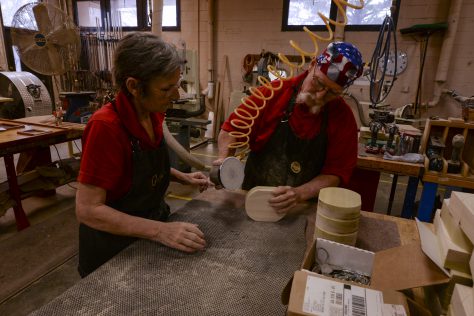
Husband and wife doing some woodworking together

(Image: Husband and wife doing some woodworking together)

Astonishing article from the leftist Huffington Post, of all places. (links removed)

Excerpt:

As millennial women, we were groomed for a white knight fantasy. From childhood favorites such as Snow White to adult rom-com staples such as How to Lose a Guy in Ten Days or Sleepless in Seattle, the media perpetuates a romantic storyline in which compatibility and lasting romance is something effortless, built on chance, sustained by good looks, fun dates and electric sexual chemistry. These story lines shape our expectations for romantic happiness. It is not enough to find someone with whom we are mostly compatible, who would make a good parent, with whom we could learn and grow wrinkly; now, we expect a perfect fit and an easy, instantaneous “connection.” In short, we want a soul mate. But it is this desire for a soul mate that is actually the undoing of our happy ending.

A “soul mate” is defined as one who is ideally suited to us, perfectly completes us, one with whom the relationship feels easy and natural. With them, a relationship is just “meant to be”… A survey of young adults conducted by the National Marriage Project found that while 84% of young adults report finding a marriage partner “very important,” a full 94% of young adults say they would like to marry a soul mate, and 73% of people ages 18 – 29 believe that there is a soul mate out there for them.

Wow. That doesn’t sound like a good approach to me. My approach has always been to pick the girl who was most willing to learn new things. And then to explain to her my vision for marriage and see if I could get her to work independently on that plan before I married her. I don’t favor this soul mate approach at all.

Does the “soul mate” approach work?

We heard that those who get married later and possess a college degree have fewer divorces and more stable marriages. So we spend our twenties trying to find ourselves through travel, accumulating degrees and building a career. Marriage will be the capstone of our achievements, and nothing less than tying the knot with a soul mate will suffice. But the tragic irony is that soul mate thinking makes us increasingly likely to divorce. A study of 1,400 married men and women shows that people who hold soul mate orientations are 150% more likely to end up divorced than those who do not.

The widespread cultural belief in “soul mate ideology” undermines our chances at happiness because it makes us passive receivers of idyllic romantic expectations. Further, it fosters self-centeredness; one rarely longs to be a soul mate for someone else, which would require effort. For this reason, believing in soul mates is one of the most dis-empowering belief systems we can adopt. As millennials, we pride ourselves on actively pursuing the life we want to live, rather than simply accepting whatever hand we are dealt. We are innovative, passionate, proactive and not afraid to take risks. Yet, there is a disconnect when it comes to our desire for lasting love. Though there are prospects around us, we forgo taking the concrete steps needed to build happy compatible relationships because we do not “feel a spark.” We are passively waiting on the sidelines for love to “happen,” and then wonder why it is so difficult.

I’ve always felt that the soul mate approach was like the evil villain in opposition to my noble plan-based approach. My approach is to pick a woman who wants to learn and work hard. Explain your marriage plan to her, and how your marriage plan serves God. My marriage plan accomplishes four goals, for example. 1) Influence the university with apologetics, 2) influence the church with apologetics, 3) provide a model of a good marriage to people in the community, including co-workers, college students and neighbors, and 4) raise effective, influential children who will have an impact for God. Now if you are a Christian woman raised in a church that affirms the soul mate / fairy tale view of marriage with this “God has a wonderful plan for your life” stuff, then a specific, non-emotional plan from a man is the last thing you want to hear about.

Their solution is for people to work at compatibility:

Compatibility is something co-created through intentionality and conscious choice. It involves mutual sacrifice, effort and commitment for the sake of the other’s benefit. A recent study found that of the couples who demonstrate above average daily generosity, 50% of them report being “very happy” in marriage; among the low generosity scores, only 14% can say the same. As studies indicate, selflessness is required to create mutual compatibility. It is not instantaneous, nor does it usually begin with true love’s kiss.

We both know from experience that there are some you naturally connect with and others you do not. This is not a call towards forced attraction or companionship. But, our romantic futures should not be placed in the hands of blind chance. It is time we roll up our sleeves and shift our expectations from unattainable perfection to realistic romance, one that accounts for imperfection. We must understand that work in a relationship is a necessary key to success, rather than an indication of imminent failure. We will be letting go of a tired plot line that sets us up for disappointment and embracing an active role in our own unique story.

How refreshing to know that we do not have to be perfect to be lovable, and that our romantic success is not solely dependent on finding the “right” fit, but instead built through cultivating daily moments of generosity, sacrifice and conscious coupling.

So in my case, I am looking for a woman who listens to the plan, develops the skills for the plan and then independently engages in activities to achieve the goals of the plan. In the past, I have had women listen to the plan carefully, including my motivations and experiences that caused me to choose this plan. And they have been willing to read books, listen to lectures, watch debates, to gain the skills needed to make a difference. And they have even engaged independently with activities like public speaking, teaching classes, and so forth. But none of the women who had done that accepted the soul mate / fairy tale view of marriage. They all wanted to hear a good plan, learn useful skills and then get to work. Big difference.