Tag Archives: Courage

Courage under fire: Ronald Speirs and Easy Company at the Battle of Foy

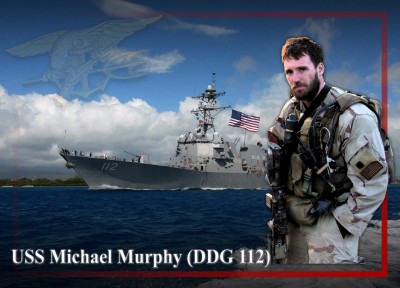
I  try to occasionally post something that shows a particularly brave action from some time and place in military history. For example, I previously wrote about Medal of Honor winner Michael Murphy in 2011. Last year, his story was told more widely in the movie “Lone Survivor”, which I recommend to everyone. Today I want to highlight another hero: Ronald Speirs.

It is January 1945 and the famous “Screaming Eagles”, the 101st Airborne division, are about to turn the tide of the Battle of the Bulge in Bastogne.

Let’s read about the Battle of Foy courtesy of a scenario description from the wargame “Flames of War”. (Note: LMG = light machine gun, in this case, a .30 caliber machine gun)

Excerpt:

E or ‘Easy’ Company, 2nd Battalion, 506th Parachute Infantry Regiment, 101st Airborne Division, like the rest of the division, was ordered on to the attack on 9 January 1945 as part of a general offensive to drive back the Germans from Bastogne. In the following days the 506th Regiment, along with the 501st Parachute Infantry Regiment, cleared the forests around the town of Foy and pushed the Germans out. Their next objective was to take Foy to allow the 11th Armored Division to attack from Foy across the fields northeast towards Noville.

[…]At 0900 hours on 13 January Easy Company attacked along the western edge of Foy, along the road. The new year had brought heavy snow and the it blanketed the ground and had reduced temperatures to well below zero. 2nd Battalion commander, Captain Dick Winters, had two section of LMGs deployed on the edge of the woods facing Foy to give Easy Company covering fire while they crossed the 250 yards of open field between the forest and Foy’s buildings. There were just a few scattered trees and haystacks to give cover. As Easy Company advance the covering fire did its job, limiting the fire on the paratroopers to sporadic rifle shots. The approach on Foy made good pace under the cover of the LMG fire, but about 75 yards out from the edge of the village the skirmish line halted and the paratroopers hunkered down in the snow. Captain Winters stared in disbelief, wondering what was going on.

Lieutenant Dike, who was commanding Easy Company, had been overwhelmed with indecision. It became obvious to Winters that Dike didn’t know what he was doing, or had had a failure of confidence. His immediate impulse was to take command himself, but he noticed Lieutenant Ronald Speirs, a capable platoon commander from D Company, standing nearby. Winters ordered Speirs to take command of Easy Company and get the attack moving again. What Speirs did next amazed many of the paratroopers who witnessed it.

On receiving his orders from Winters, Speirs immediately ran at full speed down to where Dike and his HQ had taken cover behind a haystack and told Dike his orders, ‘I’m here to take over’. After quickly being told of the situation by the NCOs he ran off towards Foy. The men of Easy Company immediately followed. On reaching the outskirt buildings of Foy, Speirs immediately sought to link up with I Company of 3rd Battalion who, despite only having 25 men, were supporting the attack from the other flank of Foy. He set off running again, through the German lines, to find I Company’s commander. After consulting with its commander, Captain Gene Brown, he turned around and dashed back through Foy and the surprised Germans. Through all this the enemy fired on him with machine-guns, rifles and guns, but not a single shot hit its mark.

Now with all that said, watch the two clips below, and pay close attention the faces of the men under Lieutenant Dike, and then later under Lieutenant Speirs. Pay close attention to how Speirs’ courage inspires the men under him to also be courageous. Especially First Sergeant Lipton, who later risks his own life to draw fire from a German sniper so that Shifty Powers can prevent any other troops from being killed by the sniper.

The two clips are from “Band of Brothers”, the episode entitled “The Breaking Point“. There is some coarse language, but no sexual language in it. Really, if you are squeamish, do not watch it. However, if you can handle it, then buy the whole DVD set. It will inspire you, and help you to do things that you didn’t think were possible. If you really want to understand the men of E Company, you can read a book by Stephen E. Ambrose called Band of Brothers: E Company, 506th Regiment, 101st Airborne from Normandy to Hitler’s Eagle’s Nest (New York, 1992).

Low resolution clip, includes briefing at the beginning

This video is lower resolution, but show Winters reflecting on how Lipton had asked him not to let Dike lead the attack the night before, and also Winters carefully explaining to Dike that the American attack has to keep moving or they will get pinned down by machine guns and zeroed-in by mortars and destroyed.

I like that one because it shows the briefing, but the next clip is in 720HD.

High resolution clip, does not include briefing

This is a higher resolution version that is only 8.5 minutes long, but doesn’t have the briefing.

If you listen closely when Speirs explains what everyone is going to do, you can here one of the NCOs say “thank God” as he pats the other on the back.

Leadership

To be a good military leader, you have to know many things. A knowledge of strategy and tactics, a knowledge of military history, the ability to see the battlefield, knowledge of your opponent, knowledge of weapons, and so on. But surely the greatest of these is courage. As Von Clausewitz says in his famous book “On War”, “War is the province of danger, and therefore courage above all things is the first quality of a warrior.” Nothing inspires troops like a commander who is willing to take on the same risks that he asks his troops to take.

Take a look at this article from the Ivey School of Business journal, which talks about the characteristics of Canadian generals in Afghanistan.

Excerpt:

A leader must be in front of subordinates.  This takes courage.  Leadership from the front encapsulates the adage, never ask a subordinate to do something that you, the leader, wouldn’t do.  In Afghanistan, the leader must not only be in front, but he or she must be seen to be in front.  Subordinates seek this reassurance from their leaders at all levels.  Though they may be tentative, leaders must demonstrate character and moral strength.  Their credibility is inextricably dependent on their ability to do so..  During his frequent visits to Afghanistan, former Chief of Defence Staff (CDS), General Rick Hillier, made a point of visiting troops that were situated in some of the most IED-laden areas of the Canadian sector.  Through his demonstrated courage, he inspired leaders of all levels.  “If the CDS goes there, so can I” was the resulting mindset.  The current CDS, General Walt Natynczyk, has successfully continued this practice.

[…]All leaders need courage. It is the lynchpin of effective leadership.  No one respects a wimp who will buy in to any idea no matter how inane it might be.  Courage is having the strength of character to persist and hold on to ideas in the face of opposition.  Here, I’m not restricting my treatment of courage as it relates to fear.  It’s also about strength of character and devotion to causes and ideas.

As Christians, we have a leader who led by example. We all need to learn to not be so concerned with looking out for ourselves and our happiness first, but to instead be willing to take risks and sacrifice ourselves to do the right thing. We Christians should all be courageous, because we are led by a courageous leader.

That doesn’t necessarily mean going halfway across the world, it can mean reaching out to someone right there next to you who needs your help and support. Maybe that person has been running on an empty tank for a long time, but still trying to do the right thing. You never know when the opportunity to do something amazing will arise, but you won’t take it if you keep thinking of how you might get hurt. You have to reconcile yourself that you are not here to avoid every possible kind of suffering. It doesn’t mean that you take unnecessary risks, but it does mean not letting fear stop you from doing the right thing.

Now get out there and take that attack on in.
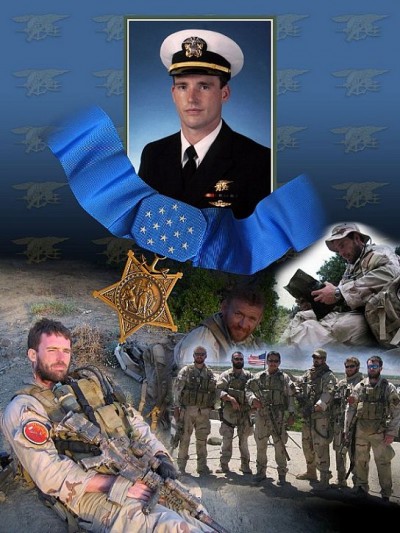
Veteran’s Day re-post: Navy SEAL Michael Murphy awarded Medal of Honor

Navy SEAL Michael Murphy wins Medal of Honor

For Veteran’s Day, I am re-posting one of my favorite Medal of Honor stories.

The Washington Examiner reports on the story of a brave Navy SEAL named Michael Murphy.

Excerpt:

Engaged in a frenzied firefight and outnumbered by the Taliban, Navy Lt. Michael Murphy made a desperate decision as he and three fellow SEALs fought for their lives on a rocky mountainside in Afghanistan’s Kunar Province in 2005.

In a last-ditch effort to save his team, Murphy pulled out his satellite phone, walked into a clearing to get reception and called for reinforcements as a fusillade of bullets ricocheted around him. One of the bullets hit him, but he finished the call and even signed off, “Thank you.”

Then he continued the battle.

Dan Murphy, the sailor’s father, said it didn’t surprise him that his slain son nicknamed “The Protector” put himself in harm’s way. Nor was he surprised that in the heat of combat his son was courteous.

“That was Michael. He was cool under fire. He had the ability to process information, even under the most difficult of circumstances. That’s what made him such a good SEAL officer,” Murphy said.

A warship bearing the name of the Medal of Honor recipient will be christened Saturday — on what would have been Murphy’s 35th birthday — at Bath Iron Works, where the destroyer is being built.

Murphy, who was 29 when he died, graduated from Pennsylvania State University and was accepted to multiple law schools, but decided he could do more for his country as one of the Navy’s elite SEALS — special forces trained to fight on sea, air and land — the same forces that killed Osama bin Laden this week in Pakistan.

[…]Murphy, of Patchogue, N.Y., earned his nickname after getting suspended in elementary school for fighting with bullies who tried to stuff a special-needs child into a locker and for intervening when some youths were picking on a homeless man, said Dan Murphy, a lawyer, former prosecutor and Army veteran who served in Vietnam.

Maureen Murphy said he thought he was too young to take a desk job as a lawyer. Instead, he went to officer candidate school, the first step on his journey to become a SEAL officer. He was in training during the Sept. 11 attacks, which shaped his views.

His view was that there are “bullies in the world and people who’re oppressed in the world. And he said, ‘Sometimes they have to be taken care of,'” she said.

On June 28, 2005, the day he was killed, Murphy was leading a SEAL team in northeastern Afghanistan looking for the commander of a group of insurgents known as the Mountain Tigers.

What happened to Murphy?

The Operation Red Wings reconnaissance team rappelled down from a helicopter at night and climbed through rain to a spot 10,000 feet high overlooking a village to keep a lookout. But the mission was compromised the following morning when three local goat herders happened upon their hiding spot.

High in the Hindu Kush mountains, Murphy and Petty Officers Marcus Luttrell of Huntsville, Texas; Matthew Axelson of Cupertino, Calif.; and Danny Dietz of Littleton, Colo.; held a tense discussion of the rules of engagement and the fate of the three goat herders, who were being held at gunpoint.

If they were Taliban sympathizers, then letting the herders go would allow them to alert the Taliban forces lurking in the area; killing them might ensure the team’s safety, but there were issues of possible military charges and a media backlash, according to Luttrell, the lone survivor.

Murphy, who favored letting the goat herders go, guided a discussion of military, political, safety and moral implications. A majority agreed with him.

An hour after the herders were released, more than 100 Taliban armed with AK-47 assault rifles and rocket-propelled grenades opened fire, attacking from higher elevation, and maneuvering to outflank the SEALs, said Gary Williams, author of “Seal of Honor,” a biography of Murphy.

[…]As the only survivor, Luttrell has pangs of regret for voting to go along with Murphy, his best friend; he now believes the team could’ve survived if the goat herders were killed.

He wasn’t willing to kill unarmed civilians. That’s the difference between the United States and the Muslim terrorists. It’s a moral difference. Michael Murphy was a good man. He used guns and violence to protect others, and he was not willing to kill unarmed civilians.

Here are the requirements for the Army version of the Medal of Honor:

The Medal of Honor is awarded by the President in the name of Congress to a person who, while a member of the Army, distinguishes himself or herself conspicuously by gallantry and intrepidity at the risk of his or her life above and beyond the call of duty while engaged in an action against an enemy of the United States; while engaged in military operations involving conflict with an opposing foreign force; or while serving with friendly foreign forces engaged in an armed conflict against an opposing armed force in which the United States is not a belligerent party. The deed performed must have been one of personal bravery or self-sacrifice so conspicuous as to clearly distinguish the individual above his comrades and must have involved risk of life. Incontestable proof of the performance of the service will be exacted and each recommendation for the award of this decoration will be considered on the standard of extraordinary merit.

I once read an entire book on Medal of Honor award winners in World War II. It’s hard to read those stories, because these people who won the award did amazing acts of bravery, courage and self-sacrifice, but then most of them DIED. The stories almost always end in sadness and grief. Here’s the one that really stuck with me as an example.

On a happier note, what kind of ship do you think would suit Michael Murphy?

 USS Michael Murphy DDG 112 Arleigh Burke
USS Michael Murphy DDG 112 Arleigh Burke

Michael Murphy is getting a brand new Arleigh Burke guided missile destroyer! Arleigh Burke vessels have the AEGIS missile defense system and their role is to protect carrier strike groups from incoming SSMs and ASMs.

Excerpt:

The Arleigh Burke Class destroyers are equipped with the Aegis combat system which integrates the ship’s sensors and weapons systems to engage anti-ship missile threats.

The Aegis system has a federated architecture with four subsystems – AN/SPY-1 multifunction radar, command and decision system (CDS), Aegis display system (ADS) and the weapon control system (WCS). The CDS receives data from ship and external sensors via satellite communications and provides command, control and threat assessment. The WCS receives engagement instruction from the CDS, selects weapons and interfaces with the weapon fire control systems.

[…]Lockheed Martin is developing the Aegis ballistic missile defence (BMD) capability for the Aegis combat system to engage ballistic missiles with the SM-3 missile. 15 Arleigh Burke destroyers have been fitted with the Aegis BMD system, which provides the capability for long-range surveillance, tracking and engagement of short and medium-range ballistic missiles. The system received US Navy certification for full deployment in September 2006. Work was completed on the 15 destroyers at the end of 2008 and the vessels, with three Ticonderoga cruisers, form the Aegis BMD fleet. On 30 July 2009 the Aegis BMD system was successfully tested by the US Navy on the USS Hopper (DDG 70).Aegis BMD is the main sea-based component of the US ballistic missile defence system.

The weapons control systems include a SWG-1A for Harpoon, SWG-3 for Tomahawk, mk99 mod 3 missile fire control system, GWS34 mod 0 gun fire control system and mk116 mod 7 fire control system for anti-submarine systems.

Only two classes of warships that I know of have the AEGIS system. The DDG Arleigh Burke and the CG Ticonderoga.

Michael Murphy was a real hero. It makes me sad that he is gone. But his spirit will live on in the new warship that bears his name.

How Margaret Thatcher, the Iron Lady, saved Britain

Here’s an article from the UK Daily Mail with some more details about her.

Margaret Thatcher stood almost alone in driving through the tough policies now credited with saving the economy, secret papers reveal.

The Tory Premier had to take on her predecessor Harold Macmillan, Bank of England governor Gordon Richardson and even her own Chancellor Geoffrey Howe to push through the policies which pulled Britain back from the brink of economic chaos.

Documents released by the National Archives under the 30-year rule show the pressure Mrs Thatcher faced from the Establishment behind the scenes – and the extent to which she was isolated.

In 1980, the year after becoming Britain’s first female Prime Minister, Margaret Thatcher embarked on a controversial programme to revive the moribund economy through deep public spending cuts and strict control of the money supply, intended to stamp out inflation.

He warned that while her programme of cuts might give a ‘sense of exhilaration’ to her supporters, the country was heading for industrial collapse and ‘dangerous’ levels of unemployment.

Macmillan, then 86, sent the letter following a meeting with the Prime Minister at Chequers in August 1980.

He criticised her for abandoning ‘consensus politics’ to pursue radical reforms and ‘divisive politics’, which he said went against the ‘essence of Tory democracy’.

It was Macmillan who coined the phrase ‘you’ve never had it so good’ in 1957 during the long post-war economic boom.

His brand of consensus politics is now credited with contributing to the economic malaise that brought Britain to its knees in the late 1970s.

Years later, in her memoirs, Mrs Thatcher poured scorn on consensus politics, writing: ‘What great cause would have been fought and won under the banner “I stand for consensus”?.’

[…]In 1981, 365 economists wrote to The Times urging Mrs Thatcher to change course and limit the damage caused by the recession.

But she was unmoved, and her tough stance succeeded in reducing inflation from 27 per cent to four per cent in four years, putting Britain on the road to recovery.

Mrs Thatcher’s economic views were heavily influenced by the right-wing Cabinet minister Sir Keith Joseph, with whom she set up the free market think tank the Centre for Policy Studies in 1974.

Both drew on the work of the influential American economist Milton Friedman whose monetary theories challenged the post-war consensus on economic thinking.

I recommend reading the whole article for some more articles where Lady Thatcher had to stand against everyone and hold onto her convictions in the teeth of the majority.

Here’s an article from Forbes magazine that summarizes her effort to turn Britain around.

Excerpt:

It’s hard to appreciate today how desperate Britain’s condition was before Thatcher took office.  Its economy was a laughing stock, the perennial sick man of Europe.  Strikes were endemic and union bosses effectively governed the country.  Her Conservative Party had long ago made its peace with the welfare state and the ethos of high spending and high taxes. While the previous Tory Prime Minister, Edward Heath, wanted to revive Britain, he hadn’t a clue how to do it. In a make-or-break showdown with the coal miner’s union, Heath called a special election under the banner “Who Governs Britain?”  Heath lost and unions’ dominance in Britain seemed secure.

Great leaders have an astute sense of taking advantage of circumstances. Even though Heath had lost two elections, none of the senior party officials would challenge him.  At the time, Thatcher was not regarded as one of the party’s major figures.  But she was the only Tory who firmly believed in free markets and in Britain’s ability to become again a proud nation based on the principles of liberty. She was a devotee of Friedrich von Hayek and Milton Friedman and of the idea of paring back big government and giving free enterprise room to flourish. Astonishingly she beat Heath in a leadership fight in 1975 and led the Tories to victory in 1979.

Immediately she began slashing income tax rates and reining in galloping spending and fighting inflation.  She also exhibited that critical sense of timing. When she took office, she was faced with a potential strike of nurses whose union was demanding huge pay increases. Thatcher compromised in a way that some thought she didn’t have the backbone to turn Britain around.  Instead she was exhibiting a great politician’s sense of knowing when to pick a fight.  Thatcher eventually pushed through major labor union reforms and made it clear she would not tolerate any union riots or violence.  Shortly after Thatcher won reelection, the coal miners union, which had destroyed Heath, decided to take her on. But unlike Heath Thatcher was fully prepared.  The big showdown ensued and Thatcher beat the coal miner’s union resoundingly. It never recovered from that defeat.

Thatcher knew the deadweight on the economy of excessive taxation. She cut the top income tax rate from 98% to 40%. She cut the corporate income tax rate from 52% to 35%.

One of Thatcher’s greatest innovations was the systematic selling off of the government’s business assets, dubbed privatization.  After World War II Britain nationalized enormous swaths of the economy which actions subsequent Conservative governments left largely untouched.  Thatcher sold government companies off and her example has been followed by countless nations around the world.

In the area of privatizations, she did two remarkable things. She sold off much of Britain’s public housing.  An enormous number of Britons, far more than in the U.S., lived in these government-owned buildings. Thatcher pushed the sale of these apartments to occupants at low prices and on very advantageous terms. The purpose was to begin to shift the mentality of people and their dependence on government. Her other smart move was in the privatization of government-owned companies:  offering a significant number of shares to workers at very low prices.  Union leaders hated privatization but their opposition was undermined as their members realized that they could do very well buying cheap shares in these newly-privatized entities.  Here again she was changing peoples’ thinking:  pro-big government workers now saw themselves as share owners, taking on more of a capitalist mentality.

Before Thatcher, many social observers thought that Britain had an ingrained, unchangeable, anti-commercial culture that would forever stand in the way of the country becoming an economic success. Yet within a decade of her taking office, Britain had the most vibrant, large economy in Europe, one even more dynamic, innovative than that of Germany’s.  London became a magnet for entrepreneurs from France, Sweden and elsewhere.

One unchangeable characteristic of a great leader is courage and that means taking career-breaking risks.  Thatcher demonstrated her mettle in the Falkland Islands crisis.  When the Argentinean military dictatorship seized Britain’s Falkland Islands, most military experts felt the Sceptred Isle simply did not possess the military means to take them back. Defying almost the entire political establishment which was haunted by both Britain’s current weakness and the memory of the Suez Canal debacle in 1956, Thatcher declared that the seizure would not stand and that Britain would go to war to take the Islands back. Thankfully she received critical help from the U.S. thanks to in large part the unrelenting efforts of Defense Secretary Caspar Weinberger (who years later became Publisher and Chairman of Forbes). To the surprise of experts, Britain’s military expedition succeeded. The Argentinean military dictatorship fell and democracy was restored in that country.  For Britain the Falklands war was a huge boost to a demoralized nation. To the world it meant that once again tyranny would be resisted.

I recommend reading that whole article. It’s hard not to smile at a woman who clearly loved her country and worked to save it from poverty.

Why good men love Maggie

And now I must offend everyone. See, I have a theory about women. I think that women generally tend to be more beholden to the opinions and fashions of the crowd than men are. It’s not absolute, but it’s maybe two-thirds to one-third, in my experience. I think that it is generally hard for them to hold to their convictions in the face of peer pressure. That’s why so few young, unmarried women are conservative after graduating from college. As soon as they reach college, they are swayed towards liberal views by their need to feel good about themselves and their need to be liked by others. Their views at home were not rooted in real knowledge, they were just fitting in with their families and churches and saying whatever words they were expected to say. And then they go off to college and learn other words to say from another community that uses praise and blame to replace their former convictions with new convictions.

But Maggie Thatcher wasn’t like that. And here’s why:

John Ranelagh writes of Margaret Thatcher’s remark at a Conservative Party  policy meeting in the late 1970’s, “Another colleague had also prepared a paper arguing that the middle way was the pragmatic path for the Conservative party to take .. Before he had finished speaking to his paper, the new Party Leader [Margaret Thatcher] reached into her briefcase and took out a book.  It was Friedrich von Hayek’s The Constitution of Liberty.  Interrupting [the speaker], she held the book up for all of us to see.  ‘This’, she said sternly, ‘is what we believe’, and banged Hayek down on the table.”  (John Ranelagh, Thatcher’s People:  An Insider’s Account of the Politics, the Power, and the Personalities.  London:  Harper Collins, 1991.)

Policies like unilateral disarmament, wealth redistribution and redefining marriage sound good to many women – especially in college, and especially when only one side is presented and the other side is demonized. The only way to resist ideas that feel good and ideas that get you peer-approval is to have formed your own views through independent study. Lady Thatcher’s economic policies were formed through a study of real economists like Nobel-prize-winning economist F.A. Hayek and Nobel-prize-winning economist Milton Friedman. The reason why she was able to hold to her principles is because she knew what she was talking about, and her opponents did not. She didn’t care about feeling good. She didn’t care about what other people thought of her. She knew was right, and that was enough to sustain her in trying times. She had the knowledge, and her opponents couldn’t change her core convictions by trying to shame her. It didn’t work.