Tag Archives: Cost

V-22 Osprey gets rave reviews from deployed US Marines

Here’s a photo of the V-22 Osprey – it can change from a helicopter to a plane:

V-22 Osprey Joint Service Aircraft

Here’s a quick run-down on what the V-22 Osprey can do.

Excerpt:

The V-22 is a tiltrotor aircraft, taking off and landing like a helicopter, but, once airborne, its engine nacelles can be rotated to convert the aircraft to a turboprop airplane capable of high-speed, high-altitude flight.

It can carry 24 combat troops, or up to 20,000 pounds of internal or external cargo, at twice the speed of a helicopter. It includes cross-coupled transmissions so either engine can power the rotors if one engine fails.

The rotors can fold and the wing rotate so the aircraft can be stored aboard an aircraft carrier.

[…]The Osprey has two, large, three-bladed rotors that rotate in opposite directions and produce lift. Because the rotors turn in opposite directions, there is no need for a tail rotor to provide stability as in a helicopter. The wing tilts the rotors between airplane and helicopter modes and generates lift in the airplane mode. The Osprey can convert smoothly from helicopter mode to airplane mode in as few as 12 seconds.

The major advantages of the Osprey over a helicopter are:

  • Longer range – The Osprey can fly from 270 to 580 miles (453 to 933 km).
  • Higher speed – The Osprey’s top speed is 315 mph (507 kph), which is twice as fast as a helicopter’s top speed.
  • Increased cargo capacity – The Osprey can carry 20,000 pounds (4,536 kg) of cargo or 24 troops.

The advantage of the Osprey over an airplane is that it can take off, hover and land like a helicopter. This makes is more versatile than an airplane for such missions as moving troops to remote areas, especially those without landing strips, or conducting long-range rescue operations at sea.

The Hill has battlefield reports about the performance of the USMC V-22 Osprey tiltrotor aircraft.

Excerpt:

Military and industry officials rave about the V-22 tiltrotor’s performance in Afghanistan but know they need to show the aircraft is worth its high price tag.

The Marine Corps are flying V-22 Ospreys in theater and “it’s more effective than we expected,” Maj. Gen. Jon Davis, Second Marine Corps Air Wing commander, told reporters here recently. “We have only scratched the surface with this aircraft. … “We’re doing things with the V-22 we did not plan to do.”

The V-22 takes off vertically but can fly like a plane, allowing it to travel faster than traditional helicopters. The military is using the craft to haul teams of Marines, special operators, combat rescue personnel and cargo.

But there are questions in defense circles about whether — after years of technical delays and cost spikes —such glowing reviews will be enough to avoid future cuts as White House, Pentagon and congressional officials look for ways to trim the annual Defense budget.

Despite rave reviews from war fighters, the program is among the most expensive at the Pentagon.

Each Osprey has a flyaway cost of $65 million. The Pentagon already has spent over $30 billion on the V-22 program, according to the Congressional Research Service.

But some people would rather cut the V-22 than cut Obamacare:

Liberal lawmakers often come after the Osprey initiative when looking for places to trim Pentagon spending.

Last month, Rep. Lynn Woolsey (D-Calif.) offered an amendment to a Pentagon policy bill that would have directed the department to spend no monies on the program in 2012.

Woolsey dubbed the program a “boondoggle” for the “military-industrial complex.” Terminating the program would save more than $12 billion over 10 years, and $2.5 billion in 2012 alone, she claimed.

The House overwhelmingly defeated her amendment, but not before Woolsey said the aircraft has gotten “mediocre marks” from independent auditors and “underperformed across the board.” There are reports the V-22 has struggled in “high-threat environments,” she said.

She also said it has failed to “prove its worth” operationally and has had a number of major crashes. But Davis says it has proven its value, citing the fleet’s strong record in a rugged war theater.

Program officials and advocates are ready to fight back as Washington continues talking about an era of federal spending cuts.

Their embryonic message, as Davis put it: “Why would we terminate something that works?”

Marine Corps and Bell-Boeing officials also say to avoid budget cuts or a reduced buy, they will have to show critics like Woolsey that the fleet is reliable.

Right now, the Osprey’s closely monitored reliability rate in Afghanistan is around 73 percent, according to program officials.

Davis wants to push that figure to 80 percent, saying that would make the V-22 among the military’s most reliable aircraft.

I love the V-22 Osprey. It is a force multiplier, in my opinion. And can you imagine that some people wanted to cancel it just because of some difficulties they had early on in testing?

Related posts

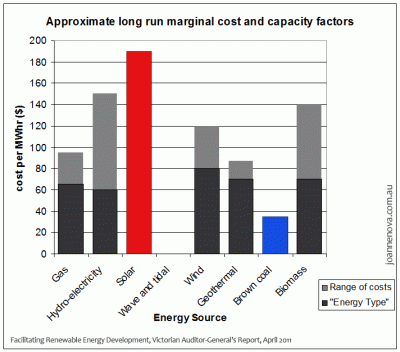
New report compares cost of coal power to renewable wind and solar power

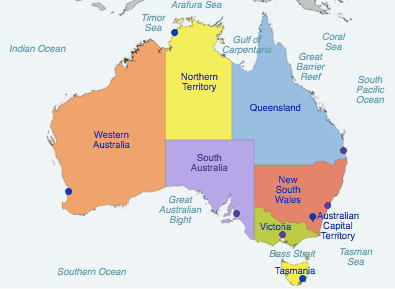
Map of Australia
Map of Australia

From the Victorian Auditor-General’s Report, April 2011. (H/T Joanne Nova)

Here’s the chart:

Cost of renewable wind and solar energy

Click here for a bigger version.

Compared to coal, wind power is incredibly expensive, and solar power is even worse.

What happened when the Canadians embraced wind and solar power?

What happened to consumer energy prices in Ontario when the Liberal government embraced unproven wind and solar power?

The Globe and Mail explains:

If you haven’t opened your September hydro bill yet, you’re in for a shock. Rates have risen 18 per cent this year to date, and that’s just the start. By this time next year – election time – Ontario power consumers will be forking over about twice as much (in nominal terms) as they did when Dalton McGuinty took office in 2003.

[…]Power expert Tom Adams may know more about this subject than any other living being. And he’s steamed. Ontario’s rates, he says, have already surpassed the U.S. average and are headed for European levels – “just because of public policy.”

The policy is to go all out on renewables – wind and solar– whether or not it makes sense. The province is paying sky-high rates for power it doesn’t need so we can have wind turbines marching on and on to the horizon, just like Denmark does. “Power demand has been dropping since 2005,” says Mr. Adams. In fact, we have so much excess supply that, from time to time, it threatens to crash the system. Because of this, we’re even paying the neighbours to take the power off our hands.

“Ontario will need new power supplies in the future,” Mr. Adams says. “But why not buy it when we need it?” Instead of waiting, the power authority is signing long-term contracts at the rate of about $1-billion a week, while paying enormous premiums to attract wind and solar producers. In other words, it’s making 20-year commitments to pay stunningly high prices for power we don’t need.

On top of that, the province is building new transmission lines to nowhere while neglecting to ensure that Toronto’s hospitals and banks can keep the lights on. In July, Toronto experienced what Mr. Adams calls “Ontario’s first green blackout.” That blackout occurred because the city’s downtown core is badly underpowered. It has the weakest power system of any financial centre in the developed world.

Why haven’t we done anything about it? Because the green lobby has been campaigning for conservation, instead. And so, when the government started picking sites for transmission upgrades, it decided to build a power line up the shore of Lake Nipigon to connect remote wind turbines to Thunder Bay.

Ever since the days of Adam Beck, the father of public power in Ontario, the province’s energy policy has been linked to economic policy. The motto was reliable power at cost. Now energy policy has been entirely decoupled from economic policy and attached to the runaway train of environmental policy. Everyone in the power system knows it. But they’re so terrified to raise their hands, most of the public is still in the dark.

The National Post wrote about how the Ontario government wastes taxpayer money to subsidize big corporations who experiment with unproven, expensive energy programs, like solar power.

Excerpt:

The Swedish retail giant IKEA announced yesterday it will invest $4.6-million to install 3,790 solar panels on three Toronto area stores, giving IKEA the electric-power-producing capacity of 960,000 kilowatt hours (kWh) per year. According to IKEA, that’s enough electricity to power 100 homes. Amazing development. Even more amazing is the economics of this project. Under the Ontario government’s feed-in-tariff solar power scheme, IKEA will receive 71.3¢ for each kilowatt of power produced, which works out to about $6,800 a year for each of the 100 hypothetical homes. Since the average Toronto home currently pays about $1,200 for the same quantity of electricity, that implies that IKEA is being overpaid by $5,400 per home equivalent.

Welcome to the wonderful world of green economics and the magical business of carbon emission reduction. Each year, IKEA will receive $684,408 under Premier Dalton McGuinty’s green energy monster — for power that today retails for about $115,000. At that rate, IKEA will recoup $4.6-million in less than seven years — not bad for an investment that can be amortized over 20.

No wonder solar power is such a hot industry. No wonder, too, that the province of Ontario is in a headlong rush into a likely economic crisis brought on by skyrocketing electricity prices. To make up the money paid to IKEA to promote itself as a carbon-free zone, Ontario consumers and industries are on their way to experiencing the highest electricity rates in North America, if not most of the world.
The government’s regulator, the Ontario Energy Board, has prepared secret forecasts of how much Ontario consumers are going to have to pay for electricity over the next five years. The government won’t allow the report to be released. The next best estimate comes from Aegent Energy Advisors Inc., in a study it did for the Canadian Manufactures and Exporters group. Residential rates are expected to jump by 60% between 2010 and 2015. Industrial customers will be looking at a 55% increase.

Going back to 2003, based on numbers dug up by consultant Tom Adams, the price of residential electricity in Ontario hovered around 8.5¢ a kWh in 2003 — the first year of the McGuinty Liberal regime. By 2015, Aegent Energy estimates the price will be up to 21¢, an increase of 135%. Doubling the price of electricity in a decade is no way to spur growth and investment. In this age of global economic competition IKEA may end up with fewer sales of its Billy bookshelves in Toronto because its customers will be bogged down with soaring power bills and a sliding economy.

How about wind power in a coastal province like New Brunswick? Is that any better? The National post explains the costs and drawbacks of wind power.

Excerpt:

A $200-million wind farm in northern New Brunswick is frozen solid, cutting off a potential supply of renewable energy for NB Power.

The 25-kilometre stretch of wind turbines, located 70 kilometres northwest of Bathurst, N.B. has been completely shutdown for several weeks due to heavy ice covering the blades.

[…]Wintery conditions also temporarily shutdown the site last winter, just months after its completion. Some or all of the turbines were offline for several days, with “particularly severe icing” blamed.

The accumulated ice alters the aerodynamics of the blades, rendering them ineffective as airfoils. The added weight further immobilizes the structures.

[…]Melissa Morton, a spokeswoman for the utility, says the contract isn’t based on power delivered during a specific period, but rather on an annual basis.

“Our hopes is that it will balance out over the 12-month period and, historically, that has been the case.”

Despite running into problems in consecutive winters, Ms. Morton says NB Power doesn’t have concerns about the reliability of the supply from the Caribou Mountain site.

It’s a waste of taxpayer money.

Paul Ryan explains why Republicans are doing what they promised to do

Rep. Paul Ryan - GOP Ideas Man

Here’s the video from The Blog Prof.

Paul Ryan is going to do it because he said he would do it.

If you would like to understand what consumer-driven health care is, read this post from the Heritage Foundation.

Excerpt:

If policymakers are serious about real patient-centered, consumer-driven health care reform, they should ensure that their legislative proposals embody six key principles:

  • Individuals are the key decision makers in the health care system. This would be a major departure from conventional third-party pay­ment arrangements that dominate today’s health care financing in both the public and the private sectors. In a normal market based on personal choice and free-market competition, consumers drive the system.
  • Individuals buy and own their own health insurance coverage. In a normal market, when individuals exchange money for a good or service, they acquire a property right in that good or ser­vice, but in today’s system, individuals and families rarely have property rights in their health insur­ance coverage. The policy is owned and controlled by a third party, either their employers or govern­ment officials. In a reformed system, individuals would own their health insurance, just as they own virtually every other type of insurance in virtually every other sector of the economy.
  • Individuals choose their own health insur­ance coverage. Individuals, not employers or government officials, would choose the health care coverage and level of coverage that they think best. In a normal market, the primacy of consumer choice is the rule, not the exception.
  • Individuals have a wide range of coverage choices. Suppliers of medical goods and ser­vices, including health plans, could freely enter and exit the health care market.
  • Prices are transparent. As in a normal market, individuals as consumers would actually know the prices of the health insurance plan or the medical goods and services that they are buying. This would help them to compare the value that they receive for their money.
  • Individuals have the periodic opportunity to change health coverage. In a consumer-driven health insurance market, individuals would have the ability to pick a new health plan on predict­able terms. They would not be locked into past decisions and deprived of the opportunity to make future choices.

And if you’re looking for a nice short podcast on consumer-driven health care, go right here.

If you want a book on this, you can get Regina Hertzlinger’s book (interview here), although I read it, and I found it filled with too many case studies and stories and not enough policy analysis.

UPDATE:

More Paul Ryan: (H/T Hyscience)

And some Michele Bachmann: (H/T Gateway Pundit)

And the House votes to repeal Obamacare, with 3 Democrats joining the Republicans, and no Republicans joining the Democrats.

Related posts