Tag Archives: Corporate Tax Rate

Burger King leaves U.S. 35% corporate tax rate for Canada’s 15% corporate tax rate

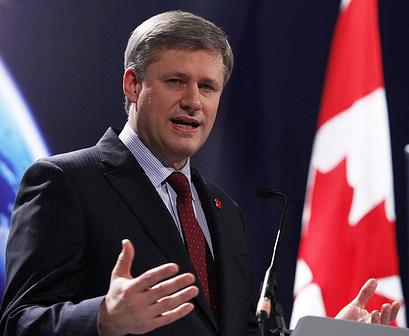
Prime Minister Stephen Harper
Prime Minister Stephen Harper: all your base are belong to us!

Wow, I really hate Burger King, but this latest move leaves me very confused. Maybe I have to eat there now?

The Chicago Tribune reports on it.

Excerpt:

Canada has become the latest frontier for U.S. companies fleeing the high cost of business, spurred by low corporate taxes and a policy that keeps international earnings out of the clutches of the Internal Revenue Service.

Burger King, the second-largest U.S. burger chain, agreed to acquire Oakville, Ontario-based Tim Hortons on Tuesday for about C$12.5 billion ($11.4 billion) in a deal that creates the world’s third-largest fast-food chain and moves its headquarters in Canada. It’s “not fair” that companies can renounce their U.S. citizenship by filling out paperwork, a White House spokesman said Monday.

The deal for Oakville, Ontario-based Tim Hortons follows Valeant Pharmaceuticals’ merger with Canada’s Biovail in 2010, which sparked the latest so- called tax-inversion wave.

Burger King is unlikely to be the last U.S. company to consider moving north even as President Barack Obama and his aides try to curb the practice, tax experts say. In addition to avoiding U.S. taxes on global earnings, companies like Burger King can take advantage of Canadian tax rates that have been cut by about a quarter in the past eight years.

“We have now made it a lot more attractive for companies to say Canada is a good place to set up shop,” said Jack Mintz, director of the University of Calgary’s School of Public Policy.

[…]Lower corporate taxes may also be an attraction for foreign companies. Canada began cutting its federal corporate tax rate in 2001 under the previous Liberal government. Prime Minister Stephen Harper then took up the baton, dropping the rate in several steps to 15 percent in 2012. Combined with provincial rates averaging 11.5 percent, Canada’s rate of 27 percent is now the second-lowest in the Group of Seven countries behind the U.K.’s 21 percent, according to auditing and tax firm KPMG.

Canada’s combined rate is still above the 24 percent average for the Organisation for Economic Co-operation and Development, according to the report.

Low corporate tax rates helped the country rise to second place in a Bloomberg ranking of best countries for doing business in January, behind only Hong Kong.

“We are proud that our low tax environment in Canada attracts businesses,” Carl Vallee, a spokesman for Harper, said by email on Monday.

The U.S. corporate tax rate is the highest in the world. It warms my heart to think that corporations are moving out to Canada. And I hope they take the jobs with them, because that’s the only way people will learn to elect presidents who understand economics. Our leader is out of his depth trying to run this country, and is only able to his economic failures by borrowing trillions and trillions of dollars from our children. Anybody can appear competent if they borrow and spend that much money, but it’s a bubble, just like the housing bubble his party caused. Canada’s prime minister has a BA and MA in economics – he actually knows how economies work. We could have picked someone qualified, but we didn’t.

I fully expect Obama to whine like a little girl about this, and call Burger King “unpatriotic”. This is loser talk, because he is a loser. The limit of his knowledge of economics is that he makes snarky speeches insulting people who disagree with him. Why did we elect this stand-up comedian? Is that what a President is supposed to do?

Canada’s economic boom: low tariffs, low corporate tax and more oil drilling

Prime Minister Stephen Harper

From Canoe.

Excerpt:

Finance Minister Jim Flaherty announced Sunday the government will scrap 70 tariff items to save Canadian businesses about $32 million a year.

“This builds on our government’s commitment in Budget 2010 to make Canada a tariff-free zone for industrial manufacturers,” Flaherty said in a statement. “By lowering costs for these businesses, we are enhancing their ability to compete in domestic and foreign markets and helping them invest and create jobs here at home.”

Various sectors — including food processing, apparel, electrical equipment and furniture — will benefit from the move.

The Conservatives had previously eliminated the duty on imported machinery and equipment in an attempt to make Canada a tariff-free zone for industrial manufacturers by 2015.

The Tories say that since 2009 they have eliminated more than 1,800 tariff items and have provided more than $435 million in annual tariff relief to Canadian businesses.

According to the leftist CTV news, Canada also has lower corporate taxes.

Excerpt:

The study released Wednesday by KPMG International found Canada’s corporate tax rate has dropped by more than 16 per cent over the last 11 years.

Canadian companies are actually paying less than their American counterparts.

On average, Canadian companies pay 28 per cent of their income in federal and provincial tax, well below the 40 per cent paid by American companies.

But Canada’s corporate tax rate is higher than Europe’s 20 per cent and the OECD average of 26 per cent.

Canadian corporate taxes fell three per cent in 2011, from 31 per cent in 2010.

“Canada’s corporate tax rate falls around the middle of the pack among the OECD countries,” said Elio Luongo, KPMG’s Canadian Managing Partner for Tax.

“But Canada’s general corporate tax rate is anticipated to continue to fall in 2012, when the federal tax rate will be 15 per cent, versus 16.5 per cent in 2011.”

I’ve written before about how Democrats oppose the job creation that would occur if the United States developed energy in Alaska, the Gulf of Mexico and the Ohio shale. Additionally, Obama has also opposed building the Keystone XL pipeline, which would have created 20,000 jobs paid for by a Canadian company. But Canada has no problems with developing their own energy resources, because their government operates independently of the environmentalist left.

Excerpt:

As world leaders gather in South Africa to discuss climate change this week and next, Canada’s environment minister says he plans to defend Alberta’s oilsands and is willing to argue they are an “ethical” and reliable energy source.

Heading into the 17th Conference of the Parties meeting, Environment Minister Peter Kent says he will not sign on to any deals that mandate some countries reduce greenhouse gas emissions while others don’t — as his government argues was the case under the Kyoto Protocol. He is also unequivocal in his defence of northern Alberta’s bitumen production, a position he expects will be supported by Alberta Environment Minister Diana McQueen when she joins him at the end of the week.

“We still need to — and the industry needs to and our provincial partners need to — be aggressive in ensuring international friends and neighbours and customers recognize Alberta’s heavy oil is no different from heavy oil produced in any number of other countries which don’t receive nearly the negative attention or criticism,” he says. “It is a legitimate resource.”

Kent has made headlines in the last year by arguing that Alberta’s oil is “ethical.”

“We talk about this on quite a regular basis,” Kent says. “I think it’s important we correct where we find … misunderstanding, misinformation or deliberate ignorance to demonize, to criticize and to attempt … to create a boycott.”

In January, on his second day as environment minister, Kent referred to Alberta’s oilsands product as “ethical oil” during an interview with a newspaper reporter.

Reports immediately linked Kent’s comments to the title of conservative activist Ezra Levant’s recent book, Ethical Oil: The Case for Canada’s Oil Sands.

The book essentially compares Canada’s human rights record to those of other oil-producing countries, and argues Canada’s “ethical oil” is preferable to “conflict oil” produced in countries with poor human rights records, such as Sudan, Venezuela, Saudi Arabia or Iran. The argument removes environmental issues, such as greenhouse gas emissions, from the equation, though Levant notes Alberta’s data on environmental issues is more transparent than information shared by other countries.

So in total I’ve presented three reasons why the Canadian economy is booming, while the American economy is stuck in neutral. Obama opposes free trade, lower corporate taxes and domestic energy production. When you elect a socialist lawyer, you get a Greece/Spain economy. When you elect a capitalist economist, you get Canada’s booming economy, and consequently, a lower unemployment rate. Recall that our recession began exactly when we elected Nancy Pelosi to the House leadership and Harry Reid to the Senate leadership in 2007. Democrats wreck economies. There is no reason why America cannot be more prosperous than Canada, but we have to not elect an abject buffoons as our leaders.

North Dakota Republican Dan Ruby wants to slash tax rates and ban abortion

Rep. Dan Ruby
Rep. Dan Ruby

Wow, this guy is perfect!

He managed to get this pro-life bill passed in North Dakota.

Excerpt:

A strong majority of lawmakers in the North Dakota House of Representatives on Friday afternoon passed a law that would make it illegal to murder any human being from the moment of their conception.

The Defense of Human Life Act, HB 1450, recognizes every human being at any stage of development as a person under state law with a right to protection.

“The overwhelming community and legislative support for HB 1450 proves that North Dakota could be the first state to recognize the value and dignity of every living human being,” stated Representative Dan Ruby. “The Defense of Human Life Act is just common sense. Of course every human being is a person, and every innocent person should receive legal protection. I am motivated to see women and children protected by HB 1450, and I look forward to its passage in the Senate in the near future.”

While the bill prohibits chemical abortifiacients such as RU-486, it does not apply to emergency contraception, or other “contraception administered before a clinically diagnosable pregnancy.” The bill also exempts legitimate medical procedures that may lead to the death of children in the womb when a woman’s life is in danger. The bill also exempts pregnant women seeking abortions from criminal prosecution.

The bill, supported by ND Right to Life, ND Life League, ND Family Alliance, ND CWFA, and the ND Catholic Conference, passed 68-25 in Friday’s vote.

“HB 1450 simply states that all human beings will be equal under North Dakota state law.  Our law would treat all children as human beings,” said Republican Rep. Gary Paur in an email to supporters.

Daniel Woodard, a legal consultant for North Dakota Right to Life and the North Dakota Life League, told LifeSiteNews.com that the bill would put the one remaining abortion clinic in the state out of business. “This bill should shut down that clinic,” said Woodard.

That’s good, but here is something that is also just as good: not taking money away from families, and not taking money away from the corporations that enable families to have money.

Excerpt:

Under the Republican governor’s proposal, the lowest individual income tax rate would decline from 1.84 percent to 1.63 percent, while the top rate would fall from 4.86 percent to 4.65 percent. The cuts would save North Dakotans about $50 million in income tax payments over two years.

Republican and Democratic lawmakers have offered alternatives. Rep. Jerome Kelsh, D-Fullerton, the House minority leader, has introduced a bill to exempt a person’s first $40,000 of income, and a couple’s first $50,000, from the state income tax entirely.

Kelsh said he wanted to focus the tax break on lower-income North Dakotans.

“I don’t think (state) income tax, to the top level of income earners in North Dakota, is really a problem,” Kelsh said in an interview. “Maybe their federal is different, but North Dakota income tax is not very burdensome to anyone.”

Reps. Dan Ruby, R-Minot, and Jim Kasper, R-Fargo, have proposals that offer larger income tax cuts than the governor’s proposal.

Ruby’s legislation would slash corporate and individual income taxes by 60 percent. The state Tax Department estimates it would reduce income tax collections by $634.7 million over two years. It would also cut taxes on so-called “pass-through” income that individuals receive from partnerships and limited liability companies.

Ruby’s bill would cut the top corporate tax rate from 6.4 percent to 2.56 percent, and reduce all five of North Dakota’s individual income tax rates below 2 percent. The top income tax rate would fall from 4.86 percent to 1.94 percent.

Oh, and I should note that he is NOT a poet. He is a small business owner and a father of 10!