Tag Archives: Consumer

Supreme Court sides with Conservative Party against price-fixing monopoly

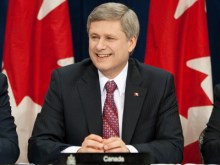
Prime Minister Stephen Harper

Story here from the Vancouver Sun. (H/T Andrew)

Excerpt:

The Canadian Wheat Board cannot spend money on advocacy to protect its monopoly, following a Supreme Court of Canada decision Thursday against hearing an appeal from the Winnipeg-based agency, which asserts that it has been silenced by the Conservative government.

Without giving reasons, the high court declined the appeal application to a Federal Court of Appeal ruling that sided with the federal government in its 2006 order from then-agriculture minister Chuck Strahl for the board to refrain from spending its money on lobbying.

[…]The federal Conservatives are seeking to end the board’s monopoly, which is controlled by farmers. The monopoly makes the agency one of the world’s biggest exporters of wheat and barley.

The board maintains that the monopoly ensures farmers receive the best prices for their grain, but the federal government, along with some farmers, say that they would be better off in a free market, selling their products on their own.

Conservatives are for a free market and competition, because we believe that it is the best way for consumers to get a low price and high quality. The proper role of government is to ensure that no organization or business enjoys monopoly status due to the government insulating them from competition. The Canadian Wheat Board is just one option, but farmers should have other choices to sell their product.

Capitalism is opposed to monopolies and it is the proper role of government to make sure that no government policy is set up to favor one corporation over any competitor. Let the farmers choose what is best for them. Choice and competition.

Dean of Harvard Medical School gives health care bill a failing grade

Story from the Wall Street Journal, by the Dean of Harvard Medical School Jeffrey S. Flier.

Excerpt:

As the dean of Harvard Medical School I am frequently asked to comment on the health-reform debate. I’d give it a failing grade.

[…]Speeches and news reports can lead you to believe that proposed congressional legislation would tackle the problems of cost, access and quality. But that’s not true. The various bills do deal with access by expanding Medicaid and mandating subsidized insurance at substantial cost—and thus addresses an important social goal. However, there are no provisions to substantively control the growth of costs or raise the quality of care. So the overall effort will fail to qualify as reform.

In discussions with dozens of health-care leaders and economists, I find near unanimity of opinion that, whatever its shape, the final legislation that will emerge from Congress will markedly accelerate national health-care spending rather than restrain it. Likewise, nearly all agree that the legislation would do little or nothing to improve quality or change health-care’s dysfunctional delivery system. The system we have now promotes fragmented care and makes it more difficult than it should be to assess outcomes and patient satisfaction. The true costs of health care are disguised, competition based on price and quality are almost impossible, and patients lose their ability to be the ultimate judges of value.

Worse, currently proposed federal legislation would undermine any potential for real innovation in insurance and the provision of care. It would do so by overregulating the health-care system in the service of special interests such as insurance companies, hospitals, professional organizations and pharmaceutical companies, rather than the patients who should be our primary concern.

In effect, while the legislation would enhance access to insurance, the trade-off would be an accelerated crisis of health-care costs and perpetuation of the current dysfunctional system—now with many more participants. This will make an eventual solution even more difficult. Ultimately, our capacity to innovate and develop new therapies would suffer most of all.

In order to have an economy recover, you need people running government who actually understand health care and economics. My lunch-time book is Regina Hertzlinger’s “Who Killed Health Care?”. Regina teaches at Harvard University, as well. She talks about how we need to lower costs and improve quality by introduce elements of choice and competition. Her plan is similar to the Republican’s Patient’s Choice Act. Consumer-Driven health care is the right solution to the problem of rising health care costs. Obama’s plan just adds fuel to the fire.

The right way to reform health care without sacrificing liberty

Consumer-driven health care:

Health Care: Fostering Focus Factories
with Dr. Regina Hertzlinger
(8:46)

Choice, Competition Should Drive Health Care Reform
with Dr. Michael D. Tanner
(5:21)

The Republican Plan (“Patient Choice Act”) is consumer-driven:

Obama’s False Health Care Choice
with Rep. Paul Ryan
(10:39)

Ideas for Free-Market Health Care Reform
with Rep. Paul Ryan
(8:30)

What’s wrong with Obamacare, Medicare, RomneyCare and CanadaCare:

Competing with the Government
with Dr. Michael F. Cannon
(7:34)

Medicare: A Model for Reform?
with Dr. Michael D. Tanner
(4:34)

Lessons from Massachusetts Health Care Reform
with Dr. Michael D. Tanner
(4:18)

The Canadian Health Care Experience
with Sally C. Pipes
(7:45)

Puncturing the Myths of American Health Care
with Sally C. Pipes
(about 8 minutes)

Michele Bachmann in defense of free trade agreements

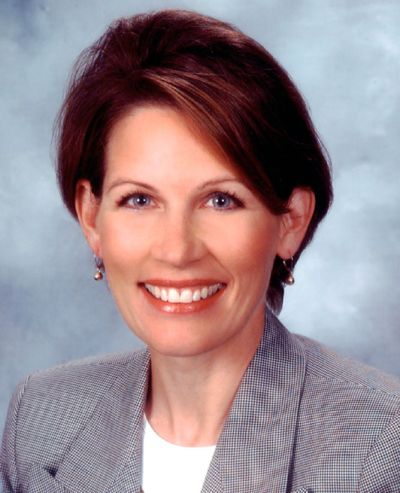
Representative Michele Bachmann

ECM sends word of a Michele Bachmann column posted at the Heritage Foundation!

Excerpt:

Each day in Minnesota and all across the nation, billions of dollars worth of products begin their journey to be sold overseas. American farmers, manufacturers, and businesses rely on exports to strengthen and grow both their bottom line, as well as our economy’s.

Free and fair trade agreements help spur economic growth; improve efficiency and innovation; create better, higher-paying jobs for hard-working Americans; and increase the availability of lower-priced products here in the United States.

Furthermore, the role of free trade as an expression of liberty and opportunity for all individuals signifies the very principles our country was founded upon.

Yet, the free trade agreements with Panama, South Korea and Colombia negotiated under the Bush Administration remain little more than words on paper. Despite having been carefully negotiated over a period of two and half years, these agreements have become bogged down by partisan divides. In the meantime, with an average tariff of 53% imposed on U.S. agricultural products by South Korea last year, for example, there is little wonder the United States International Trade Commission estimates U.S. sales of agricultural products could increase by as much as $3.8 billion once the U.S.–South Korea agreement is fully implemented.And while Congressional leaders seem content to leave these agreements on the back burner, America’s fragile industries are left hanging in the balance. The impact of depressed exports is fully evident to those who make their livelihood from them. In fact, Minnesota’s manufacturing exports experienced a 19% decline during the first quarter of 2009, mirroring a similar decrease nationwide. And our agricultural sector, especially our ailing pork and dairy producers, certainly needs no reminder of the importance of expanded export channels to the survival of their farms.

Click through and read the whole thing.

Reading this column filled me with joy and admiration, because Michele Bachmann shows  how good a Christian woman can be if she puts her mind to it. It’s so good that she has an informed view of economic policy and realizes how prosperity is important to Christians who are trying to marry and raise a family. Money is the fuel we use to run our life plans, so we all need to have jobs and to make sure that our dollar buys as many useful things as possible, by keeping prices low.

Here are my recent posts on Michele Bachmann:

You can click here for her video blog.

Please contribute to her 2010 campaign, if you can.

Here are all the posts tagged “Michele Bachmann”.

New Alfonzo Rachel video

By the way, for my female readers, the male equivalent of Michele Bachmann is Alfonzo Rachel. You can see his latest video which explains why Christianity is not compatible with socialism. He’s a devout Christian and he understands economics. He also is very entertaining in these videos he makes for PJTV.