
Tag Archives: Christianity

Two kinds of people who have tried to shame me away from Christianity

In my last job, I had two interesting encounters, first with a secular Jewish leftist man and second with a New Age prosperity gospel feminist Christian woman.

So let’s talk about the two people.

The man who thinks that conservative Christians are stupid

The first kind of person who tried to shame me for being a Christian is the person who thinks that Christianity is stupid. This kind of person invokes things that he hears in secular leftist pop culture as if it is common knowledge that theism generally, and Christianity in particular, is false. He’s watched a documentary on the Discovery channel which said that the eternally oscillating cosmology was true. Or maybe he watched a documentary on the History Channel that said that Jesus never presented himself as God stepping into history. He presents these things that he reads in the New York Times, or sees on MSNBC or hears on NPR with the authority tone that Ben Carson might take when explaining modern medicine to a witch doctor.

Here is how things usually go with him:

  • Me: here are two arguments against naturalistic evolution, the origin of life and the Cambrian explosion.
  • Him: but you don’t believe in a young-Earth do you? I mean, you believe in evolution don’t you?
  • Me: let’s talk about how proteins and DNA is sequenced, and the sudden origin of Cambrian body plans
  • Him: (shouting) Do you believe in evolution? Do you believe in evolution?

And this:

  • Me: there hasn’t been any global warming for 18 years, and temperatures were warmer in the Medieval Warming Period
  • Him: but you don’t deny climate change, do you? everyone on NPR agrees that climate change is real
  • Me: let’s talk about the last 18 years of no warming, and the temperatures during the Medieval Warming Period
  • Him: (shouting) Do you believe in climate change? Do you believe in climate change?

He asks these questions so he can either label me as a nut, without having to weigh the evidence I’m presenting, or have me agree with him, without having to weigh the evidence I’m presenting. It’s all about ignoring the evidence, so he can get back to his busy, busy practical life – and get back to feeling smug about being smarter than others. I think a lot of men are like this – they don’t want to waste their valuable time studying, they just want to jump to the right conclusion, then get back to doing whatever they want – like running marathons, or driving their kids to hockey practice, etc.

So how do you respond to a man who gets his entire worldview from the culture, but never deals with peer-reviewed evidence? Well, I think you just defeat his arguments with evidence and then present your own (peer-reviewed) evidence, and then leave it at that. If the person just wants to jump to the conclusion that all the “smart” people hold to, without doing any of the work, then you can’t win. There are atheists out there who believe in the eternal oscillating universe they saw Carl Sagan talking about in their elementary school. You might try to argue for an origin of the universe by citing new evidence like the CMB and light element abundances. But sometimes, they won’t care. Carl Sagan said it 50 years ago, and that settles it. It doesn’t matter that the new evidence overturns the old theories, they don’t care.

Do you think that Christianity will make non-Christians like you?

Consider 2 Tim 4:1-5:

I charge you in the presence of God and of Christ Jesus, who is to judge the living and the dead, and by his appearing and his kingdom:

preach the word; be ready in season and out of season; reprove, rebuke, and exhort, with complete patience and teaching.

For the time is coming when people will not endure sound teaching, but having itching ears they will accumulate for themselves teachers to suit their own passions,

and will turn away from listening to the truth and wander off into myths.

As for you, always be sober-minded, endure suffering, do the work of an evangelist, fulfill your ministry.

And 1 Peter 3:15-16:

15 but in your hearts honor Christ the Lord as holy, always being prepared to make a defense to anyone who asks you for a reason for the hope that is in you; yet do it with gentleness and respect,

16 having a good conscience, so that, when you are slandered, those who revile your good behavior in Christ may be put to shame.

If you have orthodox theological beliefs in this day and age then you are going to be shamed, humiliated and reviled by people. And it’s not just having an orthodox view of who Jesus is that annoys them (e.g. – deity, exclusivity of salvation, morality, etc.). No, their disapproval spreads on into politics, especially abortion and gay marriage – basically any kind of rules around sexuality. That’s what’s really bugging these people, I think.

The woman who thinks Christianity is life-enhancement

This one is especially difficult when you are a young man, because we naturally look to women for approval and respect. You find yourself sitting in church or youth group, hoping for the approval and respect from the Christian women for your sound theology and effective apologetics. Little do you know that many Christian women understand Christianity as life-enhancement, designed to produce happy feelings. God is their cosmic butler whose main responsibility is to meet their needs and make their plans work out. Although you might be keen on sound theology and good apologetics arguments, she doesn’t think that’s important.

So how to deal with this unmet need for approval and respect from women in the church?

First thing, be careful that you don’t attend a church where the pastor in preaching and picking hymns that give you the idea that God is your cosmic butler. Second, read the Bible very carefully, and understand that with respect to God’s purposes for you in this world, your happiness is expendable. You cannot be looking to attractive Christian women that you happen to meet in church to support you, as many of them have long-since sold out to the culture. They are not interested in learning evidential apologetics to defend God’s reputation, or in defending the unborn, or in defending natural marriage, or in defending the free enterprise system that supports family autonomy from the state, etc. Those things are hard and unpopular, especially for those women who were raised to think that Christianity is about life enhancement and peer-approval.

Here’s 1 Cor 4:1-5 to make the point:

This is how one should regard us, as servants of Christ and stewards of the mysteries of God.

Moreover, it is required of stewards that they be found faithful.

But with me it is a very small thing that I should be judged by you or by any human court. In fact, I do not even judge myself.

For I am not aware of anything against myself, but I am not thereby acquitted. It is the Lord who judges me.

Therefore do not pronounce judgment before the time, before the Lord comes, who will bring to light the things now hidden in darkness and will disclose the purposes of the heart. Then each one will receive his commendation from God.

And 2 Tim 2:4:

No soldier gets entangled in civilian pursuits, since his aim is to please the one who enlisted him.

Or, since I like Ronald Speirs from Band of Brothers so much:

This is the situation in which we find ourselves, so get used to it. And believe me, I have to deal with this, too. So I have all the sympathy in the world for you. Resign yourself to the fact that no one is going to approve of you for being faithful to the gospel of Jesus Christ; not secular men, not Christian women. There is no cavalry coming to rescue you.
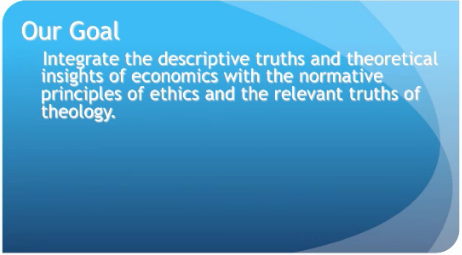

Jim Wallis debates Jay Richards on Christianity and economics

In this post, I have the video of a debate on the topic of what Christians should think about economics and economic policies. In addition to the video, I summarized the two opening speeches and the two rebuttals, for those who prefer to read rather than watch. We’ll start with a short biography about each of the debaters.

The video recording:

The debaters

Jay Richards:

Jay Richards, Ph.D., is a Senior Fellow of the Discovery Institute where he directs the Center on Wealth, Poverty and Morality, and is a Visiting Scholar at the Institute for Faith, Work & Economics. Most recently he is the co-author with James Robison of the best-selling Indivisible: Restoring Faith, Family, and Freedom Before It’s Too Late”.

In addition to writing many academic articles, books, and popular essays on a wide variety of subjects, he recently edited the new award winning anthology, God & Evolution: Protestants, Catholics and Jews Explore Darwin’s Challenge to Faith . His previous book was Money, Greed, and God: Why Capitalism Is the Solution and Not the Problem (HarperOne, May 2009), for which he received a Templeton Enterprise Award in 2010.

[…]In recent years, he has been a Contributing Editor of The American at the American Enterprise Institute, a Visiting Fellow at the Heritage Foundation, and a Research Fellow and Director of Acton Media at the Acton Institute. Richards has a B.A. with majors in Political Science and Religion, an M.Div. (Master of Divinity) and a Th.M. (Master of Theology), and a Ph.D. (with honors) in philosophy and theology from Princeton Theological Seminary.

Jim Wallis:

Jim Wallis (born June 4, 1948) is a Christian writer and political activist. He is best known as the founder and editor of Sojourners magazine and as the founder of the Washington, D.C.-based Christian community of the same name. Wallis is well known for his advocacy on issues of peace and social justice. […]He works as a spiritual advisor to President Barack Obama.

[…]In 2010, Wallis admitted to accepting money for Sojourners from philanthropist George Soros after initially denying having done so. […]In 2011, Wallis acknowledged that Sojourners had received another $150,000.00 from Soros’ Open Society Foundation.

Wallis just came out this month in favor of gay marriage. He is also a strong supporter of Barack Obama, who is radically pro-abortion. Some pro-lifers have argued that Barack Obama has the same views on abortion as Kermit Gosnell, because Obama voted twice to allow abortions on babies who were already born alive.

The format of the debate

  • 20 minute opening speeches
  • 10 minute rebuttals
  • 10 minutes of discussion
  • Q&A for the remainder

SUMMARY

I use italics below to denote my own observations.

Jim Wallis’ opening speech:

My goal is to spark a national conversation on the “common good”.

A story about my son who plays baseball.

The central goal of Christianity is to promote the “common good”.

Quotes “Catholic social teaching” which values “human flourishing”.

The “common good” is “human flourishing”.

Is the purpose of Christianity is to make sure that everyone has enough material stuff or to preach the gospel?

When Christians go on mission trips, it’s good that they focus on things like human trafficking.

Democrat John Lewis is the “conscience of the U.S. Congress”.

John Lewis gets a 0% rating from the American Conservative Union in 2012.

John Lewis gets a 8% rating from the American Conservative Union in 2011.

John Lewis gets a 2.29% lifetime rating from the American Conservative Union.

Nothing is going well in Washington right now except comprehensive immigration reform.

Does he think that Christianity means giving 20-30 million illegal immigrants a path to citizenship, while skilled engineers cannot even get green cards, even though there is a shortage of them? Does he think that the other people in society who earn more than they receive from the government ought to be taxed more in order to provide more services and benefits to those who earn less than they take from the government?

Jay Richards’ opening speech:

Two topics: 1) what is the common good? 2) what should Christians do to promote the common good?

Catholicism defines the “common good” as “Indeed, the common good embraces the sum of those conditions of the social life whereby men, families and associations more adequately and readily may attain their own perfection.”

We have natural ends that we are supposed to be achieving and some places, like South Korea, are better for allowing that to happen.

The common good is broader and prior to any sort of political specification.

It’s not the political good or what the state is supposed to do.

It’s not about the communal good, as in Soviet Russia, where the communal good was above individual and familial good.

The common good is the social conditions that promote the things that we humans have in common as individuals and members of family.

The common good takes account of who we are as individuals and in associations with other individuals, e.g. – families.

Christians don’t have to be doing the same things to promote the common good, e.g. – pastors, entrepreneurs, etc.

The church, as the church, has as its primary goal making disciples of all nations.

But even in that capacity, the church should be interested in more than just conversions and saving souls.

We also have to care about God’s created reality including things like physics, education, etc.

How should Christians promote the common good in politics?

Question: when is coercion warranted?

In Romans 13, Paul says that the state does have power to coerce to achieve certain ends, like justice.

Most Christians think that there are some things where the state can use coercion, for example, to prevent/punish murder.

It is OK for the police to use coercive force to maintain public order and the rule of law.

But we need to ask whether other things are legitimate areas for the state to use coercive force.

We should only give the state power to coerce when there is no other way to achieve a goal.

We need to leverage the science of economics in order to know how to achieve the common good.

Jay Richards' main point in the debate
Jay Richards’ main point in the debate

Henry Hazlitt: “The art of economics consists in looking not merely at the immediate but at the longer effects of any act or policy; it consists in tracing the consequences of that policy not merely for one group but for all groups.”

For example, what happens if we raise the federal minimum wage to $50. What happens next for all groups? That’s what we need to ask in order to know which policies achieve the common good.

When it comes to economics a lot of things have been tried in other places and times.

We can know what works and doesn’t work by studying what was tried before and in other places.

Many things are counter-intuitive – things that sound good don’t work, things that sound bad do work.

Principle: “We are our brother’s keeper”. Christians have an obligation to care for their neighbors.

We all agree on the goal. But how do we do things that will achieve that goal?

We have to distinguish aspirations from principles and prudential judgment.

Principle: We should provide for the material needs of the poor.

Prudence: Seeing the world as it is, and acting accordingly.

Example policies: which minimum wage is best? None? $10? $20?

We decide based on seeing how different economic policies achieve the goal of helping the poor.

Jim Wallis’ first rebuttal:

Jesus commanded us to “care for the poor and help to end poverty”.

Actually, Jesus thought that acknowledging him and giving him sacrificial worship was more important than giving money to the poor, see Matthew 26:6-13:

While Jesus was in Bethany in the home of Simon the Leper, 

a woman came to him with an alabaster jar of very expensive perfume, which she poured on his head as he was reclining at the table.

When the disciples saw this, they were indignant. “Why this waste?” they asked. 

“This perfume could have been sold at a high price and the money given to the poor.”

10 Aware of this, Jesus said to them, “Why are you bothering this woman? She has done a beautiful thing to me. 

11 The poor you will always have with you, but you will not always have me. 

12 When she poured this perfume on my body, she did it to prepare me for burial. 

13 Truly I tell you, wherever this gospel is preached throughout the world, what she has done will also be told, in memory of her.”

It’s not clear to me whether Jim Wallis thinks that preaching is more important than redistributing wealth to address material inequality.

I like what Jesus said in a TV series, even though it’s not in the Bible when an actor playing Jesus said to “change the world”.

Jesus never said to “change the world” in the Bible. Should we be concerned that he is quoting a TV actor playing Jesus instead of Jesus.

Here is a terrific story about Bill Bright.

I love Catholic social teaching.

Quote: “All are responsible for all”.

I go to the World Economic Forum at Davos, Switzerland every year. I spoke once at 7 AM on the 4th floor.

It’s a funny place for a Christian to be if they care about the poor – rubbing shoulders with leftist elites. He must have named a dozen high-profile people that he spoke with during the debate, as if he could win the debate by some sort of argument from name-dropping. He mentioned the Davos thing several times!

The greatest beneficiary of government actions to deal with the economic crisis was Wall Street banks.

I’m going to tell you a story about what a Washington lawyer says to Jesus.

I’ve had conversations with business leaders where I tell them to integrate moral truths.

I talk about the Good Samaritan parable.

Quote: “Do you love your undocumented neighbor?”

Quote: “Do you love your Muslim neighbor?”

Jay Richards’ first rebuttal:

Who is responsible for your own children? Who knows the most about them?

Parents should have more discretion over their children because they have more knowledge about their child and what’s best for them.

The Good Samaritan doesn’t show that government should confiscate wealth through taxation and redistribute it.

The Good Samaritan emphasizes voluntarily charity to help people who are not necessarily your immediate neighbor.

Some of the things we do should be for the good of other people in other countries.

But then we are back to leveraging economics to know what policies are good for those other people in other countries.

The principle of subsidiarity: if a problem can be addressed by a lower level of society (family) then we shouldn’t make higher levels (government) address it.

The best place to take care of children is within the family.

Only if the family fails should wider and wider spheres get involved.

Although we want to think of the common good in a global sense, we don’t want to lose sight of the fact

The financial crisis: we need to integrate moral truths, but also economic truths.

We don’t want to assume policies based on intuitions, we want to check our intuitions using economic principles.

Why did we have a financial crisis in mortgages, but not in commodities futures or technology, etc.?

Greed is a contributing factor in all areas of business.

Something more was going on in the mortgage markets than just greed.

There were specific policies that caused the mortgage lending crisis.

The root cause of the problem were “affordable housing policies” that lowered lending restrictions on low income people.

The policy ended up degrading the underwriting standards on loans.

Government intruded into the market and undermined the normal ways of

People were getting massive loans with no income, no jobs, no assets and no down payment.

The federal government created a market for risk loans by guaranteeing

There was a government imposed quota on mortgage lenders such that 50% of their loans had to be given to high-risk borrowers.

That is what led to the financial crisis. Not the free market, but intrusions into the free market.

These policies were well-meaning and implemented by people from both parties. But they had bad effects.

Jay Richards: How to end poverty in 10 tough steps

Jay Richards: How to end poverty in 10 tough steps

Why are some nations more prosperous than others? Is it because the wealthier nations exploit the poorer ones, keeping them poor? Or are there certain policies, laws, and cultural beliefs that lead to prosperity? Dr. Jay Richards delivers a lecture for Impact 360, in which he identifies 10 different factors that lift nations out of poverty, and explains why they work.

Summary:

  1. Establish and maintain the rule of law.
  2. Focus the jurisdiction of government on maintaining the rule of law, and limit its jurisdiction over the economy and the institutions of civil society.
  3. Implement a formal property system with consistent and accessible means for securing a clear title to property one owns.
  4. Encourage economic freedom: Allow people to trade goods and services unencumbered by tariffs, subsidies, price controls, undue regulation, and restrictive immigration policies.
  5. Encourage stable families and other important private institutions that mediate between the individual and the state.
  6. Encourage belief in the truth that the universe is purposeful and makes sense.
  7. Encourage the right cultural mores—orientation to the future and the belief that progress but not utopia is possible in this life; willingness to save and delay gratification; willingness to risk, to respect the rights and property of others, to be diligent, to be thrifty.
  8. Instill a proper understanding of the nature of wealth and poverty—that wealth is created, that free trade is win-win, that risk is essential to enterprise, that trade-offs are unavoidable, that the success of others need not come at your expense, and that you can pursue legitimate self-interest and the common good at the same time.
  9. Focus on your comparative advantage rather than protecting what used to be your competitive advantage.
  10. Work hard.

Solving economic problems is just like solving any other problem. First, we read to learn what has been proven to work. Then, we do what works. I want to encourage Christians to move beyond good intentions to good results when voting for economic policies. Often, people on the left want to “fix” inequalities by doing what feels good to them, or what sounds good to them. Economics is about choosing policies that we know have worked in other times and places.

Let’s talk more about #4 from Richards’ list.

Economic freedom linked to prosperity

Consider the book “The Poverty of Nations: A Sustainable Solution” by famous conservative theologian Wayne Grudem.

You can even read an article about it from the left-wing Christian Post here:

In a presentation of his new book at the Family Research Council, biblical theologian Wayne Grudem argued that poor countries can become rich only by producing their own prosperity, and that the free market is not only the economic answer, but in tune with the Bible’s moral teachings.

“Every nation that has escaped poverty has done so by producing its own prosperity,” said Grudem, professor of theology and biblical studies at Phoenix Seminary in Arizona. Perhaps best known for his book Systematic Theology: An Introduction to Biblical Doctrine, Grudem presented the key themes in his new book The Poverty of Nations: A Sustainable Solution. The very first of his 79 factors to help nations escape poverty in “a free market economy.”

[…]Grudem argued that the wealth of a country is determined by its per-capita income – the average amount of money each citizen makes. The only way to increase this is to increase the production of goods and services, creating more wealth for everyone, he said.

[…]The professor pointed to 79 factors to help a country produce more goods and services, in three different key areas: the economic system, government, and cultural beliefs and values.

For the economic system, Grudem mentioned the Index of Economic Freedom, a report put out by the Heritage Foundation to judge each country’s openness to trade and wealth creation.

You can find the Heritage Foundation Index of Economic Freedom right here. Take a look at the countries at the top… these countries also have a very high per capita income. Their citizens are earning a lot of money by selling what they produce to willing customers. The ones at the bottom are run by socialist governments. You wouldn’t want to try to make a living in Venezuela or Cuba or North Korea. But these are the places that American socialists admire and support. Does that tell you something about what they would do to you, if they got hold of the reins of government?

The Fraser Institute in Canada did a similar ranking of economic freedom (economic freedom = low taxes, low regulation, free trade), and they concluded:

Countries in the top quartile (25 per cent) of economic freedom (such as the U.K., Japan and Ireland) had an average per-capita income of US$40,376 in 2016 compared to US$5,649 for the bottom quartile countries (such as Venezuela, Iran and Zimbabwe). And life expectancy is 79.5 years in the top quartile of countries compared to 64.4 years in the bottom quartile.

Economic freedom works best.