Tag Archives: Bailout

Europe’s socialist debt crisis: who suffers most? Can bailouts fix it?

This is the most popular article on Investors Business Daily right now.

Excerpt:

Rational or not, Greece’s street riots and emigration rates signify one thing: Socialism offers very little to the young. So why is the EU’s $172 billion bailout geared toward saving so much of the failed socialist system?

As Europe prepares to deliver a historic $172 billion bailout to Greece in a deal announced Monday, it’s pretty much a given that the austerity conditions required, in the absence of a true free market, will hit youth hardest. Athens will be trashed by another youth rampage, as many youths blame the pain on something other than Greece’s deeply rooted socialism.

A bigger effect will come from Greeks who do recognize reality. They won’t riot. They’ll leave, voting with their feet just as Eastern Europe’s youth once did.

The young in both cases are victims of socialism, which claims to make people equal but, in reality, penalizes the young. For Greece, a country already gutted by a below-replacement birth rate and an aging population, that’s a disaster.

It’s not just Greece, but also every EU state with institutionalized socialism — where high government spending seeks to create a warm blanket insulating everyone from risk, but instead has led to bankruptcy.

[…]One out of five jobs in Greece is held by a bureaucrat, which is why unemployment among the under-24s runs at 42%. A 2010 poll shows that seven out of 10 Greek college graduates seek to leave.

Some 9% of Greek college graduates and at least 51% of Greece’s Ph.D.s are already gone, according to University of Macedonia demographer Lois Lambrianidis.

What jobs there are come from the bottom of a two-tier labor system that shields older workers in Greece’s rigid labor market. Young Greeks earn a 500-and-change euro monthly minimum wage as older workers doing the same work make 700.

In contrast, immigrant-magnet Australia holds packed job fairs at its Athens embassy. In 2011, it took in 249,000 immigrants. In 2012, a 20% rise is expected.

[…]Meanwhile, Spain’s EFE News reports that the Spanish Embassy in Santiago, Chile, has seen a 10% rise in registered nationals to 48,000, while Chile reports a 25% rise in work permits issued to Spanish citizens.

It’s not just jobs that are penalizing Europe’s young. Housing is stacked against youth, too. Eurostat reports that in 2008, 46% of young European adults ages 18-34 lived with their parents — 51 million people.

The two-tier job market, which leans heavily toward unstable contract employment, affects housing choices for the young. Other socialist measures designed to protect current owners against the market also shut out the young.

Perhaps most hostile of all to youth are the EU’s outdated state pension systems — which force the young to pay the pensions of the old as the population shrinks.

In Italy, 14% of all economic output goes to pensions. It’s no coincidence that states attracting Europe’s young, like Chile and Australia, have privatized their social security systems that give youth a real shot at building personal wealth and a credible pension through their own efforts, instead of political favoritism.

This is the direction that the United States is also headed in. What I find mystifying is why young people in the United States are voting for these policies. Young people here have a higher rate of unemployment, and they ought to know that all of these entitlement programs won’t be there for them when they retire. What possible reason could they have for voting for more and more government control?

Only one Democrat senator voted to limit future IMF bailouts for Europe

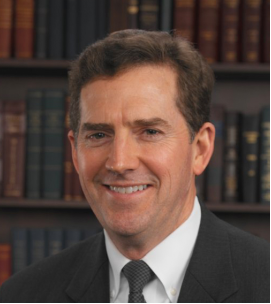
Sen. Jim Demint
Sen. Jim Demint

First, a quick re-cap on Jim Demint’s Amendment 501, which would have prevented the IMF from using $108 billion of American money to bail out foreign nations.

Excerpt:

The Senate on Wednesday defeated an amendment in a 44-55 vote that would have prevented the International Monetary Fund (IMF) from using $108 billion in U.S. monies to bail out foreign nations.

The author of the amendment, Sen. Jim DeMint (R-S.C.), said he is concerned that the IMF is using U.S. funds to rescue irresponsible nations and banks. He said the U.S. can no longer afford to offer such aid.

“There is no excuse for us giving away money around the world when we cannot even keep our promises here in America today, promises we have made to our seniors, promises we have made to our veterans,” said DeMint.

Now, Jim explains in the Wall Street Journal why 55 Democrat senators shouldn’t have voted against it.

Excerpt:

If the United States wants to help Europe find a way out of its current debt crisis, we must be a strong, world economic leader, not merely the lender of last resort.

American taxpayers sent $40 billion to Greece last year, through the International Monetary Fund, to stave off an economic collapse. But the bailout did not prevent Greece’s day of fiscal reckoning. It only delayed it. Austerity measures are still needed throughout Europe’s socialized economy and the debt contagion has not been stopped. Financial chaos has spread from Greece to Ireland, Portugal, Italy and Spain, and it now threatens the very future of the 17-member euro zone.

Undeterred, President Obama last month told the press after breaking from a closed-door meeting with European leaders, “the United States stands ready to do our part to help them resolve this issue.” He would do better to focus his attention stateside. The most dangerous threat to the U.S. economy is not across the pond. It’s in the swampland of Washington, D.C.

[…]Greece’s economy reached its tipping point and was bailed out when government debt topped 137% of its gross domestic product. Despite all the measures that have been taken to aid it, Greece’s debt-to-GDP-ratio is even higher now, at 160%. Ireland was bailed out at 74% of GDP and is now at 80%. Portugal was bailed out at 94% of GDP and is now expected to top 100%. The bailouts have arguably made the European debt crisis worse, not better.

Total U.S. debt, including entitlement liabilities, reached 100% of GDP when Congress increased the debt ceiling in August. Our $15 trillion debt now rivals the size of the entire U.S. economy.

When he first took office, President Obama promised to cut the federal deficit in half by 2013. But instead he’s increased it by more than $4 trillion. Indeed, under his direction, the U.S. government spent about $1 trillion on a Keynesian-style stimulus that failed to create the jobs promised, will spend trillions more creating a European-style health-care entitlement with ObamaCare, and has more Americans on welfare than ever before.

[…]This year the U.S. sent about $67 billion to the IMF, which represents 17.7% of the IMF’s yearly budget—nearly three times more than any other nation. On top of that, taxpayers provided an additional $108 billion credit line to the IMF in 2009.

In 2010, the IMF sent nearly $40 billion in assistance to Greece, which did nothing to prevent the country’s economic collapse in 2011. On Monday, the IMF approved another $2.95 billion worth of bailout funds for the struggling country.

[…]Earlier this year, I offered an amendment to repeal the IMF’s authority to use the additional $108 billion credit line to provide any more bailouts. It was overwhelmingly rejected by the Democrat-controlled Senate. Forty-four senators voted for it; only one was a Democrat.

This has to stop. We have to stop electing people who don’t believe that people are responsible to create their own wealth, instead of stealing it from others – and impoverishing generations yet unborn. The right way to solve economic problems is to create the conditions that incentivize people to create wealth, not to discourage them by confiscating what they earn. There is a problem in Europe right now – huge numbers of benefits are being taken from those who produce (the private sector) and given to those who don’t (the public sector). The first step is to stop the bailouts.

Donald Sensing posted some thoughts from Abraham Lincoln on his blog that seem appropriate for this post.

Excerpt:

If destruction be our lot we must ourselves be its author and finisher. As a nation of free men we must live through all time, or die by suicide.

You cannot help men permanently by doing for them what they could and should do for themselves.

Any society that takes away from those most capable and gives to the least will perish.

Few can be induced to labor exclusively for posterity. Posterity has done nothing for us.

No man is good enough to govern another man without that other man’s consent.

You cannot build character and courage by taking away man’s initiative and independence.

Let every man remember that to violate the law is to trample on the blood of his father, and to tear the charter of his own and his children’s liberty. Let reverence for the laws … become the political religion of the nation.

If ever this free people, if this Government itself is ever utterly demoralized, it will come from this incessant human wriggle and struggle for office, which is but a way to live without work.

We have to distrust each other. It’s our only defense against betrayal.

Things may come to those who wait, but only the things left by those who hustle.

Nearly all men can stand adversity, but if you want to test a man’s character, give him power.

Property is the fruit of labor; property is desirable; is a positive good in the world. That some should be rich shows that others may become rich and, hence, is just encouragement to industry and enterprise. Let not him who is houseless pull down the house of another, but let him labor diligently and build one for himself, thus, by example, assuring that his own shall be safe from violence when built.

It has ever been my experience that folks who have no vices have very few virtues.

I understand that stealing money from working people and their employers and giving it to lazy people is an important goal for Democrat politicians, because it builds up their self-esteem and it makes them feel admired and popular. But it’s not their money. They need to stop. Obama’s desire to “spread the wealth around” is not a moral policy, it’s an immoral policy – because it’s not his wealth. He didn’t produce it.

How to easily develop your knowledge of the way the world works

If you’re not reading IBD editorials every day, you are missing out. I agree with them on practically everything they write. I try to stay in touch with what’s happening in the world, with respect to economics and foreign policy, and Investors Business Daily is indispensable. (And sometimes, they even cover social issues like school choice, affirmative action and stem cell research). It’s not just the news that I want, it’s the analysis. They fit every data point into an argument – and that makes the world a very interesting place.

Here are four sample articles.

Did the latest European bailout fix anything?

Excerpt:

Led by the Fed, top central banks added dollars to the global financial system on Wednesday as Europe’s crisis deepened. We hate to rain on anyone’s parade, but this won’t solve the EU’s problems.

The central banks’ bold action, though met with wild enthusiasm by financial markets, amounts to little more than a multibillion dollar Band-Aid on a deep, dangerous wound.

[…]But even as they juggle and sell off their portfolios of bad loans, major banks in Europe, the U.S. and Asia are being forced to raise capital to meet new international banking standards. The result: a credit crunch.

In short, the global financial system is near collapse, and the central banks are madly pumping dollars into it to keep the collapse from happening.

It’s an emergency, we get it. But while such actions might help in the short run, they won’t in the long run.

The EU faces the same problems today as it did yesterday, and no amount of central bank money-printing changes that.

Namely, its 17 members, used to an ever-expanding welfare state and leisure-class lifestyle, can’t sustain that way of life with their chronically weak economies and aging, low-productivity workforces.

Contrary to recent actions, the EU’s problems aren’t short-term and financial, but long-term and fiscal.

The same kind of problems that we are having USA, as we have moved from 160 billion dollar deficits under Bush in 2007 to approximately 1.4 trillion dollar deficits in ever year that Obama has been President. Maybe we can learn some lessons from the mistakes that others have made and are making instead of making those mistakes again ourselves?

If global warming is real, where are all the hurricanes?

Excerpt:

Sunday will be the 2,232nd consecutive day that the U.S. has gone without being hit by a major hurricane. This is a big enough deal to be covered by the mainstream media. But of course it won’t be.

On Dec. 4, a new record will be set for the number of days between landfalls of category 3 or stronger storms. The previous streak, according to Roger Pielke Jr., began on Sept. 8, 1900, and ended on Oct. 19, 1906, when the Great Galveston Hurricane hit.

The record won’t be broken by just a day or even a week. Pielke, a professor of environmental studies at University of Colorado, says it will be crushed.

“Since there won’t be any intense hurricanes before next summer, the record will be shattered, with the days between intense hurricane landfalls likely to exceed 2,500 days,” he writes in his blog.

Why is this significant? Because the global warming alarmists have been telling us that man’s carbon dioxide emissions would bring bigger storms.

[…]The mainstream media has happily trafficked this nonsense, but it’s not likely to mention Pielke’s point even though it would be appropriate in stories covering our very mild hurricane season, which ended Wednesday.

Why won’t they do it? Because it’s inconsistent with their narrative. It’s like the latest batch of Climategate emails, which show again a group of scientists manipulating the process for political gain. News that contradicts the alarmists’ tale simply isn’t news to the media.

If you think that global warming alarmism has no effect on you, then you need to realize that it is being used to justify all kinds of job-killing regulations. If you want to know why companies ship jobs overseas and expand their operations outside the United States, then look no further than the EPA.

Is existing U.S. oil drilling in the EPA’s crosshairs?

Excerpt:

The latest salvo in the administration’s war on energy may be new rules and permits to regulate a process to get oil and gas from porous rock, sacrificing jobs and economic growth while under review.

There are a few areas of the U.S. that are booming. Two of these are in North Dakota and Pennsylvania, states that sit atop two massive shale rock formations, the Bakken and the Marcellus.

Extraction of oil and natural gas from these formations have created jobs and economic growth in the midst of a stagnant and parched economy.

[…]Yet the Environmental Protection Agency, bowing to environmentalists’ pressure and faithful to the administration mantra that fossil fuels are harmful and obsolete, is preparing to nip this economic boom in the bud by regulating it to death.

[…]Pennsylvania’s Department of Labor and Industry estimates fracking in the Marcellus created 72,000 jobs between the fourth quarter of 2009 and the first quarter of 2011. Drilling in the Bakken formation along the North Dakota-Montana border helps explain North Dakota’s unemployment rate of 3.2%, the nation’s lowest.

The Gulf Coast energy industry has never fully recovered from a similar moratorium and a new glacial permitting process.

Similarly, the job-creating Keystone XL pipeline project to bring Canadian tar sands oil to American refineries is stalled on environmental grounds.

It’s not enought that Obama blocks the creation of hundreds of thousands of new energy sector jobs – and wastes money on alternative energy companies connected to his campaign fundraisers – but now he might be going after existing energy production jobs, too.

Should we continue to send our “ally” Pakistan foreign aid?

Excerpt:

In what’s become a common occurrence, the Pakistani military — in an unprovoked attack — fired on coalition troops based across the border in Afghanistan. We responded by hitting two Pakistani border posts. The airstrikes killed two dozen Pakistani soldiers, sparking anti-American riots and threats of reprisal by Islamabad.

[…]So why still coddle Pakistan, diplomatically? Several reasons, not the least of which is Pakistan’s arsenal of nuclear weapons and cold war with India. But it’s mainly because we need its permission to transport military supplies across its border into landlocked Afghanistan, the terror swamp believed most worthy of draining.

More than 40% of the fuel, food, ammunition, equipment and other supplies sent to U.S. forces in Afghanistan are shipped via Pakistani ports and roads. Islamabad also gives us access to airspace — including landing rights at three air bases, where we launch the Predator drone aircraft targeting Pakistani-based terrorist camps in lieu of U.S. boots on the ground.

Islamabad could easily deny us those landing rights and cut off supply routes at any time, hamstringing our Afghan operations. Sure enough: Islamabad did exactly that over the weekend. After the coalition air strike that killed 24 of its troops, Pakistan blocked two coalition supply routes running through Pakistan. It also gave the U.S. two weeks to vacate the Shamsi air base in Balochistan, which has been used for drone sorties.

These moves make reducing our dependence on Pakistan all the more critical.

The Pentagon should hike supplies coming into Afghanistan from the north through Central Asia. To fund the added expense, it could use the billions in aid Pakistan is secretly using against us by funding and arming Afghan insurgents. It could also use a chunk of U.S. aid dollars to build larger fuel-storage facilities on the ground in Afghanistan, so that military operations can withstand major disruptions to supplies.

So there you have it – four great articles on the European crisis, global warming science, the employment situation at home, and foreign policy. And you get this analysis for free every day with Investors Business Daily. You can check out their editorials at this link, and bookmark it. Even if you don’t read the Heritage Foundation’s blog “The Foundry” and the American Enterprise Institute blog “The American”, you can still stay well informed by reading IBD every day. If you are interested in raw news without the analysis, then read CNS News.

It’s very important for Christians to understand that we have to be seen by others as aware and informed on other topics in order to be seen as aware and informed on religious issues. Part of that involves studying apologetics and being familiar with opposing arguments and evidence. Part of it is being informed about social issues like abortion, marriage and education. But part of it is just being a well-informed person in general. When topics like politics and economics and national security come up, our goal should not be to take whatever position is popular, or whatever position will make us look “nice”. We should have our own position, and we should be informed enough about the world to participate in – and even to dominate – conversations on those topics. We have to be the people who know how the world works.