
Tag Archives: Ayatollah

The top 10 foreign policy failures of the Obama administration

This well-footnoted list of Obama’s top 10 foreign policy blunders is from the Romney/Ryan campaign.

The list:

  1. No Results In Slowing Or Stopping Iran’s Nuclear Weapons Program
  2. Endangering Our Mission In Afghanistan And Weakening Our Relationship With Pakistan
  3. “Unconscionable” Leaks Of Classified Counterterror Information From The White House That Have Been “Devastating”
  4. “Devastating” Defense Cuts That Will Cede Our Status As A “Global Power”
  5. A Damaged Relationship With Israel And A Moribund Peace Process
  6. No Coherent Policy To Stem The Humanitarian And Strategic Disaster In Syria
  7. A “Reset” With Russia That Has Compromised U.S. Interests & Values
  8. Emboldening The Castros, Chávez & Their Cohorts In Latin America
  9. Getting Beaten Badly By Competitors On Trade
  10. Putting Our Interests At Risk By Mismanaging The Transition In Iraq

Each of these would devastating to Obama’s re-election effort on their own. Taken together, you have to wonder whose side he is really on.

Here’s my favorite:

Failure #1: No Results In Slowing Or Stopping Iran’s Nuclear Weapons Program

Today, Iran is on the cusp of nuclear weapons capability. Such a capability in the hands of the world’s top terrorist sponsoring state poses the greatest threat facing the United States and our friends and allies, and it risks sparking a nuclear arms race across the Middle East.

Despite promising to “do everything in his power” to stop Iran, four years of President Obama’s irresolute policies have failed to slow the progress of Iran’s program. In fact, that progress has sped up:

  • Fastest Rate Of Enrichment Ever. In 2009, Iran’s enrichment rate of low-enriched uranium was 56 kilograms per month.  That jumped to 116 kilograms per month from November 2011 to February 2012. The enrichment rate now stands at 158 kilograms per month, the fastest rate ever.[1]
  • More Spinning Centrifuges. The total number of spinning centrifuges has gone from 3,936 to 10,477 during Obama’s term. The growth rate of spinning centrifuges went from 112 centrifuges per month before Obama came into office to 152 centrifuges per month during his term.[2]
  • Fordow Underground Enrichment Facility Nearing Completion. The fortified underground facility is 70 percent complete. The number of centrifuges installed has gone from 1,064 in May to 2,140 today. The facility’s limit is 3,000 centrifuges.[3]

The Iranian program has gotten to this point because President Obama has squandered all credibility with the ayatollahs:

  • A Failed Engagement Policy. President Obama offered the ayatollahs “no preconditions” talks, which were rebuffed. The latest round of multilateral talks has produced no results.
  • Refrained From Supporting The Green Movement. When asked during a press conference, President Obama shamefully refused to voice support for Iranian dissidents in 2009 as they were being killed in the streets, saying he did not want to “meddle” in Iran’s affairs.
  • A Weak Sanctions Policy. President Obama opposed and sought to water down crippling sanctions on Iran’s Central Bank until he was forced into them by Congress and our European partners.[4] He then undermined those sanctions by issuing waivers to 20 of the top importers of Iranian oil, including China.[5]
  • Abandoned Missile Defense. He abandoned a European missile defense system meant to protect against Iranian missiles.
  • Undermined The Credibility Of The Military Option. His administration has given the Iranians no reason to believe it is serious about a military option. The administration has repeatedly talked down the effectiveness and advisability of the military option, and seems to have devoted more energy toward preventing an Israeli strike on Iran than toward preventing an Iranian nuclear weapons capability. Obama officials leaked that the administration has focused its efforts on explaining to Israel “the dangers of an Israeli attack” on Iran and has attempted to “make the decision to attack as hard as possible for Israel.”[6] And the President himself, after boldly stating to AIPAC that the United States “has Israel’s back,” changed his tune two days later by saying his statement was “not a military doctrine.”

In the face of such irresolution, the ayatollahs are pressing forward toward nuclear weapons capability without fear of repercussion because they do not believe we are serious.

And another:

Failure #3: “Unconscionable” Leaks Of Classified Counterterror Information From The White House That Have Been “Devastating”

The Obama White House has released a torrent of leaks of classified counterterror information that has compromised our national security by revealing covert sources and methods. The pace of the leaks quickened as the November election drew nearer, raising the question of whether they were politically motivated. But whether the leaks were politically motivated and intentional or the result of bad management and sloppiness in neither here nor there.  Either case is unacceptable and injurious to the intelligence operatives and uniformed men and women in the field.

Criticism of the leaks has been bipartisan:

  • John Brennan, President Obama’s own counterterror chief and Deputy National Security Adviser, has called the leaks “unconscionable,” “damaging,” and “devastating.”[10]
  • Senator Dianne Feinstein, the Democratic Chairman of the Senate Select Committee on Intelligence, has criticized the leaks and stated that they are coming from the White House. She said, “Each disclosure puts American lives at risk, makes it more difficult to recruit assets, strains the trust of our partners, and threatens imminent and irreparable damage to our national security in the face of urgent and rapidly adapting threats worldwide.”[11]

Despite the damage done, President Obama has refused to support the appointment of a special counsel to investigate these leaks and hold those responsible accountable. The special counsel mechanism is designed for just such circumstances where the impartiality of normal prosecutors may be compromised because someone in the high chain of command in the White House may be implicated.

The damaging leaks include:

  • Operational details about the Osama Bin Laden raid.
  • Existence of a Pakistani doctor who assisted the United States in finding Bin Laden and who was later arrested and jailed in Pakistan.
  • Revelation of a covert joint U.S.-Israeli cyber operation to undermine Iran’s nuclear weapons program.
  • The existence of a double-agent who was key to unraveling the second underwear bomb.
  • The White House’s process for determining the targets of drone strikes.

And one last one:

Failure #7: A “Reset” With Russia That Has Compromised U.S. Interests & Values

Mere months after Russia invaded its neighbor Georgia, the Obama Administration came into office vowing to “reset” relations with Russia, saying it would lead to more cooperation on Iran, North Korea, and Afghanistan. That reset has garnered little improvement in our relationship with Russia and no new meaningful cooperation.

Among President Obama’s concessions to Russia were:

  • Abandoning A European Missile Defense System. The unilateral abandonment of a missile defense system to be based in Poland and the Czech Republic and completed by 2013 was a sop to Russia, which had sought to intimidate our allies and discourage them from agreeing to the system in the first place. They agreed to it despite the pressure. To add insult to injury, he announced his decision on September 17, 2009—the 70th anniversary of Russia’s invasion of Poland.
  • New START. President Obama’s signing of the New START treaty compromised U.S. interests in two respects. First, it linked U.S. missile defense systems to reductions in our nations’ respective nuclear arsenals. This linkage jeopardizes our ability to deploy missile defense systems.  Second, the limits it sets on the number of Russian launchers and warheads were above what Russia possessed in its nuclear arsenal at the time.[22] In other words, New START gave Russia room to expand its arsenal while requiring the United States to reduce its arsenal.
  • “Flexibility” After The Election. In a hot mic moment, President Obama promised Russia’s leaders even more “flexibility” on missile defense and other issues in exchange for more “space” prior to the November election. It was a telling moment of weakness, one that has shaken our allies and raised the persistent question of what President Obama is planning to do post-election that he can’t tell the American people now.
  • Kid Gloves For Russia’s Human Rights and Democracy Problems. President Obama has soft-pedaled Russia’s backsliding on democracy and human rights. The Obama Administration has opposed the Magnitsky Bill that would sanction human rights abusers in Russia, preferring to grant Russia permanent normal trade relations free from any new human rights measures. President Obama even congratulated Vladimir Putin in a phone call from Air Force One on winning a corrupt election.

In return for these concessions, Russia has given little save for obstruction at the U.N., support for rogue regimes, and bellicose behavior.

  • Obstruction On Syria. Three times, Russia has wielded its veto power along with China to block U.N. Security Council Resolutions aimed at stopping the violence in Syria and sanctioning the Assad regime.
  • Arms To Syrian Regime. Russia has supplied arms to the Syrian Army during its brutal crackdown on Syrian civilians.
  • Obstruction On Iran. Russia succeeded in watering down a 2010 set of U.N. sanctions on Iran, preventing the inclusion of sanctions on Iran’s Central Bank. Since that time, Russia has successful blocked binding U.N. sanctions on the Central Bank and has criticized individual nations’ sanctions on the Central Bank, calling such efforts “unacceptable.”
  • Push To Close U.S. Airbase Vital To Mission In Afghanistan. Instead of helping American efforts in Afghanistan, Russia urged Kyrgyzstan to close down a U.S. military base that is a vital transit point for troops and supplies moving in and out of Afghanistan. It is the only such transit base the United States has in Central Asia.[23]
  • Cozying To Chávez. Closer relations between Moscow and Hugo Chávez’s Venezuela, including new deals on nuclear power cooperation, increased arms sales, and a $4 billion loan agreement.
  • Continued Abuses Of Political And Human Rights. Putin’s re-election as President came on the wings of a corrupt election. And he has continued to consolidate power, sending dissidents and even punk rockers who dare criticize him to jail on trumped up charges.
  • Return Of Cold War Rhetoric. Since announcing plans to resume his former office, Putin has employed the harshest anti-American rhetoric seen since the Cold War and has stepped up harassment of U.S. officials on Russia soil.

I really recommend reviewing these and please send them along to your friends who can vote. These are not things you see reported in the mainstream media, who seem to be more concerned about whether a 30-year-old law student gets taxpayers to pay $3000 per student for contraceptives.
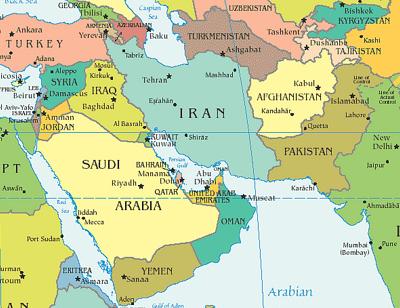
Obama administration refused to help pro-democracy forces in Iran

Middle East Map
Middle East Map

From Investors Business Daily.

Excerpt:

During their brutally suppressed protests in 2009, Iranian freedom fighters sent the White House an urgent memo calling for help. Under Obama, America ignored it.

‘So now, at this pivotal point in time, it is up to the countries of the free world to make up their mind,” Iranian opposition leaders told the Obama administration in an eight-page memo in 2009. “Will they continue on the track of wishful thinking and push every decision to the future until it is too late, or will they reward the brave people of Iran and simultaneously advance the Western interests and world peace.”

President Obama made his choice, and like so often before it was to vote “present.”

The memo, written by leaders of Iran’s Green Party after the summer 2009 anti-government demonstrations, was obtained by the Washington Examiner.

The document confirms GOP candidate Rick Santorum’s charge that the U.S. squandered an opportunity to undermine the government established by the Ayatollah Khomeini three decades ago.

In the Arizona GOP debate last week, Santorum noted that “we did absolutely nothing to help” the Green Revolution. But “when the radicals in Egypt and the radicals in Libya, the Muslim Brotherhood … rise against either a feckless leader or a friend of ours in Egypt, the president is more than happy to help them out.”

The memo refutes claims still being made by the State Department that the Green Party “did not desire financial or other support,” because it “would discredit it in the eyes of the Iranian people.”

The secret memo’s warning that the Islamist regime “with its apocalyptic constitution will never give up the atomic bomb” also contradicts conventional wisdom that the Green movement wants a nuclear Iran.

The Obama administration is oddly proud that it does “not provide financial assistance to any political movement, party or faction in Iran.” But Foundation for the Defense of Democracies scholar Michael Ledeen has argued for years that supporting Iran’s real opposition can keep it from becoming the first jihadist nuclear power.

In his 2007 book “The Iranian Time Bomb,” Ledeen insists there must be “an explicit declaration that the United States wants regime change in Iran.” The Voice of America Persian Service could help.

As Ledeen notes, “Several Iraqi ayatollahs, including some who lived in Iran for many years, would love to do this, as would Khomeini’s grandson Hossein Khomeini, who has openly criticized his grandfather’s creation.”

The U.S. can also provide satellite phones and laptops to students, religious leaders and others, and fund large-scale strikes and mass demonstrations to bring Supreme Leader Ayatollah Khamenei’s regime down.

With Iran close to a nuclear weapon, military action may be the only option. But the Green memo is a shameful blemish for a president who could have prevented a threat to the free world of nuclear terror, but didn’t.

This is important. A lot of liberals ask me what I would do to resolve the Iran situation short of war. One of the things we could be doing is supporting pro-democracy movements in Iran with information warfare, money, arms, etc. I was very annoyed when Obama backed dictators in Iran, Venezuela and Honduras, while helping the Islamists to take power in Libya and Egypt. Why does he do that? Is he stupid? Is he evil? Or is it a combination of the two?

Exceptional speech on foreign policy by Tim Pawlenty

Tim Pawlenty delivered this must-read speech on foreign policy to the Council on Foreign Relations today.

Excerpt:

President Obama has failed to formulate and carry out an effective and coherent strategy in response to these events.  He has been timid, slow, and too often without a clear understanding of our interests or a clear commitment to our principles.

And parts of the Republican Party now seem to be trying to out-bid the Democrats in appealing to isolationist sentiments.  This is no time for uncertain leadership in either party.  The stakes are simply too high, and the opportunity is simply too great.

No one in this Administration predicted the events of the Arab spring – but the freedom deficit in the Arab world was no secret.  For 60 years, Western nations excused and accommodated the lack of freedom in the Middle East.  That could not last.  The days of comfortable private deals with dictators were coming to an end in the age of Twitter, You Tube, and Facebook.  And history teaches there is no such thing as stable oppression.

President Obama has ignored that lesson of history.  Instead of promoting democracy – whose fruit we see now ripening across the region – he adopted a murky policy he called “engagement.”

“Engagement” meant that in 2009, when the Iranian ayatollahs stole an election, and the people of that country rose up in protest, President Obama held his tongue.  His silence validated the mullahs, despite the blood on their hands and the nuclear centrifuges in their tunnels.

While protesters were killed and tortured, Secretary Clinton said the Administration was “waiting to see the outcome of the internal Iranian processes.”  She and the president waited long enough to see the Green Movement crushed.

“Engagement” meant that in his first year in office, President Obama cut democracy funding for Egyptian civil society by 74 percent.  As one American democracy organization noted, this was “perceived by Egyptian democracy activists as signaling a lack of support.”  They perceived correctly.  It was a lack of support.

“Engagement” meant that when crisis erupted in Cairo this year, as tens of thousands of protesters gathered in Tahrir Square, Secretary Clinton declared, “the Egyptian Government is stable.”  Two weeks later, Mubarak was gone.  When Secretary Clinton visited Cairo after Mubarak’s fall, democratic activist groups refused to meet with her.  And who can blame them?

The forces we now need to succeed in Egypt — the pro-democracy, secular political parties — these are the very people President Obama cut off, and Secretary Clinton dismissed.

The Obama “engagement” policy in Syria led the Administration to call Bashar al Assad a “reformer.”  Even as Assad’s regime was shooting hundreds of protesters dead in the street, President Obama announced his plan to give Assad “an alternative vision of himself.”  Does anyone outside a therapist’s office have any idea what that means?  This is what passes for moral clarity in the Obama Administration.

By contrast, I called for Assad’s departure on March 29; I call for it again today.  We should recall our ambassador from Damascus; and I call for that again today.  The leader of the United States should never leave those willing to sacrifice their lives in the cause of freedom wondering where America stands.  As President, I will not.

I blogged quite a bit about the peaceful protestors in Iran. Remember Neda Soltan who was shot down in the streets? And yet Obama had almost nothing to say about the pro-democracy movements. And Obama was on the wrong side in the Honduras election, as well – he backed Manuel Zelaya. It’s good that Tim Pawlenty has something to say about it.

And a bit more  of his speech:

The third category consists of states that are directly hostile to America.  They include Iran and Syria.  The Arab Spring has already vastly undermined the appeal of Al Qaeda and the killing of Osama Bin Laden has significantly weakened it.

The success of peaceful protests in several Arab countries has shown the world that terror is not only evil, but will eventually be overcome by good.  Peaceful protests may soon bring down the Assad regime in Syria.  The 2009 protests in Iran inspired Arabs to seek their freedom.  Similarly, the Arab protests of this year, and the fall of regime after broken regime, can inspire Iranians to seek their freedom once again.

We have a clear interest in seeing an end to Assad’s murderous regime.  By sticking to Bashar al Assad so long, the Obama Administration has not only frustrated Syrians who are fighting for freedom—it has demonstrated strategic blindness.  The governments of Iran and Syria are enemies of the United States.  They are not reformers and never will be.  They support each other.  To weaken or replace one, is to weaken or replace the other.

The fall of the Assad mafia in Damascus would weaken Hamas, which is headquartered there.  It would weaken Hezbollah, which gets its arms from Iran, through Syria.  And it would weaken the Iranian regime itself.

To take advantage of this moment, we should press every diplomatic and economic channel to bring the Assad reign of terror to an end.  We need more forceful sanctions to persuade Syria’s Sunni business elite that Assad is too expensive to keep backing.  We need to work with Turkey and the Arab nations and the Europeans, to further isolate the regime.  And we need to encourage opponents of the regime by making our own position very clear, right now:  Bashar al-Assad must go.

When he does, the mullahs of Iran will find themselves isolated and vulnerable.  Syria is Iran’s only Arab ally.  If we peel that away, I believe it will hasten the fall of the mullahs.  And that is the ultimate goal we must pursue.  It’s the singular opportunity offered to the world by the brave men and women of the Arab Spring.

The march of freedom in the Middle East cuts across the region’s diversity of religious, ethnic, and political groups.  But it is born of a particular unity.  It is a united front against stolen elections and stolen liberty, secret police, corruption, and the state-sanctioned violence that is the essence of the Iranian regime’s tyranny.

So this is a moment to ratchet up pressure and speak with clarity.  More sanctions.  More and better broadcasting into Iran.  More assistance to Iranians to access the Internet and satellite TV and the knowledge and freedom that comes with it.  More efforts to expose the vicious repression inside that country and expose Teheran’s regime for the pariah it is.

And, very critically, we must have more clarity when it comes to Iran’s nuclear program.  In 2008, candidate Barack Obama told AIPAC that he would “always keep the threat of military action on the table to defend our security and our ally Israel.”  This year, he told AIPAC “we remain committed to preventing Iran from acquiring nuclear weapons.”  So I have to ask: are all the options still on the table or not?  If he’s not clear with us, it’s no wonder that even our closest allies are confused.

The Administration should enforce all sanctions for which legal authority already exits.  We should enact and then enforce new pending legislation which strengthens sanctions particularly against the Iranian Revolutionary Guards who control much of the Iranian economy.

Here’s a clip from the discussion with CFR after the speech:

You know, I was listening to a fiscal conservative being interviewed on the radio the other day and the person was saying that he had more fear of Obama’s foreign policy than of Obama’s economic policy. This was after he had laid out a gloomy economic picture.