
Tag Archives: Apologetics

What criteria do historians use to get to the minimal facts about the historical Jesus?

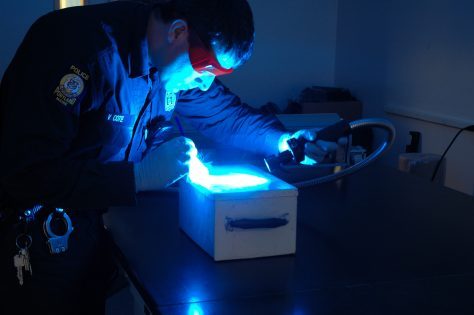
Policeman investigates crime scene for evidence

Have you ever heard Gary Habermas, Michael Licona or William Lane Craig defend the resurrection of Jesus in a debate by saying that the resurrection is the best explanation for the “minimal facts” about Jesus? The lists of minimal facts that they use are typically agreed to by their opponents during the debates. Minimal facts are the parts of the New Testament that meet a set of strict historical criteria. These are the facts that skeptical historians agree with, totally apart from any religious beliefs.

So what are the criteria that skeptical historians use to derive a list of minimal facts about Jesus?

Dr. Craig explains them in this article.

Excerpt:

The other way, more influential in contemporary New Testament scholarship, is to establish specific facts about Jesus without assuming the general reliability of the Gospels. The key here are the so-called “Criteria of Authenticity” which enable us to establish specific sayings or events in Jesus’ life as historical. Scholars involved in the quest of the historical Jesus have enunciated a number of these critieria for detecting historically authentic features of Jesus, such as dissimilarity to Christian teaching, multiple attestation, linguistic semitisms, traces of Palestinian milieu, retention of embarrassing material, coherence with other authentic material, and so forth.

It is somewhat misleading to call these “criteria,” for they aim at stating sufficient, not necessary, conditions of historicity. This is easy to see: suppose a saying is multiply attested and dissimilar but not embarrassing. If embarrassment were a necessary condition of authenticity, then the saying would have to be deemed inauthentic, which is wrong-headed, since its multiple attestation and dissimilarity are sufficient for authenticity. Of course, the criteria are defeasible, meaning that they are not infallible guides to authenticity. They might be better called “Indications of Authenticity” or “Signs of Credibility.”

In point of fact, what the criteria really amount to are statements about the effect of certain types of evidence upon the probability of various sayings or events in Jesus’ life. For some saying or event S and evidence of a certain type E, the criteria would state that, all things being equal, the probability of S given E is greater than the probability of S on our background knowledge alone. So, for example, all else being equal, the probability of some event or saying is greater given its multiple attestation than it would have been without it.

What are some of the factors that might serve the role of E in increasing the probability of some saying or event S? The following are some of the most important:

(1) Historical congruence: S fits in with known historical facts concerning the context in which S is said to have occurred.

(2) Independent, early attestation: S appears in multiple sources which are near to the time at which S is alleged to have occurred and which depend neither upon each other nor a common source.

(3) Embarrassment: S is awkward or counter-productive for the persons who serve as the source of information for S.

(4) Dissimilarity: S is unlike antecedent Jewish thought-forms and/or unlike subsequent Christian thought-forms.

(5) Semitisms: traces in the narrative of Aramaic or Hebrew linguistic forms.

(6) Coherence: S is consistent with already established facts about Jesus.

For a good discussion of these factors see Robert Stein, “The ‘Criteria’ for Authenticity,” in Gospel Perspectives I, ed. R. T. France and David Wenham (Sheffield, England: JSOT Press, 1980), pp. 225-63.

Notice that these “criteria” do not presuppose the general reliability of the Gospels. Rather they focus on a particular saying or event and give evidence for thinking that specific element of Jesus’ life to be historical, regardless of the general reliability of the document in which the particular saying or event is reported. These same “criteria” are thus applicable to reports of Jesus found in the apocryphal Gospels, or rabbinical writings, or even the Qur’an. Of course, if the Gospels can be shown to be generally reliable documents, so much the better! But the “criteria” do not depend on any such presupposition. They serve to help spot historical kernels even in the midst of historical chaff. Thus we need not concern ourselves with defending the Gospels’ every claim attributed to Jesus in the gospels; the question will be whether we can establish enough about Jesus to make faith in him reasonable.

And you can see Dr. Craig using these criteria to defend minimal facts in his debates. For example, in his debate with Ehrman, he alludes to the criteria when making his case for the empty tomb.

Here, he uses multiple attestation and the criteria of embarrassment:

Among the reasons which have led most scholars to this conclusion are the following:

1. The empty tomb is also multiply attested by independent, early sources.

Mark’s source didn’t end with the burial, but with the story of the empty tomb, which is tied to the burial story verbally and grammatically. Moreover, Matthew and John have independent sources about the empty tomb; it’s also mentioned in the sermons in the Acts of the Apostles (2.29; 13.36); and it’s implied by Paul in his first letter to the Corinthian church (I Cor. 15.4). Thus, we have again multiple, early, independent attestation of the fact of the empty tomb.

2. The tomb was discovered empty by women.

In patriarchal Jewish society the testimony of women was not highly regarded. In fact, the Jewish historian Josephus says that women weren’t even permitted to serve as witnesses in a Jewish court of law. Now in light of this fact, how remarkable it is that it is women who are the discoverers of Jesus’ empty tomb. Any later legendary account would certainly have made male disciples like Peter and John discover the empty tomb. The fact that it is women, rather than men, who are the discoverers of the empty tomb is best explained by the fact that they were the chief witnesses to the fact of the empty tomb, and the Gospel writers faithfully record what, for them, was an awkward and embarrassing fact.

There are actually a few more reasons for believing in the empty tomb that he doesn’t go into in the debate, but you can find them in his written work. For example, in his essay on Gerd Ludemann’s “vision” hypothesis. That essay covers the reasons for all four of his minimal facts.

So, if you are going to talk about the resurrection with a skeptic, you don’t want to invoke the Bible as some sort of inerrant/inspired Holy Book. You want to look at it as a historical book, and use historical criteria to get to some facts that critical historians would accept. From that, it’s possible to make a case for the resurrection, which is the guarantee that the words of Jesus are authoritative. Including the words of Jesus where he describes the Bible as a whole as God’s revelation of Himself to his creatures.

Here is the approach I use when talking to non-Christian co-workers:

  1. Explain the criteria that historians use to get their lists of minimal facts
  2. Explain your list of minimal facts
  3. Defend your list of minimal facts using the criteria
  4. Cite skeptics who admit to each of your minimal facts, to show that they are widely accepted
  5. List some parts of the Bible that don’t pass the criteria (e.g. – guard at the tomb, Matthew earthquake)
  6. Explain why those parts don’t pass the criteria, and explain that they are not part of your case
  7. Challenge your opponent to either deny some or all the facts, or propose a naturalistic alternative that explains the facts better than the resurrection
  8. Don’t let your opponent attack any of your minimal facts by attacking other parts of the Bible (e.g. – the number of angels being one or two, etc.)

And remember that there is no good case for the resurrection that does not make heavy use of the early creed in 1 Corinthians 15:3-8. That passages is universally accepted as early, eyewitness testimony from Paul, and represents the core of early Christian beliefs about the death and resurrection of Jesus. Everyone who takes evidence seriously has to account for that early creed, which passes the historical tests I outlined above.

The best essay on the minimal facts criteria that I’ve read is the one by Robert H. Stein in “Contending with Christianity’s Critics“. It’s a good short essay that goes over all the historical criteria that are used to derive the short list of facts from which we infer the conclusion “God raised Jesus from the dead”. That whole book is really very, very good.


The worst mistake you can make when defending the Christian worldview

I have a key that will unlock a puzzling mystery

So, this is just an advice post for doing apologetics.

Here are three situations I’ve run into while doing apologetics in the last month.

First situation. I was talking with a lady who is an atheist. I had a copy of “God’s Crime Scene” in my hand, and she asked me about it. I told her that it was a book written by the guy who solved the homicide case that I asked her to watch on Dateline. She remembered – it was the two-hour special on the woman who was killed with a garrotte. She pointed at the book and said “what’s in it?” I said, it has 8 pieces of evidence that fit better with a theistic worldview than with an atheistic one, and some of them scientific. Her reply to me was – literally – “which denomination do you want me to join?”

Second situation. I was talking with a friend of mine who teaches in a Catholic school. She was telling that she got the opportunity to talk to her students about God, and found out that some of them were not even theists, and many of them had questions. So she asked them for questions and got a list. The list included many hard cases, like “what about the Bible and slavery” and “why do Christians oppose gay marriage?” and so on.

Third situation. Talking to a grad student about God’s existence. I’m laying out my scientific arguments for her, holding up the peer-reviewed papers for each discovery. I get to the Doug Axe paper on protein folding probabilities, and she holds up her hand. One question: “Am I going to Hell?”

So think about those three situations. In each case, the opponent is trying to reject Christianity by jumping way, way ahead to the very end of the process. When you do Christian apologetics, you do not take the bait and jump to the end of the process dealing with nitty gritty details until you have made your case for the core of the Christian worldview using your strongest evidence. Let me explain.

So, your strongest evidence as a Christian are the scientific arguments, along with the moral argument. Those would include (for starters) the following:

  1. kalam cosmological argument
  2. cosmic fine-tuning
  3. galactic and stellar habitability
  4. origin of life / DNA
  5. molecular machines / irreducible complexity
  6. the moral argument

The problem I am seeing today is that atheists are rejecting discussions about evidence because they think that all we are interested in is getting them to become Christians. Well, yes. I want you to become a Christian. But I know perfectly well what that entails – it entails a change of life priorities. Both of the women I spoke to are living with their boyfriends, and the kids in the Catholic school just want to have fun. None of them wants to believe in a God who will require self-denial, self-control, and self-sacrifice. Nobody wants God to be in that leader position in their lives. Christianity is 100% reversed from today’s me-first, fun-seeking, thrill-seeking, fear-of-missing-out travel spirit of the age.

So, how to answer all these late-game questions? The answer is simple. You don’t answer any late-game questions until the person you are talking with accounts for the widely-accepted data in your list. These are things that have got to be accepted before any discussion about minor issues like one angel vs two angels at the empty tomb can occur. When we discuss all the basic issues where the evidence is the strongest, then we can go on to discuss issues where the evidence is debatable, then finally, in the last bits before the end, we can discuss these other kinds of questions.

How to explain why this process must be followed to the person who asks specific questions about minor issues? Simple. You explain that your goal is not to get them to become a Christian right now. That you want to let them believe anything thing they want. That’s right. They can believe anything they want to believe. As long as what they believe is consistent with the evidence. And what I am going to do is give them the evidence, and then they can believe whatever they want – so long as it’s consistent with the evidence.

So, for example, I’m going to tell them 3 pieces of evidence for a cosmic beginning of the universe: the expanding universe (redshift), the cosmic microwave background radiation, and the light element abundances. That’s mainstream science that shows that the universe came into being out of nothing, a finite time in the past. And I will charge them not to believe in any religion that assumes that the universe has always been here. For example, Mormonism is ruled out, they believe in eternally existing matter. See how that works? Hey, Ms. Atheist. You can believe anything you want. As long as what you believe is consistent with the evidence. 

I think this approach of not letting them rush you to the end at the beginning is important for two reasons. First, we can get our foot in the door to talk about things that are interesting to everyone, in a non-stressed environment. Everyone can talk about evidence comfortably. Second, we show that we hold our beliefs because we are simply letting evidence set boundaries for us on what we are allowed to believe. We can’t believe not-Christianity, because not-Christianity is not consistent with the evidence. And you start with the most well-supported evidence, and eliminate worldviews that are falsified by the most well-supported evidence. Atheism actually gets falsified pretty quickly, because of the scientific evidence.

So, that’s my advice. Had a friend of mine named William try this out about a week ago. It went down like this:

William to me:

This guy I know messaged me and bragged for a while about how easy he can dismantle Christianity. He said: “present the gospel to me as you understand it. I’ll simply ask questions to demonstrate it is not worth your belief.”

WK to William:

First of all, he isn’t allowed to just sit there and poke holes in your case, he has to present a positive case for atheism. Second, don’t discuss Christianity with him at all until you first discuss the evidence for theism – start with the good scientific evidence.

And William wrote this to his friend:

The way I’m wired is that I process all competing theories and go with the best one. By doing a comparative analysis of worldviews I find that Christian theology easily explains the most about the world I find myself living in.

I’m pretty sure that a God of some sort exists because of the scientific evidence for the origin of the universe and the fine tuning in physics. From there I find it quite intuitive that if a God went through the trouble of creating and tuning a universe for life that this God likely has some sort of interest in it and has revealed Himself to humanity in some way.

From there I can look at the major world religions and compare them to see which one explains the past and the present the best. Christianity easily comes out on top.

And then a few days later, I got this from William:

I finally got the agnostic to tell me what he thinks about origin and fine tuning. When I started pointing out that his views were unscientific, he blew a gasket, called me dishonest and told me he didn’t want to discuss anything further.

And that’s where you want to be. Cut off all discussions where the challenger tries to jump to the end and get you to debate the very last steps of your case. Present the strongest evidence for your core claims, and get him to account for this evidence within his own worldview. Lead the discussion with public, testable evidence. All warfare depends on picking the terrain, weapons and tactics that allow you to match your strength against your opponent’s weakness.

Apologetics in the gospel of John

Bible study that hits the spot

John is my favorite gospel, because the thing reads like a well constructed essay. The author makes a number of claims about who Jesus was, and supplies evidence for each claim. There is nothing extraneous to John’s thesis, the whole thing that he wrote is designed to make a case.

My friend Eric Chabot wrote a post on his blog on the use of apologetics in the gospel of John. (H/T J. Warner Wallace tweet)

Here is his thesis:

In this post, I will highlight some of the different ways John utilizes apologetics in his testimony of who Jesus is.

He talks about how God has his messengers use evidence:

3.Signs and Miracles

While actions by other prophets such as Ezekiel and Jeremiah etc. show some significant parallels to Jesus, Jesus is closer to the actions of the Jewish sign prophetssuch as Moses. “Signs” have a specific apologetic function in that they are used to provide evidence for people to believe the message of God through a prophet of God. Hence, the signs Moses does proves he is truly sent from God.  Moses had struggled with his prophetic call when he said “ But they will not believe me or listen to my voice, for they will say ‘The Lord did not appear to you.’ (Exod. 4:1). God assures Moses that  the “signs”  will confirm his call:

God says, “I will be with you. And this will be אוֹת “the sign”  to you that it is I who have sent you” (Exod. 3:12).

“If they will not believe you,” God said, “or listen to the first sign, they may believe the latter sign. If they will not believe even these two signs or listen to your voice, you shall take some water from the Nile and pour it on the dry ground, and the water that you shall take from the Nile will become blood on the dry ground.” (Exod 4: 8-9).

We see the signs are used to help people believe.

Moses “performed the “signs” before the people, and they believed; … they bowed down and worshiped” (Exod. 4:30–31)

So what did Jesus do?

“Works” are directly related to the miracles of Jesus (Jn. 5:20; 36;10:25; 32-28; 14:10-12; 15:24) and is synonymous with “signs.” Interestingly enough, when Jesus speaks of miracles and he calls them “works” he doesn’t refer to  Exod. 4:1-9, but to Num. 16:28, “Hereby you shall know that the LORD has sent me to do all these works, and that it has not been of my own accord.” For example:

Jesus answered them, “I told you, and you do not believe. The works that I do in my Father’s name bear witness about me” (John 10:25).

If I am not doing the works of my Father, then do not believe me;  but if I do them, even though you do not believe me, believe the works, that you may know and understand that the Father is in me and I am in the Father.” (John 10:37-38).

But the testimony that I have is greater than that of John. For the works that the Father has given me to accomplish, the very works that I am doing, bear witness about me that the Father has sent me (John 5: 36)

“Sign”(sēmeion) is used seventy-seven times (forty-eight times in the Gospels). As far as the “signs’ Jesus does,  29:18-19; 35:5-6; 42:18; 61:1). In John’s Gospel, Jesus performs three “signs,” at the beginning of his ministry; the water turned into wine at Cana at Galilee (2:1-12), the healing of the son of the royal official at Capernaum (4:46-64), and catching of the fish in the sea of Galilee (21:1-14). The link between the first two signs in Jn 2:12 while the link between the last two are seen in Jn 7:1, 3-4, 6, 9. Jesus follows the pattern of Moses in that he reveals himself as the new Moses because Moses also had to perform three “signs” so that he could be recognized by his brothers as truly being sent by God (Exod 4: 1-9). In the exchange between Nicodemus said to Jesus, Nicodemus said, We know you are a teacher who has come from God. For no one could perform the miraculous signs you are doing if God were not with him” (John 3:2)

Also, regarding miracles, in some cases the miracle is a witness against those who reject this evidence. John grieved: “Even after Jesus had done all these miraculous signs in their presence, they still would not believe in him” (John 12:37). One result, though not the purpose, of miracles is condemnation of the unbeliever (cf. John 12:31, 37).

The gospel of John is so good. Or is it that Jesus is just so good to not be like some idiot who just says things that no one can test? That would be stupid and annoying – it’s much better for Jesus to do these signs so that people could believe him about his identity and purpose. Do you like Jesus? I like Jesus.

I read John a long time ago, when I was about 10 or 11 years old.I can’t remember what I thought of it, but it probably had a very good effect on me as far as making me think that Christianity was something that I ought to look into. The gospel of John is that good. Philippians is still my favorite book of the Bible (because it’s practical, duh), but John is the best introduction. It’s the first thing a non-Christian should read to at least understand what Christianity is all about. Everybody should at least know that!