
Tag Archives: Apologetics

Sean McDowell explains how to make Christian apologetics into a career

Two Air Force JTACs discuss mission parameters prior to calling in CAS

Sean McDowell has managed to integrate apologetics pretty tightly with his career, and in this recent blog post, he offers some options to others who might want to follow suit.

He writes:

We live in a golden age of apologetics. There are more books, curricula, blogs, conferences, academic programs, and people interested in apologetics than ever before. As my friend (and boss) Craig Hazen says, “Apologetics is a growth industry.”

Part of the vision of our Biola M.A. Christian Apologetics program is to train apologists to be a resource for the local church. In fact, our dream is that churches would consider the need for a “Pastor or Apologetics” as important as a men’s ministry leader or a youth pastor. Until this dream becomes a reality, here’s a few ways to make a career in apologetics (If you think I have missed any, please let me know):

He has several options listed in the post:

  • Professor of Apologetics
  • Ratio Christi
  • Author
  • Blogger
  • Speaker
  • Christian School Teacher

At least one personal friend of mine does each of these six options! They are all doable, but you really have to be the best at what you do if you want to pursue them, simply because of the lower demand. People don’t value truth these days as much as they value fun and entertainment.

Let’s look at number 6 in particular, because this one seems to me to offer the most linear, low-risk, option:

6.Christian School Teacher. Before accepting a teaching position at Biola University, I taught theology and apologetics full-time at a private Christian school in southern California. Since teaching high school involves grading and disciplining students, it is very different than writing or speaking. But it is a valuable way to help Christian students think deeply about their faith, and also to critically engage non-Christian students (I had many atheist, Buddhist, and Muslim students in my classes). If you want to teach at a Christian school, you will need both apologetics/theology knowledge (an undergraduate degree or M.A. is probably sufficient) as well as training as a classroom teacher.

Of course, there is a rival view to the view of doing apologetics full time, and that view is that you should do your regular job full time, and try to have an apologetics ministry on the side. J. Warner Wallace calls such people “tent-making apologists” because, like the apostle Paul, they fund their ministry by working a normal job (Paul made tents to drive his ministry).
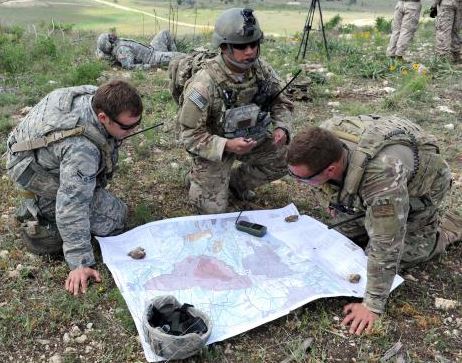
Air Force TACPs confirm target locations with their map

Wallace lists 10 reasons why tent-making apologists are effective, and this is one I have personal experience with:

Tent-Making Christian Case Makers Reach a Skeptical Audience
As an atheist, I was very skeptical of Christians when I thought they were trying to sell me something. In fact, this was a major stumbling block for me. As a high school student, I used to watch local televangelists with scorn if they repeatedly asked their viewers to send them money. Don’t underestimate this disdain on the part of skeptics. As a tent-maker, I’ve had many conversations with skeptics who have given me a hearing simply because they respected my position as a volunteer Case Maker. One told me, “At least I know you’re not in this for the money.” Tent-making Case Makers are uniquely positioned to reach a skeptical world.

This blog has no ads, because I pay wordpress to have them removed. I do post Amazon links in the What I am Reading section, but that’s only to recommend to people what I am actually reading, not to make money.

And these two are near and dear to me:

Tent-Making Christian Case Makers Thrive in Any Economy
I started thinking again about the power of tent-making Case Makers after reading Lydia McGrew’s fantastic post, “An Army of Tent Makers.” Lydia is a brilliant Case Maker who continues to have a powerful impact even though she’s not a vocational apologist. In her post, Lydia discusses the current financial climate and the limited opportunities for people seeking full-time employment as apologists. While it’s often difficult to find full-time employment in the field of Christian apologetics or start a donor-funded apologetics ministry in a challenging economy, tent-making Case Makers aren’t limited by bad economic climates. In addition, as Lydia points out, “In the end, if we can have this army of tentmakers, there will be (Lord willing) money to allow some people to work in full-time ministry. But it’s going to be quite a small proportion of those who are interested or would ideally like to do so.”

Tent Making Christian Case Makers Survive in Any Political Climate
Times are changing and our politicians and judges are less and less friendly to non-profit organizations. A federal judge recently struck down a law giving clergy tax-free housing allowances, and atheist groups continue to challenge the tax exempt status of religious non-profits.  If the non-profit status of apologetics ministries is someday successfully abolished, vocational Christian Case Makers will have to rethink their strategy. Tent-making Case Makers will already be standing in the gap. Tent-makers are flexible enough to survive, even in difficult political environments.

My regular readers know that I follow current events and what I see worries me. Earning and saving is my way of weakening the fear of the future, so that I can make a small difference today without being paralyzed by worry about tomorrow. It really is important for Christians to earn and save so that they can do ministry today without crashing and burning tomorrow when things get difficult. Although some silly people think that the height of Christian ability is to disregard the future and do wild, adventurous things today, those people are wrong.  A Christian ought to be wise about balancing ministry and finances, so that they aren’t an embarrassment to the Kingdom, or a financial burden to others. Any of the young Christians who I mentor regarding college and careers and finances will tell you that I am an absolute bully when it comes to making young people study useful subjects, get early work experience, and curtail spending on fun and thrills in favor of saving and investing.

Wallace wrote another post where he listed the occupations of a bunch of tent-making apologists, including me. I think the important thing is that you have to earn money and you have to do apologetics. Finding the right balance is your decision, but whatever you decide, make sure you are effective and make sure that you don’t starve now, or in the future when you are older. We all have to retire some day, you probably don’t want to be working full time in your 70s at a job you don’t love, just to put food on the table.

Alexander Vilenkin: “All the evidence we have says that the universe had a beginning”

I’ve decided to explain why physicists believe that there was a creation event in this post. That is to say, I’ve decided to let famous cosmologist Alexander Vilenkin do it.

From Uncommon Descent.

Excerpt:

Did the cosmos have a beginning? The Big Bang theory seems to suggest it did, but in recent decades, cosmologists have concocted elaborate theories – for example, an eternally inflating universe or a cyclic universe – which claim to avoid the need for a beginning of the cosmos. Now it appears that the universe really had a beginning after all, even if it wasn’t necessarily the Big Bang.

At a meeting of scientists – titled “State of the Universe” – convened last week at Cambridge University to honor Stephen Hawking’s 70th birthday, cosmologist Alexander Vilenkin of Tufts University in Boston presented evidence that the universe is not eternal after all, leaving scientists at a loss to explain how the cosmos got started without a supernatural creator. The meeting was reported in New Scientist magazine (Why physicists can’t avoid a creation event, 11 January 2012).

[…]In his presentation, Professor Vilenkin discussed three theories which claim to avoid the need for a beginning of the cosmos.

The three theories are chaotic inflationary model, the oscillating model and quantum gravity model. Regular readers will know that those have all been addressed in William Lane Craig’s peer-reviewed paper that evaluates alternatives to the standard Big Bang cosmology.

But let’s see what Vilenkin said.

More:

One popular theory is eternal inflation. Most readers will be familiar with the theory of inflation, which says that the universe increased in volume by a factor of at least 10^78 in its very early stages (from 10^−36 seconds after the Big Bang to sometime between 10^−33 and 10^−32 seconds), before settling into the slower rate of expansion that we see today. The theory of eternal inflation goes further, and holds that the universe is constantly giving birth to smaller “bubble” universes within an ever-expanding multiverse. Each bubble universe undergoes its own initial period of inflation. In some versions of the theory, the bubbles go both backwards and forwards in time, allowing the possibility of an infinite past. Trouble is, the value of one particular cosmic parameter rules out that possibility:

But in 2003, a team including Vilenkin and Guth considered what eternal inflation would mean for the Hubble constant, which describes mathematically the expansion of the universe. They found that the equations didn’t work (Physical Review Letters, DOI: 10.1103/physrevlett.90.151301). “You can’t construct a space-time with this property,” says Vilenkin. It turns out that the constant has a lower limit that prevents inflation in both time directions. “It can’t possibly be eternal in the past,” says Vilenkin. “There must be some kind of boundary.”

A second option explored by Vilenkin was that of a cyclic universe, where the universe goes through an infinite series of big bangs and crunches, with no specific beginning. It was even claimed that a cyclic universe could explain the low observed value of the cosmological constant. But as Vilenkin found, there’s a problem if you look at the disorder in the universe:

Disorder increases with time. So following each cycle, the universe must get more and more disordered. But if there has already been an infinite number of cycles, the universe we inhabit now should be in a state of maximum disorder. Such a universe would be uniformly lukewarm and featureless, and definitely lacking such complicated beings as stars, planets and physicists – nothing like the one we see around us.

One way around that is to propose that the universe just gets bigger with every cycle. Then the amount of disorder per volume doesn’t increase, so needn’t reach the maximum. But Vilenkin found that this scenario falls prey to the same mathematical argument as eternal inflation: if your universe keeps getting bigger, it must have started somewhere.

However, Vilenkin’s options were not exhausted yet. There was another possibility: that the universe had sprung from an eternal cosmic egg:

Vilenkin’s final strike is an attack on a third, lesser-known proposal that the cosmos existed eternally in a static state called the cosmic egg. This finally “cracked” to create the big bang, leading to the expanding universe we see today. Late last year Vilenkin and graduate student Audrey Mithani showed that the egg could not have existed forever after all, as quantum instabilities would force it to collapse after a finite amount of time (arxiv.org/abs/1110.4096). If it cracked instead, leading to the big bang, then this must have happened before it collapsed – and therefore also after a finite amount of time.

“This is also not a good candidate for a beginningless universe,” Vilenkin concludes.

So at the end of the day, what is Vilenkin’s verdict?

“All the evidence we have says that the universe had a beginning.”

This is consistent with the Borde-Guth-Vilenkin Theorem, which I blogged about before, and which William Lane Craig leveraged to his advantage in his debate with Peter Millican.

The Borde-Guth-Vilenkin (BGV) proof shows that every universe that expands must have a space-time boundary in the past. That means that no expanding universe, no matter what the model, can be eternal into the past. No one denies the expansion of space in our universe, and so we are left with a cosmic beginning. Even speculative alternative cosmologies do not escape the need for a beginning.

Conclusion

If the universe came into being out of nothing, which seems to be the case from science, then the universe has a cause. Things do not pop into being, uncaused, out of nothing. The cause of the universe must be transcendent and supernatural. It must be uncaused, because there cannot be an infinite regress of causes. It must be eternal, because it created time. It must be non-physical, because it created space. There are only two possibilities for such a cause. It could be an abstract object or an agent. Abstract objects cannot cause effects. Therefore, the cause is an agent.

Now, let’s have a discussion about this science in our churches, and see if we can’t train Christians to engage with non-Christians about the evidence so that everyone accepts what science tells us about the origin of the universe.

What criteria do historians use to get to the minimal facts about the historical Jesus?

Sherlock Holmes and John Watson: let's take a look at the facts
Sherlock Holmes and John Watson: let’s take a look at the facts

Have you ever heard Gary Habermas, Michael Licona or William Lane Craig defend the resurrection of Jesus in a debate by saying that the resurrection is the best explanation for the “minimal facts” about Jesus? The lists of minimal facts that they use are typically agreed to by their opponents during the debates. Minimal facts are the parts of the New Testament that meet a set of strict historical criteria. These are the facts that skeptical historians agree with, totally apart from any religious beliefs.

So what are the criteria that skeptical historians use to derive a list of minimal facts about Jesus?

Dr. Craig explains them in this article.

Excerpt:

The other way, more influential in contemporary New Testament scholarship, is to establish specific facts about Jesus without assuming the general reliability of the Gospels. The key here are the so-called “Criteria of Authenticity” which enable us to establish specific sayings or events in Jesus’ life as historical. Scholars involved in the quest of the historical Jesus have enunciated a number of these critieria for detecting historically authentic features of Jesus, such as dissimilarity to Christian teaching, multiple attestation, linguistic semitisms, traces of Palestinian milieu, retention of embarrassing material, coherence with other authentic material, and so forth.

It is somewhat misleading to call these “criteria,” for they aim at stating sufficient, not necessary, conditions of historicity. This is easy to see: suppose a saying is multiply attested and dissimilar but not embarrassing. If embarrassment were a necessary condition of authenticity, then the saying would have to be deemed inauthentic, which is wrong-headed, since its multiple attestation and dissimilarity are sufficient for authenticity. Of course, the criteria are defeasible, meaning that they are not infallible guides to authenticity. They might be better called “Indications of Authenticity” or “Signs of Credibility.”

In point of fact, what the criteria really amount to are statements about the effect of certain types of evidence upon the probability of various sayings or events in Jesus’ life. For some saying or event S and evidence of a certain type E, the criteria would state that, all things being equal, the probability of S given E is greater than the probability of S on our background knowledge alone. So, for example, all else being equal, the probability of some event or saying is greater given its multiple attestation than it would have been without it.

What are some of the factors that might serve the role of E in increasing the probability of some saying or event S? The following are some of the most important:

(1) Historical congruence: S fits in with known historical facts concerning the context in which S is said to have occurred.

(2) Independent, early attestation: S appears in multiple sources which are near to the time at which S is alleged to have occurred and which depend neither upon each other nor a common source.

(3) Embarrassment: S is awkward or counter-productive for the persons who serve as the source of information for S.

(4) Dissimilarity: S is unlike antecedent Jewish thought-forms and/or unlike subsequent Christian thought-forms.

(5) Semitisms: traces in the narrative of Aramaic or Hebrew linguistic forms.

(6) Coherence: S is consistent with already established facts about Jesus.

For a good discussion of these factors see Robert Stein, “The ‘Criteria’ for Authenticity,” in Gospel Perspectives I, ed. R. T. France and David Wenham (Sheffield, England: JSOT Press, 1980), pp. 225-63.

Notice that these “criteria” do not presuppose the general reliability of the Gospels. Rather they focus on a particular saying or event and give evidence for thinking that specific element of Jesus’ life to be historical, regardless of the general reliability of the document in which the particular saying or event is reported. These same “criteria” are thus applicable to reports of Jesus found in the apocryphal Gospels, or rabbinical writings, or even the Qur’an. Of course, if the Gospels can be shown to be generally reliable documents, so much the better! But the “criteria” do not depend on any such presupposition. They serve to help spot historical kernels even in the midst of historical chaff. Thus we need not concern ourselves with defending the Gospels’ every claim attributed to Jesus in the gospels; the question will be whether we can establish enough about Jesus to make faith in him reasonable.

And you can see Dr. Craig using these criteria to defend minimal facts in his debates. For example, in his debate with Ehrman, he alludes to the criteria when making his case for the empty tomb.

Here, he uses multiple attestation and the criteria of embarrassment:

Among the reasons which have led most scholars to this conclusion are the following:

1. The empty tomb is also multiply attested by independent, early sources.

Mark’s source didn’t end with the burial, but with the story of the empty tomb, which is tied to the burial story verbally and grammatically. Moreover, Matthew and John have independent sources about the empty tomb; it’s also mentioned in the sermons in the Acts of the Apostles (2.29; 13.36); and it’s implied by Paul in his first letter to the Corinthian church (I Cor. 15.4). Thus, we have again multiple, early, independent attestation of the fact of the empty tomb.

2. The tomb was discovered empty by women.

In patriarchal Jewish society the testimony of women was not highly regarded. In fact, the Jewish historian Josephus says that women weren’t even permitted to serve as witnesses in a Jewish court of law. Now in light of this fact, how remarkable it is that it is women who are the discoverers of Jesus’ empty tomb. Any later legendary account would certainly have made male disciples like Peter and John discover the empty tomb. The fact that it is women, rather than men, who are the discoverers of the empty tomb is best explained by the fact that they were the chief witnesses to the fact of the empty tomb, and the Gospel writers faithfully record what, for them, was an awkward and embarrassing fact.

There are actually a few more reasons for believing in the empty tomb that he doesn’t go into in the debate, but you can find them in his written work. For example, in his essay on Gerd Ludemann’s “vision” hypothesis. That essay covers the reasons for all four of his minimal facts.

So, if you are going to talk about the resurrection with a skeptic, you don’t want to invoke the Bible as some sort of inerrant/inspired Holy Book.

Try this approach instead:

  1. Explain the criteria that historians use to get their lists of minimal facts
  2. Explain your list of minimal facts
  3. Defend your list of minimal facts using the criteria
  4. Cite skeptics who admit to each of your minimal facts, to show that they are widely accepted
  5. List some parts of the Bible that don’t pass the criteria (e.g. – guard at the tomb, Matthew earthquake)
  6. Explain why those parts don’t pass the criteria, and explain that they are not part of your case
  7. Challenge your opponent to either deny some or all the facts, or propose a naturalistic alternative that explains the facts better than the resurrection
  8. Don’t let your opponent attack any of your minimal facts by attacking other parts of the Bible (e.g. – the number of angels being one or two, etc.)

And remember that there is no good case for the resurrection that does not make heavy use of the early creed in 1 Corinthians 15:3-8.

The best essay on the minimal facts criteria that I’ve read is the one by Robert H. Stein in “Contending with Christianity’s Critics“. It’s a good short essay that goes over all the historical criteria that are used to derive the short list of facts from which we infer the conclusion “God raised Jesus from the dead”. That whole book is really very, very good.