
Yale University computer science professor takes a look at protein formation probabilities

How did life begin?
How did life begin?

When I was in graduate school, we studied a book called “Mirror Worlds”, authored by famous computer science professor David Gelernter at Yale University. This week, I noticed that Dr. Gelernter had written an article in the prestigious Claremont Review of Books. In his article, he applies his knowledge of computer science to the problem of the origin of life.

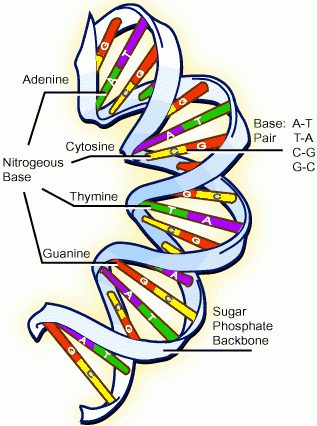
Evolution, if it is going to work at all, has to explain the problem of how the basic building blocks of life – proteins – can emerge from non-living matter. It turns out that the problem of the origin of life is essentially a problem of information – of code. If the components of proteins are ordered properly, then the sequence folds up into a protein that has biological function. If the sequence is not good, then just like computer code, it won’t run.

Here’s Dr. Gelernter to explain:

How to make proteins is our first question. Proteins are chains: linear sequences of atom-groups, each bonded to the next. A protein molecule is based on a chain of amino acids; 150 elements is a “modest-sized” chain; the average is 250. Each link is chosen, ordinarily, from one of 20 amino acids. A chain of amino acids is a polypeptide—“peptide” being the type of chemical bond that joins one amino acid to the next. But this chain is only the starting point: chemical forces among the links make parts of the chain twist themselves into helices; others straighten out, and then, sometimes, jackknife repeatedly, like a carpenter’s rule, into flat sheets. Then the whole assemblage folds itself up like a complex sheet of origami paper. And the actual 3-D shape of the resulting molecule is (as I have said) important.

Imagine a 150-element protein as a chain of 150 beads, each bead chosen from 20 varieties. But: only certain chains will work. Only certain bead combinations will form themselves into stable, useful, well-shaped proteins.

So how hard is it to build a useful, well-shaped protein? Can you throw a bunch of amino acids together and assume that you will get something good? Or must you choose each element of the chain with painstaking care? It happens to be very hard to choose the right beads.

Gelernter decides to spot the Darwinist a random sequence of 150 elements. Now the task the Darwinist is to use random mutation to arrive at a sequence of 150 links that has biological function.

[W]hat are the chances that a random 150-link sequence will create such a protein? Nonsense sequences are essentially random. Mutations are random. Make random changes to a random sequence and you get another random sequence. So, close your eyes, make 150 random choices from your 20 bead boxes and string up your beads in the order in which you chose them. What are the odds that you will come up with a useful new protein?

[…]The total count of possible 150-link chains, where each link is chosen separately from 20 amino acids, is 20150. In other words, many. 20150 roughly equals 10195, and there are only 1080 atoms in the universe.

What proportion of these many polypeptides are useful proteins? Douglas Axe did a series of experiments to estimate how many 150-long chains are capable of stable folds—of reaching the final step in the protein-creation process (the folding) and of holding their shapes long enough to be useful. (Axe is a distinguished biologist with five-star breeding: he was a graduate student at Caltech, then joined the Centre for Protein Engineering at Cambridge. The biologists whose work Meyer discusses are mainly first-rate Establishment scientists.) He estimated that, of all 150-link amino acid sequences, 1 in 1074 will be capable of folding into a stable protein. To say that your chances are 1 in 1074 is no different, in practice, from saying that they are zero. It’s not surprising that your chances of hitting a stable protein that performs some useful function, and might therefore play a part in evolution, are even smaller. Axe puts them at 1 in 1077.

In other words: immense is so big, and tiny is so small, that neo-Darwinian evolution is—so far—a dead loss. Try to mutate your way from 150 links of gibberish to a working, useful protein and you are guaranteed to fail. Try it with ten mutations, a thousand, a million—you fail. The odds bury you. It can’t be done.

Keep in mind that you need many, many proteins in order to have even a simple living cell. (And that’s not even considering the problem of organizing the proteins into a system).

So, if you’re a naturalist, then your only resources to explain the origin of life are chance and mutation. As Dr. Gelernter shows, naturalistic explanations won’t work to solve even part of the problem. Not even with a long period of time.  Not even if you use the entire universe as one big primordial soup, and keep trying sequences for the history of the universe. It just isn’t possible to arrive at sequences that have biological function in the time available, using the resources available. The only viable explanation is that there is a computer scientist who wrote the code without using trial and error. Something that ordinary software engineers like myself and Dr. Gelernter do all the time. We know what kind of cause is adequate to explain functioning code.

What happens when we die? Is there a resurrection? Is there a Heaven and a Hell?

Bible study that hits the spot

One of the questions that everyone should ask themselves is “what happens to me when I die?” Well, I’m an evangelical Protestant Christian, and I think that view of the world is correct according to logic and evidence. Well, I found an article on this that provides the philosophical theology perspective, from Dr. William Lane Craig. You can’t do better than him.

He writes:

The first and most fundamental truth that we must hold on to is that the biblical hope of immortality is physical, bodily resurrection. I repeat: The biblical hope for immortality is physical, bodily resurrection. The biblical hope is not that the soul will someday be separated from the body and fly off to heaven and be forever with God in heaven in this disembodied existence. That’s actually a very Greek understanding of the afterlife, from the Greek philosophers like Plato, and it’s very different from the Jewish-Hebrew way of thinking of the afterlife. For Jews and for the early Christians alike, the hope of immortality was not the immortality of the soul alone but rather the resurrection of the body. This physical body will be raised from the dead and transformed to immortal life.

He cites 1 Cor 15:20 and Phil 3:20-21 as support.

And do we get our resurrection bodies right away?

Now that raises the next question: When do we receive our resurrection bodies? When do we get our resurrection body? Is it immediately upon death? When we die, do we immediately receive our resurrection body? Well, the answer to that is, no. That idea fails to take seriously the physical nature of the resurrection. The resurrection body is not some different body. It is this body transformed into a glorious, immortal, Spirit-filled, incorruptible form. So if we received our resurrection body immediately upon death, the graves of all the Christians would be empty! There would be no corpses left in the tombs because our resurrection bodies are the transformation of this earthly body. Therefore, the resurrection doesn’t take place immediately upon death. Rather the Scriptures are fairly clear that this takes place at the second coming of Christ, when Christ returns to earth.

He cites 1 Cor 15:21-23, 51-52 for support, as well as 1 Thes 4:13-17.

And what about the time in between death and the second coming of Christ? After all, in Luke 23:39-43, Jesus tells the dying thief who believes in him that he’ll be with Jesus in Paradise that very day:

39 One of the criminals who hung there hurled insults at him: “Aren’t you the Messiah? Save yourself and us!”

40 But the other criminal rebuked him. “Don’t you fear God,” he said, “since you are under the same sentence? 

41 We are punished justly, for we are getting what our deeds deserve. But this man has done nothing wrong.”

42 Then he said, “Jesus, remember me when you come into your kingdom.”

43 Jesus answered him, “Truly I tell you, today you will be with me in paradise.”

Dr. Craig says:

[T]he Bible indicates is that the soul does survive the death of the body. Human death does not mean extinction. Human death is simply the separation of the soul from the body. While the body dies biologically and decays away, the soul continues to exist and continues to live in a disembodied state. In between your death and your resurrection you will exist as a disembodied soul, a soul without a body, in a conscious state.

And he cites Phil 1:21-24, where it talks about how life after death, but before the resurrection, is an improvement, because he will be with Christ, which is “far better”. Those who don’t accept Jesus as Lord and Savior will also have a life after death, but apart from Christ. And they’ll also have a resurrection, but not to eternal life with Christ:

In John 5 there’s a very interesting passage where Jesus speaks about the resurrection, and He says that there will be a resurrection, not only of the righteous dead, but even also of the unrighteous dead. John 5:28-29. Look at this saying by Jesus: “Do not marvel at this. For the hour is coming in which all who are in the graves will hear His voice and come forth, those who have done good to the resurrection of life and those who have done evil to the resurrection of condemnation.” Jesus envisions that all people will be raised from the dead. Those who are believers, the righteous dead, will be raised to the resurrection of life; but the unrighteous dead, those who have rejected God’s grace and His love, will be raised to the resurrection of condemnation.

Dr. Craig also talks about the story of Lazarus, where the rich man, who is not saved, is in Hades, which is the Greek word for the Hebrew word “Sheol”, which you may recognize from the Psalms.

Dr. Craig writes:

When people die, the righteous go to be with Christ, where they will await their resurrection from the dead. The damned go to Hades, where they are in a disembodied state where they await their resurrection to final judgment. Only then are people ushered in to their final state, which is heaven or hell.

I cannot wait until I get my resurrection body. I have a very good idea of what I’d like it to be, too. I think about the resurrection a lot, and really look forward to it. I had a difficult life in many ways. There are things that have not been resolved, like not being married, and being stuck as a virgin! And then there’s the troubles I sometimes have at work, when atheists who are younger and more dedicated than me make me feel inadequate. I was a hard worker in my 20s and 30s, but now in my 40s, I just feel like I would rather be doing things I really care about, and it’s sometimes hard to focus, especially when retirement is just around the corner – around age 50.

Sometimes, I find myself driving home in my beautiful city and state, and I just think, the most important things are not all this prosperity and freedom God blessed me with, but that vertical relationship with God. And I wish I was doing more to really show Jesus that he is Lord of my life. But my hope is that in the end, I will share in his vindication, being clothed in a righteousness that I did not earn myself.

The most important thing Christian parents need to focus on with their children

A family praying and reading the Bible

I know what you’re thinking – I’m going to say apologetics. But I was actually having a talk with a young women who found the arguments for God convincing, but wasn’t sure whether she was ready for a personal relationship with the God of the Bible. It got me thinking about my past and what it was about the God of the Bible that caused me to make a commitment.

If I had to say what it is that cause me to take Christianity seriously, including accepting Jesus as my Leader (more than just as my Savior), it would be the conviction that God was lining things up in my life to show himself to me. This was particularly welcome because I could see that I had not been blessed with the best situation in life to start out with.

Sean McDowell has a recent post about it, and since he is an expert in apologetics, I’m inclined to agree with him.

He writes:

In his book The Four Loves, C.S. Lewis makes a distinction between “Gift-love” and “Need-love.” As for Gift-love, he gives the example of a father who works and plans for the future well being of his family, even though he will die without seeing them benefit. As for Need-love, Lewis gives the example of a lonely and frightened child who comes to its mother’s arms for comfort and protection. Such love is neither selfish nor improper, because children are intended to have nurturing mothers, and mothers are intended to care for their kids.

According to Lewis, God’s love for mankind is entirely Gift-love: “The Father gives all He is and has to the Son. The Son gives Himself back to the Father, and gives Himself to the world, and for the world to the Father, and thus gives the world (in Himself) back to the Father too.” God does not need our love or worship. Rather, He freely loves us as an extension of His grace.

But our love for God is different. While we may be able to offer God Gift-love, our love is primarily need based. Lewis explains: “But man’s love for God, from the very nature of the case, must always be very largely, and must often be entirely, a Need-love.” We desperately need God in both this world and the next.

And then Lewis makes an additional (and helpful) distinction—while our objective need for God will never change, our awareness of that need can. And if our awareness of the need for God fades, then so may our faith. Thus, Lewis says:

There seems no reason for describing as hypocritical the short-lived piety of those whose religion fades away once they have emerged from “danger, necessity or tribulation.” Why should they not have been sincere? They were desperate and howled for help. Who wouldn’t?

In other words, if someone believes in God because of an immediate need for safety or comfort, then as soon as the danger or pain ends, so may the faith. How does this relate to students? Think about it. If a young person believes in God for social or relational needs in the family, church, or school, then when those needs fade, so will his or her faith. If belief in God fulfills some external need, then as soon as that need fades, or another venue provides satisfaction of that need, the student will likely abandon his or her faith (or minimally, have a marginalized faith).

The whole post is worth reading, because no less than Sean McDowell himself had a moment like this where he realized his own sinfulness and had to rely on Jesus for his forgiveness.

Judging from his tweets, I know that Sean is obsessed with super-heroes like Spider-Man, and so he would not be comparing himself to his peers in terms of righteousness. That sort of distance between you and Spider-Man can be really grating for boys. Inside, we feel like we are meant to be super-heroes. Many young men go into apologetics because they see it as a super-power. The problem of not measuring up is very strong for us, because we see the demands of Christianity as much greater than mere church attendance. I imagine that as Sean engaged with people using his apologetics super-power, he probably realized how difficult it was to know everything and give an answer to everyone. That’s above and beyond the standard shortcomings or pride, anger, hatred, and so on that are inside of every person.

We are not super-heroes but we need to have super-human righteousness (that is, perfect righteousness) in order to stand before our Creator and Designer. The only solution is to rely on the imputed righteousness of Jesus for our super-hero status. It is a good and healthy thing to take on Jesus as King, and to imitate him. But when we fail, we must also rely on him as Savior. And thank God the Father for that provision of salvation. And indeed, I myself think of Jesus as Savior in the moments where I am conscious of my own sin. But I need to think about him more than that, and I’ll explain how next.

In my case, I wanted to be a super hero growing up, but I knew I wasn’t coming from a family or a background that made super-heroes. I was saved in a non-Christian home where, thanks to my hands-off “parents”, I was on a very dark path to failure. In fact, I can see where I would have ended up by just looking at where my older brother is now. That disaster is what my parents, my schools, my culture, etc. produced in him, and it would have been me except for God stepping in to make himself known. I get excited about God as initiator and architect of salvation (not without my free will to trust). When God architects a divine appointment for me to use my prepared abilities in his defense or in mentoring little ones, I praise God as author of salvation. But I forget that Christ is the one who allows me to be clean enough to participate in this plan.

My ambition from small was to be a super-hero, and this later turned into great respect for people in the military, especially those who are awarded the Medal of Honor, like Michael Murphy. I want God to give me the Medal of Honor, too. But sin ruins my ambition every day. When I am called out to serve and am found faithful and competent, I need to remember that what makes me fit for service is Christ’s sacrifice on the cross. His shed blood is the cape that I put on when it is my turn to come off the bench and be who I was designed to be. It is very important to me that the God I serve is the kind of God who won’t turn away from me when I fall short.