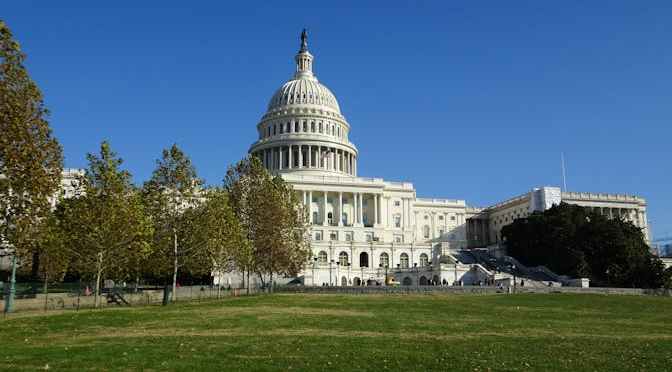
Trump pulls nomination of Janette Nesheiwat for Surgeon General

A while back, Rose and I went on the FreeThinking Podcast to discuss Trump’s Cabinet picks. I was especially negative about the nominations for Secretary of Labor and Surgeon General. Well, the leftist Secretary of Labor got through her nomination, but enough was discovered on the Surgeon General nominee for her nomination to be pulled. So who is the replacement?

First, here is the previous nominee, Janette Nesheiwat, who is very attractive, just like many of Trump’s other bad nominees:

Donald Trump’s nominee for Surgeon General is facing backlash from some of his fiercest MAGA supporters for backing some strict COVID restrictions and masking mandates.

[…]Nesheiwat, a medical director for CityMD in New York, frequently spoke about the coronavirus pandemic and offered hardline advice about how citizens should behave.

[…]’Dr. Janette Nesheiwat supported masking kids in school. Dealbreaker,’ wrote podcast host Liz Wheeler on social media when the pick was announced.

[…]Another video making the rounds on social media featured Nesheiwat praising Meta CEO Mark Zuckerberg for censoring and banning so-called ‘misinformation’ about vaccines on Facebook and Instagram.

[…]Nesheiwat signaled her support for other social media platforms to follow Zuckerberg’s example and also censor vaccine skeptics.

[…]Nesheiwat also promoted the idea of making sure children were getting their COVID-19 vaccines.

Below, I link to a Daily Signal article that talks about her replacement. That article adds that “Nesheiwat has also been criticized by conservatives for touting the idea that children can identity as a gender that differs from their biological sex.” Just a total trash pick by Trump, not conservative at all. But she’s hot.

Here is the story from Daily Signal:

The Trump administration pulled the nomination of Dr. Janette Nesheiwat to be surgeon general following reports that she inflated her credentials, Bloomberg reported.

President Donald Trump instead nominated Dr. Casey Means on Wednesday… Means attended Stanford Medical School, then she pursued a surgical residency at Oregon Health & Science University. Before completing the program, she dropped out to start her own functional medicine practice and founded the company Levels, which offers consumers continuous glucose monitors and an app to track their blood sugar.

Means’ brother, Calley Means, is a prominent advisor to Secretary Robert F. Kennedy Jr.

I’m not impressed with this new pick, but she does have a record of promoting individual autonomy and choice in health care. She also has a record of opposing woke content in medical school curriculums.

The better pick would have been Florida’s Surgeon General, who has a record of opposing Big Government Health Care.

Florida Surgeon General Dr. Joseph Ladapo has taken several anti-establishment actions, including:
  • Opposing Water Fluoridation: Advocated for removing fluoride from drinking water, citing health risks.
  • Challenging Vaccine Mandates: Opposed COVID-19 vaccine mandates, questioned vaccine efficacy, and pushed for legislation against discrimination based on vaccination status.
  • Contradicting Federal Health Guidance: Issued guidance against federal recommendations on COVID-19 vaccines and measles outbreak managemen.

Trump is definitely a mixed bag for conservatives. Mostly good, but a lot bad, too. I’m still seething with Trump for handing the Canadian socialist party a victory with his clowning about “51st state”. Having a socialist country to the north is only going to hurt us in the future.

It’s the end of Anthony Fauci’s horrifying experiments on captive dogs

I wrote an article back in 2021 about why elite Christians should not hold Anthony Fauci in high regard. So many Christian leaders sided with Anthony Fauci and Francis Collins, and tried to promote their positions to Christians. But strangely enough, there were many reasons to doubt the goodness of these two men. One of the reasons was the NIH’s experiments on captured dogs.

In my previous article, I wrote about these experiments. Let’s review that, and then see what the Trump admnistration thinks of it.

This is from the far-left The Hill.

Excerpt:

The White Coat Waste Project, the nonprofit organization that first pointed out that U.S. taxpayers were being used to fund the controversial Wuhan Institute of Virology, have now turned its sights on Anthony Fauci on another animal-testing-related matter — infecting dozens of beagles with disease-causing parasites to test an experimental drug on them.

[…]White Coat Waste claims that 44 beagle puppies were used in a Tunisia, North Africa, laboratory, and some of the dogs had their vocal cords removed, allegedly so scientists could work without incessant barking.

[…]“Our investigators show that Fauci’s NIH division shipped part of a $375,800 grant to a lab in Tunisia to drug beagles and lock their heads in mesh cages filled with hungry sand flies so that the insects could eat them alive,” White Coat Waste told Changing America. “They also locked beagles alone in cages in the desert overnight for nine consecutive nights to use them as bait to attract infectious sand flies.”

That’s what I covered in my previous article, along with the NIH funding of gain of function research which likely led to the COVID lab leak. But now there is news from the Trump administration – what do they think of these experiments on dogs?

This is the latest from the Daily Caller:

The National Institutes of Health has closed the last remaining intramural beagle lab conducting painful experiments — the federal government’s largest dog lab — NIH Director Jay Bhattacharya said in a television interview Sunday.

A project at the NIH Clinical Center on “stress-induced and sepsis-induced cardiomyopathy” represented the final in-house experiments that induced pain and distress in beagles, classified under U.S. Department of Agriculture pain categories D and E. The project has now been terminated.

[…]The NIH has killed 2,133 beagles in septic shock experiments since 1986, according to a nine-year investigation and advocacy campaign by White Coat Waste Project. Necroposy reports from 41 beagles and other veterinary records obtained by the group through the Freedom of Information Act show that the experiments involved infecting the beagles’ lungs with pneumonia-causing bacteria to induce sepsis and sometimes bleeding them out to induce hemorrhagic shock. The dogs are then euthanized.

I think it’s important for Christians to do their own thinking when it comes to how they vote. I don’t want Christians to vote so that they feel smart, and can claim to be in the “smart” crowd. I don’t think that Christians should get their ideas from the secular leftistswho work at NPR and PBS. One of the reasons I voted against Biden is because I remembered these experiments. I thought that a Republican administration would see someone like Jay Bhattacharya, Vinay Prasad or Scott Atlas as leader of the NIH. We got Jay, and he’s cleaning up the filth.

There are actually two dissentings scientists in the Trump administration:

  • Jay Bhattacharya: He’s now the Director of the National Institutes of Health (NIH). During the pandemic, Bhattacharya, a Stanford professor, co-authored the Great Barrington Declaration, which argued against widespread lockdowns and for focused protection of vulnerable groups while letting others resume normal life. He criticized mask mandates, social distancing, and vaccine policies, often clashing with the NIH and CDC’s approaches. His views on letting the virus spread among low-risk groups to build immunity were controversial, with critics arguing it underestimated COVID’s risks. Supporters, though, saw him as a voice of reason against overreach.
  • Marty Makary: Appointed as the FDA Commissioner. Makary, a Johns Hopkins surgeon and health policy expert, was outspoken about the need to balance COVID restrictions with societal costs. He questioned the efficacy of prolonged school closures and blanket mask mandates, emphasizing the low risk to children and the economic fallout of lockdowns. He also pushed for recognizing natural immunity in policy decisions, which put him at odds with federal health officials.

So, next election, remember not to listen to “Evangelicals for Biden” and fake, Soros-funded “evangelical” groups.

Is the Bible’s definition of faith opposed to logic and evidence?

Probably the biggest misconception that I encounter when defending the faith is the mistaken notion of what faith is. Today we are going to get to the bottom of what the Bible says faith is, once and for all. This post will be useful to Christians and atheists, alike.

What is faith according to the Bible?

I am going to reference this article from apologist Greg Koukl of Stand to Reason in my explanation.

Koukl cites three Biblical examples to support the idea that faith is not blind leap-of-faith wishing, but is based on evidence.

  1. Moses went out into the wilderness and he had that first encounter with the burning bush, and God gave him the directive to go back to Egypt and let his people go. Moses said, Yeah, right. What’s going to happen when they say, why should we believe you, Moses? God said, See that staff? Throw it down. Moses threw it down and it turned into a serpent. God said, See that serpent? Pick it up. And he picked it up and it turned back into a staff. God said, Now you take that and do that before the Jewish people and you do that before Pharaoh. And you do this number with the hail, and the frogs, and turning the Nile River into blood. You put the sun out. You do a bunch of other tricks to get their attention. And then comes this phrase: “So that they might know that there is a God in Israel.”
  2. [I]n Mark 2 you see Jesus preaching in a house, and you know the story where they take the roof off and let the paralytic down through the roof. Jesus said, “Your sins are forgiven.” And people get bugged because how can anyone forgive sins but God alone? Jesus understood what they were thinking and He said this: What’s harder to say, your sins are forgiven, or to rise, take up your pallet and go home? Now, I’ll tell you what would be harder for me to say : Arise, take up your pallet and go home. I can walk into any Bible study and say your sins are forgiven and nobody is going to know if I know what I am talking about or not. But if I lay hands on somebody in a wheelchair and I say, Take up your wheelchair and go home, and they sit there, I look pretty dumb because everyone knows nothing happened. But Jesus adds this. He says, “In order that you may know that the Son of Man has the power and authority to forgive sins, I say to you, arise, take up your pallet and go home.” And he got up and he got out. Notice the phrase “In order that you may know”. Same message, right?
  3. Move over to the Book of Acts. First sermon after Pentecost. Peter was up in front of this massive crowd. He was talking about the resurrection to which he was an eyewitness. He talked about fulfilled prophecy. He talked about the miraculous tongues and the miraculous manifestation of being able to speak in a language you don’t know. Do you think this is physical evidence to those people? I think so. Pretty powerful. Peter tells them, These men are not drunk as it seems, but rather this is a fulfillment of prophecy. David spoke of this. Jesus got out of the grave, and we saw him, and we proclaim this to you. Do you know how he ends his sermon? It’s really great. Acts 2:36. I’ve been a Christian 20 years and I didn’t see this until about a year ago. This is for all of those who think that if you can know it for sure, you can’t exercise faith in it. Here is what Peter said. Acts 2:36, “Therefore let all the house of Israel know for certain that God has made him both Lord and Christ, Messiah, this Jesus whom you crucified.” There it is again. “Know for certain.”

What is faith according to Bible-based theologians?

I am going to reference this article from theologian C. Michael Patton of Parchment and Pen in my explanation.

Patton explains that according to Reformation (conservative, Bible-based) theologians, faith has 3 parts:

  1. notitia – This is the basic informational foundation of our faith. It is best expressed by the word content. Faith, according to the Reformers must have content. You cannot have faith in nothing. There must be some referential propositional truth to which the faith points. The proposition “Christ rose from the grave,” for example, is a necessary information base that Christians must have.
  2. assensus – This is the assent or confidence that we have that the notitia is correct… This involves evidence which leads to the conviction of the truthfulness of the proposition… This involves intellectual assent and persuasion based upon critical thought… assensus… says, “I am persuaded to believe that Christ rose from the grave.”
  3. fiducia – This is the “resting” in the information based upon a conviction of its truthfulness. Fiducia is best expressed by the English word “trust.”… Fiducia is the personal subjective act of the will to take the final step. It is important to note that while fiducia goes beyond or transcends the intellect, it is built upon its foundation.

So, Biblical faith is really trust. Trust(3) can only occur after intellectual assent(2), based on evidence and thought. Intellectual assent(2) can only occur after the propositional information(1) is known.

The church today accepts 1 and 3, but denies 2. I call this “fideism” or “blind faith”. Ironically, activist atheists, (the New Atheists), also believe that faith is blind. The postmodern “emergent church” denies 1 and 2. A person could accept 1 and 2 but deny 3 by not re-prioritizing their life based on what they know to be true.

How do beliefs form, according to Christian philosophers?

I am going to reference a portion of chapter 3 of J.P. Moreland’s “Love Your God With All Your Mind” (i.e. – LYGWYM).

J.P. Moreland explains how beliefs form and how you can change them.

  1. Today, people are inclined to think that the sincerity and fervency of one’s beliefs are more important than the content… Nothing could be further from the truth… As far as reality is concerned, what matters is not whether I like a belief or how sincere I am in believing it but whether or not the belief is true. I am responsible for what I believe and, I might add, for what I refuse to believe because the content of what I do or do not believe makes a tremendous difference to what I become and how I act.
  2. A belief’s strength is the degree to which you are convinced the belief is true. As you gain ,evidence and support for a belief, its strength grows for you… The more certain you are of a belief… the more you rely on it as a basis for action.

But the most important point of the article is that your beliefs are not under the control of your will.

…Scripture holds us responsible for our beliefs since it commands us to embrace certain beliefs and warns us of the consequences of accepting other beliefs. On the other hand, experience teaches us that we cannot choose or change our beliefs by direct effort.

For example, if someone offered you $10,000 to believe right now that a pink elephant was sitting next to you, you could not really choose to believe this… If I want to change my beliefs about something, I can embark on a course of study in which I choose to think regularly about certain things, read certain pieces of evidence and argument, and try to find problems with evidence raised against the belief in question.

…by choosing to undertake a course of study… I can put myself in a position to undergo a change in… my beliefs… And… my character and behavior… will be transformed by these belief changes.

I think definition of faith is important, because atheists seemed to want to substitute their own definition of faith as blind belief for this Biblical definition, but there is no evidence for their view that faith is belief without evidence. I think this might be another case of projection by atheists. Blind faith is how they arrive at their views, so they are trying to push it onto us. But the Bible is clearly opposed to it.

Positive arguments for Christian theism