A Democratic senator is introducing legislation for a bailout of troubled union pension funds. If passed, the bill could put another $165 billion in liabilities on the shoulders of American taxpayers.
The bill, which would put the Pension Benefit Guarantee Corporation behind struggling pensions for union workers, is being introduced by Senator Bob Casey, (D-Pa.), who says it will save jobs and help people.
As FOX Business Network’s Gerri Willis reported Monday, these pensions are in bad shape; as of 2006, well before the market dropped and recession began, only 6% of these funds were doing well.
Although right now taxpayers could possibly be on the hook for $165 billion, the liability could essentially be unlimited because these pensions have to be paid out until the workers die.
It’s hard to say at the moment what the chances are that the bill will pass. A hearing is scheduled Thursday, which will give the public a sense of where political leaders sit on the topic, said Willis.
Just last week President Obama said there would be no more bailouts.
This is a good find from ECM – so be sure and send me your news tips, too, if you have any. I’ll give you credit.
I had a talk with my parents about what it was like for them growing up in a very very poor country before coming here, and I found out some interesting challenges that I wanted to share with you. My Dad grew up in a small village and he had to walk a mile to his farm which had lots of trees and plants that his family picked to sell the produce in the market. And they hunted for animals at night with a lantern. That’s how they grew up.
So, I wanted to ask them to tell me how things have changed for raising children from that environment compared to here in the affluent West. And below is the list of some of the challenges.
Education
My grandparents were not really focused on monitoring my parents education in school, they were more worried about passing on skills that would help them to tend the land so they could pass it on
The teachers in that country were mostly males and they were focused on academic achievement and competition, especially since intelligence and scholastic aptitude was a ticket out of poverty
There was NO emphasis on self-esteem, compassion, sex education, drug education, leftist politics or other secular leftist ideologies in the schools – and nobody wrote to politicians or attended marches for extra credit
The headmaster and the vice principal (both males) lived next door and they would come over to talk to my grandfather about my father, and to play cards while talking about politics in front of the children
Teachers were allowed to punish children in class with spankings
Teachers would inspect the students for dirty fingernails, messy hair, dirty uniform, or minimum decency clothing standards, etc. and you got rapped on the knuckles with a ruler if you were bad
My Dad attended a Presbyterian school and all the teachers attended church on Sundays
There was intense competition and last-man-standing contests for prizes, and all the sports were competitive with winners and losers – some people put a lot of effort into contests to get better so they could win
The teachers were not unionized and there was a free choice of which school to attend
none of the children had money for alcohol, drugs, contraceptives, etc.
Family and Community
My Dad grew up with a stay-at-home mother who monitored them, and they came home for lunch
There was no TV or video games, so family interaction was more common – like working together on things and doing chores to help make ends meet
my Dad’s chore was to fetch water in the morning from half-a mile away (several times)
No TV and no video games also means more sports and activities with the neighbor kids
Food was scarce, and there was no processed food or fast food – so kids were less obese
Neighbors came over more to play cards and discuss things so that children learned about adult stuff by listening and watching them debate and discuss ideas, instead of from watching mainstream news media, which is somewhere to the left of Satan, politically, on social, fiscal and foreign policy
My grandfather would make my father volunteer in a store in order for my grandfather to get credit at the store, and he was able to work because there were no regulations on children working to help to support the family as long as they also went to school
My father was earning money for the family at an early age – he saw his parents working hard and that was all the motivation he needed to want to contribute – not like today when it is difficult to make children do anything
My father used to volunteer to help other neighborhood children learn mathematics (I later did the same thing, but for money)
My father learned to hunt and fish so that he could help the family to survive
My father had 6 young siblings so he had experience raising children and learning to cook by watching my grandmother cook
If you’re wondering how I got into this long conversation with my parents, it’s because the woman I am performing acts of love on inquired repeatedly about my parents, and I got into a long discussion with them, touching on this topic and many other things related to parenting. The net effect of this on me was to make me a little more tolerant of my parents. They came from a simpler culture where they had more support from teachers and neighbors, while facing fewer challenges from the culture and secular leftist elites. My Dad worked 3 jobs when he got here. My Mom worked too. We were incredibly poor.
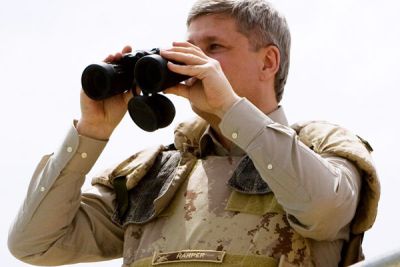
Prime Minister Stephen Harper issued a statement on Victoria Day that Canada is joining sides with South Korea in countering North Korea’s apparent act of aggression on March 26 that involved the sinking of the South Korean naval vessel Cheonan, killing 46.
“Canada is now committed to a coordinated international response, including through the UN Security Council, as a result of this act,” Harper declared in a written press release. Canada will “move to suspend high-level visits to Canada by North Korean officials,” Harper said in response to statements made Sunday by Republic of Korea’s President Lee Myung-bak.
[..]”The Government of Canada will take steps to impose enhanced restrictions on trade, investment and other bilateral relations with North Korea, including the addition of North Korea to the Area Control List.
“Canada will also continue to consult and co-operate with South Korea, as well as our partners and friends, to ensure that a strong global approach is taken toward the current situation on the Korean Peninsula,” Harper said.
Three experts from the Canadian navy, in concert with representatives from Australia, Sweden, the U.K. and the U.S., assisted in the investigation that concluded that North Korea was responsible for the sinking of the South Korean ship, the press release stated.
That’s what Obama should have done, too. We should be parking a carrier battle group right where the ship went down and running ASW patrols around the clock as part of joint exercises with South Korea and Japan. We should be selling more arms (e.g. – SAMs, SSMs, and LAVs with ATGMs), to South Korea and Japan, and building additional ships to deploy in that theater. All vessels entering and leaving North Korea should be boarded and inspected by US naval forces. We should be stepping up espionage efforts to get advanced warning of North Korea’s plans.
There should be a swift response to the sinking of South Korea’s vessel – something visible to them, as well as a change in tone and policy in the CIA and the State Department. Kick the doves and the fifth-columnists out of national security and foreign policy, and get serious about making aggression costly on the aggressor. South Korea should just pass a law saying that for every warship of theirs sunk in mysterious circumstances, THREE warships in North Korea will be sunk in mysterious circumstances.
If only Harper were in control of the US military, then we could really get something done – and not just the economic sanctions that he is going to put into place. But with President Pantywaist in charge, our enemies can do anything they want to our poorly-armed allies like South Korea.
* When I say SSMs in this article, I mean surface-to-surface missiles, not same-sex marriage. We should NOT be selling our allies same-sex marriages, we should be selling them surface-to-surface missiles.