Fun. Laughter. Happiness. Good times. No worries. Is this how life is supposed to be? Is our definition of loving life and seeing good days measured by the amount of happiness in our lives? Now, this isn’t just aimed at the “singles,” rather the post is aimed at marriage and what people tell us a good marriage is.
I was contemplating the notion that a marriage is defined as “good” by how “happy” the couple is. Now, I don’t want you to get the impression from me that I think a couple isn’t supposed to be happy in a marriage, no-no, I want to give you something to “munch” on. I found this article by Greg Koukl. The topic was on happiness and this is just one gem from the article:
“In the pursuit of happiness, human institutions are valid not because of transcendent ethic but because of temporal fulfillment, which is essentially self-centered. For example, marriage is a valid commitment as long as you’re happy. If you’re not happy anymore in the marriage, then you have reason to dissolve the marriage. But I would contend that if you’re getting married to be happy, then you’re getting married for the wrong reasons. Not that personal fulfillment is not a valid goal in some measure, but that’s not what it’s all about.”
Notice Greg didn’t condemn happiness in a marriage, rather he was making the point that happiness isn’t the goal of marriage. So, what is the goal of marriage?
“You marry as a covenant agreement between two people to maintain a family unit in society to accomplish certain things, to help each other and embrace the events and issues of life together as helpmates, to raise a family and provide a stable environment for them. Though all of those things may breed a measure of happiness, they breed a measure of misery as well. That’s why the covenant, the agreement, the commitment between husband and wife is not based on happiness. If it was you’d have to amend your vows to say, ‘Until unhappiness do us part.'”
Did you catch it? We don’t marry to be happy. Why do we marry? To “maintain a family unit in society to accomplish certain things, to help each other and embrace the events and issues of life together as helpmates, to raise a family and provide a stable environment for them.” That’s why man and woman marry. A person pursuing happiness alone will be horribly disappointed with marriage because marriage is not an institution for happiness alone.
Recommended read!
This post made me think of another post I saw on Neil Simpson’s blog about Phil 4:13.
Excerpt:
Philippians 4:13 (“I can do all things through him who strengthens me”) is one of the most misinsterpreted verses in the Bible. I used to misquote it. I can’t remember the last time I heard it used correctly. It is one of the top 10 searched verses on biblestudytools.com, along with another frequently abused verse, Jeremiah 29:11.
[…]It is technically true that we could accomplish great things with Jesus, of course, but that isn’t what Philippians 4:13 means. The verse refers to Christ’s power doing something very specific in the believer, not some sort of general power.
I love using Phil 4:13 as an example of how to read in context. You don’t need to read the entire Bible, or all of Philippians, or chapter 4 or even a paragraph to get the real meaning. Just go back one verse!
Philippians 4:12-13 I know how to be brought low, and I know how to abound. In any and every circumstance, I have learned the secret of facing plenty and hunger, abundance and need. I can do all things through him who strengthens me.
Verse 13 is Paul’s secret for being content in all situations. That’s it. Do every thing through Jesus and you can be content in everything. It isn’t about what you accomplish, it is about how you do whatever you do.
Phillipians is one of my favorite books in the New Testament, but you have to read the verses in context.
So is marriage about happiness, or something else?
I actually do think that there are many other uses for marriage other than the “produce super-kids” plan that I always talk about. I think that men and women complement each other well, so I would look forward to have all of my nasty parts worked on, like the messiness, laziness, meanness, snarkiness, selfishness, driving too fast, and so forth. I really enjoy the feelings I get from self-sacrificial love for someone, especially when I try to lead a woman upward, and she follows my lead, and I can see her getting stronger and better.
I think the appeal of marriage for me, other than the super-kids, is that I would have someone to watch over and protect and nurture at really close quarters. Normally, I just send people books to read, or mail checks for apologetics events, or reply to e-mails. Marriage would be much better, because we could work on things together everywhere we went. I have these daydreams about being surprised in the kitchen with a hug from behind, because I am washing the dishes without being asked to. That would be fun for me. Or of coming home from work and having the children all cleaned up and dressed and hugging me right when I get in the door, because my wife has been pumping up my reputation with them while I was at work. I have lots of things like that I would like to try out that I can’t do on non-wife and non-kid people. I could do all kinds of good things if I had a family.
I think a pretty test to see if you are ready for marriage is to see how much you enjoy taking care of other people, and to a lesser degree, pets and cars and stuff like that that need maintenance. If you spend all your time trying to go places and do things and trying to squeeze a lot of fun out of life, that probably isn’t the best training for marriage. But if you like teaching people new things, and cleaning out the bird cage, waxing the car, and mowing the lawn and performing acts of service for others, then I think that’s a good sign you are ready for marriage.
I am still struggling a lot with this… on the one hand, I would do anything for my pet bird. But on the other hand, I struggle a lot to read what people ask me to read and to reply to e-mails and stuff. I haven’t waxed my car all year! This is an area where I really need to improve – getting used to being helpful to others. I seem to be able to avoid the need to be happy, but I just pour all my time into learning and writing, and not doing hard things to help others.
In response to a series of controversial decisions by the National Labor Relations Board, the House of Representatives passed a bill curtailing the power of the NLRB Thursday afternoon.
The Protecting Jobs From Government Interference Act, H.R. 2587, passed the Republican-controlled House by a vote of 138-186. The bill would prohibit the National Labor Relations Board from ordering any employer to close, relocate, or transfer employment under any circumstance.
The NLRB has been the target of Republican ire since the board filed a complaint against Boeing in April for opening a plant in South Carolina, a right-to-work state. The NLRB said Boeing was punishing workers in Washington state with the decision.
Since then, the NLRB has handed down a spate of pro-union rules that have infuriated labor critics and Republican lawmakers.
Republican legislators say the board shouldn’t have power to dictate where private businesses locate. Union advocates claim the bill would strip the board’s ability to enforce labor laws.
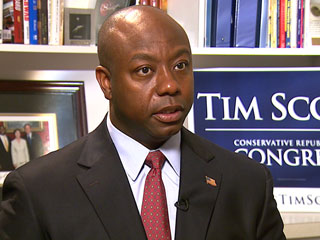
The bill was sponsored by Republican Rep. Tim Scott of South Carolina and introduced in July.
“Today’s vote is important for our entire nation, as well as for my home district in South Carolina, where the NLRB is currently pursuing an agenda which, if successful, would kill thousands of jobs,” Scott said in a statement. “By removing the NLRB’s ability to dictate where private industry creates jobs, we are preventing an unelected, Presidentially-appointed government board from pitting state against state, inserting themselves into the business decisions of private companies, and scaring away investment in our nation.”
Scott has also introduced a bill rolling back several other rules recently passed by the NLRB.
By the way, I’ve been informed that something like 40% of union members vote Republican. It’s not the union members who are bad, it’s the unions. Imagine how those people feel about having dues taken out of their salaries to fund left-wing causes?
Newly-proposed legislation in Congress would restore federal funding for abstinence education as the Obama administration continues to discriminate against grants to programs that promote abstinence over sex education.
Recently, the Department of Health and Human Services announced new funding opportunities for initiatives on the subject, but included a caveat that grants would no go to agencies promoting abstinence education. Applicants for the FOA must include a written statement, according to a National Catholic Register report, that abstinence education is not part of the program, because the Obama administration considers it an “unallowable activity.”
Organizations receiving funding under the program must make a “commitment to not use funds for unauthorized activities, including, but not limited to, an abstinence-education program.” Some $75 million has been authorized under the Claims Resolution Act of 2010 for the programs.
[…]On Tuesday, legislation was announced on the floor of the House of Representatives that could change this and restore funding for abstinence education. The Abstinence-Centered Education Reallocation Act, sponsored by Rep. Randall Hultgren, an Illinois Republican, is a bill that will put a priority on the sexual risk avoidance message found in abstinence programs.
Abstinence education isn’t just about STIs, it’s about love and marriage. Marital stability is stronger when single men and women avoid premarital sex.
Pro-growth Tax Reform
This one is part of Paul Ryan’s “Path to Prosperity” plan. This time he is explaining his 3-step plan to reform the tax laws to promote job creation.
America’s economy has been hit really hard. A lot of people have lost their jobs. More borrowing and spending and higher taxes are not going to bring jobs back to America. The last thing we need to be doing is to complicate job creation in America with this complicated tax code that we have today.
A tax code should be fair, competitive and simple, and the US tax code fails on all three counts. Here are common-sense ideas we’ve advanced before…ideas that have bipartisan support.
First, we have to make our tax code fair.
It’s full of deductions, credits and special carve-outs – otherwise known as “loopholes” – that let politically-connected companies avoid paying taxes. Every dollar that businesses spend lobbying for a better tax deal, is a dollar they’re not spending on making a better product.
And, since every dollar hidden in a loophole doesn’t get taxed – politicians make up for this lost revenue by increasing overall tax rates. So we need to close these loopholes.
But if we just close loopholes, then our federal corporate tax rate is 35 percent, which is really high.
Add in state and local taxes, the rate climbs to 39.2 percent – the second highest tax rate among developed countries.
On top of sending almost 40 cents out of every dollar earned, straight to the government, businesses pay investment taxes, payroll taxes, and a handful of other taxes our government makes job creators pay.
In the 21st century global economy – and when American families need jobs – this approach just doesn’t make any sense.
We need to make our tax code competitive.
The budget we passed in the House of Representatives calls for closing the loopholes and lowering the rates.
The President’s bipartisan Fiscal Commission proposed something similar.
Its plan would reduce the corporate tax rate to as low as 26 percent, and to lower the top individual rate that many small businesses pay to as low as 23 percent.
So if we lower tax rates, does that mean the wealthy pay less in taxes? Not if we do it by closing loopholes. Because the people who use most of the loopholes are those in the top tax brackets. For all the money that’s parked in these tax loopholes, all that money’s taxed at zero. Take away the tax loophole; lower everybody’s tax rates – that money’s now taxed. But its taxed at a fair more simple, more competitive way so the small business men and women who are out there striving and competing have a better tax rate so they can compete in this global economy.
Third, let’s make the tax code simple.
All together, individuals and businesses spend over six billion hours and 160 billion dollars, every year, just trying to understand and comply with the tax code.
Let’s simplify the code, not just by closing loopholes, but also by decreasing the number of different tax brackets taxpayers fall in.
Fewer brackets, along with lower individual rates, will make the tax code less complicated, and let more people keep more of the money they earn.
There’s a reason this approach has attracted bipartisan support: It’s Fair, It’s Competitive, and It’s Simple.
America’s been knocked down before. We’ve had tough recessions before, and we know that the secret to growing jobs and prosperity in America are through the ingenuity and the hard work of our businesses – of our small businesses, of our large businesses, of job creators. We don’t want a tax system that rewards people for coming to Washington and getting special favors. We want a tax system that rewards Americans for hard work, risk taking, entrepreneurship , investment and innovation. These are the kinds of things that have made America great in the past. And these are the kinds of ideas the we’re going to need if want to grow our economy in the future and compete in the 21st century global economy.
Imagine if the United States were the best place for companies to do business. Imagine the job growth that would stimulate.
Because I am leaving the country today and must attend to last minute preparations, brevity is required. I am grateful to Dr. Mohler for his kind remarks pertaining to both me and my book, which has recently raised quite a bit of controversy in certain evangelical circles. Although I disagree with much of what he has asserted pertaining to my treatment of the raised saints in Matthew 27:52-53, one should not doubt my respect for him and gratitude for the contributions he has made for the cause of Christ and to the Southern Baptist Convention.
An accurate interpretation of a particular biblical text is assisted by an accurate understanding of the cultural milieu in which it was written. It is unfortunate that this does not appear to be a practice of my detractors Drs. Mohler and Geisler. Their judgment that an incompatibility exists between the doctrine of biblical inerrancy and interpreting Matthew’s raised saints at Jesus’ -death as apocalyptic symbols—or even to consider this interpretation as a viable way of understanding what Matthew was communicating (which is my present position)—without engaging in a thorough and sophisticated discussion of the milieu in which Matthew wrote is quite premature.
Dr. Mohler asks, “What could one possibly find in the Greco-Roman literature that would either validate or invalidate the status of this report as historical fact?” This is the wrong question. For it presupposes that Matthew intends the report of the raised saints to be understood as a historical event. So, the first question one should ask is how Matthew intended for his readers to understand this text. If he intended for us to regard the raised saints as apocalyptic symbols, then Drs. Mohler and Geisler are mistaken when regarding them as “historical fact.” It is only IF one can determine after an exhaustive study that Matthew intended for us to regard the raised saints as an event that occurred in space-time that Dr. Mohler could legitimately claim that the Greco-Roman literature offers nothing to assist us toward a correct interpretation of the text. Instead, Drs. Mohler and Geisler have pre-determined what the text means. But it is Scripture that is inerrant. Thus, we must be careful not to canonize our interpretation of Scripture so that we come to believe that it, too, is inerrant.
Article XX of the Chicago Statement on Biblical Hermeneutics states,
“We affirm that since God is the author of all truth, all truths, biblical and extrabiblical, are consistent and cohere, and that the Bible speaks truth when it touches on matters pertaining to nature, history, or anything else.WE FURTHER AFFIRM THAT IN SOME CASES EXTRABIBLICAL DATA HAVE VALUE FOR CLARIFYING WHAT SCRIPTURE TEACHES, AND FOR PROMPTING CORRECTION OF FAULTY INTERPRETATIONS [emphasis mine]. We deny that extrabiblical views ever disprove the teaching of Scripture or hold priority over it.”
Thus, the Chicago Statement on Biblical Hermeneutics asserts that extrabiblical data can assist us in clarifying what Matthew is teaching and correct faulty interpretations.
We find a similar statement in the Chicago Statement on Biblical Inerrancy:
“We affirm that canonical Scripture should always be interpreted on the basis that it is infallible and inerrant. However, in determining what the God-taught writer is asserting in each passage, we must pay the most careful attention to its claims and character as a human production. In inspiration, GOD UTILIZED THE CULTURE AND CONVENTIONS OF HIS PENMAN’S MILIEU, A MILIEU THAT GOD CONTROLS IN HIS SOVERIGN PROVIDENCE; IT IS MISINTERPRETATION TO IMAGINE OTHERWISE [emphasis mine].
“So history must be treated as history, poetry as poetry, hyperbole and metaphor as hyperbole and metaphor, generalization and approximation as what they are, and so forth. DIFFERENCES BETWEEN LITERARY CONVENTIONS IN BIBLE TIMES AND IN OURS MUST ALSO BE OBSERVED” [emphasis mine].
Thus, the Chicago Statement on Biblical Inerrancy asserts that an inattention to the culture and literary conventions in Bible times could lead to a misinterpretation of the biblical text.
Examples in the extrabiblical literature of phenomena similar to the raised saints in Matthew 27 may provide insights pertaining to how Matthew intended for us to interpret his raised saints. When we study the literary conventions in Bible times, we identify specific language in the Greco-Roman (Virgil, Dio Cassius, Plutarch), Jewish (Josephus) and biblical (Matthew 24, Acts 2) literature that may be employed to accent an event believed to have cosmic or even divine significance. Thus, when I noticed what might be similar language in Matthew 27:52-53, the interpretive possibility I proposed in my book emerged. Couldn’t the same be said 2,000 years from now pertaining to a proper interpretation of a text in which it was asserted that “the events of 9/11 were earth-shaking” while others may wrongly interpret the statement “Hell will freeze over before Ahmadinejad converts to Christianity” as a prophecy of two events rather than as a statement of enormous improbability?
The charge that I have “dehistoricized” the text is also problematic, since it likewise presupposes that Matthew intended the raised saints to be understood as historical. But what if he intended for them to be understood as apocalyptic symbols? It would then be misguided to “historicize” them. This would be little different than regarding as historical the seven-headed great red dragon in Revelation 12:3-4 whose tail sweeps up a third of the stars and casts them to earth. I regard this description as entirely symbolic and that to regard it as a real space monster would be to “historicize” the text.
The text in Matthew 27:52-53 has puzzled many New Testament scholars for years and will continue to do so. I remain puzzled but continue to seek a better understanding of what Matthew intended to communicate here. The calls of Drs. Geisler and Mohler for me to retract my opinion that it is possible Matthew intended for his readers to understand the raised saints in Matthew 27:52-53 as apocalyptic symbols is not helpful. Instead, such premature calls stifle scholarship and authentic quests for truth. I will be happy to retract my opinion once I am convinced that Matthew’s authorial intent was to communicate that the raised saints are to be understood as an event that occurred in space-time. So far, I have found the arguments offered by Drs. Geisler and Mohler to be unpersuasive and misguided.
I am grateful to the Southeastern Theological Review for their invitation to participate in a roundtable discussion on the meaning of this text and whether the solution I proposed in my recent book is compatible with the doctrine of biblical inerrancy. It is their desire to publish that discussion within the next 60 days. I will reserve my defense and further criticisms for that discussion and want to express my gratitude to the many who have sent words of support and to those who have written in my defense on the web. It is sad—and perhaps telling—that they have been ignored by Drs. Mohler and Geisler, since some of their arguments are quite good.
Below, I outline some problems I have with Al Mohler attacking anyone about anything.
Opinions not confirmed by evidence
There are degrees of understanding topics based on what sort of learning you have done to understand them. Reading about how to replace an engine is one thing, but replacing an engine is a completely different level of knowledge. Michael Licona has actually had to read a lot of history that he disagrees with, and to write papers that were peer-reviewed, and to defend his views with opposing scholars in formal academic debates. Al Mohler hasn’t done nearly as much of that, especially the debating. And that tells me something about Al Mohler. You see, the danger with not having to prepare for debates with your opponents is that you don’t really know whether what you say you believe is actually true. Everything sounds good to a person before they are cross-examined.
For example, take the existence of God. Al Mohler believes in a Creator, but he is a young-Earth creationist. Young-Earth creationism is completely unsupported by scientific evidence, although evidence could emerge to support it in the future. However, the cosmology that most scientists support today, the Big Bang cosmology, supports the existence of God as Creator, because it requires that a non-material agent outside of time brings space, matter, energy and time into being out of nothing. Now, Mohler can write column after column assuming that God exists – we all agree on that – but he will never know that God exists from cosmology, because he doesn’t believe that cosmology provides us with reliable evidence. He couldn’t make an argument for his view that God created the universe out of nothing using science. So he has a belief in a Creator, but not knowledge.
On the other hand, Christian scholars make a case for God’s existence based on mainstream cosmology that confounds atheists in public debates. I submit that people who understand mainstream cosmology and use it in debates have gone beyond mere opinion about God’s existence and into knowledge of God’s existence, based on scientific evidence from experiments. Mohler is in the opinion stage – he doesn’t know that God created the universe, based on scientific evidence. And similarly with history. When involved in disputers with historians who have studied and debated, he is at a disadvantage. He may have beliefs, but those beliefs might be in conflict with the evidence. It doesn’t bother him that he is in conflict with the evidence, but it shows us that it is at least possible that he makes claims without knowing whether they are true or not.
Preaching to the choir instead of persuading opponents
When you take a look at Al Mohler’s writings, it seems to me that he just compares his views to other people who disagree with him, and then he shuns the other people, and urges people who have the same preferences as he does to shun them, too. He doesn’t make factual arguments against the people with whom he disagrees. Let’s see some specific posts.
In this column, Mohler argues that a church should sanction an atheist pastor. We agree on that. Atheists should not be pastors. But does Al Mohler know how to argue against atheists? His response to the atheist pastor problem is to urge churches to expel him by force. He doesn’t urge them to get better at debating with atheists, and he doesn’t suggest that they try to persuade the atheist. He doesn’t mention any arguments to defend theism, or to defeat atheism. He has an opinion, and when he finds someone with a different view, he just shuns that person and urges others to shun them as well. He doesn’t seem to know how to use evidence one way or the other to decide what is true.
In this column, he disagrees with abortion. We agree on that. But again, in this column, he doesn’t try to make a case against abortion, or to urge his readers to learn how to make a case against abortion. He just shuns the bad abortionists without arguing against the pro-abortion view. He has nothing to say to persuade those who disagree with him. He just shuns them, and urges people who have the same preferences as he does to shun them too.
In another column, he disagrees with same-sex marriage. We agree on that. But he doesn’t discuss why same-sex marriage is wrong. He just expects that everyone reading will agree with his opinions. He just wants to say that it’s not OUR thing, it’s THEIR thing, and then shun it. He doesn’t talk about the purpose of marriage, or the needs of children for mothers and fathers, or the demographic crisis, or the dangers of the gay lifestyle, or anything. He just stays at the surface level of mere disagreement without reasons.
And in this column, he surveys the opinions of theistic evolutionists. Again, I agree with him on that. But he presents no positive, evidence-based case evolution is false, or that there was a literal Adam and Eve. He doesn’t talk about mitochondrial Eve or Y-chromosome Adam, or intelligent design, or fossils or any evidence at all. He talks about how theistic evolution is troubling, without giving any scientific arguments against it.
I call his writing style “fundamentalist hand-wringing”. I AM a fundamentalist, but I don’t whine and wring my hands and complain that things are changing and urge retreat and shunning of other views. His columns are always addressed to Christians, urging us to shun the other, and providing us with no reasons or evidence to buttress our own views as being true, or providing us with neutral arguments and evidence to show our opponents why their views are false.
In case you are wondering what my posts look like compared to his, here is a post against atheism, a post against abortion, a post against same-sex marriage, and a post against theistic evolution. And I write lots of posts like those ones, filled with new studies, new research, new evidence, debates and arguments – all the time! With evidence like this, you don’t have to shun your opponent – you can take them out to lunch and try to persuade them that you are right. I try to write about issues using evidence that NON-CHRISTIANS would find persuasive. I don’t just wring my hands and say “woe is us! woe is us!”. Even though I agree with Mohler on his conclusions practically across the board, I wish he would try to be more convincing to people who don’t agree with him by using actual evidence. One thing is for sure – he isn’t qualified to make statements about the way the world is, because all he has is opinions without reasons.
His disagreement with Licona is just his opinion
So we’ve seen that Mohler basically does the same thing over and over. He expresses an opinion. He has not studied anything in detail. He doesn’t do debates with other scholars. He just wants to disagree with others and then shun them – without explaining why he is right or why they are wrong.
Here are some words that Mohler uses to describe Licona’s argument:
shocking
disastrous
greatest concern
deeply troubling
very troubling
disappointing in the extreme
That’s it. That’s his entire argument against Licona. He has nothing persuasive to say, except “Oh noes! Oh noes!” like some sort of low-self-esteem spook worried about becoming irrelevant. If Mohler wants people to take him seriously, then maybe he should do some research of his own and publish a rebuttal to Licona, instead of using scare quotes and smear tactics (the Robert Gundry story he trots out). A threat is not an argument. A smear is not a refutation.
And by the way, I have very conservative views on things like God creating the animals directly, non-material souls, a literal, eternal Hell with active tormenting and real flames, and a literal Adam and Eve, and so on. I’m sure Licona does, too. Conservatism is not the issue. The issue is what the author of Matthew meant to convey in that passage. If what Matthew intended to convey is apocalyptic imagery, then that is the literal, conservative interpretation.
Finally, consider a different scenario. Gary Habermas is at least as conservative as Al Mohler, but I do think that if HE disagreed with Licona then that would be worth listening to – and they could even have a debate about whether Matthew was using the styles of the authors of his time, which allow for this apocalyptic imagery. Because that would be a debate about historical concerns, not opinions.
Learn more about Dr. Licona
Here is Dr. Licona’s web site. I have an autographed copy of Mike’s new book, and I bought another one for reading. I highly, highly recommend this book, but for students who have read an introductory book on the resurrection first. Here is the best introductory book on the resurrection of Jesus, authored by Michael Licona and Gary Habermas. Both books I would say are essential for anyone who claims to be a mature Christian. These are required reading.
If you would like to hear Michael in a debate with skeptical scholar Bart Ehrman, click here for the playlist. This is their 2nd debate, and Michael pwns Bart.