
The top 5 myths about Christmas

From Take Two Apologetics.  It’s an interview with Krista Bontrager. I removed the links from the excerpt below, so you can click through to their site if you want the links.

Excerpt:

Krista, many of us were taught that Jesus was born in a stable because “there was no room in the inn.” Was He born in a stable?

Probably not. Nowhere in the Bible does it state that Joseph went from home to home looking for a place to stay. That story stems from many translations’ use of the word “inn” in Luke 2:7. From that, we extrapolate a whole slew of events—the innkeeper, innkeeper’s wife, a No Vacancy sign flashing. The problem is that the word used in Luke 2 (kataluma) is not the word for inn—that’s a bad English translation. The word is better translated as “upper room” or “guest room.” In fact, the 2011 translation of NIV makes that correction. Luke 22:11 also uses kataluma to describe the guest room where the last supper took place. In contrast, pandocheion (correctly translated as “inn”) appears inthe parable of the Good Samaritan.

Where was Jesus born, then, if not in a stable?

It’s much more likely He was born in a home. Mary and Joseph were going to their ancestral home, which means they had extended family there. It’s almost inconceivable that their family would not have taken them in considering the cultural practices of that time.

So if Jesus was born in a home, why does the Bible say He was placed in a manger?

That’s an important detail because it tells us what part of the house they were in. In those days, homes had an upper level where the family would sleep and a lower level where animals were kept at night for the animals’ protection and to provide heat. It seems that Jesus was born in that lower level where the animals were kept. And he was placed in a manger (feed trough) because they make for a great little cradle. In fact it reminds me of the makeshift bed my husband and I once made for our daughter when we stayed overnight at a hotel.

What about some of the characters often suggested as being present at Christ’s birth?

The shepherds were present, but the three wise men were not. Matthew’s account apparently takes place during a different time frame than Luke’s. One clue is that the Greek word Matthew used to describe Jesus is a paidion, which can mean anything from an infant to a toddler. This range of definitions would be consistent with King Herod killing all the Jewish  boys ages two and under (Matthew 2). This would mean that Jesus was probably two or younger when He was visited by the wise men.

Okay, so we’ve eliminated the stable and the wise men from the Nativity. What about the date? Was Jesus born on December 25?

Maybe. The standard story is that December 25 was adopted after Constantine’s conversion to Christianity because it was on a pagan holiday and the winter solstice. Christians then co-opted the holiday and Christianized it. What’s interesting is that the early church put almost no emphasis on celebrating the birth of Christ. They were much more concerned with the resurrection. It’s not until AD 200 where possible dates are mentioned for the celebrating of Christ’s birth. By about AD 300 there were two dates: December 25 (for the west) and January 6 (for the east). There does seem to be a tradition of December 25 long before Constantine’s conversion, so that’s why I say maybe. This article from the Biblical Archaeology Review gives a good summary of “How December 25 Became Christmas.”

I found this post over on Apologetics 315. Brian puts up a post with apologetics stories every Friday. There’s more in there – I am listening to the 5 part lecture series on church history right now. (It’s Calvinist, but polite)
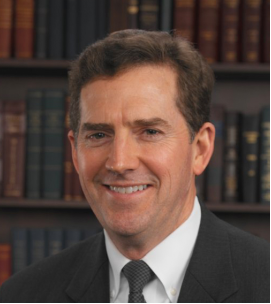
Only one Democrat senator voted to limit future IMF bailouts for Europe

Sen. Jim Demint
Sen. Jim Demint

First, a quick re-cap on Jim Demint’s Amendment 501, which would have prevented the IMF from using $108 billion of American money to bail out foreign nations.

Excerpt:

The Senate on Wednesday defeated an amendment in a 44-55 vote that would have prevented the International Monetary Fund (IMF) from using $108 billion in U.S. monies to bail out foreign nations.

The author of the amendment, Sen. Jim DeMint (R-S.C.), said he is concerned that the IMF is using U.S. funds to rescue irresponsible nations and banks. He said the U.S. can no longer afford to offer such aid.

“There is no excuse for us giving away money around the world when we cannot even keep our promises here in America today, promises we have made to our seniors, promises we have made to our veterans,” said DeMint.

Now, Jim explains in the Wall Street Journal why 55 Democrat senators shouldn’t have voted against it.

Excerpt:

If the United States wants to help Europe find a way out of its current debt crisis, we must be a strong, world economic leader, not merely the lender of last resort.

American taxpayers sent $40 billion to Greece last year, through the International Monetary Fund, to stave off an economic collapse. But the bailout did not prevent Greece’s day of fiscal reckoning. It only delayed it. Austerity measures are still needed throughout Europe’s socialized economy and the debt contagion has not been stopped. Financial chaos has spread from Greece to Ireland, Portugal, Italy and Spain, and it now threatens the very future of the 17-member euro zone.

Undeterred, President Obama last month told the press after breaking from a closed-door meeting with European leaders, “the United States stands ready to do our part to help them resolve this issue.” He would do better to focus his attention stateside. The most dangerous threat to the U.S. economy is not across the pond. It’s in the swampland of Washington, D.C.

[…]Greece’s economy reached its tipping point and was bailed out when government debt topped 137% of its gross domestic product. Despite all the measures that have been taken to aid it, Greece’s debt-to-GDP-ratio is even higher now, at 160%. Ireland was bailed out at 74% of GDP and is now at 80%. Portugal was bailed out at 94% of GDP and is now expected to top 100%. The bailouts have arguably made the European debt crisis worse, not better.

Total U.S. debt, including entitlement liabilities, reached 100% of GDP when Congress increased the debt ceiling in August. Our $15 trillion debt now rivals the size of the entire U.S. economy.

When he first took office, President Obama promised to cut the federal deficit in half by 2013. But instead he’s increased it by more than $4 trillion. Indeed, under his direction, the U.S. government spent about $1 trillion on a Keynesian-style stimulus that failed to create the jobs promised, will spend trillions more creating a European-style health-care entitlement with ObamaCare, and has more Americans on welfare than ever before.

[…]This year the U.S. sent about $67 billion to the IMF, which represents 17.7% of the IMF’s yearly budget—nearly three times more than any other nation. On top of that, taxpayers provided an additional $108 billion credit line to the IMF in 2009.

In 2010, the IMF sent nearly $40 billion in assistance to Greece, which did nothing to prevent the country’s economic collapse in 2011. On Monday, the IMF approved another $2.95 billion worth of bailout funds for the struggling country.

[…]Earlier this year, I offered an amendment to repeal the IMF’s authority to use the additional $108 billion credit line to provide any more bailouts. It was overwhelmingly rejected by the Democrat-controlled Senate. Forty-four senators voted for it; only one was a Democrat.

This has to stop. We have to stop electing people who don’t believe that people are responsible to create their own wealth, instead of stealing it from others – and impoverishing generations yet unborn. The right way to solve economic problems is to create the conditions that incentivize people to create wealth, not to discourage them by confiscating what they earn. There is a problem in Europe right now – huge numbers of benefits are being taken from those who produce (the private sector) and given to those who don’t (the public sector). The first step is to stop the bailouts.

Donald Sensing posted some thoughts from Abraham Lincoln on his blog that seem appropriate for this post.

Excerpt:

If destruction be our lot we must ourselves be its author and finisher. As a nation of free men we must live through all time, or die by suicide.

You cannot help men permanently by doing for them what they could and should do for themselves.

Any society that takes away from those most capable and gives to the least will perish.

Few can be induced to labor exclusively for posterity. Posterity has done nothing for us.

No man is good enough to govern another man without that other man’s consent.

You cannot build character and courage by taking away man’s initiative and independence.

Let every man remember that to violate the law is to trample on the blood of his father, and to tear the charter of his own and his children’s liberty. Let reverence for the laws … become the political religion of the nation.

If ever this free people, if this Government itself is ever utterly demoralized, it will come from this incessant human wriggle and struggle for office, which is but a way to live without work.

We have to distrust each other. It’s our only defense against betrayal.

Things may come to those who wait, but only the things left by those who hustle.

Nearly all men can stand adversity, but if you want to test a man’s character, give him power.

Property is the fruit of labor; property is desirable; is a positive good in the world. That some should be rich shows that others may become rich and, hence, is just encouragement to industry and enterprise. Let not him who is houseless pull down the house of another, but let him labor diligently and build one for himself, thus, by example, assuring that his own shall be safe from violence when built.

It has ever been my experience that folks who have no vices have very few virtues.

I understand that stealing money from working people and their employers and giving it to lazy people is an important goal for Democrat politicians, because it builds up their self-esteem and it makes them feel admired and popular. But it’s not their money. They need to stop. Obama’s desire to “spread the wealth around” is not a moral policy, it’s an immoral policy – because it’s not his wealth. He didn’t produce it.

Hugh Hewitt: is he a conservative radio talk show host?

Hugh Hewitt is a strong supporter of Mitt Romney. Let’s look at Romney’s views.

Here is Mitt Romney on abortion:

And more:

Mitt Romney on immigration:

Mitt Romney on global warming:

Here is Mitt Romney on gun control:

Here is Mitt Romney on embryonic stem cell research:

Here is Mitt Romney on the flat tax:

So long as Hugh Hewitt endorses Romney, then Hugh Hewitt is not a conservative in any sense of the word.