Should we expect to know what God’s reason is for allowing evil and suffering?

Here is an article by Steven Cowan about the problems of evil and suffering.

Intro:

The problem of evil is no doubt the most serious challenge to belief in God. Even religious believers find it troubling that evil exists in the world—and so much evil! It is puzzling, to say the least, that an all-powerful, absolutely good being would allow evil to exist in his creation. And yet it does. Evil and suffering exist and they are often overwhelming in their magnitude.

Now let’s find out what a noseeum is, and how it relates to the existence of evil and suffering:

However, perhaps God’s existence is incompatible with a certain kind of evil that exists. For example, the atheist William Rowe has argued that God’s existence is inconsistent with pointless or gratuitous evil. By “pointless evil,” Rowe means evil that does not and cannot serve a greater good. And Rowe believes that there is such pointless evil in the world. He thus concludes that God does not exist. Rowe’s argument may be simply stated as follows:

  1. If God exists, there would be no pointless evil.
  2. There is pointless evil.
  3. Therefore, God does not exist.

[…]But, is there pointless evil in the world? Rowe thinks there is. To show that there is pointless evil, Rowe introduces what he calls the “noseeum inference.” Like the pesty little bugs that some readers may be familiar with, a “noseeum” is something that you cannot see—it is a “no-see-um.” And a noseeum inference is a conclusion drawn on the basis of what one does not see. The basic structure of all noseeum inferences looks like this:

  1. I cannot see an x.
  2. Therefore, there probably is no x.

We all make noseeum inferences everyday of our lives. Every time I go to cross a street, I look both ways and I step out into the street only after I “no-see-um” a car coming.

[…]Rowe applies this kind of noseeum reasoning to God and evil. Rowe suggests that if we cannot see a reason for a particular instance of evil, then there is probably not a reason. Suppose we hear about a very young child who is tortured to death to amuse some psychotic person. We think about this event and we examine all the circumstances surrounding it. No matter how hard we try, we cannot see any good reason why this child had to suffer the way she did. Since we cannot see a reason why God would allow this child to suffer, there probably is not a good reason—the child’s suffering was pointless. Of course, Rowe would be quick to point out that he is not speaking merely hypothetically. There are cases like this in the news every day—real-life cases in which we shake our heads in frustration, wondering why God would allow such a thing.

Is Rowe correct in his conclusion? Do such examples prove that there is pointless evil in the world? I don’t think so. To see why, we must recognize that noseeum inferences are not all created equal. Some noseeum inferences, as we have seen, are reasonable and appropriate. But, many are not. Suppose I look up at the night sky at the star Deneb and I do not see a planet orbiting that star. Would it be reasonable for me to conclude that there is no planet orbiting Deneb? Of course not. Suppose that using the best telescopes and other imaging equipment presently available, I still cannot see a planet around Deneb. I would still be unjustified in concluding that there was no such planet.

In that example, the planet is the noseeum. Just because you look really hard, you can’t be confident that the planet is not there. And similarly with the problem of evil and suffering, looking really hard and finding no reason does not mean that there is no reason. It just means that you are not in a good position to see the reason. You don’t know enough to to be sure that there is no reason, because of your limitations as a human being.

To know that any given instance of evil or suffering is gratuitous/pointless requires a high level of knowledge. How much knowledge? Well, consider this paper by the late William Alston of Syracuse University, who lists six problems with the idea that humans can know that any particular instance of evil and suffering is gratuitous.

According to the paper, human beings just do not have the capability to know for certain that God has NO morally sufficient reason for allowing any particular instance of evil and/or suffering. God’s morally sufficient reason is a noseeum. To know for sure that there is no reason, we would need to have more knowledge than we do.

Also, remember that on the Christian view, the good aim that God has is NOT to make humans have happy feelings in this life, regardless of their knowledge, wisdom and character. That’s what atheists think, though. They think that God, if he exists, is obligated to make them feel happy all the time. They don’t think that God’s goal is being actively involved in forming their knowledge, wisdom and character. God has a purpose – to work in the world so that everyone who can freely respond to him will respond to him. The Bible says that allowing pain and suffering is one of the ways that he gets that group of people who are willing to respond to respond to him – FREELY. To be able to claim that evil is gratuitous, the atheist has to show that God can achieve his goal of saving all the people he wants to save while permitting less suffering in the world. And that is a very difficult thing for an atheist to show, given our human cognitive limitations.
Famous cancer researcher cannot find work after being fired for consensual office romance

I sometimes get into discussions with social conservatives about why I am not at least trying to get married. I have a lot of reasons for not trying to get married. For one, I don’t want to fall under the authority of hierarchies (school, work or church) who don’t think that women should ever be held responsible for their own choices. Let’s take a look at a news story that illustrates the problem.

Once upon a time, men would meet their wives in school, workplaces or churches. As long as the man was not in the reporting hierarchy of the woman, (i.e. – as long as he was not her manager or her director, etc.), then it was fine for people to meet up, date, get engaged, and get married. But that’s all changed now.

Consider this story from the New York Post:

A renowned Massachusetts Institute of Technology biologist who was axed after having what he said was a consensual fling with a much younger colleague, said the mushrooming scandal forced him on the unemployment line.

David Sabatini, 54, whose research involved unraveling how tumors develop, resigned from MIT last month and has been surviving on employment after fellow scientist Kristin Knouse claimed he “groomed” and “coerced” her into a sexual relationship, according to a report and court papers.

A longtime friend and dean at the NYU Grossman School of Medicine tried to offer him a job, but after an uproar, the school announced on May 3 that it would not hire him despite the fact that colleagues described him in a recent article as one of the world’s greatest scientists — a “genius” in line for the Nobel Prize.

“What wormhole did my life take, to … protests and being called a sexual predator? What quirk in the universe allowed this to happen?” said Sabatini, who has denied wrongdoing and noted Knouse did not work in his lab or report to him.

In an October lawsuit against MIT, Sabatini said that his relationship with Knouse, who is 21 years his junior, was consensual — and told a reporter he was shocked to find himself the subject of protests at NYU when the school explored the possibility of hiring him.

Sabatini has contended he and Knouse began their fling during a 2018 conference, while he was in the midst of a divorce. By 2020, he thought the affair had cooled, though he claims Knouse wanted to continue. By October 2020, she complained she’d been harassed, and in a later lawsuit alleged Sabitini oversaw a “sexualized” environment in his lab.

What’s interesting about this story to me is that it’s been reported that this woman entered into this relationship with this man after he clearly communicated to her that he was only looking for something casual. I.e. – he was not trying to hide that he did not want to be tied down. He was telling her that up front.

There are more details about the story in Common Sense.

After their initial hook-up…

…they met up at Knouse’s condo near Boston Common where they discussed a few ground rules for their tryst. They agreed they could see other people. Knouse, Sabatini remembers, had ongoing flings with men who she referred to with nicknames like “anesthesiologist f*** buddy,” “finance bro,” and “physics professor,” and she wanted to keep it that way. Also, they wouldn’t tell anyone. Why complicate things at work? It was all supposed to be fun.

Why did this woman get the man fired? Well, there is an old saying about women that goes like this: “Hell hath no fury like a woman scorned”. Apparently, Sabatini was getting interested in another woman, and less interested in Knouse:

Things were fizzling… he was getting involved with another woman, a microbiologist in Germany.

Knouse didn’t want to let go. In January 2020 she texted, in part: “I get anxious when I don’t hear back from you and then I see you post stuff on Twitter and it provides an admittedly small and silly but still another bit of evidence to this growing feeling that you don’t care about me in the way that I care about you.” He wrote back: “I am sorry but you are being crazy.” In another text, Knouse admitted feeling “stung.” She added: “I think it’s worth thinking about whether you want someone who matches your passion, intellect, and ambition.”

Feminists think that people are faithful and committed because of self-interest, e.g. – “passion, intellect, and ambition”, i.e. – self-interest. They think that  a woman can just like fun, and choose a man who likes fun, and have a permanent, exclusive relationship based on continuous fun. No need to care about religion. No need to care about the rationality of moral behavior. No need to care about traditional gender roles. Things will just work out, if each person acts selfishly all the time.

So what happened to Sabatini next?

This:

In October 2020, Knouse texted her friends that she was “unpack[ing] a ton of suppressed abuse and trauma from an obvious local source”—an apparent reference to Sabatini. Knouse’s fellowship at the Whitehead was ending, and she didn’t apply for any faculty jobs there. When the new director, Ruth Lehmann, called Knouse to ask why, Knouse complained for the first time of being “harassed.”

In November, Knouse warned her friend—an incoming Whitehead fellow—to “squeeze out as much advice as possible before your mentor is Weinstein’ed out of science.”

In December, at Lehmann’s behest, the consulting firm Jones Diversity sent the Whitehead employees a survey “based in part on Dr. Knouse’s false complaint about Dr. Sabatini,” according to a complaint later brought by Sabatini. All participants were anonymous. Five or so of the nearly 40 employees in Sabatini’s lab took part.

The next month, two former Sabatini lab members lodged complaints to H.R.—the first complaints against him in his 24-year tenure—about “bro culture” in the lab.

This prompted the Whitehead to hire the law firm Hinckley, Allen & Snyder to conduct an investigation on “gender bias and/or inequities and a retaliatory leadership in the Sabatini lab.” The Whitehead never told Sabatini what he was accused of. Former lab members told me their co-workers were sobbing when they came out of meetings with the lawyers, saying that the lawyers had put words in their mouths. “They had a very strong agenda,” one of them told me.

Knouse was 29 years old. She was not a child. Sabatini never worked with her. He never supervised her. He never threatened her or pressured her. This was a relationship between two consenting adults. But that doesn’t matter, because in every school and workplace, women cannot be held responsible for their own bad choices. Women are always victims of men. It is always the man who must be punished. And men have to go to school and work in these environments for their entire lives – walking on thin ice, never knowing when the axe will fall.

Sabatini is ruined:

In the 24 hours after the report came out, Sabatini’s life fell apart. MIT put him on administrative leave. The Howard Hughes Medical Institute, another prestigious non-profit that funds biomedical research and was paying Sabatini’s salary, fired him. He resigned from the Whitehead, and eventually MIT, at the advice of his lawyers who thought it would help him secure his next job. (“I one hundred percent regret that,” Sabatini told me).

Soon, the biotech startups he’d helped found— Navitor Pharmaceuticals, KSQ and Raze Therapeutics—started severing their relationships with him. Sabatini was axed from professorships, fellowships, and professional societies. Awards and grants were pulled. His income disappeared.

Knouse is still working. They decided that she didn’t violate the policy – only he violated it. She has no problem at all with this outcome – she really believes she is a victim, and shouldn’t have to take responsibility for her own choices. Can you imagine being married to a woman who does whatever she wants, then blames you when things go wrong? And worse – goes to the authorities to have them punish you, when she is the one who chose poorly?

This was a consensual relationship. Expectations were set at the beginning – this was casual, no commitment. She agreed to the casual nature, she was sleeping with several other men. Suddenly, she reached age 29, and decided it was time to get serious. He reminded her about their arrangement – nothing serious.

They were BOTH EQUALLY in violation of the company rule. Abuse was alleged by her, but there was no police involvement to verify it. He was punished, but there was no criminal trial where he could defend himself. He was not given due process. No lawyer. No self-defense. This lack of due process is common on college campuses, workplaces, and even in religious organizations. Women who are jilted by men are able to make these allegations and get these men fired without any due process.

Some people might say “well, he was treating her badly, so he deserved it”. The issue is not whether he is to blame, or whether she is to blame. The issue is what message it sends to men about the safety of having relationships with women. Women aren’t punished for breaking the same rules as men break. And men are learning from that not to engage in relationships with women, because the authorities always side with the women even if their own decisions have gotten them into trouble.

Some people might say, “well as long as you act morally, then this won’t happen to you”. But these accusations can also be made against innocent men who are just “guilty” of offending women in the school or workplace with their conservative or Christian views. This was already happening to people in companies like Mozilla and Google. Men sometimes get accused of false rape and sexual harassment for rejecting a woman’s advances.

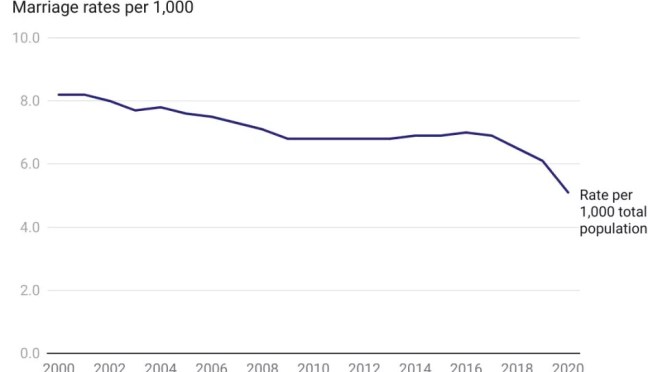
I know that a lot of pro-marriage social conservatives love to load men up with duties, and blame them when things go wrong. But those social conservatives cannot expect men to continue to marry in an environment where men are always to blame, men must always be punished, men must always pay alimony and child support, men must always go to jail, men must always lose their jobs or custody of their kids. Men are learning NOT to talk to women, date them, mentor them, or marry them.

It’s lots of fun for pro-marriage social conservatives to treat women like children, and embrace chivalry in public. It’s a form of virtue-signaling. But if you ignore the incentives facing men, then you are causing the very decline of marriage that you claim to oppose.

What are undesigned coincidences, and how are they used in apologetics?

When you’re reading the Bible, you may find passages in one book that are mysterious on their own, but then they make sense if you add missing details from a parallel account from a different source inside or even outside the Bible. I think these “undesigned coincidences” are helpful for answering the question of that skeptics often ask: “is the Bible history or myth?” Let’s see some examples.

So, there are two kinds of undersigned coincidences. In the “internal” kind, the clearing up is done by another source in the same book. In the external kind, the clearing up is done by a source outside the same book.

Here’s an article from Apologetics UK with some internal examples:

In John 6:1-7, we are told:

Some time after this, Jesus crossed to the far shore of the Sea of Galilee (that is, the Sea of Tiberias), and a great crowd of people followed him because they saw the signs he had performed by healing the sick. Then Jesus went up on a mountainside and sat down with his disciples. The Jewish Passover Festival was near.When Jesus looked up and saw a great crowd coming toward him, he said to Philip, “Where shall we buy bread for these people to eat?” He asked this only to test him, for he already had in mind what he was going to do.Philip answered him, “It would take more than half a year’s wages to buy enough bread for each one to have a bite!”

Now, Philip is a fairly minor character in the New Testament. And one might, naturally, be inclined to wonder why Jesus hasn’t turned to someone a little higher in the pecking order (such as Peter or John). A partial clue is provided in John 1:44: “Philip, like Andrew and Peter, was from the town of Bethsaida.” Likewise, John 12:21 refers to “Philip, who was from Bethsaida in Galilee”

And what is so significant about Philip being from the town of Bethsaida? We don’t learn this until we read the parallel account in Luke’s gospel (9:10-17). At the opening of the account (verses 10-11) we are told, “When the apostles returned, they reported to Jesus what they had done. Then he took them with him and they withdrew by themselves to a town called Bethsaida, but the crowds learned about it and followed him. He welcomed them and spoke to them about the kingdom of God, and healed those who needed healing.”

And so, we are informed by Luke that the event was actually taking place in Bethsaida — the town from which Philip was from! Jesus thus turns to Philip, whom, he believed, would be familiar with the area. Notice too that Luke does not tell us that Jesus turned to Philip.

But it gets even more interesting still. In Matthew 11, Jesus denounces the unrepentant cities, saying, “Woe to you, Chorazin! Woe to you, Bethsaida! For if the miracles that were performed in you had been performed in Tyre and Sidon, they would have repented long ago in sackcloth and ashes.” The reader is left wondering what miracles were performed in these cities. We are not told in Matthew’s gospel. It is only in light of Luke’s account of the feeding of the five thousand (chapter 9), in which we are told of the event’s occurrence in Bethsaida, that this statement begins to make sense!

This one is pretty clever:

In Matthew 2 6:67-68, we read, “Then they spat in His face and beat Him; and others struck Him with the palms of their hands, saying, “Prophesy to us, Christ! Who is the one who struck You?”” This raises the natural question, why are they asking “Who hit you?” It is not until we read the parallel account in Luke’s gospel (22:64) that we learn that they had blindfolded him, thereby making sense of their taunts “Who hit you?”

Another one:

In Luke 23:1-4, w e read,
Then the whole assembly rose and led him off to Pilate. And they began to accuse him, saying, “We have found this man subverting our nation. He opposes payment of taxes to Caesar and claims to be Messiah, a king.”

So Pilate asked Jesus, “Are you the king of the Jews?”

“You have said so,” Jesus replied.

Then Pilate announced to the chief priests and the crowd, “I find no basis for a charge against this man.”
On the surface, this seems to be a rather strange declaration to make. Jesus has just declared Himself to be a King, and has been charged with subverting the nation and opposing paying taxes to Caesar. Why has Pilate found no basis for a charge against him?

The answer lies in the parallel account in John’s gospel (18:33-38):

Pilate then went back inside the palace, summoned Jesus and asked him, “Are you the king of the Jews?”

“Is that your own idea,” Jesus asked, “or did others talk to you about me?”
“Am I a Jew?” Pilate replied. “Your own people and chief priests handed you over to me. What is it you have done?”

Jesus said, “My kingdom is not of this world. If it were, my servants would fight to prevent my arrest by the Jewish leaders. But now my kingdom is from another place.”

“You are a king, then!” said Pilate.

Jesus answered, “You say that I am a king. In fact, the reason I was born and came into the world is to testify to the truth. Everyone on the side of truth listens to me.”

“What is truth?” retorted Pilate. With this he went out again to the Jews gathered there and said, “I find no basis for a charge against him.

It is only when you read John’s account that you learn that Jesus had told Pilate that “My kingdom is not of this world. If it were, my servants would fight to prevent my arrest by the Jewish leaders. But now my kingdom is from another place.”

And the same article has some external undesigned coincidences:

In Matthew 2:22, we are told:

But when [Joseph] heard that Archelaus was reigning in Judea in place of his father Herod, he was afraid to go there. Then after being waned by God in an dream, he left for the regions of Galilee…

Josephus’ Antiquities 17.3.1 tells us that the domain of Herod the Great was divided among his sons, with Archelaus having authority in Judea but not in Galilee, which was governed by his younger brother, Herod Antipas.

We also know that Archelaus had acquired quite a bloody reputation (e.g. Antiquities 17.13.1-2 and 17.9.3). The latter of these references describes how Archelaus slaughtered 3,000 Jews at Passover. Thus, Joseph decides not to return to Judea and, instead, goes further north to the regions of Galilee, governed by Herod Antipas.

And another one:

In Matthew 2:22, Archeleaus is reigning as king in Judea; in Matthew 27:2, Pilate is governor of Judea; in Acts 12:1, Herod is king of Judea; and in Acts 23:33, Felix is governor of Judea. This becomes extremely confusing.

But here’s the thing: Josephus attests to the accuracy of every one of these titles. Herod the Great was made King of Judea by Mark Anthony. Archelaus was deposed in the year 6 A.D., after only a ten-year reign, and a series of procurators ruled over Judea (of whom Pilate was fifth). The Herod of Acts 12 is Agrippa I. He was made king by Claudius Caesar. After his death, Judea was, once again, placed under the government of procurators (one of them being Felix).

And another one:

When Luke tells us of the riot in Ephesus, he reports that the city clerk tells the crowd that “There are proconsuls”. A proconsul is a Roman authority to whom a complaint may be taken. Normally, there was only one proconsul. Just at that particular time, however, there seems to have been two as a result of the assassination of Silanus (the previous proconsul) by poisoning in the Fall of AD 54, by the two imperial stewards at the urging of Nero’s mother. This event is independently documented by Tacitus in his Annals (13.1). Indeed, Luke’s accuracy has allowed historians to date the event which Luke narrates with incredible precision since we know when Silanus was poisoned.

If you think that these are clever, then share this post, and encourage your non-Christian friends and family to consider one of the many reasons why so many scholars have considered the New Testament books to be so reliable.

I wish that Christian parents and pastors were more thoughtful about how they present the Bible to young people. Instead of just saying “the Bible says” and praising blind faith acceptance of the Bible, why don’t we think a little harder, and look for some confirmation of the Bible from historical methods like undesigned coincidences, and from non-Biblical authors, and from archaeology, etc.? Surely adding more evidence for taking the Bible seriously is the right approach, if the goal is to be persuasive? It’s not like we’re see good results from the current “blind faith” approach to raising Christian children, right?