
Canada’s government plans to increase punishments for “hate speech” online

I keep warning Americans never to visit Canada, at least while the secular left Liberal Party is in control. Visiting Canada is like visiting a police state. As soon as you enter the country, anything you say can and will be used against you in a kangaroo court. If you criticize the government, or the government’s favored groups, then you are guilty. They are going to make you pay.

Let’s take a look at this article from True North:

In a move aimed at curbing the spread of what it terms “online hate,” the Liberal government of Canada has revealed its plan, including hefty fines for online speech and stringent punishment including up to life imprisonment for hate crimes.

The centrepiece of this initiative is the proposed Online Harms Act, details of which were unveiled during a technical briefing released to reporters on Monday.

[…]The bill will include amendments to the Criminal Code aimed at addressing hate crimes more effectively.

[…]These amendments include the introduction of a standalone hate crime offence applicable across all criminal offences, with penalties extending up to life imprisonment.

Maximum punishments for existing hate propaganda offences are also set to be increased substantially.

[…]Also, the bill would add a definition of “hatred” based on the past decision of the Supreme Court of Canada to the Criminal Code.

The text of the bill defines “content that foments hatred” as any content “content that expresses detestation or vilification of an individual or group of individuals on the basis of a prohibited ground of discrimination, within the meaning of the Canadian Human Rights Act, and that, given the context in which it is communicated, is likely to foment detestation or vilification of an individual or group of individuals on the basis of such a prohibited ground.‍”

“For greater certainty and for the purposes of the definition content that foments hatred, content does not express detestation or vilification solely because it expresses disdain or dislike or it discredits, humiliates, hurts or offends,” adds the government.

Keep in mind that in Canada, people who disagree with policies favored by the Liberal party are routinely prosecuted by the state. People get prosecuted for posting Bible verses in Canada, because they offend people.

Your fellow citizens can report you to the government for “hate speech”:

Anybody will also be able to file complaints against others for “posting hate speech online” that is discriminatory against protected categories such as gender, race, disability and others.

Amendments to the Canadian Human Rights Act will let anybody file complaints against persons posting so-called hate speech with the Canadian Human Rights Commission. If found guilty, the Canadian Human Rights Tribunal can order those found to violate the government’s definition of hatred with fines up to $70,000 and takedown orders for content.

According to the text of the bill, the Tribunal has the power to order payments of up to $20,000 for victims of so-called online hate, as well as an order to pay the government $50,000 “if the member panel considers it appropriate.”

You may recall, if you follow Canadian law, that the Human Rights Commissions are kangaroo courts that are only ever used to punish Christians and conservatives. They are never used against the Liberal Party or groups that support the Liberal Party. Human Rights Commissions are like social media “fact checkers”. On paper, they’re unbiased. In practice, they only censor speech critical of the regime, and the regime’s supporters. Famous Canadians like Ezra Levant and Mark Steyn have been dragged in front of these Human Rights Commissions. And citizens almost never win their cases. These are kangaroo courts.

You don’t have to speak words directly to a person in order to be guilty of hate speech. Your speech online can be reported as “hate speech”:

“It is a discriminatory practice to communicate or cause to be communicated hate speech by means of the Internet or any other means of telecommunication in a context in which the hate speech is likely to foment detestation or vilification of an individual or group of individuals based on a prohibited ground of discrimination,” Bill C-63’s text reads.

You may never know the identity of your accuser. And if you do know, then you cannot name them publicly:

The Tribunal will also have powers to hide the identity of those who bring complaints against anybody whom they deem to have posted online hate speech. Additionally, it can compel those who face complaints to not reveal the identity of those involved upon discovery.

It goes without saying that if you cannot expose them publicly, then you have no recourse to counter them.

The government will be monitoring speech online:

The government plans to establish a new organization. This body, comprising the Digital Safety Commission, the Digital Safety Ombudsperson, and the Digital Safety Office, will work to ensure compliance with regulations and protect users from online harm.

Naturally, the Conservative Party leader opposes the bill:

Prior to the bill’s unveiling, Conservative leader Pierre Poilievre said he would oppose the law, accusing the government of using the issue to legislate censorship and infringe Canadians’ free speech.

“We will oppose Justin Trudeau’s latest attack on freedom of expression,” Poilievre responded to a question from True North’s Andrew Lawton last week.

“What does Justin Trudeau mean when he says the worst hate speech? He means speech he hates.”

Will there ever be another election in Canada? It’s hard to say. Trudeau may not allow another election, especially when he is losing in the polls:
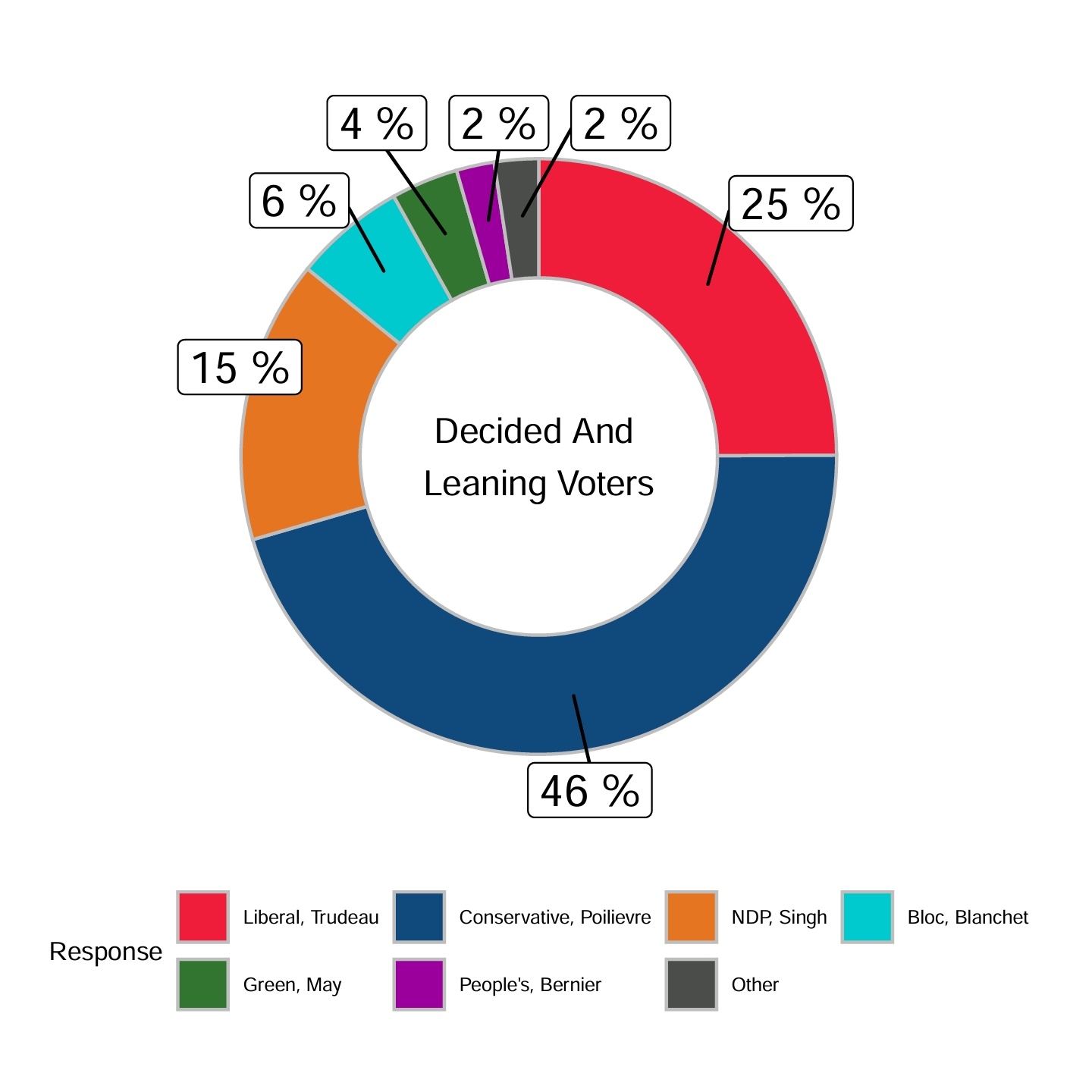
Canada Election Projection 2024

If you’re in Canada right now, and you have the education and/or skills to get out, then get out. Yes, the Conservatives are leading in the polls. But until they win, that country is not safe.

Let’s hear from some Canadians, courtesy of Rebel News:

Americans – you must never travel to this country. The bill doesn’t just undermine freedom of speech, it destroys it. It would be like going to North Korea or Iran. They freeze the bank accounts of peaceful protestors, while letting Hamas supporters run wild in their streets. It is not a free country.

How the presence and quality of fathers affects belief in God

Here’s an article by Paul Copan which points out how father presence/absence and father quality affects belief and disbelief in God.

Excerpt:

Seventh, the attempt to psychologize believers applies more readily to the hardened atheist. It is interesting that while atheists and skeptics often psychoanalyze the religious believer, they regularly fail to psychoanalyze their own rejection of God. Why are believers subject to such scrutiny and not atheists? Remember another feature of Freud’s psychoanalysis — namely, an underlying resentment that desires to kill the father figure.

Why presume atheism is the rational, psychologically sound, and default position while theism is somehow psychologically deficient? New York University psychology professor Paul Vitz turns the tables on such thinking. He essentially says, “Let’s look into the lives of leading atheists and skeptics in the past. What do they have in common?” The result is interesting: virtually all of these leading figures lacked a positive fatherly role model — or had no father at all.11

Let’s look at some of them.

  • Voltaire(1694–1778): This biting critic of religion, though not an atheist, strongly rejected his father and rejected his birth name of François-Marie Arouet.
  • David Hume(1711–76): The father of this Scottish skeptic died when Hume was only 2 years old. Hume’s biographers mention no relatives or family friends who could have served as father figures.
  • Baron d’Holbach(1723–89): This French atheist became an orphan at age 13 and lived with his uncle.
  • Ludwig Feuerbach (1804–72): At age 13, his father left his family and took up living with another woman in a different town.
  • Karl Marx(1818–83): Marx’s father, a Jew, converted to being a Lutheran under pressure — not out of any religious conviction. Marx, therefore, did not respect his father.
  • Friedrich Nietzsche(1844–1900): He was 4 when he lost his father.
  • Sigmund Freud(1856–1939): His father, Jacob, was a great disappointment to him; his father was passive and weak. Freud also mentioned that his father was a sexual pervert and that his children suffered for it.
  • Bertrand Russell(1872–1970): His father died when he was 4.
  • Albert Camus(1913–60): His father died when he was 1 year old, and in his autobiographical novel The First Man, his father is the central figure preoccupation of his work.
  • Jean-Paul Sartre(1905–80): The famous existentialist’s father died before he was born.12
  • Madeleine Murray-O’Hair (1919–95): She hated her father and even tried to kill him with a butcher knife.
  • We could throw in a few more prominent contemporary atheists not mentioned by Vitz with similar childhood challenges:
  • Daniel Dennett (1942–): His father died when he was 5 years of age and had little influence on Dennett.13
  • Christopher Hitchens (1949–): His father (“the Commander”) was a good man, according to Hitchens, but he and Hitchens “didn’t hold much converse.” Once having “a respectful distance,” their relationship took on a “definite coolness” with an “occasional thaw.” Hitchens adds: “I am rather barren of paternal recollections.”14
  • Richard Dawkins (1941–): Though encouraged by his parents to study science, he mentions being molested as a child — no insignificant event, though Dawkins dismisses it as merely embarrassing.15

Moreover, Vitz’s study notes how many prominent theists in the past — such as Blaise Pascal, G.K. Chesterton, Karl Barth, and Dietrich Bonhoeffer — have had in common a loving, caring father in their lives.16

Not only is there that anecdotal evidence, but there is also statistical evidence.

Excerpt:

In 1994 the Swiss carried out an extra survey that the researchers for our masters in Europe (I write from England) were happy to record. The question was asked to determine whether a person’s religion carried through to the next generation, and if so, why, or if not, why not. The result is dynamite. There is one critical factor. It is overwhelming, and it is this: It is the religious practice of the father of the family that, above all, determines the future attendance at or absence from church of the children.

If both father and mother attend regularly, 33 percent of their children will end up as regular churchgoers, and 41 percent will end up attending irregularly. Only a quarter of their children will end up not practicing at all. If the father is irregular and mother regular, only 3 percent of the children will subsequently become regulars themselves, while a further 59 percent will become irregulars. Thirty-eight percent will be lost.

If the father is non-practicing and mother regular, only 2 percent of children will become regular worshippers, and 37 percent will attend irregularly. Over 60 percent of their children will be lost completely to the church.

Let us look at the figures the other way round. What happens if the father is regular but the mother irregular or non-practicing? Extraordinarily, the percentage of children becoming regular goesupfrom 33 percent to 38 percent with the irregular mother and to 44 percent with the non-practicing, as if loyalty to father’s commitment grows in proportion to mother’s laxity, indifference, or hostility.

[…]In short, if a father does not go to church, no matter how faithful his wife’s devotions, only one child in 50 will become a regular worshipper. If a father does go regularly, regardless of the practice of the mother, between two-thirds and three-quarters of their children will become churchgoers (regular and irregular). If a father goes but irregularly to church, regardless of his wife’s devotion, between a half and two-thirds of their offspring will find themselves coming to church regularly or occasionally.

A non-practicing mother with a regular father will see a minimum of two-thirds of her children ending up at church. In contrast, a non-practicing father with a regular mother will see two-thirds of his children never darken the church door. If his wife is similarly negligent that figure rises to 80 percent!

The results are shocking, but they should not be surprising. They are about as politically incorrect as it is possible to be; but they simply confirm what psychologists, criminologists, educationalists, and traditional Christians know. You cannot buck the biology of the created order. Father’s influence, from the determination of a child’s sex by the implantation of his seed to the funerary rites surrounding his passing, is out of all proportion to his allotted, and severely diminished role, in Western liberal society.

Basically, anyone who doesn’t have a benevolent, involved father is going to have an more difficult time believing that moral boundaries set by an authority are for the benefit of the person who is being bounded. The best way to make moral boundaries stick is to see that they apply to the person making the boundaries as well – and that these moral boundaries are rational, evidentially-grounded and not arbitrary. It is therefore very important to children to be shepherded by a man who studied moral issues (including evidence from outside the Bible) in order to know how to be persuasive to others. If you want your child to be religious and moral, you have to pick a man who is religious and moral. And it can’t just be a faith commitment that he makes, he can just lie about that. Women ought to check whether men are bound to what they believe by checking what they’ve read. A man usually acts consistently with what he believes, and beliefs only get formed when a man informs himself through things like reading.

My advice to Christian women is this. When you are picking a man, be sure and choose one who is already invested in Christian things and producing results. It’s very unlikely that he’s going to start from nothing after you marry him. If you value your kids, make a man’s interest in developing and acting on a Christian worldview the main thing you are looking for.

Study: “social contagion” is a major factor in teen and young adult gender dysphoria

Previously, I had blogged about a small study published in 2018 by Brown University’s Dr. Lisa Littman. That study was controversial, because it falsified the narrative about transgenderism held by secular leftists. The new study, published in March 2023 in Archives of Sexual Behavior, confirms the Rapid Onset Gender Dysphoria theory first advanced by Littman. Let’s take a look.

The study is here, on Springer Link.

Excerpt from the Abstract:

During the past decade there has been a dramatic increase in adolescents and young adults (AYA) complaining of gender dysphoria. One influential if controversial explanation is that the increase reflects a socially contagious syndrome: Rapid Onset Gender Dysphoria (ROGD).

We report results from a survey of parents who contacted the website ParentsofROGDKids.com because they believed their AYA children had ROGD. Results focused on 1655 AYA children whose gender dysphoria reportedly began between ages 11 and 21 years, inclusive. These youths were disproportionately (75%) natal female. Natal males had later onset (by 1.9 years) than females, and they were much less likely to have taken steps toward social gender transition (65.7% for females versus 28.6% for males). Pre-existing mental health issues were common, and youths with these issues were more likely than those without them to have socially and medically transitioned.

Parents reported that they had often felt pressured by clinicians to affirm their AYA child’s new gender and support their transition. According to the parents, AYA children’s mental health deteriorated considerably after social transition.

Breitbart reported about the study and noted:

When asked if their child had friends who “came out as transgender around the same time,” 55.4 percent said “yes,” with that response being significantly higher for females, (60.9 percent) than it was for males (38.7 percent).

[…]The study also revealed that parents said they oftentimes felt pressured by clinicians to go along with their child’s new gender identity and support their transition. The parents added that their children’s “mental health deteriorated considerably after social transition.”

[…]Parents also estimated that before developing gender dysphoria, their child was spending an average of 4.5 hours per day “on the internet and social media.”

When asked whether a stressful event in their child’s life may have contributed to the onset of gender dysphoria, 72.6 percent of parents answered “yes.”

One of the differences between men and women, in my experience, is that the majority of men tend to generate their worldview by making plans that are likely to achieve goals, whereas the majority of women tend to get their goals from the culture, and pursue those goals by doing what feels good “in the moment”. I have been told this by women who were never like this, and by women who grew out of this once they experienced failure. That’s why transgenderism is especially problematic for girls, because if it is being spread by social cues and pressures, then girls are typically going to be more susceptible to that than boys.

Let’s talk about the previous study.

Here’s how the study was first reported by Science Daily:

This month, a Brown University researcher published the first study to empirically describe teens and young adults who did not have symptoms of gender dysphoria during childhood but who were observed by their parents to rapidly develop gender dysphoria symptoms over days, weeks or months during or after puberty.

[…]The study was published on Aug. 16 in PLOS ONE.

Peer pressure / The Internet:

The pattern of clusters of teens in friend groups becoming transgender-identified, the group dynamics of these friend groups and the types of advice viewed online led her to the hypothesis that friends and online sources could spread certain beliefs.

[….]”Of the parents who provided information about their child’s friendship group, about a third responded that more than half of the kids in the friendship group became transgender-identified,” Littman said. “A group with 50 percent of its members becoming transgender-identified represents a rate that is more 70 times the expected prevalence for young adults.”

Mental disorders / traumatic events:

Additionally, 62 percent of parents reported their teen or young adult had one or more diagnoses of a psychiatric disorder or neurodevelopmental disability before the onset of gender dysphoria. Forty-eight percent reported that their child had experienced a traumatic or stressful event prior to the onset of their gender dysphoria, including being bullied, sexually assaulted or having their parents get divorced.

This article at The Federalist had a few examples to illustrate the conclusion of the study. I’ll pick two.

The study includes other eye-opening information, such as case studies of several children’s stories.

  • “A 14-year-old natal female and three of her natal female friends were taking group lessons together with a very popular coach. The coach came out as transgender, and, within one year, all four students announced they were also transgender.”

  • “A 14-year-old natal female and three of her natal female friends are part of a larger friend group that spends much of their time talking about gender and sexuality. The three natal female friends all announced they were trans boys and chose similar masculine names. After spending time with these three friends, the 14-year-old natal female announced that she was also a trans boy.”

I thought this quote from that article was interesting as well, given the culture’s obsession with “bullying”, which is a nebulous term that can mean actual bullying, or mere disagreement.

The study also may indicate that school “anti-bullying” programs typically created by LGBT activist organizations such as the Human Rights Campaign may help accelerate children identifying as transgender by pushing peers and authority figures to profusely express their support.

Coming out as transgender means instant fame and popularity, because you’re a victim, and everyone has to be nice to you… or else:

“Great increase in popularity among the student body at large. Being trans is a gold star in the eyes of other teens,” wrote one parent on the study response form. Another wrote, “not so much ‘popularity’ increasing as ‘status’ … also she became untouchable in terms of bullying in school as teachers who ignored homophobic bullying …are now all at pains to be hot on the heels of any trans bullying.”

So becoming transgender has social rewards, especially for people who are being bullied. White girls are constantly being bullied for their race in public schools, so identifying as transgender is a quick and easy way for them to get out of the oppressor class and into the victim class