

Canadian court rules that pro-life students can’t show images of abortion on campus

Map of Canada
Map of Canada

This is from Life Site News.

Excerpt:

In a stunning reversal of recent rulings in nearby provinces, British Columbia Chief Justice Christopher Hinkson has ruled that Canadian Charter of Rights and Freedoms does not apply to pro-life students seeking space on the University of Victoria campus to demonstrate.

Former U Vic student Cameron Cote and the B.C. Civil Liberties Association had petitioned for a declaration that the university administration had breached the Youth Protecting Youth pro-life club’s Charter rights when, in early 2013, it refused permission to display pictures of aborted and healthy babies.

But the Charter only applies to government bodies and Hinkson ruled that the university, though funded mostly by taxpayers, and incorporated by the provincial government, which also appoints a majority of its directors, was acting privately when it decided to deny YPY use of its property. So even though the decision was based on the content of YPY’s pro-life message, the Charter protection of free speech and assembly does not apply.

The university is funded by taxpayer dollars – it’s not private. But, any port in a storm for this judge.

More:

[T]he University of Victoria, by simply refusing YPY space to air its views, was acting as a private landlord, ruled Hinkson. But what Hinkson isn’t getting, said John Carpay, head of the Calgary-based Justice Centre for Constitutional Freedom, is that universities respect freedom of speech, and alternately impose censorship, very selectively.

“Universities censor pro-life students for showing graphic pictures of aborted babies,” said Carpay. “But universities allow Falun Gong supporters showing graphic pictures of members tortured by the Chinese government. They also allow those promoting use of seat belts to show graphic images of people with their heads halfway through windshields.”

“Free expression is a cornerstone of democracy,” Carpay added. “But a lot of people seem to believe they have a right not be offended, and this outweighs free speech.”

[…]YPY’s battle with the U Vic student society goes back at least to 1999, when the pro-life club won a human rights discrimination ruling. In 2010, a second human rights complaint against the society was settled out of court in the club’s favor.

In all these cases pro-abortion students complained that they felt “harassed” by YPY’s posters, pamphlets, or pictures. The student society then suspended the group’s club status, resulting in the removal of the privilege to use university property for its activities.

As well, pro-abortion protesters have stolen YPY displays, covered others in cat feces, and pelted members’ belongings with smoke bombs and stink bombs with no response from the university administration. “They’ve created a culture of bullying. They can get away with treating pro-life students badly,” said Anastasia Pearse, western co-ordinator of the National Campus Life Network.

I’m not sure what secular leftists are learning in college, but it sure isn’t the ability to separate fair process from political correctness. If anyone disagrees with a secular leftists, then the rules don’t apply and anything can be done to stop us from exercises the same rights that everyone else gets. It’s not fair, and I fear that we need to just be more serious about whether what we are doing is going to reverse this problem of not having any influence. I recommend that each one of us not be content with a normal life. In order to fix these problems, we need to aim to have an influence.
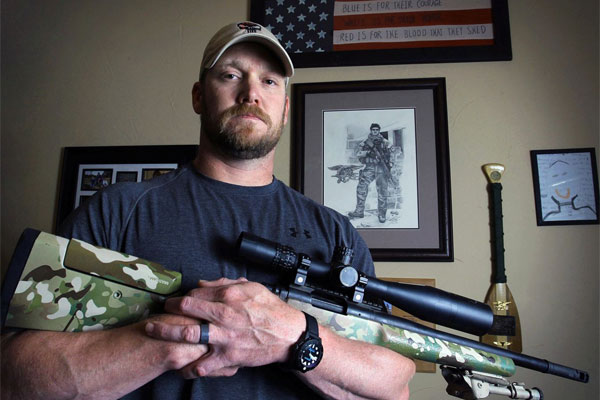
Clint Eastwood’s “American Sniper” shows why America goes to war

Chris Kyle, Navy SEAL

John Nolte explains why so many people are going to see it.

He writes:

“American Sniper” opens during the worst days of Fallujah in Iraq. Kyle (Bradley Cooper) is the eye in the sky watching his fellow warriors through a sniper scope and protecting them when necessary with the kind of precision shooting that will quickly make him a legend (and target).

Through a door, an Iraqi woman emerges with a boy who can’t be older than 10. They walk towards a group of Marines. She hands the boy a large grenade. Kyle has been told by his superiors that what happens next is his call.

Before Kyle can make what seems like an impossible choice (“I’ve never seen such evil,” Kyle says later), Eastwood and his screenwriter Jason Hall take us back in time with one of the best flashback sequences you’ll ever see. The economy is brilliant, and in just a few minutes we see what made Chris Kyle Chris Kyle: His Christian father’s strict but loving moral code, his days as a rodeo rider, his romance with Taya (a terrific Sienna Miller) — the woman who will become his faithful wife, and why two pre-9/11 terrorist attacks on American embassies led Kyle to become a Navy SEAL at the ripe old age of 30.

The rest of the story, which is every bit as compelling (this might be the best-paced film Eastwood has ever made), centers on Kyle’s harrowing four tours of duty and his troubled home life. This is a man deeply in love with his country (“I’d die for this country. America is the greatest country in the world.”) and his young family. He can only be truly faithful to one. “God, country, family,” are the man’s priorities.

“American Sniper” is refreshingly told only from Kyle’s point of view. He reminds a doubting comrade that we’re fighting these “evil f*****g savages” (terrorists) in Iraq so we don’t have to fight them in San Diego. And Eastwood doesn’t flinch from showing these evil f*****g savages for the evil f*****g savages they are. You won’t soon forget watching terrorist mastermind Zarqawi’s chief enforcer, a monster nicknamed The Butcher, slowly torture and murder a young boy with a power drill.

War is ugly and it’s not pretty watching our guys kick in doors. But there are bad guys behind those doors, and no matter how bad those guys might be, Eastwood makes sure the audience knows Americans don’t carry power drills or take lives out of any motive other than self-defense.

There is nothing even close to moral equivalence in “America Sniper,” only the truth: that there is no equivalence between the barbarians who target the innocent and the American heroes who target those who target the innocent.

[…]The Big Emotional Question that drives much of “American Sniper” is whether or not, after it’s all over, Kyle still believes in who he is and what he’s done. The film’s best moment comes when that question is answered, when we learn just what is that is tearing Kyle up inside. “I will stand before my Creator and justify every shot,” he tells a military therapist.

You see, it’s not Iraq or Bush or the military or the mission or even those 160 confirmed kills. What’s eating Kyle alive is that he didn’t do more — didn’t save more United States Marines.

This movie made $90 million on its opening weekend. Why aren’t there more movies like this made in Hollywood?

I’m a big fan of war movies – have been since I was a kid. I like war movies that tell the stories of famous battles a lot, but my favorites are movies that show why we have to fight, and the fundamental goodness of fighting evil on the battlefield, when we are threatened by enemies who cannot be dealt with any other way. My favorite war movies are the ones where there are clear-cut villains, like the German Nazis or the Japanese Imperialists or the North Korean communists. I think Islamic extremists belong in there. Why are people so cautious about celebrating our armed forces for confronting evil as clear-cut as any we have had to face in the past?

I really don’t know what’s gone wrong with this country when we celebrate artists, musicians, actors and athletes more than people in the military, the police and the clandestine services. When I was a young man, I would spend hours making and building model jet fighters and drawing pictures of all kinds of military vehicles. Model jet fighters hung from my ceiling. I had maps of all the allied advances during World War 2 on my wall. I read books like this one, which tells the story of every man who won the medal of honor in World War 2. And when I got older, I read military history and military biographies. For me, the idea of stopping a violent evil person has always been a good thing.

You can read more about Chris Kyle on military.com.

Finally: more details on alleged first-century fragment of Mark’s gospel emerge

Here’s the latest on it from Live Science.

Excerpt:

A text that may be the oldest copy of a gospel known to exist — a fragment of the Gospel of Mark that was written during the first century, before the year 90 — is set to be published.

At present, the oldest surviving copies of the gospel texts date to the second century (the years 101 to 200).

This first-century gospel fragment was written on a sheet of papyrus that was later reused to create a mask that was worn by a mummy. Although the mummies of Egyptian pharaohs wore masks made of gold, ordinary people had to settle for masks made out of papyrus (or linen), paint and glue. Given how expensive papyrus was, people often had to reuse sheets that already had writing on them.

In recent years scientists have developed a technique that allows the glue of mummy masks to be undone without harming the ink on the paper. The text on the sheets can then be read.

The first-century gospel is one of hundreds of new texts that a team of about three-dozen scientists and scholars is working to uncover, and analyze, by using this technique of ungluing the masks, said Craig Evans, a professor of New Testament studies at Acadia Divinity College in Wolfville, Nova Scotia.

“We’re recovering ancient documents from the first, second and third centuries. Not just Christian documents, not just biblical documents, but classical Greek texts, business papers, various mundane papers, personal letters,” Evans told Live Science. The documents include philosophical texts and copies of stories by the Greek poet Homer.

The business and personal letters sometimes have dates on them, he said. When the glue was dissolved, the researchers dated the first-century gospel in part by analyzing the other documents found in the same mask.

[…]The technique is bringing many new texts to light, Evans noted. “From a single mask, it’s not strange to recover a couple dozen or even more” new texts, he told Live Science. “We’re going to end up with many hundreds of papyri when the work is done, if not thousands.”

[…]Evans says that the text was dated through a combination of carbon-14 dating, studying the handwriting on the fragment and studying the other documents found along with the gospel. These considerations led the researchers to conclude that the fragment was written before the year 90. With the nondisclosure agreement in place, Evans said that he can’t say much more about the text’s date until the papyrus is published.

[…]Evans said that the research team will publish the first volume of texts obtained through the mummy masks and cartonnage later this year. It will include the gospel fragment that the researchers believe dates back to the first century.

The team originally hoped the volume would be published in 2013 or 2014, but the date had to be moved back to 2015. Evans said he is uncertain why the book’s publication was delayed, but the team has made use of the extra time to conduct further studies into the first-century gospel. “The benefit of the delay is that when it comes out, there will be additional information about it and other related texts.”

The previous earliest-ever fragments are P52 and P104.

Evangelical Textual Criticism explains:

A lot has happened since then in the study of Greek palaeography and with the increase in readily available collections of digital images and refined classification one would assume that the experts are able to form an even more informed opinion now than they were in the 1930s. A 2012 article by Orsini and Clarysse provides exactly this re-evaluation. Their method is solid and responsible, both scholars have a tremendous track record, and in general I don’t find much to disagree with, even though in some of the finer distinctions Orsini and Clarysse make I cannot always follow them. Their evaluation of the date is not far off from what Roberts came up with in giving the range 125-175 for P52. So is P52 still the earliest fragment of the New Testament?

Possibly, but looking through the results presented by Orsini and Clarysse there is another candidate, P104, an interesting fragment of Matthew 21, published in 1997. This papyrus receives a date 100-200. Some particular scripts are easier to pin down than others and that is why P104 has a span of a century, whilst P52 only half a century. So we have P52 and P104 both dated by a range that has its median in the centre of the second century (it may be earlier, it may be later).

So what is the oldest manuscript? Well, there are two candidates, P52 of John 18, and P104 of Matthew 21; the former oldest manuscript has become part of a double act (two times 52 is 104).

P52 has John 18:31–33 and John 18:37–38 on it.

It will be interesting to see how scholars respond to this new fragment of Mark.