How well are Democrat Party policies working out in socialist Europe?

Brain vs Heart, from: theawkwardyeti.com

Last night, I watched the Democrat debate, and I saw a bunch of people “solve” all of the worlds problems with their hand-waving and happy-talk. Almost no evidence for the effectiveness of any policy was offered, and rarely did anyone pointed to numbers showing that their past actions had succeeded.

At one point, the King of the Clowns Bernie Sanders pointed to Denmark as proof that his socialist ideas would all work.

So I thought we might take a quick look at see how socialism is doing in Denmark, and in Europe more generally.

This is from the government-run news media in Canada, the CBC.

They write:

More than a quarter of Japan’s citizens are at least 65, making it the world’s fastest aging country. In Canada, about 16.1 per cent of us are seniors.

Right now in Japan, there’s a higher demand for adult diapers than children’s diapers, economist Michael Moffatt says, a “stunning statistic” that illustrates one of the main reasons why the country’s economy has been treading water for the better part of two decades.

“They haven’t been able to find a way to get their economy to grow in a significant way while still being able to support an older population,” the Richard Ivey School of Business professor said.

Japan’s GDP has grown at an average rate of 1.3 per cent for the past 25 years, according to the World Bank, dropping from averages of more than five per cent annual growth in earlier decades.

Yes, that’s because Japan’s solution to economic growth has been the Democrat solution: stimulus spending, massive borrowing, low (and decreasing) interest rates. It’s Obamanomics, and guess what? It doesn’t work there, either.

More:

Sweden and Denmark are the “places we need to turn to,” Foot said, in crafting economic and health policy to manage the shift in demographics. While the countries take different approaches, they all focus on health care, offering programs akin to pharmacare or following up with seniors in their homes after a visit to the hospital.

And while Sweden’s residents are not collectively older than Japan’s, about a quarter of the country’s 9.5 million residents are at least 60, according to Global Age Watch.

The public purse covers most home-care and long-term care in both Sweden and Denmark.

Unsurprisingly, they are among the highest taxed countries in the European Union, according to Eurostat. In 2013, Sweden topped the list, while in 2014 it was Denmark.

Policy-makers in Canada will have to make similar choices when it comes to taxes, Foot said, arguing more tax revenue will be needed, although there may be alternative ways of collecting it.

Foot said Ottawa and the provinces could look at taxing different sources, like foreign exchange or stock market transactions.

“If the state or government doesn’t step in, we’ll see poverty rise amongst our senior population,” he said. “We’ll go back to the days when poverty rates in that population were upwards of 30 per cent.”

So, massive government intervention in the free market in the areas of health care has not actually helped them, it has hurt them. And what happens to marriage rates and birth rates when you take 50-70% of a man’s salary? Does it make him start a business and hire other people? Does it make him want to marry? Does it make him want to have children? Are men happy when their wives are forced to work, and when their children are taught by public school teachers and monitored by government social workers? Do men like it when they pay taxes to other people to decide what their family will amount to and what their children will believe? Big government has a corrupting influence on character, turning people away from marriage, family and work.

The Democrat candidates in the debate want to turn us into Greece. They assume (somewhat naively) that all other behaviors will remain constant as they ramp up government spending and then borrow and tax to pay for it. But anyone who thinks about the problem for more than 5 seconds can see that businesses and individuals do not keep on doing what they were doing when spending and taxes increase. To be a Democrat is to not understand basic economics. It is to persist in childhood, having tantrums, ignoring how incentives change for everyone who is affected by childish policies.

Maybe the CBC is too conservative… let’s go to the BBC, they are hard leftists. What does the BBC say?

They say this:

As German Chancellor Angela Merkel is fond of repeating, the EU accounts for just 7% of the world’s population and a quarter of its gross domestic product (GDP) but as much as half of its welfare spending.

[…]Social expenditure per person in the EU in 2012 (the most recent year available, using a harmonised definition) was €7,600 (£5,540), but with a range from €18,900 (£13,800) in Luxembourg to just €927 (£675) in Bulgaria. The UK figure was €8,700 (£6,340).

Interestingly, average EU spending per citizen is almost the same as in the United States and well below that in Switzerland, after adjusting for price differences. Typically, poverty relief, health and pensions are much the biggest components of welfare spending, whereas unemployment benefits cost relatively less.

Sounds like a Democrat paradise, right? This is the Holy Grail to socialists like Bernie Sanders and Hillary Clinton.

More:

Over the past 15 years, the average fertility rate (children per woman) in the EU has been 1.54, ranging from barely over 1.3 in Hungary and Spain, and 1.36 in Germany, to 1.8 in the UK and just under two in Ireland, France and Sweden.

According to the “main scenario” of the latest Eurostat population projections, Germany’s population has already started to shrink and is expected to fall from 82 million in 2013 to 74 million by 2050.

Well, wait now. Democrats told me that if we just nationalize everything that the private sector does, and raise tax rates on job creators and investors, and make all the women get out of their homes and work like men, and criminalize homeschooling, and marginalize Christianity, and abort the next generation of workers, and pay single mothers welfare to raise future criminals, and enact no-fault divorce to get men out of the homes, and teach children to have premarital sex at age 12 so that men get sex without having to marry first, then men and women would just be as interested in starting businesses, working hard, getting married and parenting as they were before? Are you telling me that letting the government control everything, and taking most of what people earn to pay for it, actually discourages people from starting businesses, working, marrying and having kids? Who is going to pay for all these expensive social programs, then?

And this is what Democrats hold up as perfection – heaven on Earth. Instead of closing their eyes to reality and wishing we were Europe, why don’t they actually look at Europe first? And maybe take a first-year course in economics.

Democrat debate: spend more money, raise taxes, ban guns and fossil fuels

It's almost Hallowe'en, and this debate scared me
It’s almost Hallowe’en, and this debate scared me

Here’s Bernie Sanders explaining what the number 1 foreign policy threat to the United States is:

It’s not Iran getting a nuclear weapon. It’s not Russian aggression in the Ukraine. It’s not the Middle East on fire after we retreated from Iraq. It’s not China militarizing and stealing our military secrets by hacking our computers. Forget all that. The really big threat is the over 18 years of no warming that we’ve had, which is (to them) a sure sign that we’re all going to die a fiery death.

Here’s a review of the debate from National Review.

Excerpt:

In one of the few surprises of the night, Bernie Sanders did his best to try to save her on her troubles with her personal e-mail server. He’s an old fool if he thinks Hillary will return the favor when he needs it. Martin O’Malley, who sounded tough in cable-news interviews, wimped out in the end once he saw the audience’s roaring applause to Sanders’s declaration that the issue was settled and nobody needed to hear any more about “her damn e-mails.”

Sanders may rock the arenas when they’re filled with progressive grassroots activists, but his style doesn’t transfer well to a broader audience. He’s the party guest whom you instinctively don’t want to talk to, who begins shouting immediately, who grabs your lapel and spits a bit as he jabs his finger into your chest for emphasis. He’s Senator Larry David. You want to get away from his perpetually irritated (and irritating) ranting, but he just won’t stop talking, and he won’t let you gently back away or escape the conversation. Every two-minute answer felt like ten minutes of shouting — and he had the audacity to give Hillary grief about shouting.

Beyond his giant wimp-out on Hillary’s e-mails, O’Malley was more pleasant to listen to but is ultimately going to be a non-factor in this race. When Sanders finished his call for a revolution, O’Malley turned to the camera and said with a big smile, “What we need is a green-energy revolution!” And for a moment, he waited for applause that didn’t come. The Democratic audience wasn’t in a mood for innovation. They are in a mood for populist revenge against people who have more than they do. Sanders shouts, O’Malley whispers.

Jim Webb pointed out how affirmative action disadvantages poor whites, the need to respect the rights of gun owners, the seriousness of foreign-policy threats that Democrats rarely acknowledge — like cyber threats, hacking (ahem), and China. He was the lone voice of reality saying,“With all due respect to Senator Sanders, I don’t think the revolution is going to come, and I don’t think the Congress is going to pay for all this.”

Webb has a good chance of winning the Democratic nomination in 1948. You almost have to wonder how Webb would be doing in the GOP presidential primary, but at a key moment, Webb flinched, saying he wouldn’t have a problem with extending Obamacare benefits to illegal immigrants.

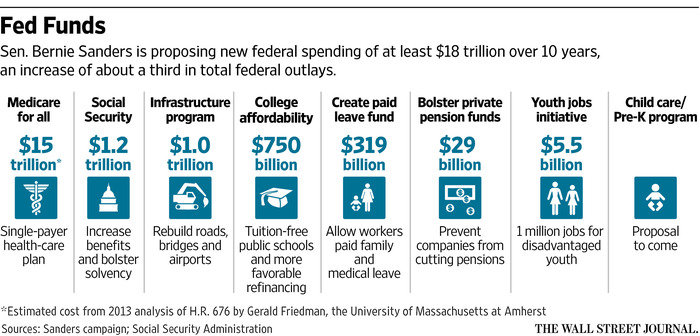
So all the candidates on the stage proposed a lot of spending (e.g. – free college tuition) and paying for it by taxing the rich. As if the rich are going to stand there and take it, and not simply respond by laying off workers, outsourcing, and even moving their operations out of the country entirely. Should we really be giving free college degrees in English to people, and paying for it by taxing entrepreneurs and job creators? Can no one see the negative consequences of taxing the people who invent products, run companies and create jobs? Do people really continue to work as hard when you take more and more of their money, or do they not scale back their work or stop working entirely?

Should we really go “well beyond” what Obama did with his executive order amnesty? Should we really be covering illegal immigrants under Obamacare? All the candidates seemed to be fine with amnesty for millions of unskilled immigrants. Again, no worry about how to pay for a whole bunch of people who use more in government programs than they pay for in taxes. Where will the money come from? Will “the rich” just lie down and hand over their money and keep working like before as more and more of their money is taken from them and their families, and given to others? How did the Democrat candidates respond to the problem of illegal immigrants who are convicted of crimes being released to murder ordinary citizens? Their answer: disarm the ordinary citizens. Take their guns. And release the drug criminals from the jails.

New regulations were proposed. Glass-Steagall and restrictions on energy development. Only Webb had a sensible view of energy development, including nuclear power. The rest turned a blind eye to the massive pollution caused by India and China and promised to stop the global warming with expensive wind and solar power.

And what about all the wars created by our weakness with Russia, China, Iran, Islamic State? Well, except for Webb, the candidates promised to end these wars, apparently unilaterally, and with a magic wand. Whoosh! There, all the wars are ended. Because that’s what the Democrat voters want to hear. They want simplistic solutions, and they can’t comprehend the motivations of other parties: job creators, banks, Russia, China, Iran, and so on. They just want what they want, and they have no idea what comes next as the other people in the room respond to the new rules.

Jim Webb

Webb was the only grown-up on the stage, and he is more like the old-style Democrat who actually was competent, and actually loved his country:

When asked whether only black lives matter, or whether all lives matter, Webb was the ONLY one to say that all lives matter. He was the only one was serious about foreign policy. And the only one who was serious about what all this spending would cost.

God help us all if anyone other than Webb is the nominee. I really was scared for my country listening to the other candidates pander to their clueless base.

To get another reaction to the first CNN debate, you can listen to the latest episode of the Weekly Standard podcast.

Making a difference as a Christian: advice on fundraising, ministry, and missions

Ratio Christi event at Ohio State University featuring Frank Turek
Ratio Christi event at Ohio State University featuring Frank Turek (10/12/2015)

What’s the ideal balance between work and missions? In this post, I will argue against going abroad to do full-time missions.

Do apologetics ministry in your spare time, and work full-time

A full-time job and part-time ministry makes the most sense from a cost-benefit point of view. I have friends who are software engineers who studied enough science, history, and philosophy part-time, who are able to do public debates with atheists, which influence many more people than one-on-one interactions. One of my friends has several Masters degrees, and is in a PhD program, but his full-time career is in software and network management. He is 100% self-funded. He has worked in a successful apologetics career with a full-time career in technology, and he is debt-free. This is the best option . Your debts get paid off. Your resume stays gap-free. You bring a nest egg to your future spouse. You can afford to have children. You can afford a stay-at-home mom. You can afford either homeschooling or private schools, should you decide to go that route.

You have to start saving and investing early if you want to be independent in your old age. With full-time work and part-time ministry, you still make a difference for Christ and His Kingdom over time, while avoiding a financial crisis that could cost you your family, your friends, and even your faith. This is an especially wise way to proceed, given the economic struggles we are likely to face from housing bubbles, student loan bubbles, rising interest rates, entitlement crises, state pension underfunding, environmental regulations, the ever increasing national debt, demographic crisis, etc. Read the culture and be cautious about the future.

Use the Internet to make a difference in other countries for free

One cost-effective way to make a difference is by using the Internet to reach other countries. You can work full-time, and then use your spare time to blog. This blog gets an average of 24,000 page views per week. About 45% of that traffic comes from NON-USA countries. If you keep working full-time and just start a blog for free, then you can maintain your gap-free resume and have a much easier time marrying and raising children.

The university next door is a great place to have an influence

I do think full-time ministry is OK in two cases: if you don’t go abroad, or if you go abroad with a full-time job or full-ride scholarship. My friend Eric Chabot was able to host Frank Turek at Ohio State University last night (see photo above), for example. He got a great crowd. He is donation-driven, but he runs a lean operation since he lives near the campus where he serves. When it comes to having an impact, the American university is the place to make a difference. We have enough trouble in our own country, especially in the universities, where so many young people lose the faith of their childhood – there’s no need to travel and incur heavy expenses.  I think it also makes sense financially to go abroad for missions, if you get a scholarship that pays your way or if you have a job offer where you can work full-time and do missions part-time. What does not make sense is sending an unskilled missionary to a foreign country at the cost of tens of thousands of dollars that could be used much more efficiently in smaller, effective Eric-Chabot-style operations.

Your feelings and desires are not God speaking to you

Now some people who want to go into overseas missions will tell me that they feel led to go. This method of decision making is not Biblical, as I explained in one of my previous posts. If you believe the Bible, then feelings are a pretty poor way of determining what God wants from you. In fact, left to themselves, humans typically choose what feels best for them, not what does best for God. If God really calls you to do something, like he called Jonah, then you probably won’t feel like doing it. Missionary work is especially suspect when God is supposedly calling you to go to a country that you always dreamed of traveling to while you were a non-Christian. Normally, conversion causes you to have different desires – not the same desires you had as a non-Christian. Unless you hear an audible voice, like an Old Testament prophet would, then it’s best not to think that God is speaking through your feelings and desires. A good book to read on this is “Decision Making and the Will of God“, by Garry Friesen.

Don’t go into missions in order to have fun or go on an adventure

I am suspicious of people who try to turn Christianity into a mechanism for achieving the same goals that non-Christians want to achieve. These days, it seems as if everyone wants to travel to exotic places. If there is evidence of hedonistic, fun-pursuing, thrill-seeking behavior in your past, then consider that you may just want an “adventure”. I have a friend who went to Russia for a year just after graduating college, and she admitted to me that she just went “to have an adventure”. To me, that’s not a good reason to spend thousands of dollars, and put gaps in your resume. It’s not a cost-effective way to make a difference, given the other alternatives. Your goal should be to make yourself defensible so that you can put out a sustained effort that lasts, not burn out and then be ineffective for the rest of your life. Think about what J. Warner Wallace says about living wisely and prudently so you position yourself to make a steady contribution in the second half of your life. Don’t wreck your long-term impact for short-term fun. God will not honor that.

Don’t go into missions to make up for an immoral past

Anyway, if you look in your past and see lots of wild behavior – drinking, drugs, premarital sex, cohabitation, abortions, gambling, divorces, etc., then consider that you may be interested in missions for the wrong reasons. You don’t need to go on a missions trip to dramatically declare to everyone that you are now completely reformed from your wild party days. I actually managed to talk a friend out of a short-term missions trip who felt that it was a good way to do something meaningful to “make up” for her past. By being responsible with her job and saving money, she’s managed to avoid burning out, and to instead put out a steady stream of effective activities. And she was financially stable enough to get married and have children, as well – another excellent way to make a difference.

Do not go into missions if your resume and balance sheet do not demonstrate maturity

We already talked about the need for sound planning in the Bible study we did with Wayne Grudem.  The Bible praises hard work, stewardship, prudence and wisdom. And this is especially true for people who are getting older and need to be thinking about marriage, children and retirement. It’s not a good witness for Christians to be financially unstable. When you are able to stand on your own two feet financially, and help others from your earnings, you gain credibility with non-Christians. We don’t want people to think that we are doing this for the money. The best option is to be self-funded, like Paul and his tent-making-funded ministry.

By the way, if you’d like to read a related post by Eric Chabot, this one is a good one.