Category Archives: Polemics

The Southern Baptist Convention’s progressive immigration policies threaten public safety

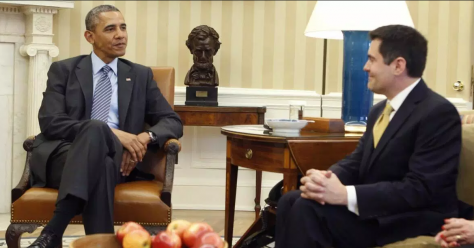
Russell Moore and Barack Obama

I have a confession to make. I have really been struggling with the Southern Baptist Conventions slide into liberalism, not just on moral issues, but on policy issues as well. The straw that broke the camel’s back for me is the SBC slide towards open borders. Thankfully, not everyone thinks it is “compassionate” to spend other people’s money and risk other people’s safety. The Heritage Foundation, my favorite think tank, is still taking the conservative view on immigration. And they do it by looking at the evidence of how open border policy is working out in other times and other places.

Here’s the latest on Germany from Robin Simcox, writing at the Daily Signal.

Excerpt:

Diana Feldman received an unusual text message from the phone of her 14-year-old daughter, Susanna, late last month.

Written in broken German, the message said she would be back home in a few weeks and that her mother should not try to find her.

Yet the message was not from Susanna. She had already been raped and strangled, and her body was dumped next to some railroad tracks in the city of Wiesbaden in western Germany.

[…]Ali Bashar, a 20-year-old Iraqi Kurd, entered Germany in October 2015 with his parents and was a blight from the beginning. According to the BBC, he was allegedly tied to a robbery, possession of a weapon, and sexual assault on an 11-year-old girl in the refugee shelter where he lived (and where he dealtdrugs).

Bashar’s asylum claim was rejected toward the end of 2016, but he was allowed to stay in the country while he appealed the decision.

Over 18 months later, when he killed Susanna, a decision on his appeal still had not been made. Days after his crime, Bashar and seven other members of his family returned to Iraq. However, he was tracked down by Kurdish authorities and extradited to Germany.

Bashar has since admitted to killing Susanna.

[…]Hussein Khavari arrived in Europe in January 2013. He proceeded to throw a woman over a cliff that summer in Corfu, Greece, and was subsequently imprisoned for 10 years in February 2014 for attempted murder. However, he was released after just 18 months, part of a government amnesty aimed at reducing strain on its overcrowded prisons.

Khavari journeyed on to Germany, where he arrived in November 2015, and claimed asylum the following February. He claimed to be a 17-year-old Afghan upon arrival, saying that his father had been killed fighting the Taliban.

In October 2016, Khavari raped and strangled Maria Ladenburger, a 19-year-old German student, in Freiburg, in southwest Germany. Khavari left his still-breathing victim to drown in a nearby river after his attack. He was sentenced to life in prison.

During his trial, it emerged that rather than being a 17-year-old fatherless Afghan, Khavari was a Iranian. His father was alive and well, living in Iran. Khavari’s asylum claim was also undecided at the time of Ladenburger’s killing.

Another case from southwest Germany, this time in Kandel, saw Mia Valentin, a 15-year-old girl, being stabbed to death by her ex-boyfriend last December. The killer, Abdul D., came to Germany from Afghanistan in April 2016, claiming to be 14 years old. In reality, he is now 20.

Such stories—coming in the wake of the mass sexual assault of more than 1,000 women in Germany on New Year’s Eve of 2015—have a variety of consequences.

Now consider this article from June 2016 from the far-left National Public Radio, which is delighted with the new progressive policies of the SBC:

Matthew Soerens of the evangelical refugee resettlement group World Relief praised the move, noting that churchgoers of many religious denominations are eager to aid refugees, and are “strongly opposed to governmental efforts that would block their ability to be a part of this sort of ministry.”

Soerens says Donald Trump’s proposal to bar immigration from countries with a “proven history of terrorism” would likely keep out Christians and other religious minorities as well.

Got that? He wants to let in refugees from countries with a “proven history of terrorism”. The point about Christianity is a red herring, since almost none of the refugees admitted under Obama were Christians.

CNS News explains in this article from October, 2016:

The administration admitted a total of 12,587 Syrian refugees during the just-ended fiscal year, exceeding the target President Obama declared last fall by 2,587 (20.5 percent).

Of the 12,587, the vast majority are Sunni Muslims – 12,363 (98.2 percent) – while another 103 are identified in State Department Refugee Processing Center data simply as Muslims and a further 20 as Shi’a Muslims.

Sixty-eight of the 12,587 Syrian refugees (0.5 percent) are Christians. They comprise 16 Catholics, eight Orthodox, five Protestants, four Jehovah’s Witnesses, one Greek Orthodox, and 34 refugees self-identified simply as Christians.

The Bible says that rape and murder are wrong. Perhaps Southern Baptist leaders like Moore and Sorens are just more concerned with political expediency than sound theology.

Keep in mind that no one in the SBC has a real private sector job where they earn money in a competitive free market by providing goods and services. When they talk about letting in refugees, they aren’t going to be liable for the crimes and social costs (education, health care, public safety, etc.). That’s on you, the taxpayers. And on the little girls who are raped and murdered. The SBC is not primarily concerned about underage sex-trafficking gangs run by Pakistani Muslim immigrants. Their priority is feeling good and being liked. Meeting with Obama in the Oval Office and preening for the cameras and hearing the praises of the far-left mainstream media. They like to be seen as “compassionate” by spending other people’s money and risking other people’s safety.

Once again, I must mention that I myself am non-white, and I favor skilled immigrants from all races. I am in favor of naturalizing skilled immigrants who can keep a high-paying job, refrain from committing crimes, and who are barred from collecting from any social welfare program for some long period of time. But refugees and unskilled immigrants should not be put on a path to naturalization under any circumstances. If individuals want to help them, they are free to help them with acts of voluntary charity. I myself am more interested in funding pro-life, pro-marriage, apologetics, etc. efforts.


Why do famous atheists believe that God does not exist?

Women need to learn to choose a man who is prepared to be a father and husband
The importance of fathers for teaching children about a God who cares

Here’s a lecture by New York University professor Paul Vitz to explain a connection between atheism and fatherlessness:

Here’s an article by Paul Copan (related to the lecture) which points out how father presence/absence and father quality affects belief and disbelief in God.

Excerpt:

Seventh, the attempt to psychologize believers applies more readily to the hardened atheist.It is interesting that while atheists and skeptics often psychoanalyze the religious believer, they regularly fail to psychoanalyze their ownrejection of God. Why are believers subject to such scrutiny and not atheists? Remember another feature of Freud’s psychoanalysis — namely, an underlying resentment that desires to kill the father figure.

Why presume atheism is the rational, psychologically sound, and default position while theism is somehow psychologically deficient? New York University psychology professor Paul Vitz turns the tables on such thinking. He essentially says, “Let’s look into the lives of leading atheists and skeptics in the past. What do they have in common?” The result is interesting: virtually all of these leading figures lacked a positive fatherly role model — or had no father at all.11

Let’s look at some of them.

  • Voltaire(1694–1778): This biting critic of religion, though not an atheist, strongly rejected his father and rejected his birth name of Francois-Marie Arouet.
  • David Hume(1711–76): The father of this Scottish skeptic died when Hume was only 2 years old. Hume’s biographers mention no relatives or family friends who could have served as father figures.
  • Baron d’Holbach(1723–89): This French atheist became an orphan at age 13 and lived with his uncle.
  • Ludwig Feuerbach (1804–72): At age 13, his father left his family and took up living with another woman in a different town.
  • Karl Marx(1818–83): Marx’s father, a Jew, converted to being a Lutheran under pressure — not out of any religious conviction. Marx, therefore, did not respect his father.
  • Friedrich Nietzsche(1844–1900): He was 4 when he lost his father.
  • Sigmund Freud(1856–1939): His father, Jacob, was a great disappointment to him; his father was passive and weak. Freud also mentioned that his father was a sexual pervert and that his children suffered for it.
  • Bertrand Russell(1872–1970): His father died when he was 4.
  • Albert Camus(1913–60): His father died when he was 1 year old, and in his autobiographical novel The First Man, his father is the central figure preoccupation of his work.
  • Jean-Paul Sartre(1905–80): The famous existentialist’s father died before he was born.12
  • Madeleine Murray-O’Hair (1919–95): She hated her father and even tried to kill him with a butcher knife.
  • We could throw in a few more prominent contemporary atheists not mentioned by Vitz with similar childhood challenges:
  • Daniel Dennett (1942–): His father died when he was 5 years of age and had little influence on Dennett.13
  • Christopher Hitchens (1949–): His father (“the Commander”) was a good man, according to Hitchens, but he and Hitchens “didn’t hold much converse.” Once having “a respectful distance,” their relationship took on a “definite coolness” with an “occasional thaw.” Hitchens adds: “I am rather barren of paternal recollections.”14
  • Richard Dawkins (1941–): Though encouraged by his parents to study science, he mentions being molested as a child — no insignificant event, though Dawkins dismisses it as merely embarrassing.15

Moreover, Vitz’s study notes how many prominent theists in the past — such as Blaise Pascal, G.K. Chesterton, Karl Barth, and Dietrich Bonhoeffer — have had in common a loving, caring father in their lives.16

Here are some corrections to the list:

1) Voltaire was not an atheist but a deist who rejected claims of the Bible’s inspiration, like Paine. Voltaire’s aphorism, “If God did not exist, it would be necessary to invent him,” far from being the cynical remark it is often taken for, it was meant as a retort to the atheistic clique of d’Holbach, Grimm, and others.

2) David Hume’s religious views remain uncertain. He never said he was an atheist. A gentle skeptic suits him more.

3) Bertrand Russell was an agnostic.

Not only is there that anecdotal evidence of a psychological explanation for atheism, but there is also statistical evidence.

Excerpt:

In 1994 the Swiss carried out an extra survey that the researchers for our masters in Europe (I write from England) were happy to record. The question was asked to determine whether a person’s religion carried through to the next generation, and if so, why, or if not, why not. The result is dynamite. There is one critical factor. It is overwhelming, and it is this: It is the religious practice of the father of the family that, above all, determines the future attendance at or absence from church of the children.

If both father and mother attend regularly, 33 percent of their children will end up as regular churchgoers, and 41 percent will end up attending irregularly. Only a quarter of their children will end up not practicing at all. If the father is irregular and mother regular, only 3 percent of the children will subsequently become regulars themselves, while a further 59 percent will become irregulars. Thirty-eight percent will be lost.

If the father is non-practicing and mother regular, only 2 percent of children will become regular worshippers, and 37 percent will attend irregularly. Over 60 percent of their children will be lost completely to the church.

Let us look at the figures the other way round. What happens if the father is regular but the mother irregular or non-practicing? Extraordinarily, the percentage of children becoming regular goesupfrom 33 percent to 38 percent with the irregular mother and to 44 percent with the non-practicing, as if loyalty to father’s commitment grows in proportion to mother’s laxity, indifference, or hostility.

[…]In short, if a father does not go to church, no matter how faithful his wife’s devotions, only one child in 50 will become a regular worshipper. If a father does go regularly, regardless of the practice of the mother, between two-thirds and three-quarters of their children will become churchgoers (regular and irregular). If a father goes but irregularly to church, regardless of his wife’s devotion, between a half and two-thirds of their offspring will find themselves coming to church regularly or occasionally.

A non-practicing mother with a regular father will see a minimum of two-thirds of her children ending up at church. In contrast, a non-practicing father with a regular mother will see two-thirds of his children never darken the church door. If his wife is similarly negligent that figure rises to 80 percent!

The results are shocking, but they should not be surprising. They are about as politically incorrect as it is possible to be; but they simply confirm what psychologists, criminologists, educationalists, and traditional Christians know. You cannot buck the biology of the created order. Father’s influence, from the determination of a child’s sex by the implantation of his seed to the funerary rites surrounding his passing, is out of all proportion to his allotted, and severely diminished role, in Western liberal society.

Basically, anyone who doesn’t have a benevolent, involved father is going to have an enormously difficult time believing that moral boundaries set by an authority are for the benefit of the person who is being bounded. The best way to make moral boundaries stick is to see that they apply to the person making the boundaries as well – and that these moral boundaries are rational, evidentially-grounded and not arbitrary.

Is the Bible’s definition of faith opposed to logic and evidence?

Bible study that hits the spot
Theology that hits the spot

Probably the biggest misconception that I encounter when defending the faith is the mistaken notion of what faith is. Today we are going to get to the bottom of what the Bible says faith is, once and for all. This post will be useful to Christians and atheists, alike.

What is faith according to the Bible?

I am going to reference this article from apologist Greg Koukl of Stand to Reason in my explanation.

Koukl cites three Biblical examples to support the idea that faith is not blind leap-of-faith wishing, but is based on evidence.

  1. Moses went out into the wilderness and he had that first encounter with the burning bush, and God gave him the directive to go back to Egypt and let his people go. Moses said, Yeah, right. What’s going to happen when they say, why should we believe you, Moses?God said, See that staff? Throw it down.Moses threw it down and it turned into a serpent.God said, See that serpent? Pick it up.And he picked it up and it turned back into a staff.God said, Now you take that and do that before the Jewish people and you do that before Pharaoh. And you do this number with the hail, and the frogs, and turning the Nile River into blood. You put the sun out. You do a bunch of other tricks to get their attention.And then comes this phrase: “So that they might know that there is a God in Israel.”
  2. [I]n Mark 2 you see Jesus preaching in a house, and you know the story where they take the roof off and let the paralytic down through the roof. Jesus said, “Your sins are forgiven.” And people get bugged because how can anyone forgive sins but God alone?Jesus understood what they were thinking and He said this: What’s harder to say, your sins are forgiven, or to rise, take up your pallet and go home?Now, I’ll tell you what would be harder for me to say : Arise, take up your pallet and go home. I can walk into any Bible study and say your sins are forgiven and nobody is going to know if I know what I am talking about or not. But if I lay hands on somebody in a wheelchair and I say, Take up your wheelchair and go home, and they sit there, I look pretty dumb because everyone knows nothing happened.But Jesus adds this. He says, “In order that you may know that the Son of Man has the power and authority to forgive sins, I say to you, arise, take up your pallet and go home.” And he got up and he got out. Notice the phrase “In order that you may know”. Same message, right?
  3. Move over to the Book of Acts. First sermon after Pentecost. Peter was up in front of this massive crowd. He was talking about the resurrection to which he was an eyewitness. He talked about fulfilled prophecy. He talked about the miraculous tongues and the miraculous manifestation of being able to speak in a language you don’t know. Do you think this is physical evidence to those people? I think so. Pretty powerful.Peter tells them, These men are not drunk as it seems, but rather this is a fulfillment of prophecy. David spoke of this. Jesus got out of the grave, and we saw him, and we proclaim this to you.Do you know how he ends his sermon? It’s really great. Acts 2:36. I’ve been a Christian 20 years and I didn’t see this until about a year ago. This is for all of those who think that if you can know it for sure, you can’t exercise faith in it. Here is what Peter said. Acts 2:36, “Therefore let all the house of Israel know for certain that God has made him both Lord and Christ, Messiah, this Jesus whom you crucified.” There it is again. “Know for certain.”

What is faith according to Bible-based theologians?

I am going to reference this article from theologian C. Michael Patton of Parchment and Pen in my explanation.

Patton explains that according to Reformation (conservative, Bible-based) theologians, faith has 3 parts:

  1. notitia – This is the basic informational foundation of our faith. It is best expressed by the word content. Faith, according to the Reformers must have content. You cannot have faith in nothing. There must be some referential propositional truth to which the faith points. The proposition “Christ rose from the grave,” for example, is a necessary information base that Christians must have.
  2. assensus – This is the assent or confidence that we have that the notitia is correct… This involves evidence which leads to the conviction of the truthfulness of the proposition… This involves intellectual assent and persuasion based upon critical thought… assensus… says, “I am persuaded to believe that Christ rose from the grave.”
  3. fiducia – This is the “resting” in the information based upon a conviction of its truthfulness. Fiducia is best expressed by the English word “trust.”… Fiducia is the personal subjective act of the will to take the final step. It is important to note that while fiducia goes beyond or transcends the intellect, it is built upon its foundation.

So, Biblical faith is really trust. Trust(3) can only occur after intellectual assent(2), based on evidence and thought. Intellectual assent(2) can only occur after the propositional information(1) is known.

The church today accepts 1 and 3, but denies 2. I call this “fideism” or “blind faith”. Ironically, activist atheists, (the New Atheists), also believe that faith is blind. The postmodern “emergent church” denies 1 and 2. A person could accept 1 and 2 but deny 3 by not re-prioritizing their life based on what they know to be true.

How do beliefs form, according to Christian philosophers?

I am going to reference a portion of chapter 3 of J.P. Moreland’s “Love Your God With All Your Mind” (i.e. – LYGWYM).

J.P. Moreland explains how beliefs form and how you can change them.

  1. Today, people are inclined to think that the sincerity and fervency of one’s beliefs are more important than the content… Nothing could be further from the truth… As far as reality is concerned, what matters is not whether I like a belief or how sincere I am in believing it but whether or not the belief is true. I am responsible for what I believe and, I might add, for what I refuse to believe because the content of what I do or do not believe makes a tremendous difference to what I become and how I act.
  2. A belief’s strength is the degree to which you are convinced the belief is true. As you gain ,evidence and support for a belief, its strength grows for you… The more certain you are of a belief… the more you rely on it as a basis for action.

But the most important point of the article is that your beliefs are not under the control of your will.

…Scripture holds us responsible for our beliefs since it commands us to embrace certain beliefs and warns us of the consequences of accepting other beliefs. On the other hand, experience teaches us that we cannot choose or change our beliefs by direct effort.

For example, if someone offered you $10,000 to believe right now that a pink elephant was sitting next to you, you could not really choose to believe this… If I want to change my beliefs about something, I can embark on a course of study in which I choose to think regularly about certain things, read certain pieces of evidence and argument, and try to find problems with evidence raised against the belief in question.

…by choosing to undertake a course of study… I can put myself in a position to undergo a change in… my beliefs… And… my character and behavior… will be transformed by these belief changes.

I think definition of faith is important, because atheists seemed to want to substitute their own definition of faith as blind belief for this Biblical definition, but there is no evidence for their view that faith is belief without evidence. I think this might be another case of projection by atheists. Blind faith is how they arrive at their views, so they are trying to push it onto us. But the Bible is clearly opposed to it.

Positive arguments for Christian theism