Category Archives: Polemics

William Lane Craig answers: why choose Christianity over Judaism or Islam?

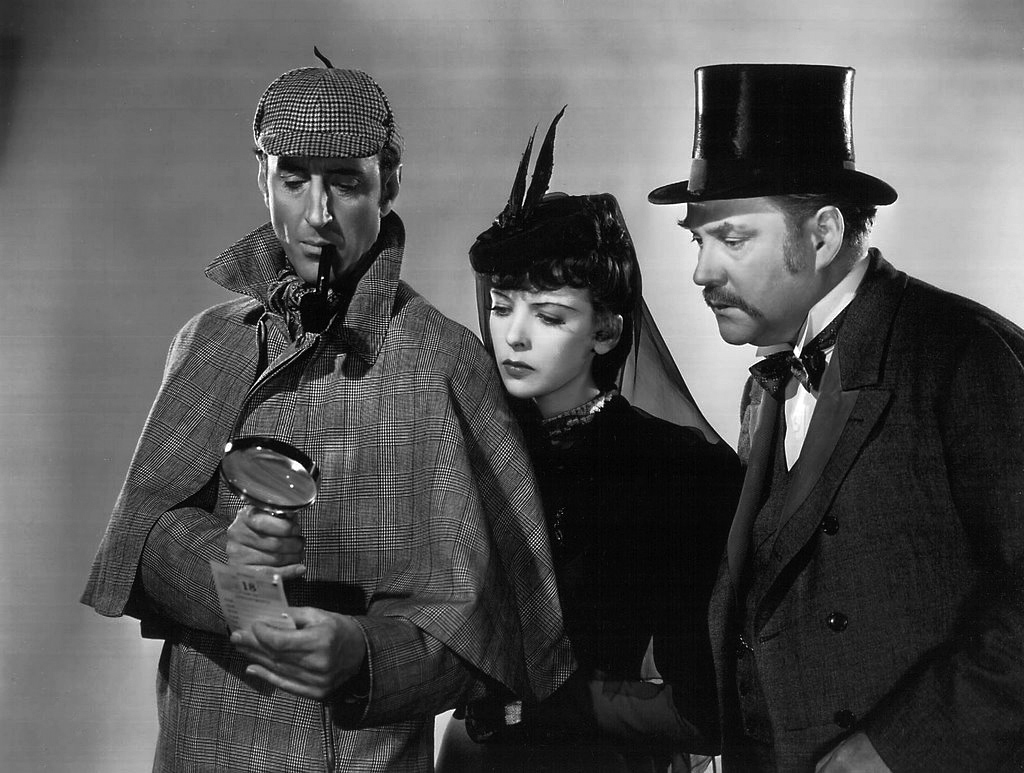
Sherlock Holmes and John Watson

This is the latest question on the Reasonable Faith Q&A section.

It says:

Hello Dr. Craig,

I have always wondered about your claim that Christianity is the only true religion (based on historical evidence as you say). But how can you be so sure when Islamic and Jewish scholars claim the same claim?

As a former atheist and now an agnostic, the question of which religion to choose is essential. I’m very well acquainted with Islamic Theology and unlike your claim. Islam affirms that Christians, Jews and Muslims worship the same god (“Allah” is not a special god for Muslims rather it’s the term for god in Arabic).

So what is your position on Islam? (And I would really like to know from who do you get your information on Islamic theology).

I also would to invest some time in Christian theology, would kindly recommend some introductory books?

I think we are going to have to work from the historical Jesus to answer this one, and we won’t be able to use the New Testament as if it is the inspired Word of God. We’ll have to use it like a history book, and see what we can get from it using the ordinary rules for doing history on ancient documents.

Here’s the best part of Dr. Craig’s answer for Islam:

The short answer to your question of why Christianity rather than Islam or Judaism, Sultan, is Jesus of Nazareth. While Judaism, Christianity, and Islam are the world’s three great monotheistic faiths, genetically related and so having much in common, what divides them is their account of Jesus. I think that neither Judaism nor Islam gives a satisfactory historical account of the person and work of Jesus of Nazareth.

[…]It is ironic that the Qur’an chooses to deny the best established fact about Jesus, namely, his crucifixion (IV.157). Not only is there not a single shred of evidence in favor of this remarkable hypothesis, but the evidence supporting Jesus’ crucifixion is, as Emory University New Testament scholar L. T. Johnson puts it, “overwhelming” (The Real Jesus [San Francisco: Harper San Francisco, 1996], p. 125). Paula Frederickson, whose book From Jesus to Christ inspired the PBS special by the same name, declares, “The crucifixion is the strongest single fact we have about Jesus” (Society of Biblical Literature meeting, November 22, 1999). The crucifixion of Jesus is recognized even by the sceptical critics in the Jesus Seminar as–to quote Robert Funk–”one indisputable fact” (Jesus Seminar video).

When we think that the Qur’an was written by a man living in Arabia 600 years after Jesus with no independent source of information about him, it really isn’t so surprising that his view of Jesus was distorted. Whatever else one might say about Islam, its view of Jesus is erroneous, and so this religion cannot be true.

And the best part of Dr. Craig’s answer for Judaism:

As for Judaism, again I should say that the decisive consideration is Jesus’ claims to be the Jewish Messiah and his subsequent resurrection from the dead. Jewish scholars are coming to recognize the historical facts undergirding Jesus’ resurrection and are hard-pressed to explain those facts apart from the resurrection. Indeed, one of their number, the late Pinchas Lapide, whom I heard lecture at the University of Munich, declared himself convinced that the God of Israel raised Jesus of Nazareth from the dead. He also thought that Jesus believed himself to be the Messiah.

The striking thing about this is that I know a Jewish guy who will debate historical Jesus with me, and he LOVES The Teaching Company (now called “The Great Courses”). I tell him that even the atheist Bart Ehrman is willing to give me the burial, the empty tomb and the post-mortem appearances of Jesus in his course on the historical Jesus for The Teaching Company. So if we are going to do some history, it’s going to be pretty awkward for the Jewish guy to come up with a hypothesis that can explain those 3 facts, not to mention the early proclamation of the first Christians that Jesus was the Messiah, even after he was executed in a shameful way. Even non-Christian sources report that. And their proclamation of the resurrection that didn’t win them any friends, let me tell you.

In the post, Dr. Craig recommended a book where he debates a Jewish New Testament scholar, edited by Paul Copan and Craig Evans. I asked my friend Eric Chabot about the book, and he said he had read it and it was “great”. So I bought it. I love debate books. I try to buy them all right away and then read them, since I like to read a fight. Somehow, this one had escaped my notice until now. If you’re interested in these issues, I recommend getting that book as well.

Economist Walter Williams explains how to not be poor

Economist Walter Williams

Here is his article on wealth and poverty on Creators.

First, there is no real poverty in the United States:

There is no material poverty in the U.S. Here are a few facts about people whom the Census Bureau labels as poor. Dr. Robert Rector and Rachel Sheffield, in their study “Understanding Poverty in the United States: Surprising Facts About America’s Poor”, report that 80 percent of poor households have air conditioning; nearly three-quarters have a car or truck, and 31 percent have two or more. Two-thirds have cable or satellite TV. Half have one or more computers. Forty-two percent own their homes. Poor Americans have more living space than the typical non-poor person in Sweden, France or the U.K. What we have in our nation are dependency and poverty of the spirit, with people making unwise choices and leading pathological lives aided and abetted by the welfare state.

Second, the “poverty” is not caused by racism, but by poor choices:

The Census Bureau pegs the poverty rate among blacks at 35 percent and among whites at 13 percent. The illegitimacy rate among blacks is 72 percent, and among whites it’s 30 percent. A statistic that one doesn’t hear much about is that the poverty rate among black married families has been in the single digits for more than two decades, currently at 8 percent. For married white families, it’s 5 percent. Now the politically incorrect questions: Whose fault is it to have children without the benefit of marriage and risk a life of dependency? Do people have free will, or are they governed by instincts?

There may be some pinhead sociologists who blame the weak black family structure on racial discrimination. But why was the black illegitimacy rate only 14 percent in 1940, and why, as Dr. Thomas Sowell reports, do we find that census data “going back a hundred years, when blacks were just one generation out of slavery … showed that a slightly higher percentage of black adults had married than white adults. This fact remained true in every census from 1890 to 1940”? Is anyone willing to advance the argument that the reason the illegitimacy rate among blacks was lower and marriage rates higher in earlier periods was there was less racial discrimination and greater opportunity?

Third, avoiding poverty is the result of good choices:

No one can blame a person if he starts out in life poor, because how one starts out is not his fault.

If he stays poor, he is to blame because it is his fault. Avoiding long-term poverty is not rocket science. First, graduate from high school. Second, get married before you have children, and stay married. Third, work at any kind of job, even one that starts out paying the minimum wage. And finally, avoid engaging in criminal behavior. It turns out that a married couple, each earning the minimum wage, would earn an annual combined income of $30,000. The Census Bureau poverty line for a family of two is $15,500, and for a family of four, it’s $23,000. By the way, no adult who starts out earning the minimum wage does so for very long.

Fourth, what stops people from making good choices is big government:

Since President Lyndon Johnson declared war on poverty, the nation has spent about $18 trillion at the federal, state and local levels of government on programs justified by the “need” to deal with some aspect of poverty. In a column of mine in 1995, I pointed out that at that time, the nation had spent $5.4 trillion on the War on Poverty, and with that princely sum, “you could purchase every U.S. factory, all manufacturing equipment, and every office building. With what’s left over, one could buy every airline, trucking company and our commercial maritime fleet. If you’re still in the shopping mood, you could also buy every television, radio and power company, plus every retail and wholesale store in the entire nation”. Today’s total of $18 trillion spent on poverty means you could purchase everything produced in our country each year and then some.

Walter Williams is one of my two favorite economists, the other being Thomas Sowell. By sheer coincidence, they both happen to have grown up poor, and they both happen to be black. They understand what causes poverty very well. I recommend their books to you if you want to understand poverty, too.

William Lane Craig answers: should Christians accept intelligent design?

Here is the question he is answer on his Reasonable Faith web site:

Dr. Craig,

First of all, I appreciate all you have done for the Kingdom of God. I pray you keep up the good work. You are someone I look up to.

I’m taking a philosophy of religion course right now, and it is very fascinating to me. I’m taking the course because I am interested in Christian Apologetics. One aspect of Christian Apologetics is to argue for intelligent design. To my surprise, my professor, who is a Christian, does not believe in intelligent design (ID). I also wanted to point out the fact that in an astronomy class my girlfriend is taking, the professor lectured on how most Christians do not believe in ID.

As I’m pondering on why my Christian professor doesn’t believe in ID and how an astronomy professor lectures on how most Christians don’t believe in ID, I start to question if I even know what ID really is.

I thought that God was the intelligent designer that we are arguing for in Christian Apologetics.

So my questions for you are:

1) What is your definition of intelligent design?

2) Is intelligent design something that Christians should believe in?

3) If Christians should believe in intelligent design, then why do some people not believe in it? Are they just confused on the meaning of intelligent design?

I appreciate your time.

Drew

Here is part of Dr. Craig’s answer:

I think it advisable to capitalize “Intelligent Design” (ID) in order to signal that we are using the words in a technical sense, rather than in the sense accepted by every Christian. Broadly speaking, we may say that ID is a theory of justifiable design inferences. That is to say, it’s a theory which seeks to answer the question: what justifies us in inferring that design is the best explanation of some phenomenon? It is obvious that we make such design inferences all the time. A teacher who finds that a student’s term paper reproduces sections from Wikipedia realizes that this is not the result of chance but of deliberate plagiarism. Archaeologists excavating a site readily discern the difference between the products of sedimentation and metamorphosis and human artifacts. A beachcomber who comes upon a sandcastle recognizes that it’s not the result of the action of the waves and the wind but of intelligent design.

Some of these inferences are so obvious that it never even occurs to us to ask why we are justified in making such inferences to design. But philosophically, it’s no trivial matter to provide a theory of what makes a design inference justified. The theory of Intelligent Design seeks to provide just such an account. As an account of justified design inferences, Intelligent Design theory is of interest to a wide variety of fields: for example, to cryptographers who are trying to discern whether a sequence of letters is just meaningless jibberish or an encoded message; to crime scene investigators who want to determine whether the fire was a result of natural causes or of arson; to searchers for extra-terrestrial intelligence who are trying to make out whether the signal they’re receiving is just random noise or a message from an extra-terrestrial intelligence, and so on and so forth.

ID theorists have offered a number of accounts of what justifies a design inference. Undoubtedly one of the most sophisticated which has been offered comes from the mathematician William Dembski in his book The Design Inference, which appeared in Cambridge University Press’s monograph series on Probability, Induction, and Decision Theory. Dembski argues that a design inference is justified when two conditions are met: first, the event to be explained is extraordinarily improbable and, second, the event corresponds to an independently given pattern.

In its most fundamental sense, then, Intelligent Design is a theory of design inferences which is applicable to a number of diverse fields. While disagreement may exist over which theory of design inference is correct, this is hardly the point at which Intelligent Design encounters heated opposition. Rather controversy arises when the theory of Intelligent Design is applied to the field of biology. For Dembski and other ID theorists have made the controversial claim that biological organisms exhibit just that combination of high improbability and conformity to an independently given pattern that justifies an inference to intelligent design. Accordingly, they maintain that we are justified scientifically in inferring that biological complexity is best explained by Intelligent Design.

We infer design in biology (e.g. – protein sequencing) the same way we infer design in blog posts, computer programs, etc.

This video featuring Stephen Meyer explains ID in 5 minutes: (H/T Evolution News)

If you want to understand intelligent design better, I recommend this lecture by Stephen C. Meyer on the origin of life.