
Category Archives: Podcasts

Cold Case Christianity podcast talks about lack of authenticity in the church

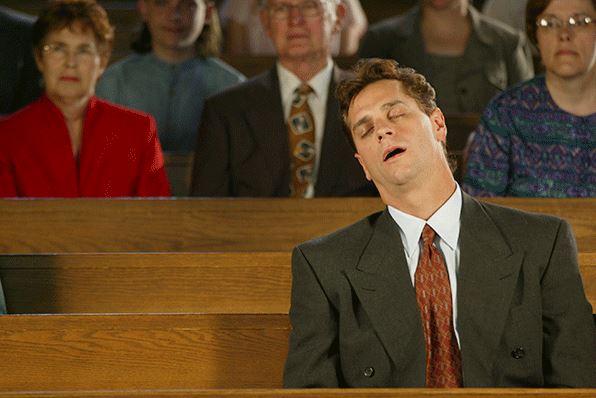
Church sucks, that's why men are bored there
Making church less boring for young people

Here’s an episode of the Cold Case Christianity podcast that I really liked. This is one you definitely do not want to miss. I wanted to summarize the first topic of three that he covers, because it’s something that’s been coming up a lot lately. Topics 2 and 3 are worth listening to, as well.

You can grab the MP3 file here.

Topic #1: Why are young people leaving church?

  • problem: not convinced Christianity is true
  • problem: apparent conflict with science
  • problem: unanswered questions
  • problem: difficulties inside the church
  • problem: the church’s (correct) position on same-sex marriage

Jim’s claim: if people do not think that the Bible is accurate and divinely inspired, then they are going to be tempted to pick and choose what to believe and what not to believe

Jim reads a blog post from a young lady who attends church, and here are her top problems with the church:

  1. you can’t ask questions
  2. you can’t voice your doubts
  3. you can’t explain your struggles
  4. you can’t confess your sins
  5. you can’t confide your fears

And she wants the leadership to be real and open about these things as well.

Wallace says that there here are two main problems that teens run into at college:

  1. intellectual skepticism
  2. selfish desires, especially in sexual areas

It’s aggravated by the hostile university setting (skeptical professors), and a culture of drinking and sex.

The university culture is offering you a worldview that makes your selfish desires more permissible and normal. Unless people have a compelling reason not to reject that, they won’t reject it. It’s the path of least resistance to conform to the expectations of your peers and professors. Our aim should be to provide young people with evidence before they face the skepticism in college.

Another major problem facing young people is the Christian position on homosexuality and gay marriage. Christian teachings on sexuality in general are viewed with suspicion, and these things are not discussed or debated in the church. One way to respond to this is to defend the reliability of Scripture. (Note: I think another way to respond is to give secular reasons for what the Bible teaches, and to help young people link their decisions about sexuality with their larger life plan).

Topic 2 was about objective vs cultural moral standards, and topic 3 was about whether different denominations differ in essentials or in peripheral issues.

My thoughts on topic #1

This week I’ve been spending time with a younger Christian discussing apologetics with her and we have had some different life experiences and she sometimes asks me to explain what happened. So I’ve been telling about some of the problems I had trying to map what the Bible says onto real life. I’m not going to post them here, but there were definitely problems dealing with my parents, my peers in school, my co-workers and church people. I kept trying to do good things, like trying to talk about my faith at work, and sometimes, very unexpected things happened to me. So telling about these struggles does convey the sort of seriousness that I think is lacking in the church environment.

So my point here is this. If you are dealing with young people, it might be a good idea to not gloss over these problems and keep everything at the surface level. Talk to them about what a Christian life should look like and the struggles you had trying to live it out. Talk to them about their plans, and how different decisions are going to affect those plans. Talk to them about their grades. Talk to them about their future profession. Talk to them about apologetics. Talk to them about politics and economics, so they know how to vote for their futures. Basically, they should have the idea that you are interested in whether Christianity is true or not, and that you are interested in them make some sort of plan to serve God and making the decisions they need to get there. You should tell young people your plan and how you are funding it and working on it, in order to prod them to make their own plan.

So if the problem is perceived lack of authenticity, then the solution is to talk to young people like grown ups and give them insight. This is my plan to serve God. This is my plan for my marriage. This is why I think Christianity is true. This is what I want my kids to end up like. This is what I want my wife to do. This is how I intend to fund all this. These are the laws/public policies that help/hurt my plan. These are the problems and struggles I’ve had implementing my plan. Here is an area where my sinfulness is really messing up my plan. When I talk to other Christians, we talk about these issues relevant to my plan.

It’s this kind of frank talk about what you are trying to do (and what role self-control plays in your plans) that helps young people to get serious about their beliefs. Don’t reduce the whole religion to rituals and feelings – it’s a mistake.


Robert Gagnon debates gay activist Jayne Ozanne on Bible vs homosexuality

Gay activist vandalizes pro-marriage sign

I am tempted to say that this is the best podcast I have ever heard on the Unbelievable show. Do anything you have to do in order to listen to this podcast.

Details:

Prof Robert Gagnon has become a well-known voice advocating the traditional biblical view on sexuality. In a highly charged show he debates the scriptural issues on sexuality with Jayne Ozanne, the director of Accepting Evangelicals who came out as gay earlier this year.

The MP3 file is here.

If you can only listen for 15 minutes, then start at 49 minutes in and listen from there.

The following summary is rated MUP for made-up paraphrase. Reader discretion is advised.

Summary:
Intro:

  • Speaker introductions
  • Gagnon: scholars who support gay marriage agree that the Bible doesn’t support it
  • Gagnon: scholars who support gay marriage agree Jesus taught male-female marriage
  • Ozanne: I went to the hospital because I was sick from trying to suppress my gay desires
  • Ozanne: Doctors told me that I would die if I didn’t act on my gay desires
  • Ozanne: I decided to reinterpret the Bible to fit with my gay desires
  • Ozanne: According to my new interpretation, Jesus actually supports my gay desires

Segment 1: Genesis

  • Ozanne: In Genesis the Bible says that Adam needs a woman to complete him
  • Ozanne: I reinterpret this to mean that Adam needed a “complementarian human being”
  • Ozanne: Genesis doesn’t say whether Eve was complemented by Adam in that chapter
  • Ozanne: It’s not critical that men are complemented by women, a man could complement a man
  • Ozanne: Genesis 2 doesn’t talk about children, it’s all about adult needs from a relationship
  • Gagnon: Genesis 2 has never been interpreted that way in all of history
  • Gagnon: Genesis 2 language specifically implies a human being who is opposite/different
  • Gagnon: Genesis 2 language translates to complement or counterpart
  • Gagnon: Genesis as a whole teaches that the sexuality is for male and female natures
  • Gagnon: The extraction of something from the man that is given to the woman is complementarian
  • Ozanne: I think that people can be complementary outside of male-female Genesis language
  • Ozanne: I don’t want to discuss specific words and texts and Greek meanings
  • Gagnon: the text has always been read and interpreted to support male/female complementarity
  • Gagnon: the male-female nature argument is made because the two natures are complementary
  • Ozanne: the text was interpreted by patriarchal males who treated women like property, it’s biased
  • Ozanne: what is important to me is how Christ interprets Genesis (?? how does she know that?)
  • Ozanne: I am passionate about my interpretation of Scripture which supports my gay desires
  • Gagnon: just because a person is passionate about their interpretation it doesn’t make it right
  • Gagnon: I am not arguing for the male-female view based on passion, but on scholarship, evidence and history
  • Ozanne: both sides are equally passionate about their interpretations (?? so both are equally warranted?)
  • Ozanne: the real question is why God “allowed” two different interpretations of Scripture

Segment 2: Is homosexuality a sin?

  • Gagnon: Jesus affirmed traditional sexual morality, which forbids homosexuality
  • Gagnon: Jesus teaches that marriage is male-female, and limited to two people
  • Gagnon: No one in history has interpreted the Bible to say that homosexuality was not immoral
  • Ozanne: Jesus came to bring life, and that means he supports homosexuality
  • Ozanne: I was dying, and embracing my gay desires allowed me to live, so Jesus approves of me
  • Ozanne: God says “I am who I am” and that means he approves of me doing whatever I want
  • Ozanne: There is an imperative to be who I am, and that means embracing my gay desires
  • Gagnon: Jesus argued that the twoness of the sexual bond is based on the twoness of the sexes
  • Gagnon: Jesus did not come to gratify people’s innate desires, he called people to repent of sin
  • Gagnon: Jesus did reach out to sinners but he never condoned the sins they committed
  • Gagnon: Jesus’ outreach to tax collectors collecting too much and sexual sinners is the same: STOP SINNING
  • Ozanne: I don’t think that Romans 1 is talking about homosexuality
  • Ozanne: I think it’s talking about sexual addiction, not loving, committed gay relationships
  • Ozanne: Paul was condemning pederasty in Romans 1, not loving, long-term, consensual sexual relationships between gay adults
  • Gagnon: nothing in the passage limits the condemnation to pederasty
  • Gagnon: the passage was never interpreted to be limited to pederasty in history
  • Gagnon: rabbis and church fathers knew about committed two-adult same-sex relationships, and said they were wrong
  • Gagnon: the argument for marriage is based on the broad two-nature argument, with no exceptions
  • Gagnon: the condemnation is not limited to exploitative / coercive / lustful / uncommitted relationships
  • Gagnon: even pro-gay scholars agree the passage cannot be interpreted Ozanne’s way (he names two)

Segment 3: The showdown (49:00)

  • Ozanne: I don’t care how many pages people have written on this
  • Ozanne: God says that “the wisdom of the wise I will frustrate” so you can’t use scholars, even pro-gay scholars, to argue against my passionate interpretation
  • Ozanne: I am not interested in the text or history or scholarship or even pro-gay scholars who agree with you
  • Ozanne: what decides the issue for me is my mystical feelings about God’s love which makes my sexual desires moral
  • Ozanne: you are certain that this is wrong, but your view does not “give life” to people
  • Ozanne: your scholarship and historical analysis is “a message of death” that causes teenagers to commit suicide (= you are evil and a meany, Robert)
  • Ozanne: “I pray for you and your soul” (= opposing me will land you in Hell) and “I hope that listeners will listen with their hearts” (?? instead of their minds?)
  • Ozanne: you can prove anything you want with research, even two mutually exclusive conclusions, so you shouldn’t rely on scholarship and research since it could be used to prove my view as well
  • Ozanne: instead of relying on research, you should rely on your heart and your feelings about God’s love to decide what the Bible teaches about sexual morality
  • Gagnon: you are distorting the gospel in order to make your case
  • Gagnon: attacking my “certainty” is an ad hominem attack to cover your dismissmal of the scholarship and history
  • Gagnon: you distort the gospel to make it seem like Christ just wants us to get what we want, when we want it, with who we want it with
  • Gagnon: Christ calls us to take up our cross, to lose our lives and to deny ourselves
  • Gagnon: you have a notion of what “fullness of life” is, but it’s not reflective of the gospel
  • Gagnon: Paul’s life was much more troubling than yours, mine or anyone else around here
  • Gagnon: Paul was beaten, whipped, stoned, poorly sheltered, poorly clothed, poorly fed, shipwrecked, and anxious for his churches
  • Gagnon: on your view, he should have been miserable and angry with God all the time
  • Gagnon: but instead Paul was constantly thankful and rejoicing to be able to suffer with Jesus and look forward to the resurrection
  • Gagnon: I have suffered too, but the suffering we go through never provides us with a license to violate the commandments of God
  • Ozanne: “the ultimate thing is what people feel God has called them to”
  • Ozanne: My goal right now is to tell young people that homosexuality is fine so they don’t commit suicide
  • Ozanne: the view that homosexuality is wrong is “evil and misguided”
  • Gagnon: the greater rates of harm in the gay community are intrinsic to homosexual unions, not caused by external disapproval of homosexuality

Segment 4: Concluding statements

  • Gagnon: gay male relationships on average have more sex partners and more STDs
  • Gagnon: female relationships on average have shorter-length relationships and more mental issues
  • Gagnon: the greater rates of harm are because there is no complementarity / balance in the relationships
  • Gagnon: everyone has some disappointment or suffering in their lives that hurts them, and that they are tempted to break the rules to fix, but we should not break the rules in order to be happy
  • Ozanne: both sides are passionate, so no one can be right, and evidence proves nothing
  • Ozanne: only feelings about “what God is doing” can allow us to decide what counts as sin or not
  • Ozanne: the main thing that is at stake here is to make people like us, not to decide what the Bible says about sin
  • Ozanne: my message to people is to do whatever you want, and ignore mean people who don’t affirm you
  • Ozanne: we should be more opposed to mean people who make non-Christians feel unloved than about doing what the Bible says

William Lane Craig lectures on failure in the Christian life

I have a key that will unlock a puzzling mystery

I found this audio on Brian Auten’s Apologetics 315 web site.

Here is the MP3 file.

And here is my summary.

Intro:

  • the topic of failure is not one that is often discussed by Christians
  • failure #1: failure in the Christian life which is the result of sin
  • failure #2: when a Christian is defeated while trying to serve God
  • the consequences for failure #1 can be worse for the Christian
  • the consequences for failure #2 can be worse for the world as whole
  • how is it possible for a person to fail when they are obeying God? (#2)
  • how can it be that God can call someone to a task then let them fail?
  • failure is not persecution – persecution is normal for Christians
  • failure is not trials – testing is normal for Christians to grow

Bill’s failure:

  • Bill had submitted all the coursework for his second doctoral degree
  • but he had to pass a comprehensive oral examination
  • he failed to pass the comprehensive exam
  • Bill and Jan and his supporters had all prayed for him to pass
  • how could God allow this to happen?

Solution to the problem:

  • God’s will for us may be that we fail at the things we try in life
  • there are things that God may teach us through failure
  • Bill learned that human relationships are more important than careers
  • we need to realize that “success” in life is not worldly success
  • true success is getting to know God well during your life
  • and failure may be the best way to get to know God well
  • it may even be possible to fail to know God while achieving a lot
  • the real measure of a man is loving God and loving your fellow man

Practical:

  • give thanks to God regardless of your circumstances
  • try to learn from your failure
  • never give up

The ending of Bill’s story:

  • Bill spent an entire year preparing for a re-take of his exam
  • Bill was awarded his second doctorate “magna cum laude” (with great distinction)
  • Bill learned that American students are not well prepared for exams
  • the year of studying remedied his inadequate American education
  • in retrospect, he is thankful for the failure – he learned more

If you like this, you should pick up Craig’s book “Hard Questions, Real Answers“, which has a chapter on this problem.