

Category Archives: Podcasts

Paul Helm debates William Lane Craig on Calvinism and Molinism

Two horses fight it out, may the best horse win!

I listened to this excellent discussion between Dr. William Lane Craig and Oxford University Calvinist philosopher Dr. Paul Helm. I think this is a useful discussion in general because atheists often bring up problems with Calvinism as objections to Christianity in general, such as:

  • If God exists, then he controls everything and I don’t have free will
  • If God knows the future, then I don’t have free will
  • If God controls everything, then I am not responsible for my sinning
  • If God has to choose me to be saved, then I am not responsible for my damnation

Details:

If God ordains the future, can humans have free will? Are people predestined for salvation? And what does the Bible say on the matter? William Lane Craig is a Christian philosopher and leading proponent of Molinism, a view of divine sovereignty that seeks to reconcile God’s fore-ordination with human free will. Paul Helm is a leading Calvin Scholar. He defends the view that  God predestines the future, limiting human freedom.

MP3 of this show: http://cdnapi.kaltura.com/p/618072/sp/61807200/playManifest/entryId/1_jn0bdo52/flavorId/0_002f1k0d/protocol/http/format/url/a.mp3?clientTag=feed:1_jlj47tkv

For William Lane Craig: http://www.reasonablefaith.org

For Paul Helm: http://paulhelmsdeep.blogspot.co.uk/ 

I was surprised because my Calvinist friend Dina thought that Dr. Helm won this debate, but I thought that Dr. Craig won. So without further ado, here is the snark-free summary of the discussion. I also sent the summary to Dina to make sure that it was reasonably fair and accurate. She said it was biased, but she was predestined to say that. Anyway, there’s a commentary on the debate over at Michael’s Theology blog. And Calvinist Remington has a podcast review in parts. Part 1 is here.

Summary: 

JB: Has Lewis had any impact on your apologetics?

Craig: Not as a scholar, but more as a model of a scholar who leaves a legacy through his published work

JB: How did you become interested in Calvinism?

Helm: Starting from childhood, and lately writing more on Calvinism from a philosophical point of view

JB: How do you view God’s sovereignty?

Helm: Strong view of divine sovereignty, God is sovereign over all events, but that doesn’t mean that they are determined by him

JB: What is Calvin’s legacy?

Helm: He amplified an existing concept of predestination, and wrote on many other topics

JB: What is Molinism?

Craig: Molina affirms divine sovereignty as Paul Helm does, but he also affirms libertarian free will

Craig: Every event that occurs happens by God’s will or by God’s permission

JB: What about open theism?

Craig: Paul and I both oppose open theism

JB: How does Molinism reconcile human free will and divine sovereignty

Craig: God has knowledge of what would happen under any set of circumstances

Craig: God has knowledge of everything that COULD happen, and he has knowledge of everything that WILL happen

Craig: God knows what each person freely choose to do in any set of circumstances and he can place people in times and places where he is able to achieve his ends without violating creaturely freedom and creaturely responsibility

JB: How does this apply to the issue of salvation?

Craig: The circumstances in which God puts a person includes God leading people to him and he foreknows who will respond to his leading

Craig: God has ordered the world in such a way that he foreknows the exact people who will free respond to his leading if he puts them in certain circumstances

JB: Does God want to save the maximum of people?

Craig: My own view is that God does order the world in such a way that the maximum number of people will respond to God’s drawing them to himself

JB: Is the Molinist view gaining ground?

Craig: Yes, Calvinists and open theists are both moving towards it, and Molinism is the dominant view among philosophical theologians

JB: Why has Molinism not convinced you?

Helm: It’s an unnecessary theory, God’s natural knowledge and free knowledge covers what middle knowledge covers

Helm: Calvinism has a stronger view of sin, such that God has to act unilaterally and irrestibly to save them

JB: Are creatures free on your view?

Helm: My view of free will is weaker than Craig’s view of free will

Craig: For the Calvinist, grace is irresistible, but for the Molinist, grace is effective when it is met with a response from the creature

Craig: The Bible affirms the strong view of free will, when it says that in certain circumstances people can freely choose to do other than they do

Helm: But if a person is in circumstances X and they are free, then why don’t they choose something that isn’t what God can foresee

Craig: In identical circumstances, a person has the freedom to choose, and God doesn’t determine what they choose, he just foreknows what they choose

Helm: How can God foreknow what people will freely do if people have this strong view of freedom that allows them to do anything? God would not know what people can freely do if they really are free

Craig: God has knowledge of what his creatures would freely do in any set of circumstances, he has knowledge of subjunctive statements

Craig: The Scripture is filled with statements that show that God has this knowledge of what people would do in other circumstances (e.g. – 2 Cor 2:8)

Helm: I am not denying that the Bible is full of subjunctive statements, but if humans have real libertarian free will, then God cannot know what they will do

Craig: I think God does preordain everything, Molinism has a strong sense of divine sovereignty BUT the foreordaining is done with the knowledge of what humans would do in any circumstances, so that what God ordains achieves his ends, but without violating creaturely free will

Craig: I take at face value the passages of the Bible where it says that God wants all persons to be saved

Craig: When the Bible says that God wants ALL persons to be saved (2 Pet 3:9), the Bible means that God wants ALL persons to be saved

Craig: So either universalism is true OR there is something that stops all from being saved outside of God

Craig: the something that prevents all from being saved is creaturely free will

Helm: Most people don’t have the opportunity to hear the gospel, so God doesn’t want all to be saved

Helm: People can still be responsible for what God “fore-ordains”

JB: Can a person really be responsible for wickedness if they didn’t freely choose it?

Helm: Even though God is the only one who can act unilaterally to make save people, the people who act wickedly are still responsible

Craig: Molinism provides an answer to the problem of why not all people have heard the gospel, because by using middle knowledge he is able to know who would respond to the gospel if they heard it and he places those people in the times and places where they will hear it

Craig: That solution means that NO ONE is lost because they have not heard the gospel

Craig: There is Biblical support for (Acts 17:27) God choosing the times and places where people will live SO THAT they will be led by him and be able to respond to his leading

JB: Is God the author of sin, on Calvinism?

Craig: If Calvinists define providence to mean causal determinism, then he is the cause of every effect including human actions, and he is the one who causes people to sin

Craig: This view (determinism) impugns the character of God

Helm: I don’t think that sovereignty requires determinism

Helm: God has mysterious resources – which I cannot specify – that reconcile his sovereignty with human responsibility for wickedness

JB: But if God is the cause of people doing wrong things, then how can they be responsible for it?

Helm: Well, humans do cause their own actions

Craig: Helm is right to say that God has resources to reconcile God’s sovereignty with free will and human responsibility, and that resource is not an unknown mystery, it’s middle knowledge

Craig: I can affirm everything in the Westminster Confession except for the one clause where they expressly repudiate middle knowledge as the mechanism for reconciling divine sovereignty and free will

Helm: Well, Calvinists have a strong view of sin so that humans cannot respond to God’s leading

Craig: Yes, and that’s why humans need prevenient grace in order to respond to him

Craig: God has to take the initiative and draw people to himself or they cannot be saved, but that grace is resistible, and that’s what the Bible teaches (Acts 7:51), so humans are still responsible if they resist God

Helm: My view of grace is that it is monergistic and irrestible, it is a unilateral action on the part of God, like pulling someone out of an icy pond which they can’t get out of

JB: If humans freely choose to respond to God’s drawing and leading, does that diminish grace?

Helm: Many are called but few are chosen

Craig: Molinism does not require synergism – which is the idea that humans are partly responsible for their salvation

Craig: In Eph 2:8, Scripture is clear that faith opposite to works, and responding to God’s drawing is not meritorious

JB: So receiving a gift is not meritorious?

Craig: It’s the passive acceptance of what someone else has done for you

Helm: But doesn’t this mean that you can lose your salvation, because you can accept and resist the gift of salvation?

Craig: That’s a separate question that Christians can differ on, but if the Holy Spirit indwells a person and seals them, then that would argue for the view that salvation cannot be revoked

JB: Doesn’t Romans 8 teach Calvinism pretty clearly?

Helm: This is called the “golden chain”, and it does support Calvinism

Craig: Actually, this text is no problem for Molinists because the first link in the chain is foreknowledge, which, if it incorporates middle knowledge, is no problem for Molinists

Craig: What God is electing in Romans 8 is a specific group of people that he knows in advance of creating the universe will freely respond to his drawing them to him

Craig: In Acts 4:27-28, it is talking about God’s foreknowledge, which involves and incorporates knowledge of what any individual would freely choose if placed in those circumstances

JB: If God actualizes a set plan with set circumstances for everyone, isn’t that very similar to Calvinism?

Craig: Yes! It’s a strong statement of divine sovereignty

Helm: Foreknowledge doesn’t mean that God knows what people would do, it’s just refering to God “knowing his own mind” about what he wants to do

JB: How do you respond to the fairness of God unilaterally and specifically choosing some people for salvation and choosing other people for damnation (because he refuses to act unilaterally for them)?

Helm: God ordinarily bypasses other people in the Bible, like when he chooses the Jews as his chosen people

Craig: The problem with that is that the Bible clearly teaches that God has a genuine will that all will be saved and he makes a genuine offer of salvation to all people

Craig: Also, just being a Jew and a member of the chosen people doesn’t mean you were saved, because some Jews rebelled against God

Craig: And there were also people outside of the Jewish people who were righteous and in a relationship with God, like Job

Helm: “the fabric of our faith” depends on God’s choice and his not-choice, it is fundamental to the Bible and to God’s character, and choosing them “effectively” (irrestibly and unilaterally)

Helm: The idea of God considering “possible worlds”, some of which are feasible and not feasible, with conflicts between the wills of free creatures in different circumstances, and then actualizing one world that achieve these ends is very messy

Craig: Some worlds may not feasible for God to create, for example a world in which everyone is saved – it is logically possible, but may not be feasible

Craig: God will not exercise any divine coercion to force people to go to Heaven against their own will

Helm: If God chooses a world because it is feasible, then he doesn’t love me directly, he is choosing a world, not individuals

Craig: Well, when God actualizes a world, he specifically knows which individuals will be saved within that world, but without disrespecting free will

Craig: The world isn’t primary, the individuals are primary

Helm: I think that middle knowledge can he included in God’s natural knowledge and free knowledge

Craig: The knowledge of what people would do in different circumstances is based on the freedom of the individuals

JB: Make your conclusions!

Craig: Molinism is a Biblical model for reconciling divine sovereignty with human freedom

Helm: It is intellectually mystifying to introduce this strong view of human freedom and it is not Biblical

William Lane Craig asks: are there objective truths about God?

A conflict of worldviews

In a lecture entitled “Are there Objective Truths About God?”, philosopher William Lane Craig discusses the problem that Christians face when they make truth claims about God to non-Christians. We think that there are objective truths about God – that there are some propositions that describe the way God really is, in reality. We think that people who don’t believe in those objective are factually wrong, in the same way that someone who thinks that Toronto is the capital of Canada is factually wrong.

But some people want to say that every statement about God is true “for each person” – so that conflicting claims about God are fine and no one is wrong. This could only be the case if everyone is just describing their own preferences, though – if they are making subjective claims about themselves, and not objective claims about God. Unfortunately, Christianity claims to be true for everyone – (e.g. – God is three persons and one being), so that Christians are committed to defending the idea that there are objective truths about God.

Here’s the link to a page containing the lecture audio. (H/T Be Thinking)

The MP3 file is here.

So what questions does Bill answer in the lecture?

What is a self-refuting statement?

The main concept in the lecture is self-refutation. A self-refuting sentence is a sentence that, if true, makes itself false or meaningless. For example, suppose someone said to you: “there are no sentences longer than 5 words” then that would be self-refuting since it falsifies itself. Bill argues that objections to the idea that there are objective truths about God are all self-refuting.

What is truth?

Craig holds that “truth” is a property of a proposition such that a proposition is true if it corresponds to the external world. For example, if I claim that there is a crocodile in your closet and we find a crocodile in your closet, then my statement was true. If there is no crocodile in your closet then my statement was false. The real objective world out there is what makes propositional claims true or false – these are not claims about an individual’s preferences, they are claims about the world. Bill is concerned with truth claims about God that are objective – whether there are propositions about God that are true regardless of what anyone thinks.

Objections to objective truth

Bill discusses 3 objections to the idea that there are objective truths about God. Each objection seeks to make religion subjective, (true for each person, like food preferences or clothing fashion).

Objection #1:The Challenge of Verificationism

The first challenge is that religious claims cannot be verified using the 5 senses, and therefore religious statements are objectively meaningless.

Consider the statement “Only propositions that can be verified with the 5 senses are meaningful”. That statement cannot be verified with the 5 senses. If the statement is true, it makes itself meaningless. It’s self-refuting.

Objection #2: The Challenge of Mystical Anti-Realism

The second challenge is that religious claims, and claims about God, are neither true nor false.

Consider the statement “Propositions about God cannot be true or false”. Craig asks – why should we accept that? Any reason given would have to assert something about God that is true or false, and those reasons would contradict the original statement. For example, “God is too great to be grasped by human categories of thought” is a proposition about God that the speaker thinks is true, which contradicts the original assertion.

Objection #3: The Challenge of Radical Pluralism

The third challenge is that each person invents an entire reality of their own, and that there is no mind-independent objective world shared by individuals.

Consider the statement “There is no objective reality shared by all individuals”. That statement is a statement that applies to all individuals, regardless of what they think.  It’s self-refuting.

Conclusion

Craig ends the lecture by arguing that it is OK for Christians to think that other people’s views are false. It does not follow that just because someone thinks other people’s views are wrong that they am going to mistreat other people. In fact, in Christianity it is objectively true that it is good for Christians to love their enemies. It is objectively true that all human beings have value, because human beings are made by God. So even if Christians disagree with others, they still treat them well, because they think that there are moral truths that they have to conform to.

My thoughts

Sometimes, non-Christians think that it is dangerous to hold beliefs too strongly. But I think what really matters is the content of the belief – some beliefs are false and some are true – you want to believe the true beliefs as strongly as you can, as long as the evidence warrants it. In Christianity, I am absolutely obligated to treat people with whom I disagree with respect and gentleness (1 Pet 3:15-16). The more convinced I am about that belief, the better my opponents will be treated. A stronger belief in Christianity means more tolerance for those who disagree.

Why do non-Christians get so offended when Christians claim to be right about there being only one way to be rightly related to God? Well, for many it’s because their worldview is a personal preference, and they feel uncomfortable having to defend it rationally and evidentially. For most people, religion is just their cultural preference – like cooking style, or favorite sport, or clothing style. That’s why they respond to your truth claims with name-calling like “you’re intolerant” and “you’re judgmental” and “you’re arrogant”. These are just shorthand ways of saying, “I’m offended that you’ve thought things through more than I have, and now I look dumb”. My family is from a non-Christian culture, so I have to talk to my relatives about this all the time. They feel judged, but it’s not my fault that they haven’t done any homework to prove out their beliefs.

I got this “you’re mean” reaction a lot from people who are raised to think that their religion is a racial, national or cultural identity. They think that if you tell them they are wrong  on matters of fact that somehow this amounts to some sort of racism or prejudice. You make factual claims, and they hear discrimination. But that’s not how Christians think of religion – we only care if it’s true or not – just like we care whether the claims of history or science are true or not. We not trying to be mean, any more than it’s mean to say things like “water boils at 100 C”. That’s just the way it is, and we’re more than happy to discuss the reasons why we think that, and to look at your reasons to see why you don’t think that.


Scott Klusendorf defends the pro-life view on the Unbelievable radio show

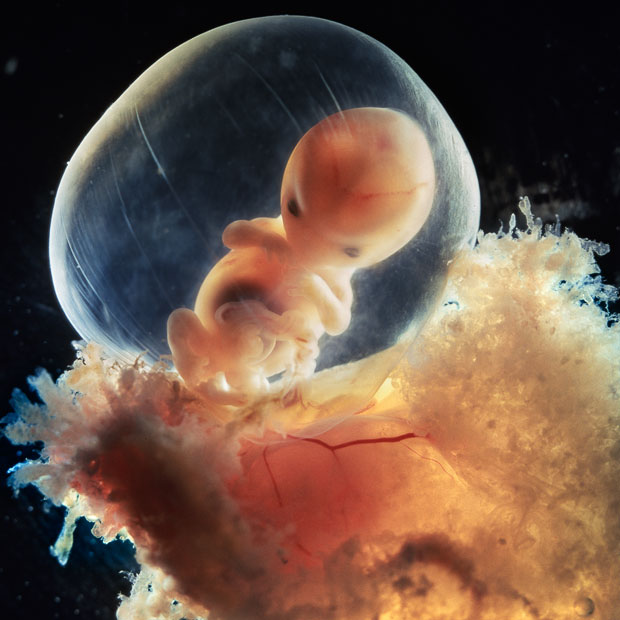
I'm Scheming Unborn Baby, and I approve of incrementalism
I’m Scheming Unborn Baby, and I approve of this debate

Here are the details:

The abortion debate reared its head again this summer after controversial tweets by Richard Dawkins made the news.

Justin hosts a discussion between Mara Clarke of the Abortion Support Network and Scott Klusendorf of the Life Training Instititute. Mara believes women need to be decide whether to terminate a pregnancy, but Scott says that all depends on whether we are dealing with a human life in the womb.

MP3 of this show:

http://cdnapi.kaltura.com/p/618072/sp/61807200/playManifest/entryId/1_ggc953xi/flavorId/1_vto2eisb/protocol/http/format/url/a.mp3?clientTag=feed:1_jlj47tkv

My snarky paraphrase of the debate (not exact):

  • Speaker introductions
  • Klusendorf: no justification for abortion is necessary if the unborn are not human
  • Klusendorf: we need to address the issue “what is the unborn?” Are the unborn human?
  • Klusendorf: SLED: size, level of development, environment, degree of dependency
  • Klusendorf: None of these things affect the value of a human being
  • Klusendorf: Even if we don’t KNOW whether the unborn is human
  • Mara: I’m not going to debate when life begins
  • Mara: Women know when life begins by feelings
  • Mara: The moral decision is “whether I can take care of this child?”
  • Brierley: When is an unborn being human?
  • Mara: I refuse to debate that – the real question is whether women want their babies or not
  • Mara: Forced pregnancy is not OK
  • Brierley: Could your justification for abortion (not wanting to care for a child) work through all 9 months?
  • Mara: Late term abortions are rare, so I don’t have to answer that question
  • Mara: Abortion should be OK through all 9 months of pregnancy because women cannot be restricted
  • Mara: Some women are poor, they need to be able to kill expensive babies at any time
  • Klusendorf: although she says she won’t debate the unborn, she does take a position
  • Klusendorf: she assumes the unborn is not human, because she says that insufficient funds is justification for abortion
  • Klusendorf: no one argues that you can kill a two year old because they cost money, because she thinks they are human
  • Klusendorf: she is begging the question by assuming the unborn are not human, but that is the issue we must resolve
  • Klusendorf: I am pro-choice on many other things, e.g. women choosing their own husbands, religion, etc.
  • Klusendorf: Some choices are wrong – Mara might be right, but she needs to make the case for the unborn not being human
  • Brierley: What is your reason for thinking that an unborn child is different from a 2-year old?
  • Mara: An unborn child is not the same as a 2-year old, in my personal opinion
  • Mara: I am not a debater, so I don’t have to provide reasoning for my assertion, I just feel it
  • Mara: Not everybody agrees with Scott, they don’t have to have a rational argument, they just need to feel differently
  • Mara: From my experience, when a woman doesn’t want to be pregnant, then she should be able to not be pregnant
  • Mara: Women shouldn’t be punished with a baby that she doesn’t want, even if she chooses to have recreational sex
  • Brierley: What do you think of women who think the unborn is human and do it anyway?
  • Klusendorf: It’s interesting that they never kill their toddlers for those reasons
  • Klusendorf: I layed out scientific and philosophical reasons for the humanity of the unborn
  • Klusendorf: Her response was “but some people disagree with you”
  • Klusendorf: People disagreed about whether slavery was wrong, or whether women should be able to vote
  • Klusendorf: that doesn’t mean there is no right answer – the right answer depends on the arguments
  • Klusendorf: if absence of agreement makes a view false, then it makes HER pro-choice view false as well
  • Klusendorf: she did make an argument for the unborn child having no rights because of the location
  • Klusendorf: she needs to explain to us why location matters – what about location confers value
  • Mara: I’m not going to let Scott frame my debate for me!!!
  • Mara: women get pregnant and they don’t want their babies! should we put them in jail!!!!
  • Klusendorf: I didn’t just give my opinion, I had science and philosophy, the issue is “what is the unborn?”
  • Mara: philosophical and scientific debates are unimportant, I am an expert in real women’s lives
  • Klusendorf: Which women? Women in the womb or only those outside the womb?
  • Mara: Only those outside the womb
  • Klusendorf: Only those outside the womb?
  • Mara: Women living outside the womb have a right to kill women inside the womb – women have bodily autonomy
  • Klusendorf: then does a pregnant woman with nausea have a right to take a drug for it that will harm her unborn child?
  • Mara: Unborn children are only valuable if they are wanted, unborn children only deserve protection if they are wanted
  • Mara: There are restrictions on abortion – you can’t get an abortion through all nine months in the US
  • Mara: There is a 24-week limit in the UK as well
  • Klusendorf: There are no restrictions on abortion that conflict with “a woman’s health” because Supreme Court said
  • Mara: where are these late term abortion clinics?
  • Klusendorf: (he names two)
  • Mara: that’s not enough!!! we need more! where is there one in Pennsylvania?
  • Klusendorf: well, there used to be Gosnell’s clinic in Pennsylvania, and you could even get an infanticide there….
  • Brierley: What about Dawkins’ view that it is moral to abort Down’s Syndrome babies?
  • Klusendorf: he is ignoring the scientific case and philosophical case for the pro-life
  • Klusendorf: the pro-life view is a true basis for human equality

What I wanted Scott to ask was whether sex-selection abortions were OK with her. Since her reasoning is “if it’s unwanted, it has no rights”, then that would mean sex-selection abortions are just fine. That’s what a UK abortion expert recently argued. And I also posted recently about how sex-selection abortions are not prosecuted in the UK. If you’re looking for a war on women, there it is.