
Category Archives: News

Has the case against same-sex marriage strengthened or weakened over time?

Just over 14 years ago I first wrote my first long essay against same-sex marriage. I was still new at making the case, but I did my best. Sadly, we lost. I think we lost because Christians were not being equipped to make a case for natural marriage that would be convincing to non-Christians. If we want to live in a society that protects children, we have to be able to do that.

Before we begin, it’s worth reviewing why the government has an interesting in recognizing marriage as distinct from other relationships. The state recognizes natural marriage as valuable because the state has an interest in what marriage produces, namely, children who are raised in a stable environment.

Natural marriage is built on the norms of gender complementarity, exclusivity and permanence. It’s the coming together of a man and a woman that creates children. And when the children are created, each biological parent has an allegiance to that child, because they contributed to that child’s DNA. And who else but the biological parents will have a stronger interest in the well-being of their own child?

Stability is achieved because of the norms of exclusivity (fidelity) and permanence (commitment). In a properly functioning marriage, the adults give up some of their own freedoms in the short term in order to provide the children with long-term stability. And government used to give a special status to relationships that gave children that stabiliity.

In my original post, I talked about how the normalizing premarital sex and legalizing no-fault divorce would harm children. Same-sex marriage came after, and it also harms children. And some new articles pick up on that theme with new evidence.

Here’s an article from Katy Faust, published in The Blaze. She writes about how parents are now assigned by the state:

Since 2015, activists have been arguing state by state that equality requires making parenthood gender-neutral and elevating “social parents” (unrelated adults in the home who have not undergone background checks). Fathers have been legally erased from birth certificates to accommodate “two moms” and vice versa. Activists have insisted on requiring insurance or the government to fund the creation of fatherless and motherless children. Biology and adoption are bypassed in favor of “intent-based” parenthood. Giving same-sex couples equal access to the marital “constellation of benefits” denied children equal access to their own mother and father.

What happened to the idea of two people with two different natures coming together to commit for life, in order to have and raise children? It’s gone. Now, children are lower than pets. No one is thinking about God’s design for getting men and women to work together to care for their children. Now people are in it for themselves, and children are just expendable accessories.

Katy’s article talks about the cataclysmic effects that undoing the complementary genders norm had on the schools. Schools don’t talk about mothers and fathers. In fact, they indoctrinate kids to think that mothers and fathers are not even normal for marriage and family. Public libraries promote books to children to make them feel bad about needing to be loved by their father and mother. All in the name of “don’t judge”.

Katy also notes:

The culture shift and the legal restructuring contributed to a booming fertility market. Surrogate pregnancies more than doubled from 2.2% in 2011 to 4.7% in 2020. Fertility clinics often direct gay couples to surrogacy grants in the name of “equitable access to parenthood.”

These children did not lose their mothers to tragedy. They lost their mothers to adult “equality.”

Many children are not growing up with a mother and father in the home. By the way, Katy had a civil debate with a gay activist in Australia, and you might like to watch it if you want to debate this issue well.

The second article from First Things talks more about how children are affected:

The overwhelming desire to be connected to one’s biological parents is evident in the 70 percent of donor-conceived adults who believe they have been harmed by not knowing the identity of a biological parent. Seventy-seven percent agree that a sperm or egg donor is “half of who I am,” and 86 percent believe that a biological parent’s information belongs to the adult child.

These are not abstract trends; they negatively impact children every day.

That article also notes how the same-sex marriage has caused all sorts of bad effects on society. Now that relationships are about adult selfishness, people just don’t even bother marrying before they have kids.

Look at this:

[A] historically low marriage rate: An all-time low of 46.8 percent of households were headed by a married couple in 2022.

And this:

[A] historically low birth rate: Live births decreased nearly 9 percent from 2014, the year before Obergefell was decided, to 2019, the year before Covid-19 decreased live births even further.

And this:

Third, young people are increasingly confused about their identity: Americans aged eighteen to twenty-four who identify as transgender increased 422 percent from 2014 to 2023.

It’s not just kids that are affected, it’s society as a whole. It will result in a drop in tax revenues, which are used to pay for social programs. And we will get a drop in workers in sectors like energy, health care, and other critical industries.

My thoughts

I don’t have any experience raising children, but I do have experience with parrots. My family had several, back where I immigrated from. And I know that parrots need to have stability in order to be happy. They need to feel that if they call, their humans will come. They don’t like to move to a different house. They don’t like the furniture to move. They like routines and they like head scratches, but they have to trust you first. I remember being in grad school, and calling home from the computer lab to check on the parrot, because I didn’t trust my lazy, selfish older brother to monitor the bird while I was gone. The TSA staff at my local airport in the US got so used to me bringing home balsa wood blocks and California Spray Millet that they would call me “The Parrot Guy”.  Parrots are so little. They need the bigger people to look after them!

I just cannot imagine how people could want children, and then not understand children need stable relationships with their real mother and father! We have so much evidence showing the effects of divorce on kids, and the effects of same-sex parenting on kids. We need marriage to be child-focused, not adult-focused.

If you want to hear Rose and I talk about it, we did an episode. Audio is here.

And we did an episode with Frank Turek. Audio is here.
Michael Egnor debates the nature of mind with Christof Koch and Michael Shermer

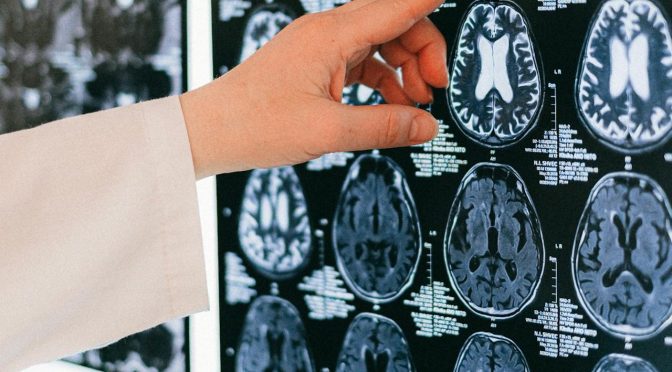
A little while ago, we welcomed Dr. Michael Egnor and Denyse O’Leary onto the Knight and Rose Show to discuss their new book “The Immortal Mind: A Neurosurgeon’s Case for the Existence of the Soul”. Desert Rose and I really had fun interviewing them, and their book has gotten rave reviews from our friends. But Dr. Egnor has also been going into hostile forums to defend his views.

Let’s start with the first one. Michael Shermer is a well-known skeptic (I would say atheist) who occasionally interviews people who disagree with him, such as Dr. Stephen C. Meyer.

Well, he moderated a discussion with Dr. Egnor and an opponent, neuroscientist Christof Koch:

This was a cordial debate where Dr. Egnor answered specific cases from the field of neuroscience that challenged his views.

But a more recent debate on the Piers Morgan show featured Dr. Egnor facing off against Dr. Michael Shermer:

In this one, the main topic was near-death experiences and terminal lucidity, both of which were brought up in our episode of the Knight and Rose Show. Those are two good pieces of data that I think refute the materialist view of mind, which holds it to be identical to the brain.

Sadly, on a show like that, they tend to focus on a small number of topics, which is why I recommend our episode that was published on May 31st, 2025.

We covered those topics, and many more:

In our episode, we discussed:

  • Dr. Egnor’s experiences as a neurosurgeon, especially cases where there was significant brain loss, but no loss of mental capacities
  • different views of mind: materialism (mind is brain), substance dualism (mind as separate substance), Thomistic dualism (mind and brain integrated but separable), and idealism (everything is mind)
  • Wilder Penfield’s research on epilepsy patients, which showed the limits of brain stimulation, and also supported free will
  • how split-brain surgeries give support for a unified, immaterial mind
  • Benjamin Libet’s free will experiments that showed the existence of “free won’t”, giving more support to an immaterial mind
  • cases of conjoined twins that share brain structures but have different personalities
  • near-death experiences, especially the Pam Reynolds case, which strongly supports the idea of an immaterial mind that survives while the brain is inactive
  • how computers cannot develop consciousness or free will by adding computational power
  • how the human mind does not have an evolutionary pathway of gradual development
  • cases of terminal lucidity, where a patient who had previously shown diminished mental processing due to brain damage suddenly regains their clarity

So, if you haven’t been following this new argument against naturalism, it might be a good idea to either listen to our episode, or if you are a fan of one of the skeptics, then listen to one of the debates. The book “The Immortal Mind” has many, many more details than our podcast episode.

I am always happy to add to my list of arguments for theism, and against naturalism.

So far, I have:

    • origin of the universe
    • cosmic fine-tuning
    • information in the origin of life
    • irreducible complexity and molecular machines
    • biological big bangs in the fossil record
    • habitability – discoverability correlation
    • first-person consciousness and free will
    • moral realism and objective moral values

Does anyone know any others that I can add to this list? No philosophical arguments! Except the moral argument! Philosophy is just too squishy for engineers. I like hard evidence when I’m making a positive case! Run up the score!

Are the Galapagos finch beaks evidence of Darwinian evolution?

Were you taught in biology class that the changing lengths of finch beaks was a good proof of Darwinian evolution? Many students were… but is it true?

Jonathan Wells has an article about it at Evolution News.

It says:

When Charles Darwin visited the Galápagos Islands in 1835, he collected specimens of the local wildlife. These included some finches that he threw into bags, many of them mislabeled. Although the Galápagos finches had little impact on Darwin’s thinking (he doesn’t even mention them in The Origin of Species), biologists who studied them a century later called them “Darwin’s finches” and invented the myth that Darwin had correlated differences in the finches’ beaks with different food sources (he hadn’t). According to the myth, Darwin was inspired by the finches to formulate his theory of evolution, thoughaccording to historian of science Frank Sulloway “nothing could be further from the truth.”

In the 1970s, biologists studied a population of medium ground finches on one of the islands in great detail. When a severe drought left only large, hard-to-crack seeds, 85 percent of the birds perished. The survivors had beaks that were about 5 percent larger than the average beak size in the original population. The biologists estimated that if similar droughts occurred once every ten years, the population could become a new species in only 200 years. In a 1999 booklet defending evolution, the U.S. National Academy of Sciences called the finches “a particularly compelling example” of the origin of species.

But after the drought, birds with smaller beaks flourished again, and the average beak size of the population returned to normal. No net evolution had occurred. No matter; Darwin’s finches became an icon of evolution that is still featured in most biology textbooks.

In the 1980s, a population of large ground finches, with larger beaks than the medium ground finches, migrated to the island. When a drought in 2004-2005 again reduced the food supply, the medium and large ground finch populations both declined. But since even the largest beaks among the medium ground finches were no match for the beaks of the large ground finches, the latter pretty much monopolized the larger seeds and the former had to make do with smaller seeds. This time, the medium ground finches that survived the drought had beaks that were smaller than the average size in the original population. Biologists studying the finches argued that birds with smaller beaks were better able to eat the tiny seeds that were left after the large ground finches ate the big ones, and they concluded that this was again an example of “evolutionary change.”

[…]Wait a minute. Average beak size increased slightly during one drought, only to return to normal after the rains return. Then average beak size decreased slightly during another drought. A region of DNA is correlated with beak size. And somehow that tells us how finches evolved in the first place?

There is an important distinction to make between micro-evolution and macro-evolution. Changes within a type is micro-evolution. Evolving a new organ type or body plan is macro-evolution. There is plenty of evidence for micro-evolution, but no evidence for macro-evolution.

What needs to be proven by the Darwinists is that the same process that results in different average beak size in a population of finches after a drought can create the finches in the first place. I think that Darwinists are credulous – they believe what they want to believe because they want to believe it, even if the evidence is incredibly weak. Darwinists must demonstrate that heritable variations can result in the generation of new organ types and body plans. Changes in average beak size is not interesting. What is needed is to show how the beaks, much less the wings, evolved in the first place.

Icons of Evolution

Jonathan has actually written about a number of  misleading things that you may mind in Biology textbooks.

Here are the sections in his book “Icons of Evolution“:

  • The Miller-Urey Experiment
  • Darwin’s Tree of Life
  • Homology in Vertebrate Limbs
  • Haeckel’s Embroys
  • Archaeopteryx–The Missing Link
  • Peppered Moths
  • Darwin’s Finches
  • Four-Winged Fruit Flies
  • Fossil Horses and Directed Evolution
  • From Ape to Human: The Ultimate Icon

Dr. Wells holds a Ph.D in Molecular and Cell Biology from the University of California at Berkeley.