Clint Eastwood’s “American Sniper” has wowed American audiences, but for one short week it also thrilled crowds in Baghdad.
Iraq’s upscale Mansour Mall played the film for one week before the controversy surrounding the film prompted management to end showings.
“Some people watching were just concentrating, but others were screaming ‘[expletive], shoot him! He has an IED, don’t wait for permission!’” said moviegoer Gaith Mohammed, the Global Post reported Wednesday. “I love watching war movies because especially now they give me the strength to face [the Islamic State].”
[…]Mr. Mohammed, asked by the newspaper if he agreed with some Western reviews that labeled the movie racist, replied, “No, why? The sniper was killing terrorists, the only thing that bothered me was when he said he didn’t know anything about the Koran!”
A government ministry employee told the Post he didn’t enjoy the film, taking umbrage with the first scene and what he considered the movie’s overall anti-Muslim overtones.
“The sniper, he has a chance to hit the child and his mother in their foot or anywhere without killing them, but he didn’t because he’s bloodthirsty like all the American troops,” said Wael, who declined to give his last name, the newspaper reported. Wael added that he had seen the film three times.
“American Sniper,” which stars Bradley Cooper, has made $257 million worldwide in two weeks of release. The film, which has garnered six Oscar nominations, including Best Picture, was made on a budget of $58 million.
Hilarious that Iraqis are less consumed by race than leftists on an American university campus.
I do have a point to make about this. I wonder if people realize that the reason why so many Muslim countries don’t like us is because they are forming their impressions from anti-morality made by immoral Hollywood secular leftists? If you put out a decent movie that looks realistic and shows Americans taking care of evildoers, people in other countries are going to like us a lot more.
If you haven’t seen American Sniper, what are you waiting for? Go see it!
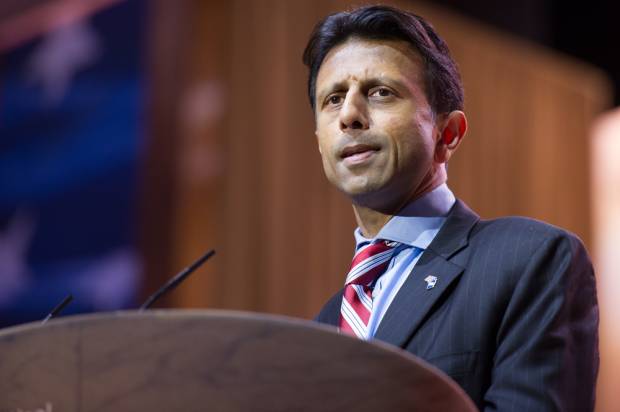
This is an editorial from the Washington Examiner, authored by school choice champion Bobby Jindal.
What is school choice?
On the most basic level, school choice represents the freedom to choose — empowering parents to select the best educational options for their sons and daughters. That could be a charter school, a private school, a religious school, home schooling, or even online learning. Governments should provide parents with the personalized and individualized tools they need to help their children excel academically.
That freedom to choose in turn will provide children with the freedom to succeed. With the right educational environment, teachers and academic training; students from all locations, income brackets and demographic groups will have better tools to compete in the global economy. We need to develop the talents of every American — no matter where he or she is from, and no matter the color of his or her skin — to maximize our country’s potential.
School choice also serves another important purpose — freeing low-income children from failing schools. No child should see his God-given talents go to waste because he is stuck in a failing school — and no parent should face the disempowerment that comes from knowing her son or daughter remains trapped in a poor school, and she lacks the financial means to move that child elsewhere. We can do better — and, by allowing parents dissatisfied with their school to move with their feet, school choice gives both high-performing and low-performing schools more incentive and motivation to improve their offerings.
Finally, school choice provides parents with freedom from the status quo — an educational-industrial complex that thinks bureaucrats, not parents, can best make decisions about the lives and futures of America’s children. It’s about pushing back when the then-head of Louisiana’s largest teachers’ union said low-income parents had “no clue” how to choose the right school for their children. And it’s even about standing up to the Attorney General of the United States, when the Department of Justice asked a court to block Louisiana’s school scholarship program on civil rights grounds — even though 90 percent of the program’s participants come from racial minority groups.
I don’t like people who talk conservative but govern liberal. I want to see the achievements.
The numbers:
For here in Louisiana, we’ve put those principles to practice. Since we removed the cap on charters in 2009, we’ve authorized almost 200 charter schools throughout the state — that’s 70,000 kids who now have a choice about where they go to school. This last year, our Recovery School District became the nation’s first school district with 100 percent charter school enrollment. And the results are dramatic: The graduation rate in New Orleans has increased from 54.4 percent before Hurricane Katrina in 2004 to 72.8 percent; the percentage of New Orleans students scoring basic and above has increased from 35 percent to 63 percent; and the percentage of failing schools in New Orleans has dropped from 67 percent in 2005 to 17 percent.
We expanded our school choice scholarship program, which was initially confined to New Orleans, statewide. Parental satisfaction with the statewide scholarship program stands at a whopping 91.9 percent. We went even further though and created a dollar for dollar rebate for donations used to fund nonpublic school scholarships low-income students through our “school tuition organizations.” Between 2008 and 2013, the percentage of students in the scholarship program who are proficient in third grade English language arts has grown by 20 percentage points and in math by 28 percentage points. Again and again, we’ve proven that giving more choice to parents is not only vital, but it gets results.
We also expanded access to online and dual enrollment courses for students across the state. This year, we’ve had over 19,000 students take advantage of our Course Choice program enrolling in advanced placement courses and career and technical courses that they otherwise wouldn’t have access to.
He’s in my top 2 for the 2016 presidential race, along with Scott Walker.
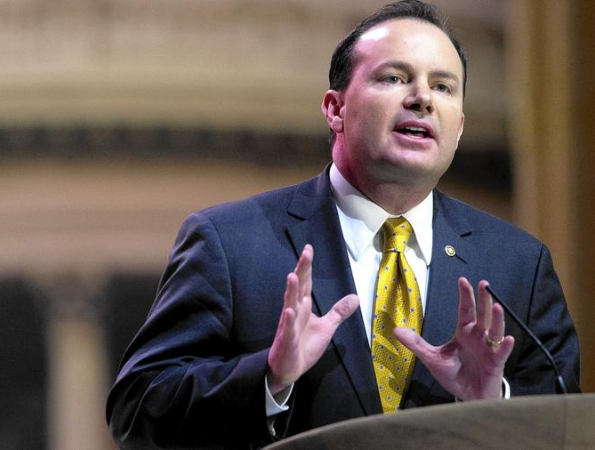
I’d like to see school choice enacted at the federal level, and fortunately, Utah Senator Mike Lee has the same idea.
I recently introduced in the Senate a bill that would empower the people most acutely committed to the quality of our education system: America’s moms and dads. My colleague on the other side of the Capitol, Rep. Luke Messer, R-Ind., has introduced a companion bill in the House.
By giving parents more power to invest in their child’s education and to choose what school best meets their needs, the Enhancing Educational Opportunities for All Act takes an important step toward restoring accountability to our public education system—something that has been missing for far too long.
Under our current system—which has remained essentially unchanged since President Lyndon B. Johnson signed the 1965 Elementary and Secondary Education Act—most parents are powerless to influence the quality of their child’s education.
What occurs in public school classrooms around the country—what teachers teach and how they teach it—is the result of a long, convoluted, bureaucratic chain of command that zigzags its way from Washington to local school districts, but never includes parents.
First, Congress passes legislation authorizing federal bureaucrats to establish rules, regulations, and standards with which states must comply in order to receive federal education funds.
Next, state officials refine—or in some cases distort—these Washington directives, writing narrower rules for their school districts, which then establish the specific policies for individual schools.
At no point in this decision-making process are parents consulted.
Instead, they are left with a “take it or leave it” choice: either accept the education offered at the local public school—no matter how bad it may be—or buy a better alternative, by moving closer to a better school or paying private school tuition.
For America’s most affluent families, this is no big deal—they can afford private schools and so have the power to choose the school that is best for their children. For everyone else, it precludes parents from making choices about their children’s education.
So our bill would expand school choice to all parents, regardless of socio-economic status or zip code, by allowing federal “Title I” K-12 support funds to follow low-income students to any public or private school of their choice.
It would also remove the contribution limits on Coverdell education savings accounts and allow “529” account funds to cover K-12 education expenses.
Our bill would give working parents more opportunities to invest in a variety of learning services and products outside the classroom, such as tutoring, online courses and textbooks.
The problem facing our public school system today is not about a lack of money—we have nearly tripled our investments in elementary and secondary students since 1970. The problem is dysfunctional government policy—however well intentioned—and a lack of accountability.
And that’s exactly what we should expect when Washington bureaucrats have more control than parents over a child’s education. We have a moral and economic obligation to flip this equation and put parents back in the driver’s seat.
For when we tolerate a system in which the quality of a child’s education depends on her parents’ zip code, we fail to live up to the ideals at the heart of American exceptionalism.
And when millions of children learn from a young age not to dream big, but to surrender to the hopelessness of low expectations, we will live in a society where upward mobility is no longer rule but the exception.
We can and we must do better.
If a school is failing – and they often are, especially in poorer areas – then shouldn’t parents have the ability to send their kids to a better school? When I want to buy something online, I know I can always do better by comparing prices and reviews. Competition between suppliers drives prices down, and raises quality up. The customer is king in the free market. It can work in education, too.
What kinds of bills do Republicans pass? Let’s take a look at a couple.
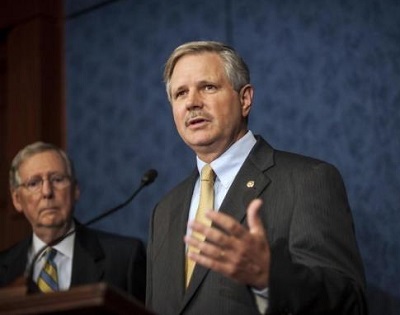
The first story is about North Dakota Republican Senator John Hoeven, and it’s from the Washington Times.
North Dakota Senator John Hoeven (right)
Excerpt:
Senators approved the Keystone XL pipeline in a momentous vote Thursday as nine Democrats bucked their party leaders and joined Republicans in backing the long-stalled project, setting up an eventual showdown with President Obama, who has vowed a veto.
The vote marks the first major accomplishment for the Senate Republican majority, who carefully selected the pipeline to put at the top of the agenda in hopes of preparing Democrats for even bigger tests with Mr. Obama.
“This took a bipartisan effort to get done. That’s what the people want,” said Sen. John Hoeven, the North Dakota Republican who sponsored the legislation.
The 62-36 vote is a high-water mark for the pipeline, which had never before cleared the Senate on a binding vote, and just two months ago fell to a Democratic filibuster.
The bill still must be combined with a House version that passed the chamber this month before it heads to Mr. Obama.
This is a bill that creates jobs, lowers the price of gas, makes us less dependent on foreign sources of oil and it doesn’t harm the environment.
Having a job is good because when you earn your own success, you are usually happier than you would be receiving money from the government. Lower gas prices are good, because you can spend the money you safe on useful things, like date night with your wife, or maybe a gift for your mom or dad. Making us less dependent on foreign oil is good, because some of these nations we buy oil from don’t like us very much, and that’s putting it nicely. We really should not be buying oil from Venezuela, for example. And finally, it’s a good idea to conserve nature as it is, because we all like animals, trees, flowers, etc., and we should keep it all clean. A pipeline is safer for moving oil than using trains – fewer environmental disasters.
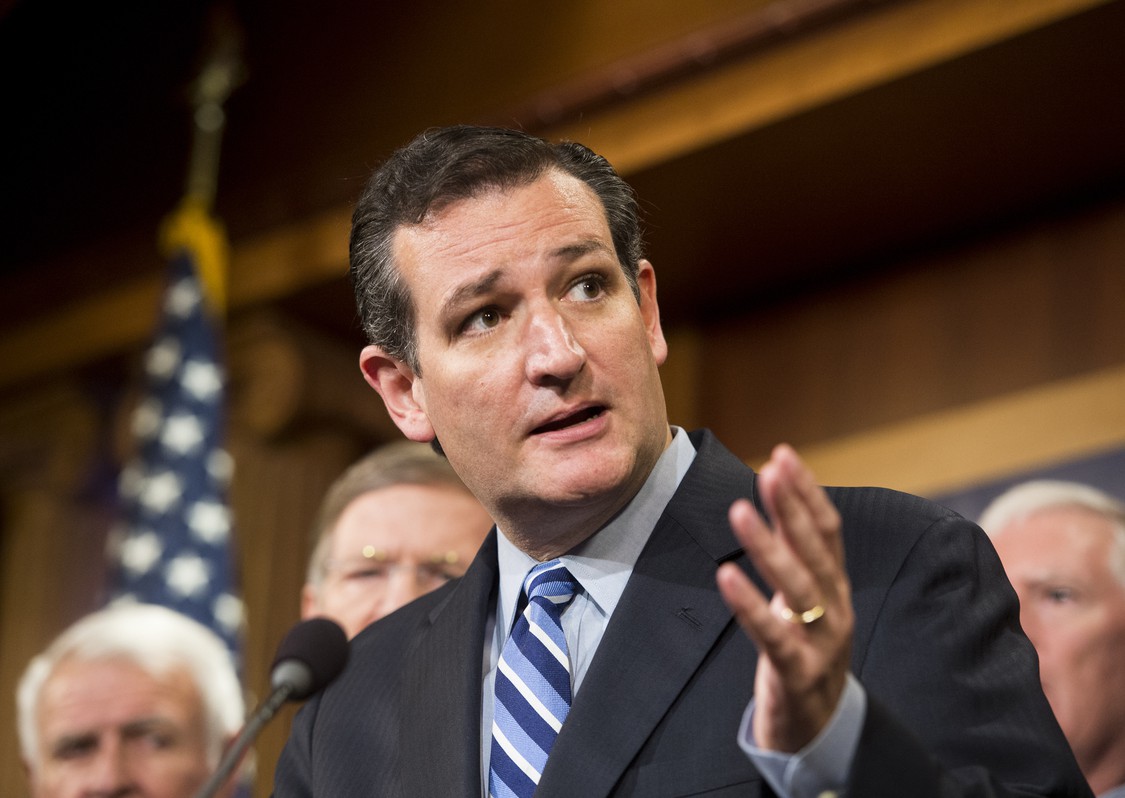
Next story is about Texas senator Ted Cruz, and it’s from the Daily Signal.
Texas Senator Ted Cruz
Excerpt:
Sen. Ted Cruz wants to protect taxpayers from political targeting by the Internal Revenue Service. The Texas Republican introduced legislation yesterday making it crime to engage in such behavior as questions still linger about the full extent of the IRS scandal.
This is not the first time Cruz has offered this type of legislation. In February 2014, he introduced amendments to the STOP Identity Theft Act. Those measures, however, were defeated by Democrats and did not make it out of the Senate Judiciary Committee.
“Free speech is not a partisan issue. The IRS has no business meddling with the First Amendment rights of Americans,” Cruz said during last year’s debate.
With a new Republican Senate majority, Cruz is hopeful that this time the language will pass independently as a bill. In a press release, Cruz blasted the lack of action by President Obama and his administration in response to the IRS scandal.
“In May 2013, President Obama declared the IRS’s illegal targeting of conservative groups ‘intolerable and inexcusable,’ yet to this date no one has been held accountable for it,” Cruz said in a statement.
Cruz’s bill would make it a crime for any IRS employee to willfully target anyone based solely on political beliefs. Any employee found in violation would be subject to a fine, up to 10 years in prison, or both.
“This is a well thought out amendment to the IRS code to try and deter and punish the type of naked political targeting engaged in by Lois Lerner and other IRS employees,” said Hans von Spakovsky, manager of the election law reform initiative and senior legal fellow at The Heritage Foundation.
I think it’s a good idea for government not to be used as a weapon to punish people who want less government and more freedom. Don’t you?
Last one is about Republican Congressman Steve King of Iowa, as reported by Doug Ross.
Iowa Congressman Steve King
Excerpt:
“We’re extremely pleased that Congressman King has introduced the National Right to Work Act, intensifying a growing debate about labor law and worker freedom in our country. This legislation would enshrine the common-sense principle – already enforced in nearly half of U.S. states – that no worker should be compelled to join or pay dues to a union just to get or keep a job.
“In an age of legislative overreach, this is one of the shortest bills ever introduced. A National Right to Work Act does not add a single word to federal law. It simply removes language in the National Labor Relations Act that gives union officials the power to extract dues from nonunion workers as a condition of employment.
“Voluntary association is a quintessential American ideal and the case for Right to Work has always rested on the principles of employee freedom, but passage of a National Right to Work law will also pay economic dividends. Studies demonstrate that workers in Right to Work states enjoy greater private sector job growth and higher disposable incomes than their counterparts in states without Right to Work protections.
“The Right to Work principle is also popular with the public. Polls consistently show that 80 percent of Americans and union members support the principle of voluntary unionism.
“A National Right to Work Act enshrines worker freedom while providing significant economic benefits for workers. The National Right to Work Committee is mobilizing its 2.8 million members to call on their Congressperson to support the National Right to Work Act.”
Evidence shows that right-to-work states are more attractive to job creators, which results in lower unemployment in states that adopt right-to-work.