All posts by Wintery Knight

https://winteryknight.com/

Mainstream media defends Pope accused of covering up homosexual sexual assaults

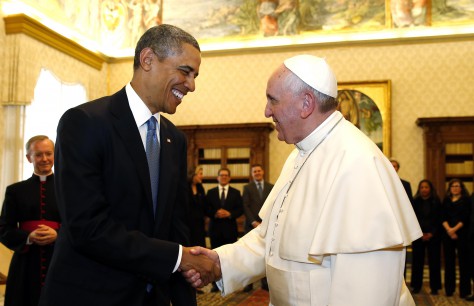
Barack Obama shakes hands with Pope Francis

During the past week, news stories reported that Pope Francis actually knew about the epidemic of sexual assaults and rapes by homosexual priests in the Catholic church. His response leaves a lot to be desired.

The National Catholic Register reported this earlier in the week:

In an extraordinary 11-page written testament, a former apostolic nuncio to the United States has accused several senior prelates of complicity in covering up Archbishop Theodore McCarrick’s allegations of sexual abuse, and has claimed that Pope Francis knew about sanctions imposed on then-Cardinal McCarrick by Pope Benedict XVI but chose to repeal them.

Archbishop Carlo Maria Viganò, 77, who served as apostolic nuncio in Washington D.C. from 2011 to 2016, said that in the late 2000s, Benedict had “imposed on Cardinal McCarrick sanctions similar to those now imposed on him by Pope Francis” and that Viganò personally told Pope Francis about those sanctions in 2013.

Archbishop Viganò said in his written statement, simultaneously released to the Register and other media, (see full text below) that Pope Francis “continued to cover” for McCarrick and not only did he “not take into account the sanctions that Pope Benedict had imposed on him” but also made McCarrick “his trusted counselor.” Viganò said that the former archbishop of Washington advised the Pope to appoint a number of bishops in the United States, including Cardinals Blase Cupich of Chicago and Joseph Tobin of Newark.

Archbishop Viganò, who said his “conscience dictates” that the truth be known as “the corruption has reached the very top of the Church’s hierarchy,” ended his testimony by calling on Pope Francis and all of those implicated in the cover up of Archbishop McCarrick’s abuse to resign.

Speaking as a Protestant, I thought that Benedict was the best Pope the Roman Catholic church ever had. I used to call him “The Protestant Pope”, because he had so few of the problems that Protestants like me dislike about Roman Catholic doctrines. It doesn’t surprise me that he did the right thing when the crisis was brought to his attention. But his successor has not done the right thing. He has different priorities.

The New York Times reported:

As he flew near Caribbean islands devastated by Hurricane Irma on his way back to the Vatican from Colombia on Sunday, Pope Francis said that political leaders and others who denied climate change reminded him of a passage from the psalms about man’s stubbornness.

[…]On the flight, the pope nevertheless appealed again to Mr. Trump, this time on his decision to end President Obama’s Deferred Action for Children Program, known as DACA.

[…]In contrast to his negative appraisal of Mr. Trump’s approach to immigration, the pope praised Italy’s efforts to welcome large numbers of migrants even as it sought to stem the tide of immigrants coming from Libya.

In fact, the defenders of the Pope made clear that his priorities are global warming and open borders, not following what the Bible says about sex outside of marriage.

Catholic journalist Emily Zanotti explains, in the Daily Wire:

In a bizarre interview with a Chicago NBC affiliate, Cardinal Blaise Cupich, head of the Archdiocese of Chicago, suggested recent claims made by a former apostolic nuncio — the Vatican’s envoy to the United States — that Pope Francis not only disregarded sexual abuse allegations against Cardinal Theodore McCarrick, but promoted McCarrick and sought his counsel, were going down a “rabbit hole.”

The Pope, Cupich told NBC, has more important things to attend to than sex abuse scandals, like climate change and immigration.

“The Pope has a bigger agenda,” Cardinal Cupich said. “He’s got to get on with other things, of talking about the environment and protecting migrants and carrying on the work of the church. We’re not going to go down a rabbit hole on this.”

Clearly, this is the focus of Catholic church leadership. Global warming and open borders both help to destroy free market capitalism, and increase the size of the secular government.  (Global warming alarmism allows the government to tax and regulate energy production and consumption, and open borders brings in a lot of low-skilled immigrants who tend to vote for higher taxes and more welfare spending). That’s the Pope’s priority. And since it’s also the mainstream media’s priority, they are defending him from his critics.

Ben Shapiro, writing in the far-left Newsweek, explains:

So, did the press leap to investigate Vigano’s claims? Did they demand answers from Pope Francis? Did we see the same type of courageous, comprehensive coverage of Francis’ activities that we saw from the Globe team circa 2003? Of course not.

Instead, mainstream media outlets went out of their way to portray Vigano as a disgruntled conservative angry at Pope Francis’ progressive interpretation of Catholic doctrine. The New York Times headlined, “Vatican Power Struggle Bursts Into Open as Conservatives Pounce.” Their print headline was even worse: “Francis Takes High Road As Conservatives Pounce, Taking Criticisms Public.”

Yes, according to the Times, the story wasn’t the sitting Pope being credibly accused of a sexual abuse cover-up—it was conservatives attacking him for it. The problem of child molestation and sexual abuse of clergy took a back seat to Francis’ leftist politics, as the Times piece made clear in its first paragraph: “Since the start of his papacy, Francis has infuriated Catholic traditionalists as he tries to nurture a more welcoming church and shift it away from culture war issues, whether abortion or homosexuality. ‘Who am I to judge?’ the pope famously said, when asked about gay priests. Just how angry his political and doctrinal enemies are became clear this weekend…”

It wasn’t just the Times. On Wednesday, Reuters headlined, “Defenders rally around pope, fear conservatives escalating war.” On Thursday, Reuters doubled down with this headline: “Conservative media move to front line of battle to undermine Pope Francis.” The Telegraph (U.K.) reported, “Vatican analysts say the attack appears to be part of a concerted effort by conservatives to oust Pope Francis, who they dislike for his relatively liberal views…

[…]The media’s disgraceful attempts to cover for Francis because of their love for his politics merely exposes the actual malign motivations of many in the media: they were happy to expose misconduct and evil inside the Catholic Church when the pope was a conservative; they’re happy to facilitate a cover-up when the pope is a liberal.

As an evangelical conservative Christian, the Bible means more to me than the opinions of any man. The Bible is God speaking to his creatures about what their priorities ought to be. So, as a Bible-believing Christian, I’m primarily concerned about chastity, fidelity, protecting the unborn and promoting natural marriage. I wish we could all agree that these things should be our priorities. People should not be having sex outside of marriage, or cheating on their spouses. Unborn children should not be killed. Young children should grow up in stable homes with their biological mother and father present.

And I also believe in small government and low taxes, because parents need to keep the money they earn, in order to run their families properly. Parents should not be taxed to pay for high energy costs (global warming alarmism causes higher energy costs, for example Germany and Canada) and unskilled immigrants (higher police, education and health care costs, as seen in places like France and the UK). I want strong families where children grow up loved and protected. And I think Catholics should agree with me on this.

New study: belief in free will linked to ability to behave morally and to help others

J. Warner Wallace: God's Crime Scene
J. Warner Wallace: God’s Crime Scene

This is a re-post because I am travelling today.

A while back I finished reading “God’s Crime Scene”, the new book by J. Warner Wallace. I wanted to post something about some studies he mentioned in Chapter 6, on free will. This is one of the places where he found evidence in a surprising area.

Wallace says that free will makes more sense if theism is true, because we have non-material souls that interact with our bodies, but are not causally determined by them. On atheism, only matter exists, and you can’t get free will (or consciousness) from matter. So atheists like Sam Harris and Alex Rosenberg, for example, deny free will, because they are materialists and atheists.

Anyway, here’s what he writes on p. 256:

In 2008, researchers from the University of Minnesota and the University of British Columbia conducted experiments highlighting the relationship between a belief in determinism and immoral behavior. They found students who were exposed to deterministic literature prior to taking a test were more likely to cheat on the test than students who were not exposed to literature advocating determinism. The researchers concluded those who deny free will are more inclined to believe their efforts to act morally are futile and are, therefore, less likely to do so.

In addition, a study conducted by researchers from Florida State University and the University of Kentucky found participants who were exposed to deterministic literature were more likely to act aggressively and less likely to be helpful toward others.” Even determinist Michael Gazzaniga conceded: “It seems that not only do we believe we control our actions, but it is good for everyone to believe it.”” The existence of free will is a common characteristic of our experience, and when we deny we have this sort of free agency, there are detrimental consequences.

I decided to look up these studies.

Here’s the abstract for first study: (2008)

Does moral behavior draw on a belief in free will? Two experiments examined whether inducing participants to believe that human behavior is predetermined would encourage cheating. In Experiment 1, participants read either text that encouraged a belief in determinism (i.e., that portrayed behavior as the consequence of environmental and genetic factors) or neutral text. Exposure to the deterministic message increased cheating on a task in which participants could passively allow a flawed computer program to reveal answers to mathematical problems that they had been instructed to solve themselves. Moreover, increased cheating behavior was mediated by decreased belief in free will. In Experiment 2, participants who read deterministic statements cheated by overpaying themselves for performance on a cognitive task; participants who read statements endorsing free will did not. These findings suggest that the debate over free will has societal, as well as scientific and theoretical, implications.

And the abstract for the second study: (2009)

Laypersons’ belief in free will may foster a sense of thoughtful reflection and willingness to exert energy, thereby promoting helpfulness and reducing aggression, and so disbelief in free will may make behavior more reliant on selfish, automatic impulses and therefore less socially desirable. Three studies tested the hypothesis that disbelief in free will would be linked with decreased helping and increased aggression. In Experiment 1, induced disbelief in free will reduced willingness to help others. Experiment 2 showed that chronic disbelief in free will was associated with reduced helping behavior. In Experiment 3, participants induced disbelief in free will caused participants to act more aggressively than others. Although the findings do not speak to the existence of free will, the current results suggest that disbelief in free will reduces helping and increases aggression.

So what to make of this?

If you’re an atheist, then your worldview is telling you that what you are doing now is the result of genetic programming and sensory inputs. You’re not conscious. You can’t reason. You make no free choices, including moral choices. Naturally, someone who believes this is going to struggle with prescriptive morality, including self-sacrificial care and concern for others. Their worldview undermines the rationality of the moral point of view. You might find atheists acting morally for their own purposes, but their worldview doesn’t rationally ground it. This is a big problem for people who can see objective morality woven into the universe – and themselves – because they have the awareness of objective right and wrong.

I think what atheists like to say is “I can be moral, too”. That’s not interesting. What is interesting is whether it is rational for you to be moral when things start to get a bit uncomfortable. When I look at the adultery of Dawkins, the polyamory of Carrier, the divorces of Shermer and Atkins, etc. I am not seeing anything that really wows me. They all deny free will of course, and think that trying to resist temptation is a waste of time. What difference would it make if they did, anyway – there’s no afterlife on atheism.

Wallace explains how the awareness of free will and moral choices caused him to turn away from atheism, in this blog post.

He writes:

As an atheist, I chose to cling to naturalism, in spite of the fact that I lived each day as though I was capable of using my mind to make moral choices based on more than my own opinion. In addition, I sought meaning and purpose beyond my own hedonistic preferences, as though meaning was to be discovered, rather than created. I called myself a naturalist while embracing three characteristics of reality that simply cannot be explained by naturalism. As a Christian, I’m now able to acknowledge the “grounding” for these features of reality. My philosophical worldview is consistent with my practical experience of the world.

I think atheists who want to be honest about their own experience of first-person consciousness, free will, moral realism, etc. will do well to just accept that theism rationally grounds all of these things, and so you should accept theism. Theism is real. If you like morality, and want to be a virtuous person, then you should accept theism.

54-year-old feminist angry at dating agency for not finding her a rich husband

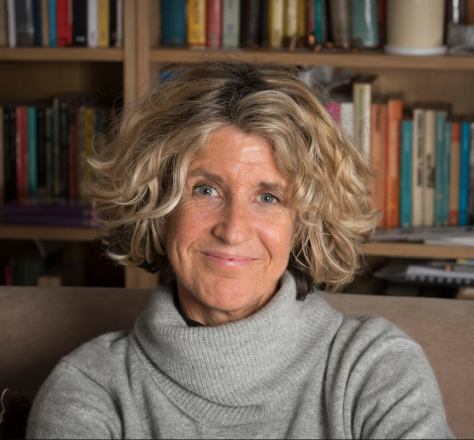
Kate Mulvey at age 53 expects that rich men will want to marry her

A little while ago, I blogged about a 47-year-old mother of three who sued a dating agency for failing to find her a rich husband. That was pretty bad, but I found something even worse. A 54-year-old woman who spend all her savings on a dating agency. She expected them to find her loads of rich men who want to marry her – despite her never having invested anything in them.

The UK Telegraph reports:

Glass of wine in hand, the man sitting opposite me in the restaurant was in full flow. While he was droning on about his work commitments, I zoned in and out trying to work out how on earth I was going to get to through this first date. I had expected to meet an eligible bachelor, but he had turned out to be so boring that he made me want to stick asparagus up my nostrils.

This memory came flooding back when I read about, Tereza Burki, a City financier who, last week, successfully sued a Knightsbridge-based elite matchmaking service, for the return of her £12,600 annual fee after they failed to find her the man of her dreams.

A couple of years ago, I too joined an expensive matchmaking agency. I had just come out of a seven year relationship, and was on the wrong side of 50.

I soon tired of online dating and receiving messages from over weight baldies who peppered their emails with childish emojis. I hankered to find Mr Right-for-me, a man who was suitably educated and a successful professional.

And so this is how I found myself, throwing money (my entire savings to be precise) to an upmarket matchmaking agency in central London. The agency claimed to filter out the undesirables, the mediocre and give clients the personal touch, so I handed over the hefty sum of £6,000.

As I waited to be matched with someone from their ‘extensive database’, I idly imagined my handsome date, cashmere polo neck, a bit academic and kind. We’d eat steak tartare and swap notes on our latest clever box-set find and favourite novels.

The first indication that all was not as I had expected came when I met personal matchmaker at a Park Lane hotel for ‘tea and an interview’…  told her how I loved folk music, my favourite film was The Deer Hunter, and enjoyed weekends in the countryside.

[…]A few days later she emailed me with the details of W, “a successful entrepeneur who had travelled extensively and also liked folk music”. When I met him at a pub in Richmond, I was shocked. I was expecting a cultured and dynamic man, instead I got a man in a pair of jeans, a moth eaten jumper and the table manners of a modern day Baldrick.

And therein lies the rub. These agencies trade on their exclusivity, yet the men I met were far from the international super elite they promised.

Isn’t this terrible? Clearly the dating agency is to blame. It should be easy for a penniless, feminist hedonist to find rich men who want to spend all their money taking care of a 54-year-old woman who had literally nothing to do with the process by which they earned all that money.

One thing we know about her for sure is that she is impractical. She is 54 years old and has just spent her last savings on a dating agency. From her other comments about the type of men she is looking for, we can infer that she wasted a lot of money on travel, fine dining, and other frivolous experiences designed to produce feelings of sophistication without any practical plan for preparing for the financial demands of old age. What’s the point of having fun “in the moment” if you don’t have any plan to allow sustainable recreation in the future, when you’re too old to work?

I spent some time reading articles by Kate Mulvey, and here is what I was able to determine:

  • she has no useful degrees – she paid for useless degrees in Italian and French, instead of studying something useful, like computer science or nursing or petroleum engineering. Her “writing” is all about fashion, dating and “lifestyles”
  • her opinion on children: “uppity children take your time, emotions and energy” – she sees children as a detriment to her highest priority (her career). She says “I, however, have lived a life of unfettered freedom to take on projects, write books and travel”
  • she had loads of entertaining men “beating a path to [her] door” when she was younger
  • she spend thousands of pounds on plastic surgery
  • she blames her lack of marriage success on her being “brainier” than men
  • she turned down men who wanted to marry her, as late as age 33
  • her book is called “Accidental Singleton” because her approach to life – anti-marriage hedonism – has accidentally left her single and penniless at age 54

Although she talks a lot about being intelligent, it seems to me that an intelligent woman would have practical degrees, savings and an awareness of what men actually want from a woman – and WHEN they want it. Men want a woman to support them in their most difficult period, just after they graduate and hit the job market. Starting out in a career is hard because the man doesn’t have savings or a resume or references. The support of a young, attractive, virtuous woman means everything during those difficult years. This is when a wife has the most impact on her husband’s ability to earn and save, on his mental health, on his physical health, etc.

Somehow, this narcissist thinks that she can just show up in a man’s life, after he has done all his earning alone, and grab hold of the things that she never helped build. She wasted all her youth and beauty chasing experiences with attractive bad boys, but she thinks that it’s reasonable for a man to invest all his wealth in her. A woman has value to a man at the time when he is attempting to do difficult things, but lacks support.

What exactly is it that a woman like Kate has to offer a man, given her life choices? Does anyone think that this woman has marriage-character? Does anyone think that her life of selfishness and hedonism has prepared her to be a good wife? What kind of conversation about moral obligations could you have with someone who has only ever done what felt good to her in the moment? Has her string of failed relationships with hot bad boys prepared her to be trusting and unselfish? How about to be faithful? Or even to be content? What is it that she thinks that she is offering that would justify the heavy investment that she is asking for, especially in an age of no-fault-divorce and anti-male divorce courts?

I think people really underestimate how much goes into making a good wife. The character she has to develop. The skills that she has to develop. The way she treats her husband, which often comes from carefully cultivating virtues like chastity and sobriety. Her worldview, which affects whether she has practical abilities like love, forgiveness and self-control. Her ability to be good with money. Her ability to nurture others and make social connections consistent with marriage and homemaking. Her ability to bear children, and then nurture them during the critical first 5 years after – not to mention homeschooling, which is increasingly valuable in a time when underperforming government-run schools seek to indoctrinate, rather than educate, children.

Nothing about this woman makes me think that she has any marriage-related character traits or abilities. Any idiot can spend someone else’s money on their own feelings, fun and thrills. But it takes a carefully crafted woman to really do the work of a wife. Marriage isn’t there so that women can be happy. Marriage is an enterprise. Being selfish – doing what is easy, and what feels good moment by moment – doesn’t prepare a woman for the enterprise.