
All posts by Wintery Knight

https://winteryknight.com/

Which side of the abortion rights debate is backed by scientific evidence?

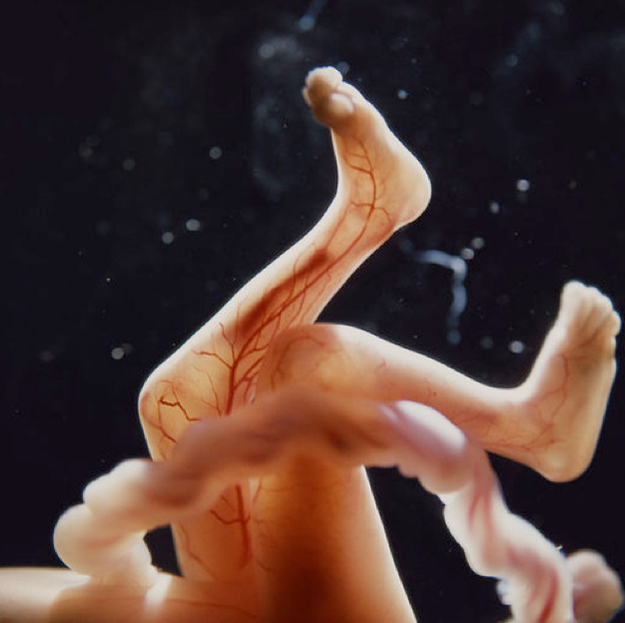
Unborn Baby - 10 weeks old
Unborn Baby – 10 weeks old

Once upon a time I didn’t know much about the case for abortion rights or the case for the right to life of unborn children. My reason for not reading much about it is that I thought that it was kind of a subjective issue. But, I started a project to read 1-2 books on every conceivable topic, including one on abortion. Lo and behold, it turned out that one side did have the backing of science.

This article from The Public Discourse explains: (links removed)

The following are typical examples—only three of the many, many we could cite. These are from standard texts by embryologists, developmental biologists, and microbiologists:

“Human life begins at fertilization, the process during which a male gamete or sperm unites with a female gamete or oocyte (ovum) to form a single cell called a zygote. This highly specialized, totipotent cell marked the beginning of each of us as a unique individual.” “A zygote is the beginning of a new human being (i.e., an embryo).” Keith L. Moore, The Developing Human: Clinically Oriented Embryology, 7th edition.

“Fertilization is the process by which male and female haploid gametes (sperm and egg) unite to produce a genetically distinct individual.” Signorelli et al., Kinases, phosphatases and proteases during sperm capacitation, Cell Tissue Research.

“Although life is a continuous process, fertilization (which, incidentally, is not a ‘moment’) is a critical landmark because, under ordinary circumstances, a new, genetically distinct human organism is formed when the chromosomes of the male and female pronuclei blend in the oocyte” (emphasis added; Ronan O’Rahilly and Fabiola Mueller, Human Embryology and Teratology, 3rd edition.

The genetically distinct part is key – this unborn child is has a different DNA signature (a human signature) than either the mother or the father. Nothing will be added or taken away from this new signature as the unborn child grows. It never changes.

More:

These authorities all agree because the underlying science is clear. At fertilization—or, more precisely, when the sperm (a male sex cell) fuses with the oocyte (a female sex cell, more commonly referred to as an egg)—each of them ceases to be, and a new entity, one that is both genetically and functionally distinct from either parent, is generated. This new entity, initially a single totipotent cell, then divides into two cells, then (asynchronously) three, then four, eight, and so on, enclosed all the while by a membrane inherited from the oocyte (the zona pellucida), which then dissolves during implantation, allowing for continued growth in the direction of maturity as a member of the species. Even prior to implantation, however, these cells and membrane function as parts of a whole that regularly and predictably develops into the more mature stages of a complex human body.

How do we know that the result of sperm-oocyte fusion is a new entity, rather than a continuation of the oocyte? We know that a new entity exists because, once the sperm penetrates the oocyte, a completely new trajectory of biological development commences. The biological activity of an oocyte is directed toward successful fertilization; the biological activity of sperm is directed toward penetration of an oocyte. The biological activity of the new entity that results when sperm and oocyte fuse, however, is directed toward nothing less than the development of a mature human organism, distinct from either parent. Further, this new entity’s activities are directed not by instructions from the mother’s body, as some people wrongly suppose, but by its own unique set of instructions, especially the blueprint for development contained in its unique genetic material. The mother’s body recognizes the zygote and then the embryo as an entity distinct from itself. In fact, the embryo must send out chemical signals to prevent the mother’s immune system from attacking it. The embryo also emits chemical signals that induce changes in the lining of the mother’s uterus to enable successful implantation.

If this embryo is provided a suitable environment, nutrition, and protection from deliberate attack, serious injury, or disease, it will develop to the mature stage of a human organism. Thus, from the zygote stage onward this distinct, new organism has all of the internal resources—in its genetic and epigenetic structure—needed to develop itself (or, rather, himself or herself, since in the human sex is determined from the very beginning) to the mature stage of a human organism. At no point after fertilization—implantation, gastrulation, birth, puberty, etc.—does a fundamental change in biological trajectory occur. These subsequent stages of development are simply the unfolding of the zygote’s inherent dynamism toward human organismal maturity. This shows that the zygote already is a human organism—a member of the species Homo sapiens—albeit at an early stage of his or her development.

So, since I like to win arguments with science, I just took the side of the debate that was backed by science. I really hate to lose debates, you know. I really like to cite scientific evidence when I’m debating.

The crime of abortion, it seems to me, is that you are depriving a human being of his or her future, because of your convenience right now. Human beings don’t have the right to take away the futures of other human beings because they want to be unburdened by the results of their own actions. We shouldn’t resort to violence in order to escape responsibility for our own actions. In almost every case, (except to save the life of the mother), killing the unborn child isn’t justified. It’s actually very scary to me that anyone would think that hurting other people was a reasonable response to one’s own diminished happiness. How did we ever get to a place in society when people don’t think that taking responsibility to care for the unborn child is morally better than killing the unborn child? It’s a baby for goodness sake. We ought to be serious about setting up our lives and controlling ourselves so that we never hurt an unborn child.

Did Australia’s ban on guns lower violent crime rates and lower suicide rates?

Gun ownership up, gun violence down

Someone asked me about what I thought of Australia’s experience banning the use of handguns for self-defense against criminals, and so I thought I would link to an article from The Federalist, then explain what peer-reviewed studies say about the issue.

Let’s start with The Federalist.

It says:

The argument, as Vox’s headline puts it, is “Australia confiscated 650,000 guns. Murders and suicides plummeted.”

The piece, along with many gun control advocates, cites a Harvard University study whose conclusion begins with this line: “It does not appear that the Australian experience with gun buybacks is fully replicable in the United States.” Not a great start for Vox’s angle, but I digress.

The study doesn’t conclude that “murders and suicides plummeted” in Australia after the 1996 gun ban, as Vox claims in its headline. Instead, it focuses solely on firearm-related murders and suicides.

After the gun ban, violent crime rates were up:

Yes, as with the gun-happy United States, the murder rate is down in Australia. It’s dropped 31 percent from a rate of 1.6 per 100,000 people in 1994 to 1.1 per 100,000 in 2012.But it’s the only serious crime that saw a consistent decline post-ban.

In fact, according to the Australian government’s own statistics, a number of serious crimes peaked in the years after the ban. Manslaughter, sexual assault, kidnapping, armed robbery, and unarmed robbery all saw peaks in the years following the ban, and most remain near or above pre-ban rates. The effects of the 1996 ban on violent crime are, frankly, unimpressive at best.

It’s even less impressive when again compared to America’s decrease in violent crime over the same period. According to data from the U.S. Justice Department, violent crime fell nearly 72 percent between 1993 and 2011. Again, this happened as guns were being manufactured and purchased at an ever-increasing rate.

So although you have fewer firearm-related deaths when you disarm law-abiding civilians, violent crime increases, because there is now NO deterrence to criminals. Even a criminal with a knife can rob, rape and murder someone who is unarmed.

What about suicide rates?

Look:

The Australian gun ban’s effect on suicide in the country isn’t any better. While Vox repeats the Harvard study’s claim that firearm-related suicides are down 57 percent in the aftermath of the ban, Lifeline Australia reports that overall suicides are at a ten-year high. The Australian suicide prevention organization claims suicide is the leading cause of death for Australians 15 to 44 years old. So, while Australians kill themselves with firearms less often, it seems they don’t actually take their own lives any less often than before the ban.

So, overall suicides are not down, people simply found other ways to kill themselves. So the gun ban had no effect on the overall suicide rate. But it did raise the violent crime rate. Should we be surprised by this? Actually, this is consistent with peer-reviewed research.

Gun crime also skyrocketed after the 1996 gun ban. The Washington Free Beacon reports.

Excerpt:

Australia has seen a rise in gun crime over the past decade despite imposing an outright ban on many firearms in the late 1990s.

Charges for crimes involving firearms have increased dramatically across the island nation’s localities in the past decade according to an analysis of government statistics conducted by The New Daily. It found that gun crimes have spiked dramatically in the Australian states of Victoria, New South Wales, South Australia, and Tasmania. In Victoria, pistol-related offenses doubled over the last decade. In New South Wales, they tripled. The other states saw smaller but still significant increases.

Experts said that the country’s 1996 ban on most semi-automatic firearms has actually driven criminals to those guns. “The ban on semi-automatics created demand by criminals for other types of guns,” professor Philip Alpers of the University of Sydney told The New Daily. “The criminal’s gun of choice today is the semi-automatic pistol.”

[…]Regardless of the reasons for the jump in gun crime, the numbers reveal the true size of Australia’s illegal gun market. “Taken together, the data suggests that despite our tough anti-gun laws, thousands of weapons are either being stolen or entering the country illegally,” The New Daily said. “The fourfold rise in handgun-related charges in NSW in the past decade points to the existence of a big illegal market for concealable firearms that seems to have been underestimated in the past.”

If you take guns away from law-abiding people (which is what Australia did), then only criminals will have guns. And that means that the criminals will become bolder in the face of their disarmed victims.

The peer-reviewed research

Whenever I get into discussions about gun control, I always mention two academic books by John R. Lott and Joyce Lee Malcolm.

I think that peer-reviewed studies should be useful for assessing gun control vs gun rights policy. The book by economist John Lott, linked above,compares the crime rates of all U.S. states that have enacted concealed carry laws, and concludes that violent crime rates dropped after law-abiding citizens were allowed to carry legally-owned firearms. That’s the mirror image of Dr. Malcolm’s Harvard study, which shows that the 1997 UK gun ban caused violent crime rates to MORE THAN DOUBLE in the four years following the ban. But both studies affirm the same conclusion – more legal firearm ownership means less crime.

One of the common mistakes I see anti-gun advocates making is to use the metric of all “gun-related deaths”. First of all, this completely ignores the effects of hand gun ownership on violent crime, as we’ve seen. Take away the guns from law-abiding people and violent crime skyrockets. But using the “gun-related deaths” number is especially wrong, because it includes suicides committed with guns. This is the majority (about two thirds) of gun related deaths, even in a country like America that has a massive inner-city gun violence problem caused by the epidemic of single motherhood by choice. If you take out the gun-related SUICIDES, then the actual number of gun homicides has decreased as gun ownership has grown.

For a couple of useful graphs related to this point, check out this post over at the American Enterprise Institute.

Should we expect to know what God’s reason is for allowing evil and suffering?

Lets take a closer look at a puzzle

Here is an article by Steven Cowan about the problems of evil and suffering.

Intro:

The problem of evil is no doubt the most serious challenge to belief in God. Even religious believers find it troubling that evil exists in the world—and so much evil! It is puzzling, to say the least, that an all-powerful, absolutely good being would allow evil to exist in his creation. And yet it does. Evil and suffering exist and they are often overwhelming in their magnitude.

Now let’s find out what a noseeum is, and how it relates to the existence of evil and suffering:

However, perhaps God’s existence is incompatible with a certain kind of evil that exists. For example, the atheist William Rowe has argued that God’s existence is inconsistent with pointless or gratuitous evil. By “pointless evil,” Rowe means evil that does not and cannot serve a greater good. And Rowe believes that there is such pointless evil in the world. He thus concludes that God does not exist. Rowe’s argument may be simply stated as follows:

  1. If God exists, there would be no pointless evil.
  2. There is pointless evil.
  3. Therefore, God does not exist.

[…]But, is there pointless evil in the world? Rowe thinks there is. To show that there is pointless evil, Rowe introduces what he calls the “noseeum inference.” Like the pesty little bugs that some readers may be familiar with, a “noseeum” is something that you cannot see—it is a “no-see-um.” And a noseeum inference is a conclusion drawn on the basis of what one does not see. The basic structure of all noseeum inferences looks like this:

  1. I cannot see an x.
  2. Therefore, there probably is no x.

We all make noseeum inferences everyday of our lives. Every time I go to cross a street, I look both ways and I step out into the street only after I “no-see-um” a car coming.

[…]Rowe applies this kind of noseeum reasoning to God and evil. Rowe suggests that if we cannot see a reason for a particular instance of evil, then there is probably not a reason. Suppose we hear about a very young child who is tortured to death to amuse some psychotic person. We think about this event and we examine all the circumstances surrounding it. No matter how hard we try, we cannot see any good reason why this child had to suffer the way she did. Since we cannot see a reason why God would allow this child to suffer, there probably is not a good reason—the child’s suffering was pointless. Of course, Rowe would be quick to point out that he is not speaking merely hypothetically. There are cases like this in the news every day—real-life cases in which we shake our heads in frustration, wondering why God would allow such a thing.

Is Rowe correct in his conclusion? Do such examples prove that there is pointless evil in the world? I don’t think so. To see why, we must recognize that noseeum inferences are not all created equal. Some noseeum inferences, as we have seen, are reasonable and appropriate. But, many are not. Suppose I look up at the night sky at the star Deneb and I do not see a planet orbiting that star. Would it be reasonable for me to conclude that there is no planet orbiting Deneb? Of course not. Suppose that using the best telescopes and other imaging equipment presently available, I still cannot see a planet around Deneb. I would still be unjustified in concluding that there was no such planet.

In that example, the planet is the noseeum. Just because you look really hard, you can’t be confident that the planet is not there. And similarly with the problem of evil and suffering, looking really hard and finding no reason does not mean that there is no reason. It just means that you are not in a good position to see the reason. You don’t know enough to to be sure that there is no reason, because of your limitations as a human being.

To know that any given instance of evil or suffering is gratuitous/pointless requires a high level of knowledge. How much knowledge? Well, consider this paper by the late William Alston of Syracuse University, who lists six problems with the idea that humans can know that any particular instance of evil and suffering is gratuitous. (You can get the PDF here)

According to the paper, human beings just do not have the capability to know for certain that God has NO morally sufficient reason for allowing any particular instance of evil and/or suffering. God’s morally sufficient reason is a noseeum. To know for sure that there is no reason, we would need to have more knowledge than we do.

Also, remember that on the Christian view, the good aim that God has is NOT to make humans have happy feelings in this life, regardless of their knowledge, wisdom and character. That’s what atheists think, though. They think that God, if he exists, is obligated to make them feel happy all the time. They don’t think that God’s goal is being actively involved in forming their knowledge, wisdom and character. God has a purpose – to work in the world so that everyone who can freely respond to him will respond to him. The Bible says that allowing pain and suffering is one of the ways that he gets that group of people who are willing to respond to respond to him – FREELY. To be able to claim that evil is gratuitous, the atheist has to show that God can achieve his goal of saving all the people he wants to save while permitting less suffering in the world. And that is a very difficult thing for an atheist to show, given our human cognitive limitations.

The best place to learn more about no-see-ums is in this excellent lecture by Biola University professor Doug Geivett.