Did you know that there is a real woman who inspired the feminist fairy tale TV show “Sex in the City”? She had an enormous influence on young women, who wanted the glamour, fun, and consequence-free sex with “high value” no-commitment men. Most women who adopted the values of the show probably thought that this path would eventually lead to marriage and children.
My friend Chris sent me this article from Fox News, which talks the woman who inspired the show’s storyline.
It says:
“Sex and the City” may have left a trailblazing legacy for women on television, but the book’s original author now thinks her independent lifestyle may not have been as rewarding.
Candace Bushnell, 60, who wrote the original 1997 novel which spawned the successful TV series for HBO, opened up to Sunday Times Magazine about her 2012 divorce, admitting it made her realize how not starting a family made her feel “truly alone.”
“When I was in my 30s and 40s, I didn’t think about it,” she recalled. “Then when I got divorced and I was in my 50s, I started to see the impact of not having children and of truly being alone. I do see that people with children have an anchor in a way that people who have no kids don’t.”
I do think that it’s important for young women to really consider where they want to be when they are 30, 40, 50, etc. A wise person should seek to pattern their decisions off of the decisions of people who have reached the goals that they themselves want to reach. Candace Bushnell clearly has failed to achieve her goals. And those who listen to her will, likewise, fail to achieve the goals of marriage and children.
Making decisions today to achieve goals tomorrow
It’s important not to put too much faith in TV shows. Or any fiction.
Whenever I see women reading books in the office, I always ask them: is that fiction or non-fiction? In 19 years of full-time work, I have never had a woman answer non-fiction. And they usually answer “romance”. Well, I supposed if you were a fictional character, then you might take the advice of fictional characters. But if you are a real person, then you should look at the way the world really works. You should read peer-reviewed research, and take the advice of real people who have come up from humble beginnings to achieve the goals that you want to achieve.
After all, if your goal was to retire at 50, wouldn’t it make sense to read books about investing, and take the advice of successful investors? It certainly would not make sense to imitate the characters in TV shows and movies made by Hollywood divorcers, adulterers, rapists and pedophiles. And yet so many women do the latter with marriage and children decision-making. They seem to derive some sort of unquestionable emotional delight from making important decisions based on appearances, intuitions, peer-approval, etc.
Why listen to celebrities, teachers, politicians, etc. who have infidelities, no children, failed marriages, etc.? Why make decisions by counting votes from your no-achievement peer group? If you want to reach a goal, then there is only one way to proceed, and that’s by consulting the evidence, and seeking guidance from those with demonstrated results.
For example, when I was choosing which state to live in, I made a spreadsheet and filled it with all sorts of rankings of the 50 states that I pulled out of research papers and reports. I looked at things like infrastructure, income tax, economic growth, business friendliness, cost of living, tax as a % of income, abortion laws, support for traditional marriage, single motherhood, gun laws, concealed carry laws, fiscal solvency, etc. I moved here, and I’ve become very wealthy as a result. And my state has actually moved upward in gun rights rankings, fiscal solvency rankings, tax rankings, etc. since I got here. We’re even trying to pass pro-life laws! When you make decisions using evidence and when you listen to good advice from people who have real achievements, you succeed.
Don’t make decisions about sex, marriage and children by “following your heart”. That’s the lesson.
Washington crosses the Delaware river before the Battle of Trenton
My favorite book about the American Revolutionary war by far is called “1776”. It’s written by famous historian David McCullough. The part of the book that really stuck out to me was the Battle of Trenton. I think that this battle really defines the essential character of America, as seen in the decision-making of its great general and first President, George Washington.
In the book, I learned about how George Washington and his revolutionary army had suffered a string of defeats at the hands of the powerful Commonwealth army, and their mercenary allies. It was the middle of a freezing cold winter, and the many of the sickly and ill-equipped American troops were just days from having their enlistment contracts run out. Some of the troops were not waiting for their enlistments to expire, they were just deserting. In droves.
Washington was losing, and was just days from losing his Continental Army. If the Americans lost the revolutionary war, then it would mean that every man who signed the Declaration of Independence would be hanged as a traitor. The American revolutionaries had risked everything for liberty, and they were about to lose everything – their money, their property and even their lives.
With the British army maneuvering to make his Harlem Heights position untenable, George Washington withdrew from the island of Manhattan, and established a new encampment further north near White Plains, New York.
On October 28, 1776, a flank attack by the British on this new position resulted in the collapse of Washington’s line. Thankfully, he was able to orchestrate an orderly withdrawal that preserved the army. Unfortunately, Washington’s retreat further exposed Fort Washington, which remained garrisoned on Manhattan.
Next, another defeat for Washington:
The Battle of Fort Washington
November 16, 1776
RESULT: BRITISH VICTORY
Following the defeat of George Washington’s army at White Plains, New York, British General William Howe focused his army’s attention on Fort Washington, the last post defended by the Continental army on Manhattan. Although Washington hoped to abandon the fort, his officers convinced him that it needed to be held in order to keep British ships from ascending the Hudson River.
During a carefully-orchestrated, all-out attack on November 16, 1776, British and Hessian forces overwhelmed the fort’s garrison after vicious fighting. When he heard the attack begin, Washington, who had stationed himself across the Hudson River in New Jersey, travelled across the river to the enter the fort and personally inspect its defenses. Several officers accompanied Washington, including Generals Israel Putnam, Hugh Mercer, and Nathanael Greene. They convinced Washington to leave the fort just 30 minutes before it was surrounded.
And then, another defeat for Washington:
Evacuation of Fort Lee
November 20, 1776
RESULT: BRITISH VICTORY
After the fall of Fort Washington, George Washington made plans for the evacuation of Fort Lee, which stood across the Hudson River in New Jersey. In a letter written to John Hancock on November 19, 1776, the general wrote that “…Fort Lee was always considered as only necessary in conjunction with [Fort Washington]…,” and that it would be abandoned as soon as provisions and other supplies were removed.
Unfortunately, a large British force succeeded in scaling the heights close to the fort on November 20, 1776. Faced with superior numbers, Washington called for the immediate evacuation of the fort, which resulted in the loss of dozens of cannon, 2-300 tents, and 1,000 barrels of flour.
That brings us to the Battle of Trenton. Across the Delaware river from Washington’s army was an encampment of Hessian mercenaries, fighting for the British. The Hessians believed that Washington’s Continental army was in full retreat. The British generals had already written home to the King to tell him that the war was nearly over, and that they had won. But had they?
General George Washington’s commitment to cross the Delaware River on Christmas 1776 foreshadowed the many hardships faced as well as the eventual victory of the Continental Army during the American Revolution. At first glance, the decision to transport 2,400 Continental soldiers across an icy river in one night, directly into a severe winter storm of sleet and snow seems irrational.
Washington’s decision, however, was based on strategic motivation, understanding that the Continental Army desperately needed a victory after months of intense fighting with several significant defeats and no major victories. Washington also understood that the element of surprise was the only way that he and his army stood a chance of defeating the highly trained Hessian mercenaries.
On the morning of December 25, 1776, Continental soldiers woke up in their camps along the Delaware River to a frozen, snowy covered ground. Weather conditions worsened and temperatures continued to drop throughout the day. Late in the afternoon, the Continentals left their tents and began to form along the river in anticipation of the night’s events. Washington kept almost all of the details of the crossing a secret; as a result, none of the soldiers knew anything about their upcoming mission.
Washington’s crossing of the Delaware River on December 25, 1776 allowed his army to strike the Hessians at Trenton the next morning.
Washington’s plan was to cross the river at night, march to the nearby town of Trenton, New Jersey, and attack the Hessian garrison right before dawn. Time was Washington’s greatest enemy; to combat it his orders called for the various regiments to assemble at their designated crossing points no later than sunset. The close proximity to the crossing points allowed the soldiers to begin the journey immediately after nightfall struck and complete the crossing no later than midnight. Once across, Washington intended for the armies to reassemble and march approximately ten miles to Trenton, arriving there no later than five o’clock in the morning to achieve surprise. Despite his meticulous planning, the schedule failed almost before it even began.
Many of the regiments did not arrive at the river until well after dark. Additionally, a severe winter storm that included wind, rain, snow, hail, and sleet met the soldiers at the banks of the river significantly slowing their crossing. Many of the boats had to combat ice jams and unfavorable currents. To make matters even worse, the extreme darkness caused by the storm made it hard for the boatmen to see the opposite shore.
The necessity of using larger ferries to carry pieces of artillery across the river caused even more delays. Washington crossed the river with John Glover’s Marblehead mariners and upon arrival debated whether or not to cancel the entire operation because it was more than three hours behind schedule. Washington decided it was too costly to retreat and he painfully watched as his army continued to trickle across the river.
If you were standing by the river along with Washington watching his sick, frozen, ill-equipped army struggle across the Delaware, then you would probably think that Washington had lost the element of surprise. This attack was just taking too long to happen. Maybe Washington would give up his plan, because things hadn’t gone his way. But Washington didn’t quit – he persisted.
The Battle of Trenton, December 25, 1776 (click for larger image)
Immediately following his famous crossing of the Delaware River, General George Washington marched the Continental Army to Trenton, New Jersey. The army’s forces included horses, guns, wagons, and soldiers, stretching for nearly one mile. The weather was worse than it had been crossing the river, but the army continued to proceed as Washington rode up and down the column pressing his men to carry on.
Shortly after eight o’clock on the morning of December 26, 1776, the Continental Army started its charge on the city. Three columns marched through thick snow with Washington personally leading the middle charge. As the soldiers pushed forward, artillery began to fire. At the same time, German drums urgently called the Hessians to arms. To his astonishment, Washington had maintained the element of surprise.
Immediately after the firing began, three Hessian regiments ran from their quarters ready to fight, quickly forming ranks. As the Hessians grouped, the Continental Army entered the city at two points: John Stark marched into the city on River Road from the west, while Nathanael Greene and Washington arrived from the north.
Andreas von Wiederholdt, a Hessian lieutenant, incorrectly reported to Colonel Johann Rall that the Continental Army had surrounded Trenton and there was no available route for retreat. As a result, Rall decided to counterattack Washington within the city and not retreat across Assunpink Creek. This proved to be costly as Washington’s forces occupied the highest ground in the city and had clear views of all of Rall’s movements.
Time after time, Washington countered Rall’s efforts to outflank the Continentals. Eventually, Washington’s forces overpowered the Hessians. Rall was mortally wounded and many of his soldiers broke ranks, fleeing from the fighting. Normally very disciplined, Rall’s regiment was confused and disoriented without their commander. They retreated to an orchard east of Trenton where they were forced to surrender.
Despite the large number of Hessians that escaped Trenton, Washington still won a crucial strategic and material victory. In only one hour of fighting, the Continental Army captured nearly nine hundred Hessian officers and soldiers as well as a large supply of muskets, bayonets, swords, and cannons. Washington ordered his soldiers to treat the Hessian prisoners in a humane manner, and the general quickly focused his attention on what to do next. Washington assembled all of his officers in Trenton to discuss whether they should attack another post, hold their position in Trenton, or retreat back across the Delaware. Washington decided that because of the condition of his army, the best move was to return to their camps across the River.
When the Continental Army returned to camp on the Pennsylvania side of the Delaware River, soldiers were exhausted. They had marched and fought for two straight days through rain, snow, sleet, and hail. Washington knew that his army had far exceeded expectations at Trenton and that they faced many more challenges going forward.
Washington won two more battles in rapid succession. Many of his troops re-enlisted because of these victories. There were many battles remaining to fight, and many hardships such as the winter at Valley Forge. But the Battle of Trenton was the turning point of the revolution. George Washington would not let a string of defeats stop him.
Dr. Stephen C. Meyer is my favorite defender of Christianity these days. His first book covered the origin of life. His second book covered the sudden origin of body plans in the fossil record. And his third book covered the origin of the universe and fine-tuning. In this post, we’ll see a recent popular-level article he wrote for The Federalist, and 6 new short videos he made for Prager University.
Here is latest article from my favorite news source – The Federalist. He explains how scientific discoveries provide evidence for a Creator of the universe:
From the first astronomical investigations about the early history of the universe, light, and other forms of radiant energy, have yielded the most important clues about cosmic origins. During the 1920s, astronomers discovered that the wavelengths of light coming from distant galaxies were stretched out, or “red-shifted,” as if the galaxies were moving away from us. Just as sound coming from a train whistle drops in pitch as the result of the sound waves being stretched out as the train recedes, light coming from a distant galaxy changes color (becomes more red) as light waves are elongated as galaxies move away from Earth.
Soon after the discovery of the red shift, Belgian priest-physicist Georges Lemaître and Caltech astronomer Edwin Hubble showed that galaxies farther away from Earth were receding faster than those close at hand. That suggested a spherical expansion of the universe in all directions of space like a balloon inflating from a singular explosive beginning—from a “Big Bang.”
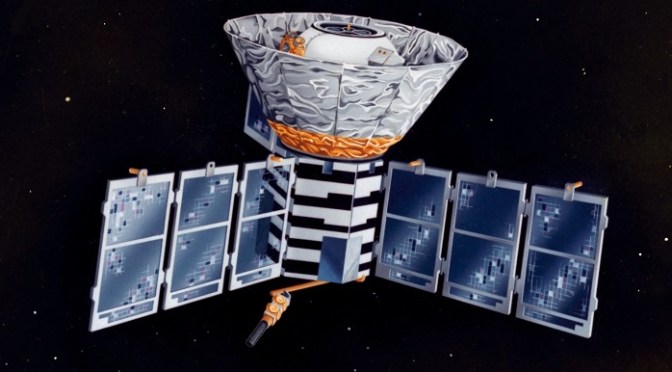
Then in 1965, physicists discovered a different kind of light they thought provided further evidence of the Big Bang. While working at Bell Laboratories in New Jersey, physicists Arno Penzias and Robert Wilson inadvertently discovered an extremely low-energy radiation on their highly sensitive, large antennas. This radiant energy, now known as the Cosmic Background Radiation, is postulated to be a remnant of the earliest moments after the Big Bang when the universe was immensely hot and densely compacted.
Those are the 3 most common pieces of evidence for a cosmic beginning – and therefore, a Cosmic Beginner. And this evidence is likely to be enhanced by NASA’s newest telescope, which Dr. Meyer talks about:
[O]n December 22 NASA will launch a new satellite capable of seeing the first starlight from just after the Big Bang—a light, and an event, that tell us about the creation of the universe and, in their own ways, reveal God to the world.
NASA’s new James Webb Space Telescope will be carried into space this week from French Guiana on the back of an Ariane 5 rocket. The $10 billion, 21-foot telescope features a massive umbrella-like sun shield. It also boasts 15 times the range of motion and six times the light-gathering capability of the Hubble Space Telescope—NASA’s next best instrument for peering deep into space and far back in time.
The light that NASA’s new telescope seeks to detect comes, not from those very earliest moments after the beginning, but from the first stars and galaxies that formed an estimated several hundred thousand years later. Detecting that light will nevertheless provide further confirmation of an expanding universe.
Since the new telescope can detect infrared light—invisible light with extremely long wave-lengths—it can establish whether the most distant galaxies exhibit the amount of red shift that astronomers expect given the Big Bang.
[…]This additional evidence of an expanding universe would further deepen the mystery associated with the Big Bang and add weight to a growing science-based “God hypothesis.” If the physical universe of matter, energy, space, and time had a beginning—as observational astronomy and theoretical physics increasingly suggest—it becomes extremely difficult to conceive of any physical or materialistic cause for the origin of the universe. After all, it was matter and energy that first came into existence at the Big Bang. Before that, no matter or energy—no physics—would have yet existed that could have caused the universe to begin.
Instead, whatever caused the universe to originate must not have been material and must exist beyond space and time. It must further have been capable of initiating a great change of state, from nothing to everything that exists. Such considerations have led other scientists—former Massachusetts Institute of Technology physicist Gerald Schroeder and the late Caltech astrophysicist Allan Sandage, for example—to posit an external creator as the best explanation for the origin of the universe as revealed by modern cosmology.
This new telescope creates an interesting situation for Christians and atheists. Christians are excited about this telescope, and anxious to get back the results that will confirm a supernatural Creator. Atheists are nervous about this telescope. They are committed to an eternally existing universe. One that doesn’t implicate any kind of supernatural first cause of the natural world. If the universe has a beginning, then by definition, the cause of the universe must be supernatural and eternal. Because it existed causally prior to the beginning of the universe. It is not material, because it created matter. It is not in time, because it created the physical universe that marks the passage of time.
Anyway, to share this information, Dr. Meyer has created six new short videos for Prager University. I’ve embedded the 6 videos below, and each title is a link to Prager University where you can find a transcript. These are perfect for busy people to get the big picture.
If you’re looking for a longer lecture, delivered to an audience of students, this one from 2015 is 95 minutes long, and has over 900,000 views:
What I’d like to see is parents and pastors stop worrying about how Christians feel,and whether we are like. Step one of being a Christian is knowing and showing that God exists. It’s not about feelings, community or peer approval. This is not Disney. This is not romance novels. What we need is young Christians who can have productive conversations about Christianity. And those conversations are easy – if we are trained in the mainstream science that confirms the existence of the supernatural Creator / Designer.