
All posts by Wintery Knight

https://winteryknight.com/

Were you taught that black and white moths are evidence of evolution?

Here’s a post by Jonathan Wells at Evolution News, which re-caps the history of the peppered moths experiment.

Excerpt: (links removed)

The peppered moth story is familiar — even overly familiar — to most readers of ENV, so I will summarize it only briefly here. Before the industrial revolution, most peppered moths in England were light-colored; but after tree trunks around cities were darkened by pollution, a dark-colored (“melanic”) variety became much more common (a phenomenon known as “industrial melanism”). In the 1950s, British physician Bernard Kettlewell performed some experiments that seemed to show that the proportion of melanic moths had increased because they were better camouflaged on darkened tree trunks and thus less likely to be eaten by predatory birds.

Kettlewell’s evidence soon became the classic textbook demonstration of natural selection in action — commonly illustrated with photos of peppered moths resting on light- and dark-colored tree trunks.

By the 1990s, however, biologists had discovered several discrepancies in the classic story– not the least of which was that peppered moths in the wild do not usually rest on tree trunks. Most of the textbook photos had been staged.

In the 2000s the story began disappearing from the textbooks. British biologist Michael Majerus then did some studies that he felt supported the camouflage-predation explanation. But before he died of cancer in 2009, he only managed to publish a report of his study in the Darwin lobby’s in-house magazine Evolution: Education and Outreach. Now four other British biologists have presented his results posthumously in the Royal Society’s peer-reviewed Biology Letters. In an accompanying supplement, the authors presented their version of what they call “the peppered moth debacle.” And a debacle it certainly is, but not in the way they think.

According to Charles Darwin, natural selection has been “the most important” factor in the descent with modification of all living things from one or a few common ancestors, yet he had no actual evidence for it. All he could offer in The Origin of Species were “one or two imaginary illustrations.” It wasn’t until almost a century later that Kettlewell seemed to provide “Darwin’s missing evidence” by marking and releasing light- and dark-colored moths in polluted and unpolluted woodlands and recovering some of them the next day. Consistent with the camouflage-predation explanation, the proportion of better-camouflaged moths increased between their release and recapture.

Throughout the 1970s and 1980s, however, researchers reported various problems with the camouflage-predation explanation, and in 1998 University of Massachusetts biologist Theodore Sargent and two colleagues published an article in volume 30 of Evolutionary Biology concluding “there is little persuasive evidence, in the form of rigorous and replicated observations and experiments, to support this explanation at the present time.” (p. 318)

The same year, Michael Majerus published a book in which he concluded that evidence gathered in the forty years since Kettlewell’s work showed that “the basic peppered moth story is wrong, inaccurate, or incomplete, with respect to most of the story’s component parts.” (p. 116) In a review of Majerus’s book published in Nature, University of Chicago evolutionary biologist Jerry Coyne wrote: “From time to time, evolutionists re-examine a classic experimental study and find, to their horror, that it is flawed or downright wrong.” According to Coyne, the fact that peppered moths in the wild rarely rest on tree trunks “alone invalidates Kettlewell’s release-and-recapture experiments, as moths were released by placing them directly onto tree trunks.”

In 1999, I published an article in The Scientist summarizing these and other criticisms of the peppered moth story, and in 2000 I included a chapter on peppered moths in my book Icons of Evolution. Then, in 2002, journalist Judith Hooper published a book about the controversy titled Of Moths and Men. Hooper accused Kettlewell of fraud, though I never did; my criticism was directed primarily at textbook writers who ignored problems with the story and continued to use staged photos even after they were known to misrepresent natural conditions.

Jonathan has actually written about a number of  misleading things that you may mind in Biology textbooks.

Here are the sections in his book “Icons of Evolution“:

  • The Miller-Urey Experiment
  • Darwin’s Tree of Life
  • Homology in Vertebrate Limbs
  • Haeckel’s Embroys
  • Archaeopteryx–The Missing Link
  • Peppered Moths
  • Darwin’s Finches
  • Four-Winged Fruit Flies
  • Fossil Horses and Directed Evolution
  • From Ape to Human: The Ultimate Icon

There’s also a documentary based on the book on Youtube.

Dr. Wells holds a Ph.D in Molecular and Cell Biology from the University of California at Berkeley.
Environmentalists and protectionists block economic growth in Puerto Rico

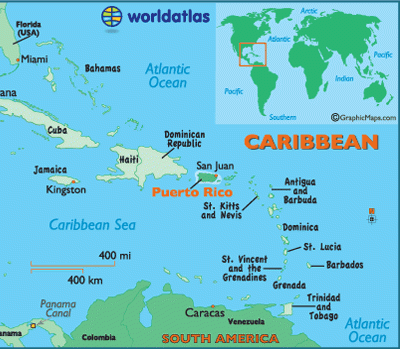
Puerto Rico Map
Puerto Rico Map

Here’s a story from Mary Anastasia O’Grady at the Wall Street Journal. She interviewed Puerto Rican Gov. Luis Fortuño and learned about his plan to boost the island’s economic growth.

Excerpt:

If [Luis Fortuño’s] plan to boost the island’s competitiveness by switching electricity generation from oil to natural gas is to succeed, he’s going to need relief from the pernicious 1920 Jones Act. It prohibits any ship not made in the U.S. from carrying cargo between U.S. ports. There are no liquefied-natural-gas (LNG) tankers made in the U.S. Unless Puerto Rico gets a Jones Act exemption, it cannot take advantage of the U.S. natural gas bonanza to make itself more competitive.

The Jones Act is good if you are a union shipbuilder who doesn’t like competition, or a member of Congress who takes political contributions from the maritime lobby. But it’s bad if you are a low-income Puerto Rican who needs a job. And there are plenty of those.

Puerto Ricans are American citizens but they are significantly poorer than the rest of the country. Per capita income on the island in 2010 was roughly $16,300 compared to just over $47,000 for the nation as a whole.

Life on the island is also expensive, in part because of the high price of electricity, 68% of which is produced using imported oil. The governor’s office says that the price of electricity here went up 100% from 2001 to 2011.

[…][B]ringing down high energy costs remains a fundamental challenge, and one that is exacerbated by new costly federal regulations on emissions that would require the installation of scrubbers on oil-fired electricity plants. To meet those regulations affordably, Mr. Fortuño wants to convert the island’s oil-fired plants to cheaper, cleaner natural gas. To that end, he proposes a pipeline from the southern LNG terminal at Punta Guayanilla across the island to San Juan. The U.S. Army Corps of Engineers has assessed the proposal and said it would produce no significant environmental impact.

It sounds like a plan to help the poor and unemployed. There are only two problems. First, the Sierra Club and local environmentalists have ginned up fears about the project and promised to sue to stop construction. Second, the Jones Act is still in the way.

The governor admits that his administration could have done a better job communicating the pipeline plan to Puerto Ricans, but he also points out that “some of the same groups that have opposed the pipeline have also opposed wind-power and solar projects. They are opposing everything, including waste-to-energy” projects which he maintains are less polluting than landfills.

Mr. Fortuño says that he expects Washington to give him a carve-out for LNG tankers, but he doesn’t have it yet. He also says that a large part of the environmentalist push-back is political, suggesting to me that he ought to be more worried than he is. This kind of politics needs to preserve the status quo of the welfare state. And that implies blocking Mr. Fortuño’s development agenda no matter what it means to the poor.

I thought this article was a neat little way to see how groups of people who understand economics try to pull themselves up out of messes, and who stands in their way. It’s something to think about when you think about poverty – what will really work to lift people out of poverty? And what is the real effect of labor unions and environmentalists on economies?

Six Montreal Muslims arrested in a case of human trafficking and prostitution

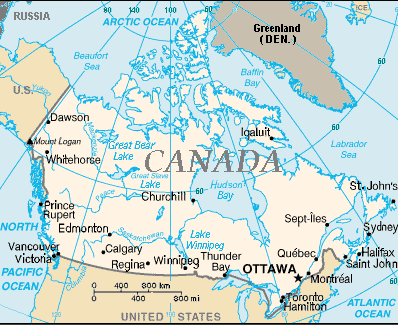
Map of Canada with cities

From CTV Montreal.

Excerpt:

The Montreal police Child Sexual Exploitation Investigations Section has announced the arrest of six young men in a case of human trafficking and prostitution.

Two underage girls allegedly met the suspects in February 2011 and were forced into prostitution.

The girls told police that they managed to flee to their freedom a week later.

Police have arrested Abdul Karim Nassereddine, 20, Naib Ali Soilihi, 20 and Mohammed Rami Taha, 19. Mezri Mehdi Mohamed Hamza, 21, turned himself in Thursday after being sought by authorities.

The two others arrested cannot be named, as they were minors at the time of the alleged offences.

The suspects were charged with a variety of crimes related to sexual assault and prostitution of minors Thursday.

This is not surprise to me. Many people think of Islam as just another religion like Christianity or Judaism, but actually, they are not the same at all.

Rape epidemic in Norway and Sweden

I got these videos from Verum Serum.

Here’s the first: (3 minutes)

And here’s the second: (2 minutes)

Here is my previous story about the three Montreal Muslims convicted of first degree murder for murdering several of their own relatives in an “honor killing”.