

All posts by Wintery Knight

https://winteryknight.com/

17-year-old girl uses firearm to defend herself from burglar

Guns are for self-defense against criminals

My friend Terrell posted this story from Fox 59 local news.

Excerpt:

A 17-year-old girl in Franklin Township is safe after a scary brush with a burglar at her family’s home on Knapp Road Wednesday.

Faith Shilkett was home alone around 2 p.m., when her dog Duke started barking. She walked out of her room and saw a man knocking on the front door.

“He was big. He was muscular. He looked like he could do damage if he got a hold of you,” said the teen. “I was scared if he got in, he could’ve hurt me.”

Faith then took off through the house to lock the other doors. When she did that, she got a glimpse of the man at a deck door. She says the man then went to the garage door and jiggled the handle, trying to get in, and even peered in the window. Faith then ran to her mom’s room and pulled out a gun.

“I stayed back here and I started yelling ‘I’m here. I have a gun. I’m going to shoot,’” she said.

Faith called for help and waited. She said she heard rustling in the garage and the man took off in a white van.

[…]Faith says the man was roughly six feet tall, white, and had brown hair.

Guns are a great equalizer for a contest between a 17-year-old girl and a 6-foot-tall man.

It’s very important that everyone remember what the second amendment is used for in the United States. The second amendment allows law-abiding people to purchase firearms in order to defend themselves from criminals.

Although there is opposition to gun ownership in certain circles, the academic literature is quite clear and decisive. Legal ownership of firearms reduces rates of violent crime. Whenever laws that allow law-abiding citizens to carry firearms for self-defense, violent crime rates decrease. Whenever laws are passed that restrict law-abiding citizens from owning and carrying firearms for self-defense, violent crime rates increase.

The peer-reviewed research

Whenever I get into discussions about gun control, I always mention two academic books by John R. Lott and Joyce Lee Malcolm.

Here is a paper by Dr. Malcolm that summarizes one of the key points of her book.

Excerpt:

Tracing the history of gun control in the United Kingdom since the late 19th century, this article details how the government has arrogated to itself a monopoly on the right to use force. The consequence has been a tremendous increase in violent crime, and harsh punishment for crime victims who dare to fight back. The article is based on the author’s most recent book, Guns and Violence: The English Experience (Harvard University Press, 2002). Joyce Malcom is professor of history at Bentley College, in Waltham, Massachusetts. She is also author of To Keep and Bear Arms: The Origins of an AngloAmerican Right (Harvard University Press, 1994).

Upon the passage of The Firearms Act (No. 2) in 1997, British Deputy Home Secretary Alun Michael boasted: “Britain now has some of the toughest gun laws in the world.” The Act was second handgun control measure passed that year, imposed a near-complete ban on private ownership of handguns, capping nearly eighty years of increasing firearms restrictions. Driven by an intense public campaign in the wake of the shooting of schoolchildren in Dunblane, Scotland, Parliament had been so zealous to outlaw all privately owned handguns that it rejected proposals to exempt Britain’s Olympic target-shooting team and handicapped target-shooters from the ban.

And the result of the 1997 gun ban:

The result of the ban has been costly. Thousands of weapons were confiscated at great financial cost to the public. Hundreds of thousands of police hours were devoted to the task. But in the six years since the 1997 handgun ban, crimes with the very weapons banned have more than doubled, and firearm crime has increased markedly. In 2002, for the fourth consecutive year, gun crime in England and Wales rose—by 35 percent for all firearms, and by a whopping 46 percent for the banned handguns. Nearly 10,000 firearms offences were committed.

[…]According to Scotland Yard, in the four years from 1991 to 1995 crimes against the person in England‟s inner cities increased by 91 percent. In the four years from 1997 to 2001 the rate of violent crime more than doubled. The UK murder rate for 2002 was the highest for a century.

I think that peer-reviewed studies – from Harvard University, no less – should be useful to those of us who believe in the right of self-defense for law-abiding people. The book by economist John Lott, linked above,compares the crime rates of all U.S. states that have enacted concealed carry laws, and concludes that violent crime rates dropped after law-abiding citizens were allowed to carry legally-owned firearms. That’s the mirror image of Dr. Malcolm’s Harvard study, but both studies affirm the same conclusion – more legal firearm ownership means less crime.

Atheist Jerry Coyne explains why morality is impossible for atheists

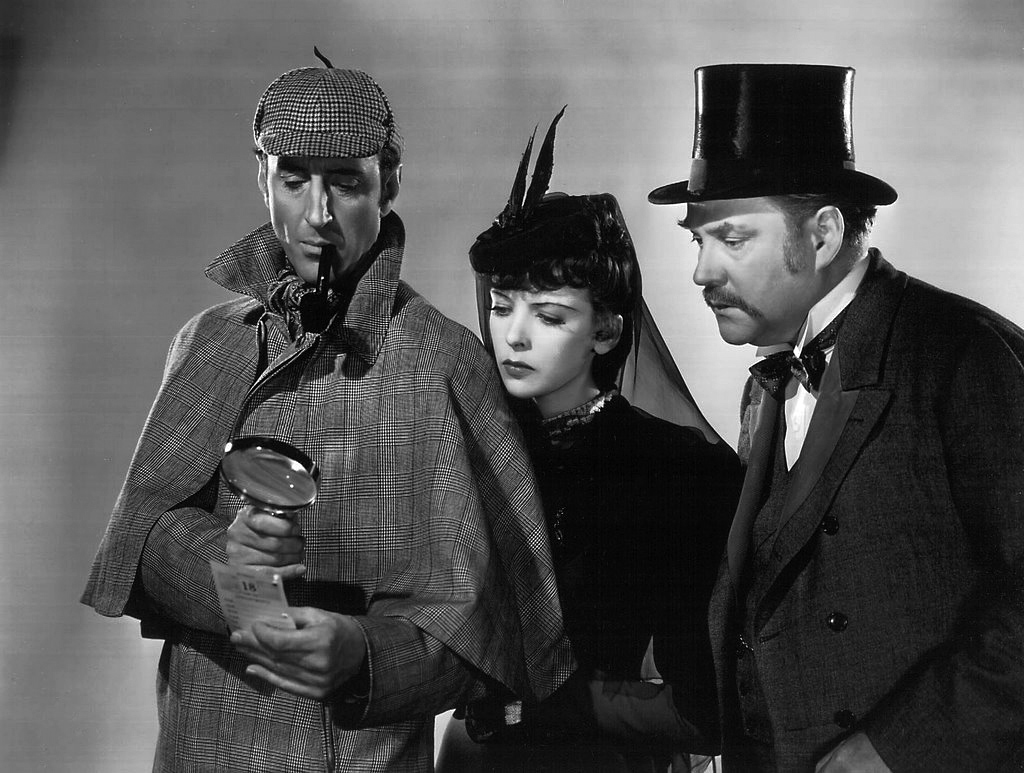
Sherlock Holmes and John Watson about to do philosophy

Let’s review what you need in your worldview in order to have a rationally grounded system of morality.

You need 5 things:

1) Objective moral values

There needs to be a way to distinguish what is good from what is bad. For example, the moral standard might specify that being kind to children is good, but torturing them for fun is bad. If the standard is purely subjective, then people could believe anything and each person would be justified in doing right in their own eyes. Even a “social contract” is just based on people’s opinions. So we need a standard that applies regardless of what people’s individual and collective opinions are.

2) Objective moral duties

Moral duties (moral obligations) refer to the actions that are obligatory based on the moral values defined in 1). Suppose we spot you 1) as an atheist. Why are you obligated to do the good thing, rather than the bad thing? To whom is this obligation owed? Why is rational for you to limit your actions based upon this obligation when it is against your self-interest? Why let other people’s expectations decide what is good for you, especially if you can avoid the consequences of their disapproval?

3) Moral accountability

Suppose we spot you 1) and 2) as an atheist. What difference does it make to you if you just go ahead and disregard your moral obligations to whomever? Is there any reward or punishment for your choice to do right or do wrong? What’s in it for you?

4) Free will

In order for agents to make free moral choices, they must be able to act or abstain from acting by exercising their free will. If there is no free will, then moral choices are impossible. If there are no moral choices, then no one can be held responsible for anything they do. If there is no moral responsibility, then there can be no praise and blame. But then it becomes impossible to praise any action as good or evil.

5) Ultimate significance

Finally, beyond the concept of reward and punishment in 3), we can also ask the question “what does it matter?”. Suppose you do live a good life and you get a reward: 1000 chocolate sundaes. And when you’ve finished eating them, you die for real and that’s the end. In other words, the reward is satisfying, but not really meaningful, ultimately. It’s hard to see how moral actions can be meaningful, ultimately, unless their consequences last on into the future.

Theism rationally grounds all 5 of these. Atheism cannot ground any of them.

Let’s take a look at #4: free will and see how atheism deals with that.

Atheism and free will?

Here’s prominent atheist Jerry Coyne’s editorial in USA Today to explain why atheists can’t ground free will.

Excerpt:

And that’s what neurobiology is telling us: Our brains are simply meat computers that, like real computers, are programmed by our genes and experiences to convert an array of inputs into a predetermined output. Recent experiments involving brain scans show that when a subject “decides” to push a button on the left or right side of a computer, the choice can be predicted by brain activity at least seven seconds before the subject is consciously aware of having made it. (These studies use crude imaging techniques based on blood flow, and I suspect that future understanding of the brain will allow us to predict many of our decisions far earlier than seven seconds in advance.) “Decisions” made like that aren’t conscious ones. And if our choices are unconscious, with some determined well before the moment we think we’ve made them, then we don’t have free will in any meaningful sense.

If you don’t have free will, then you can’t make moral choices, and you can’t be held morally responsible. No free will means no morality.

Here are some more atheists to explain how atheists view morality.

William Provine says atheists have no free will, no moral accountability and no moral significance:

Let me summarize my views on what modern evolutionary biology tells us loud and clear — and these are basically Darwin’s views. There are no gods, no purposes, and no goal-directed forces of any kind. There is no life after death. When I die, I am absolutely certain that I am going to be dead. That’s the end of me. There is no ultimate foundation for ethics, no ultimate meaning in life, and no free will for humans, either.

Richard Dawkins says atheists have no objective moral standards:

In a universe of blind physical forces and genetic replication, some people are going to get hurt, other people are going to get lucky, and you won’t find any rhyme or reason in it, or any justice. The universe that we observe has precisely the properties we should expect if there is, at bottom, no design, no purpose, no evil and no good, nothing but blind, pitiless indifference… DNA neither knows nor cares. DNA just is. And we dance to its music. (Richard Dawkins, River Out of Eden: A Darwinian View of Life (1995))

When village atheists talk about how they can be moral without God, it’s important to ask them to justify the minimum requirements for rational morality. Atheists may act inconsistently with their worldview, believing in free will, expecting praise and blame for complying with the arbitrary standards of their peer group, etc. But there is nothing more to morality on atheism that imitating the herd – at least when the herd is around to watch them. And when the herd loses its Judeo-Christian foundation – watch out. That’s when the real atheism comes out – the atheism that we’ve seen before in countries that turned their backs on God, and the moral law. When God disappears from a society, anything is permissible.

Why does the law say that killing an unborn child is OK, but not a born child?

I'm Scheming Unborn Baby, and I approve this study
I’m Scheming Unborn Baby, and I approve this message

This article from Nancy Flory in The Stream really caused me to stop and think about the plight of unborn children in our age of selfishness.

Nancy starts her piece like this:

As someone who’s faced an unexpected pregnancy — and now has a rambunctious two-year-old — I came across two stories in the last week that stopped me cold. As I explained in an earlier article, I faced uncertainty, financial hardships and downright fear when I discovered I was pregnant. I know what it’s like not to know what the future holds, not to know how I’m going to buy food for my children, to know I’m going to lose my car and go for months without gainful employment, all while unexpectedly pregnant. So I can speak with candor about the two mothers who made headlines this week regarding what they chose to do when faced with an unexpected pregnancy.

I’m just going to quote the second one, you can click through for the first.

She writes:

Emile Weaver — Having Too Much Fun to Stop for Parenthood

An Ohio judge this week sentenced sorority girl Emile Weaver to life in prison without parole for throwing away her newborn baby girl after giving birth in her sorority house’s restroom. The 20-year-old texted her boyfriend following the child’s death, saying, “No more baby,” and “taken care of.”

Prosecutors made the case that Weaver knew all along she wasn’t going to keep the baby and engaged in risky behaviors such as drinking, smoking marijuana and playing in a volleyball tournament while pregnant, reported The Blaze.

Although she apologized during her trial for killing her child and testified that she thought the baby was dead before she put her in the trash, she made legal moves to plead not guilty by reason of insanity and, after the trial, vowed that she would appeal.

The judge did not believe that she was remorseful and handed down the stiff sentence.

Nancy goes on to make the point about abortion. Why is it OK for a woman to kill her unborn child in its 6th, 7th, 8th month of gestation but it suddenly becomes wrong after the child is born? Why is abortion morally right 5 minutes before birth, but morally wrong 5 minutes after birth? What is it that the baby acquires after passing through the birth canal a few inches that gives them the right to life?

Or, isn’t it the case the the location of the child is meaningless, and the child had all the value in the world the moment it was conceived, and a new DNA signature of a human being was created that is distinct from the mother and the father. A new person was made. That new person is not the father, and is not the mother. It’s a new person. And it’s not right to kill innocent people just because the mother wants to have fun and thrills, and escape the responsibility for her actions. That’s really what abortion is – two unmarried people get drunk, have sex for fun and thrills, and then they kill the child because they don’t want their pursuit of fun and thrills to be impacted with expectations, responsibilities or obligations.

This is why I am so suspicious of the women I knew when I was younger who pushed me to have fun, and who hated expectations, responsibilities and obligations. There is a lot of drinking and pleasure-seeking that goes on with young women, and I didn’t want anything to do with it. Fun makes me suspicious. For young people, it seems to go along with playing the victim, avoiding responsibility, and running away from moral obligations. So many young, unmarried women seem to have this desperate desire for fun, thrills and travel. And they are revolted by expectations, responsibilities and moral obligations. Not me – I am deeply suspicious of fun and thrills. It strikes me as childish, and when I read stories about women who have had abortions, I understand what is behind my suspicion.

I’m not killing any unborn children, not for any fun in the world. Not for the best fun the world has to offer. Fun isn’t that important to me, not if I have to break moral laws and even be complicit in murder. No way.