All posts by Wintery Knight

https://winteryknight.com/

Five liberal Democrat policies that hurt minorities

Marriage and Poverty

The five policies are:

  • higher minimum wage rates
  • opposition to school voucher programs
  • releasing criminals from jail
  • affirmative action
  • single mother welfare

This article is by Jason L. Riley, and it appeared in the Wall Street Journal.

Excerpt:

At the urging of labor unions, President Obama has pushed for higher minimum wages that price a disproportionate percentage of blacks out of the labor force. At the urging of teachers unions, he has fought voucher programs that give ghetto children access to better schools.

Both policies have a lengthy track record of keeping millions of blacks ill-educated and unemployed. Since the 1970s, when the federal government began tracking the racial achievement gap, black test scores in math, reading and science have on average trailed far behind those of their white classmates. And minimum-wage mandates have been so effective for so long at keeping blacks out of work that 1930, the last year in which there was no federal minimum-wage law, was also the last year that the black unemployment rate was lower than the white rate. For the past half-century, black joblessness on average has been double that of whites.

Last week the Justice Department said it would release some 6,000 inmates from federal prison starting later this month. The goal, according to the White House, is to ease overcrowding and roll back tough sentencing rules implemented in the 1980s and ’90s.

But why are the administration’s sympathies with the lawbreakers instead of their usual victims—the mostly law-abiding residents in low-income communities where many of these inmates eventually are headed? In dozens of large U.S. cities, violent crime, including murder, has climbed over the past year, and it is hard to see how these changes are in the interest of public safety.

The administration assures skeptics that only “nonviolent” drug offenders will be released, but who pays the price if we guess wrong, as officials have so often done in the past?

When Los Angeles asked the Rand Corp. in the 1990s to identify inmates suitable for early release, the researchers concluded that “almost no one housed in the Los Angeles jails could be considered non-serious or simply troublesome to their local communities” and that “jail capacity should be expanded so as to allow lengthier incarceration of the more dangerous.”

A 2002 federal report tracked the recidivism rate of some 91,000 supposedly nonviolent offenders in 15 states over a three-year period. More than 21% wound up rearrested for violent crimes, including more than 700 murders and more than 600 rapes. The report also noted the difficulty of identifying low-risk inmates. Auto thieves were rearrested for committing more than a third of the homicides and a disproportionate share of other violent offenses.

Keep in mind that when criminals are release, they don’t go move into wealthy progressive neighborhoods. It’s not the wealthy leftists elites who have to deal with the released inmates. It’s the poor, low-income minority neighborhoods that have to deal with them.

By the way, I covered the minimum wage argument here, and I covered the school choice argument here.

That covers the first 3 policies. This article from The College Fix covers the fourth policy, affirmative action.

It says:

A UCLA law professor critiques affirmative action as detrimental to the very people it strives to aid: minority students.

Professor Richard Sander, though liberal-leaning, has deemed affirmative action practices as harmful, a notion that contradicts a liberal view in college admissions, said Stuart Taylor, a nonresident senior fellow at the Brookings Institution.

[…]Sander began teaching law at UCLA in 1989. After a few years he garnered an interest in academic support and asked permission to analyze which strategies most effectively assist struggling students.

After reviewing statistics on performance, especially those of students with lower academic merit, he noticed correlations between race and academic success.

“I was struck by both the degree to which it correlated with having weak academic entering credentials and its correlation with race,” Sander said in a recent interview with The College Fix. “And as I looked into our admissions process I realized that we were giving really a large admissions preference.”

Sander noticed that students admitted into the law school with lower academic credentials than their peers had significantly lower percentages of passing the Multistate Bar Examination, Sander said. This especially pertained to minority students who were given special consideration in the admittance process due to their race rather than their academic preparedness.

He then began thinking about whether or not these students would have better chances of succeeding if they went to a less elite university, he said.

He called this discrepancy a mismatch; when minority students with lower credentials than their peers are accepted into more challenging universities and then suffer academically as a result.

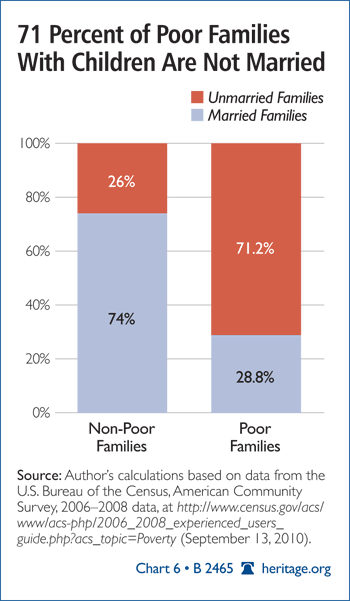
And the fifth policy is welfare. Welfare encourages women to not marry the men that they have sex with, since they will lose their single mother benefits if they do. Children who are raised fatherless are more likely to struggle in a number of areas, and they are especially likely to be poor. What we should be doing (if we really want to help the poor) is paying people to get married and stay married. But Democrats are opposed to that. The connection between welfare, fatherlessness, poverty and crime is explained in a previous post.

Pastor Mark Driscoll explains reality of sin, the centrality of Jesus Christ

Bible study that hits the spot

Mark Driscoll has a series he does called “Best Sermon Ever”, where he invites other pastors to give their sermons. But today’s sermon really is the Best Sermon Ever, but it’s given by Mark Driscoll (sent to me by super-Wife McKenzie). I asked McKenzie to send me the best sermon she had ever heard, and now it’s the best sermon that I have ever heard.

As always, when dealing with Mark Driscoll, we note that he does not hold women accountable to the Bible on moral issues, but instead deflects responsibility for the bad decisions of women to men, often to non-Christian men who don’t even have objective morality . Nevertheless, I agree with him 99.9% of the time, and I think you will agree when you listen to the sermon that this man has a gift for preaching. I could not find a single thing wrong with this sermon, I give it a score of 12 billion out of 10.

This is the link to his web site that has the sermon, the audio and the full transcript. The title of the sermon is “The Father of a Murdered Son”.

This is a Youtube video that someone uploaded: (audio only)

Here is the beginning of the sermon:

Luke 20:9–18, “The Father of a Murdered Son.”

“And he,” that is Jesus, “began to tell the people this parable,” which is a small story that tells a big truth. “A man planted a vineyard and let it out to tenants and went into another country for a long while. When the time came, he sent a servant to the tenants, so that they would give him some of the fruit of the vineyard. But the tenants beat him and sent him away empty-handed. And he sent another servant. But they also beat and treated him shamefully, and sent him away empty-handed. And he sent yet a third. This one also they wounded and cast out. Then the owner of the vineyard said, ‘What shall I do? I will send my beloved son; perhaps they will respect him.’

“But when the tenants saw him, they said to themselves, ‘This is the heir. Let us kill him, so that the inheritance may be ours.’ And they threw him out of the vineyard and killed him.”

Jesus here is on his way to Jerusalem. He is days from his crucifixion. He is going to be murdered in a brutal and bloody way. And as he’s approaching the cross and the crowds have gathered around him, he wants us to see human history and our lives individually from the perspective of God.

And this is very important because we live in a day where this is not encouraged. This is actually discouraged. We live in a day in which we want to see our lives and history from our perspective according to our own sinful desires and our own selfish pursuits, which can then even lead us to the point of questioning, is there a God? Or if there is a God, questioning the goodness of God. Is there a God? Does he care? Is he involved? Does he love us? And then we put ourselves in the position of judging God.

And then some of us can even go to the Scriptures and say, “I don’t think God should ever get angry. He should never judge anyone. That whole issue of hell seems highly unnecessarily and over-reactionary. Perhaps, that was primitive teaching from a former day, thankfully we’ve evolved beyond that.” And it’s because we are the guilty looking at the judge and wanting to replace our position with his that we might judge him.

WHO DOES EACH CHARACTER IN THE PARABLE REPRESENT?

Jesus here wants for us to have an opportunity, in as much as we’re able, with a three-pound, fallen brain and sinful proclivity and self-interest to put a hat on and to look at things, not from our perspective, but from God’s perspective, to see our lives as God sees them, to see human history as God sees it. Now we’re not God, so we have a limited capacity to do this. But in telling this parable, Jesus is trying to open our understanding to what it is like for God to deal with you and me and us. And he does so in the form of a parable.

For us to extract significant meaning from the parable, it requires that we go through, look at each of the characters and ask, to whom does that refer?

I can’t really excerpt this sermon. You simply must listen to all of it.

If you are anything like me, this sermon is going to hold you accountable about whether you are doing everything you can to tell non-Christians about Jesus, and why his actions are the most important events ever to occur in history. I listened to it and I immediately sat down and wrote an 1100 word essay to very special woman about my life, and how I would like to be more faithful as a Christian in service to the gospel of Jesus Christ.

In particular, I thought of my co-workers who are Muslim, Hindu and Jewish, and how important it is for me to let them know that they can ask me about the story of Jesus and that I will tell them the gospel. It made me think about how much I would like my non-Christian co-workers to hear the gospel, and understand who Jesus claimed to be, and the significance of his actions.

It took me an hour to write this essay to the special lady, and  I credit the sermon with stimulating me to write out my innermost thoughts about how Christ saved me, and what I would like to be doing in response.

Concealed carry permit holder uses legal firearm to defend police officer

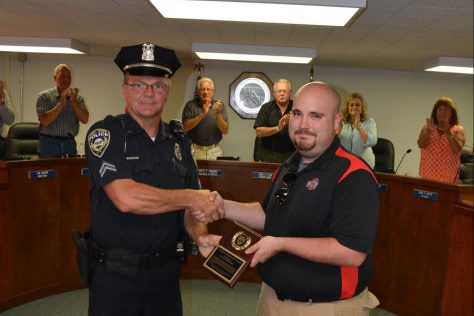
Dylan Deboard received the Citizens Award of Valor on July 25, 2016
Dylan Deboard received the Citizens Award of Valor on July 25, 2016 for assisting police officer

This story is from The Blaze.

Excerpt:

An Ohio man with a concealed carry permit was presented Monday with a Citizens Award of Valor for coming to the aid of police officer under attack last year.

Cpl. Michael Wheeler of Ohio’s Mount Vernon Police Department told Inside Edition that he owes his life to Dylan DeBoard, the man who saved him.

“Every time I see him, I let him know how much I appreciate what he did,” he said.

According to Wheeler, he was attacked last year by a homeless man who later admitted to being high on crystal meth. While he was attempting to subdue his attacker, the man knocked Wheeler to his back and straddled him. He ripped away his microphone and reached for his gun.

Wheeler said that in his 14-year career he’s “never been in that situation before.”

“I’ve always been able to take control of a situation,” he said.

According to Wheeler, all of a sudden, the man stopped struggling with him. He looked up to see a man with a gun.

“I didn’t know if he was pointing at me or [the attacker],” Wheeler said.

Then the man with the gun — DeBoard — announced that he was a concealed carry holder. Wheeler was then able to use his attacker’s hesitation to flip him over and handcuff him.

The officer said he is thankful for the opportunity to honor DeBoard for his actions. “I wish a lot more of society would do what he did,” he added. “There were people standing around, but they were just watching. I kept wondering why people didn’t do anything.”

I think the reason why the other bystanders were not doing anything is because they were not armed, they were not trained to use a firearm, and they did not have moral clarity. We have lost moral clarity because we surround ourselves with nonsense on television where celebrity is more important than heroic character.

First, let’s talk about the training factor. To get a concealed carry permit in Ohio, you have to complete a course on handgun safety, pass a written test and you also have to pass a marksmanship test. This is because the evaluators do not want you to bring disrepute on legal firearm ownership because you aren’t qualified to use the tool you are carrying responsibly. The safety and accuracy test is quite difficult, depending on the state – you might be asked to hit 4″ targets at 5, 10 and 15 yards, for example, with 20 out of 25 rounds fired. That’s not easy!

Previously, I blogged about a report that showed that concealed-carry permit holders commit crimes at a lower rate than police officers. This is because the people who get these permits are careful not to do anything to lose them. They want to be safe, but they are also there to watch out for others. It is very important that we recognize that there are some people in our society who make poor choices (e.g. – drug use), and that we need the ability to defend ourselves and others from them.