Did the Jesus’ followers expect Messiah to rise from the dead alone, before the final resurrection?

Investigation in progress

Why did the early church apply the word resurrection to Jesus? If they wanted to say that Jesus was alive and had triumphed over his enemies and was exalted by God, then why not say that? Why not say that he had been bodily assumed into Heaven and was now with the Father? The early proclamation that Jesus rose from the dead is a puzzle for naturalists, because it seems unexpected given what most Jews believed about the concept of resurrection. Jews didn’t have any concept of an individual resurrection before the day of judgment. Resurrection was something that happened to all the righteous at the end of the world. Not to one person.

Here’s a post from Tough Questions Answered to explain.

He quotes Tim Keller’s “The Reason for God” so:

The report of Jesus’s resurrection would have also have been unthinkable to the Jews. Unlike the Greeks, the Jews saw the material and physical world as good. Death was not seen as liberation from the material world but as a tragedy. By Jesus’s day many Jews had come to hope that some day in the future there would be a bodily resurrection of all the righteous, when God renewed the entire world and removed all suffering and death.  The resurrection, however, was merely one part of the complete renewal of the whole world, according to Jewish teaching. The idea of an individual being resurrected, in the middle of history, while the rest of the world continued on burdened by sickness, decay, and death, was inconceivable.

[…]If someone had said to any first-century Jew, “So-and-so has been resurrected from the dead!” the response would be, “Are you crazy? How could that be? Has disease and death ended? Is true justice established in the world? Has the wolf lain down with the lamb? Ridiculous!” The very idea of an individual resurrection would have been as impossible to imagine to a Jew as to a Greek.

And there’s more in a second post (this is Keller quoting N.T. Wright):

Over the years, skeptics about the resurrection have proposed that the followers of Jesus may have had hallucinations, that they may have imagined him appearing to them and speaking to them. This assumes that their master’s resurrection was imaginable for his Jewish followers, that it was an option in their worldview. It was not.

Others have put forth the conspiracy theory, that the disciples stole the body and claimed he was alive to others. This assumes that the disciples would expect other Jews to be open to the belief that an individual could be raised from the dead. But none of this is possible. The people of that time would have considered a bodily resurrection to be as impossible as the people of our own time, though for different reasons.

Another reason to question whether the concept of resurrection could be applied to Jesus is because there is no expectation that the Messiah was even supposed to die, much less be resurrected.

Dr. William Lane Craig explains:

The original disciples believed that Jesus was risen from the dead despite almost every predisposition to the contrary. Three aspects of the disciples’ disposition following Jesus’s crucifixion put a question mark behind the faith and hope they had placed in Jesus:

  1. Jesus was dead, and Jews had no anticipation of a dying, much less rising, Messiah.
  2. According to Jewish law, Jesus’s execution as a criminal showed him out to be a heretic, a man literally under the curse of God.
  3. Jewish beliefs about the afterlife precluded anyone’s rising from the dead before the general, eschatological resurrection of the dead.

It is important to appreciate, with respect to the first aspect of their situation, that in Jewish expectation Messiah would conquer Israel’s enemies and restore the throne of David, not be shamefully executed by them. Jesus’s ignominious execution at the hands of Rome was as decisive a disproof as anything could be to a first century Jew that Jesus was not Israel’s awaited Messiah, but another failed pretender. Failed Messianic movements were nothing new in Judaism, and they left their followers with basically two alternatives: either go home or else find a new Messiah. These were no doubt hard choices, but nevertheless they were the choices one had. After surveying such failed Messianic movements before and after Jesus, N. T. Wright remarks,

So far as we know, all the followers of these first century Messianic movements were fanatically committed to the cause. They, if anybody, might be expected to suffer from this blessed twentieth century disease called ‘cognitive dissonance’ when their expectations failed to materialize. But in no case, right across the century before Jesus and the century after him, do we hear of any Jewish group saying that their executed leader had been raised from the dead and he really was the Messiah after all.

And here’s more support for the no individual resurrection point:

Finally, Jewish hope in the resurrection of the dead was invariably a corporate and eschatological hope. The resurrection of all the righteous dead would take place after God had brought the world as we know it to an end. Surveying the Jewish literature, Joachim Jeremias concluded,

Ancient Judaism did not know of an anticipated resurrection as an event of history. Nowhere does one find in the literature anything comparable to the resurrection of Jesus. Certainly resurrections of the dead were known, but these always concerned resuscitations, the return to the earthly life. In no place in the later Judaic literature does it concern a resurrection to d o x aas an event of history.41

Even if the disciples’ faith in Jesus had somehow managed to survive the crucifixion, they would at most have looked forward to their reunion with him at the final resurrection and would perhaps have preserved his tomb as a shrine, where Jesus’s bones might rest until the eschatological resurrection. That was the Jewish hope.

But we know that that did not happen. Despite their having most every predisposition to the contrary, it is an indisputable fact that the earliest disciples suddenly and sincerely came to believe that God had raised Jesus of Nazareth from the dead.

So I hope that enough has been said there for you to realize that talking about resurrection with respect to Jesus is a very weird thing for the early church to do – that is, unless it actually happened.
Obama’s Affordable Care Act: health care costs rise by the most in 32 years

Trust Obama with your health care plan

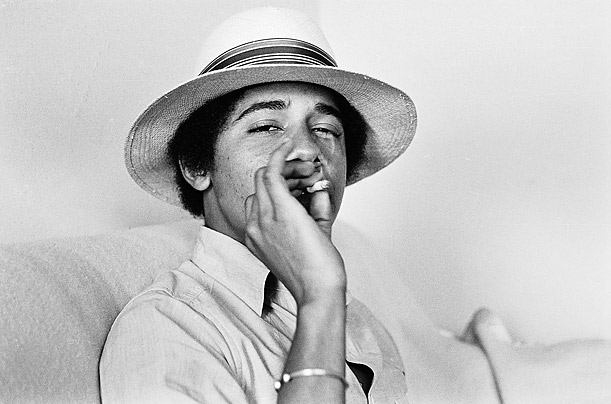
Should you entrust a “community organizer” to reform health care? What if he had no record of having successfully reformed health care in his resume – at any level of government? What if he refused to show you his academic transcripts? What if he had not a single private sector job related to health care in his resume? What if he had written an autobiography where he confessed to drug use that has very possibly damaged his brain so that all he can do is play golf and read a teleprompter?

Should you hire someone like that to reform health care? What if he only gives you one reason to hire him: his skin color? Should you hire someone to reform health care based solely on his skin color?

CNN Money explains what Obamacare has done to health care costs:

Health care costs rose sharply in August.
Prices for medicine, doctor appointments and health insurance rose the most last month since 1984. The price increases come amid a broader debate about climbing health care costs and high premiums for Obamacare coverage.

A recent report by Kaiser/HRET Employer Health Benefits forecasts that the average family health care plan will cost $18,142, up 3.4% from 2015. That’s faster than wage growth in America.

Medical care costs altogether rose 1% just in August from July, according to the Consumer Price Index, a report on price inflation from the U.S. Labor Department.

Premiums on the Obamacare exchanges are expected to rise by double-digits this year.

Some health insurers, such as Aetna, have recently announced they would pull out of the Obamacare exchanges, saying Obamacare patients have turned out to be sicker and costlier than expected.

Overall, workers are paying up more for deductibles. Over half of U.S. workers with single coverage health insurance plans pay a deductible of $1,000 or more, up from 31% of workers in 2011.

And the health care price increases come as inflation overall continues to be low. Consumer prices altogether rose 1.1% in August compared to a year ago.

Consider this article from Investors Business Daily to illustrate the importance of not picking a President based on confident words and personal charisma.

It says:

Employer-based health insurance premiums climbed 4.2% this year for family plans, according to an annual Kaiser Family Foundation report. That’s up from 3% the year before.

Since 2008, average family premiums have climbed a total of $4,865.

The White House cheered the news, saying it was a sign of continued slow growth in premium costs.

[…]”We will start,” Obama said back in 2008, “by reducing premiums by as much as $2,500 per family.”

That $2,500 figure was Obama’s mantra on health care. You can watch the video if you don’t believe it.

And Obama wasn’t talking about government subsidized insurance or expanding Medicaid or anything like that. He specifically focused on employer provided health care.

For “people who already have insurance, and the employers who are providing it,” he said at one campaign event, “we will work to lower your premiums by up to $2,500 per family.”

Let’s watch the video. I want everyone to see how confident a clown can sound when he lies about being able to solve problems that he knows nothing about.

He had no record of achievement in this area. None, Zero, Zip. And the same goes for his claims about keeping your doctor, keeping your health care plan, and so on. It was all lies – just things that people wanted to believe, that Obama did not have the ability to make happen. He had never, ever done anything with health care ever before. You would literally have had a better result if you had handed the job of health care reform to a turnip.

Honestly, someone’s skin color, sex, national origin or sexual orientation is not a reason to hire them to do an important job. Obama isn’t qualified to flip burgers in a McDonald’s. Why would anyone entrust someone with no transcripts and no resume to undertake such a momentous task? This is hurting real people – real people are having to pay the costs of electing an affirmative action President. We really need to not do things like that.

Next time, if we are going to hire someone to reform health care, let’s hire someone like black economist Thomas Sowell. At least he has experience in economics enough to know what happens next to all parties involved in a policy implementation. Obama, on the other hand, has doubled the national debt from $10 trillion to $20 trillion – an enormous burden on the next generation of American workers. What did we get for all this spending? Absolute and complete failure across the board.

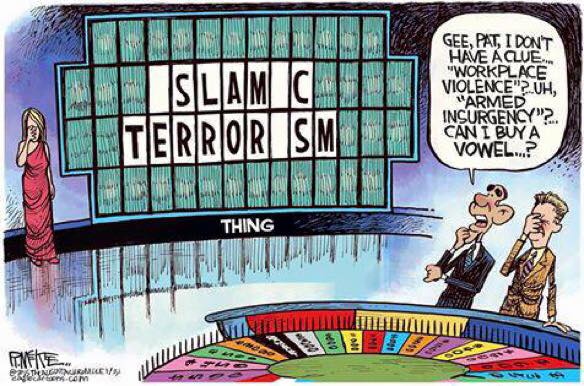
After recent terrorist attacks, Obama orders intelligence agencies to study global warming

Democrats think that the real threat to America is not radical Islamic terrorism
Democrats think that the real threat to America is global warming

The leftist USA Today reports on Obama’s tough response to terrorist attacks in New York, New Jersey and Minnesota.

Excerpt:

A high-level presidential directive signed Wednesday puts climate change at the center of decision-making on national security, requiring agencies to consider current and future climate trends in all “relevant national security doctrine, policies, and plans.”

President Obama has long argued that climate change is a national security issue, and the White House trumpeted the memorandum as an “historic step to address the national security implications of climate change.”

But the policy changes are mostly evolutionary, following no fewer than three executive orders directing federal agencies to take climate change into consideration when adopting policies.

The eight-page presidential memorandum carries the same force of law within the federal government as an executive order, and its policies will carry over into the next administration unless explicitly rescinded by the next president. In fact, the first agency implementation reports required under Obama’s order aren’t due until February — the month after Obama leaves office. It also sets up a panel, headed by the president’s national security adviser and chief science adviser, to catalog data on climate change and its effects — and giving intelligence agencies more of a role in analyzing climate data.

We have real problems with real Islamic terrorists, and the President is concerned with global warming. I guess Obama’s top campaign donors didn’t get enough taxpayer money from “stimulus” grants to their (now bankrupt) green energy companies (e.g. – Solyndra) the first time around. I can tell you this: when I go to a shopping mall or walk around downtown, it’s not the global warming monster that I am afraid of: it’s the radical Islamic terrorists. Why doesn’t our government understand this?

Other countries DO understand this, though.

When the UK sees terrorist attacks, they do their job – protect the public from terrorist attacks.

The UK Telegraph reports:

Britain’s top spy has warned that terrorist groups like so-called Islamic State pose a “persistent threat” that is set to last a “professional lifetime”.

It comes as intelligence agencies are set to recruit more spies, with MI6 said to be getting another 1,000 staff over the next five years.

In a rare public appearance, Alex Younger, the head of MI6, insisted Britain had made significant improvements in the way it tackles terrorism but admitted there was little sign of the “enduring” danger disappearing soon.

[…]Asked if the terror threat from groups like IS and al Qaida had reached its apex, Mr Younger said: “I would like to be optimistic about this but we have got quite long experience of this phenomena now and I see it very much as the flip side to some very deep-seated global trends, not least of all globalisation, the reduction of barriers between us.

“It’s a function also of the information revolution and the capacity for ideas to travel. It is fuelled by a deepening sectarian divide in the Middle East and there are some deep social economic and demographic drivers to the phenomenon that we know as terrorism.

“Allied with the emergence of state failure this means that, regrettably, this is an enduring issue which will certainly be with us, I believe, for our professional lifetime.”

Last year’s Strategic Defence and Security Review said £2.5bn was being invested in security and intelligence agencies with an additional 1,900 staff to ensure they have “the resources and information they need to prevent and disrupt plots against this country at every stage”. 

I wouldn’t have a problem paying taxes to a government that actually believed that it was important to not let terrorists kill me. But clearly my taxes are being wasted by this administration. They have been so clouded by fanciful faith-based ideology that they are incapable of doing their jobs.