Tag Archives: Views

On the issues: assessing the 2016 Republican presidential candidates

Latest Republican presidential primary polls
Latest Republican presidential primary polls (click for larger image)

The PDF is here. (50 pages, but you only have to read about the candidates you might consider voting for)

Unfortunately, radically leftist Politico is the only one with a write-up on it, so here goes:

The hard-line conservative arm of the Heritage Foundation has tough criticism for much of the 2016 field, but high praise for the Texas senator.

The political arm of The Heritage Foundation has released a detailed assessment of the 2016 Republican presidential field — and it offers harsh words for many candidates. But not for Sen. Ted Cruz.

Cruz receives almost exclusively praise for his stances in the 50-page 2016 presidential policy scorecard, the first of its kind produced by Heritage Action. The report grades the candidates across six categories: growth, opportunity, civil society, limited government, favoritism and national security.

Many of the lines in the scorecard appear destined for future attack ads.

Jeb Bush, for instance, is accused of having “kowtowed to the state’s environmental lobby” in Florida. Chris Christie “has shown favoritism toward well-connected real estate developers.” Rand Paul’s “views at times veer outside the conservative mainstream.” And Donald Trump backs “massive tariffs that would damage the American economy.”

Cruz, by contrast, manages to emerge with barely a blemish, receiving only softly worded critiques of his adopting “sound policies advanced by others” rather than crafting his own.

[…]“Cruz has been willing to pay a political price for taking on government favoritism,” the report reads.

The group even forgives Cruz for one of the few trespasses he has made against its positions, voting for a bill that served “as a bargaining chip for [Export-Import Bank] allies to secure reauthorization.” The report credits him for later switching his vote and then publicly attacking Republican Senate Majority Leader Mitch McConnell for allegedly lying about his plans.

Bobby Jindal, who is running hard to the right in Iowa, receives among the more glowing reviews. So does Marco Rubio, who angered the right with his pursuit of a comprehensive immigration plan after first being elected with tea party support.

The two current front-runners in the polls, Ben Carson and Trump, were dinged for their lack of a record on conservative causes and a lack of specifics in their visions. “His unconventional foreign policy prescriptions raise more questions of significant consequence than they answer,” Heritage writes of Trump.

Bush was singled out for some of the most biting critiques. “Has shown favoritism toward Florida special interests and supports amnesty” for undocumented immigrants, reads one bullet point.

In its 2016 assessment, Heritage dings Bush for not supporting recent efforts to defund Planned Parenthood this fall because he said he opposed precipitating a government shutdown. The report accuses him of “playing to President [Barack] Obama’s talking points rather than reinforcing conservatives.”

No, everyone knows that my list of candidates favors governors who have a history of putting in place actual policies that actually affected real people in the real world and got real conservative results. So on that score, Cruz and Rubio way down the list because they have achieved very little:

  1. Scott Walker
  2. Bobby Jindal
  3. Rick Perry
  4. Ted Cruz
  5. Marco Rubio

Ted Cruz’s Twitter feed and his overall feel to me is that all he does is talk, talk, talk. He just doesn’t have the record of Bobby Jindal at putting policies into place. For example, as governor, Jindal actually cut spending. He actually put in place pro-life measures that actually saved lives. He actually put in place a school choice program that helped low-income students get out of failing schools. He actually cut off funding for Planned Parenthood. He actually defended religious liberty. Cruz is just a senator, so he hasn’t got that proven record. I believe he would be conservative, but I feel safer trusting someone with experience.

Having said that, the more I read reports like this Heritage Action Scorecard report, I am finding out that Cruz has been willing to at least pay a price politically for doing the right thing at various times. So, although he does not have the accomplishments that the governors have, he has been willing to push conservative values when it was not to his advantage, politically. I have to admit, there is some value to this in one sense – we know that he would do what he says no matter what. But there is a problem with Cruz. We don’t know whether he is able to create clever policies that will draw the votes of independents and even moderate Democrats. That’s what Walker and Jindal were able to do. So, although I respect what the Heritage Action team have written, I am not changing my rankings.

Tonight’s debate

Be sure and tune in to both debates tonight on Fox Business, as I am expecting Jindal and Cruz to outperform their competitors in their respective debates:

Republican debate – Fox Business/Wall Street Journal

Time – Primary: 9 p.m. ET. Secondary: 7 p.m. ET

Location – Milwaukee Theater, Milwaukee, Wisconsin

Moderators – Gerard Baker, Neil Cavuto, Maria Bartiromo

Primary: All candidates averaging at least 2.5 percent in four most recent national polls by Nov. 4.

Secondary: Remaining candidates averaging at least 1 percent in one of the four most recent polls.

Primary: Donald Trump, Ben Carson, Marco Rubio, Ted Cruz, Jeb Bush, Carly Fiorina, John Kasich, Rand Paul.

Secondary: Chris Christie, Mike Huckabee, Bobby Jindal, Rick Santorum.

Candidates on my list are in bold. The debate will be live-streamed, so you have no excuses for missing it. This one promises to be a good one. The moderators will not be amateurs as with the Democrat-biased CNBC debate.
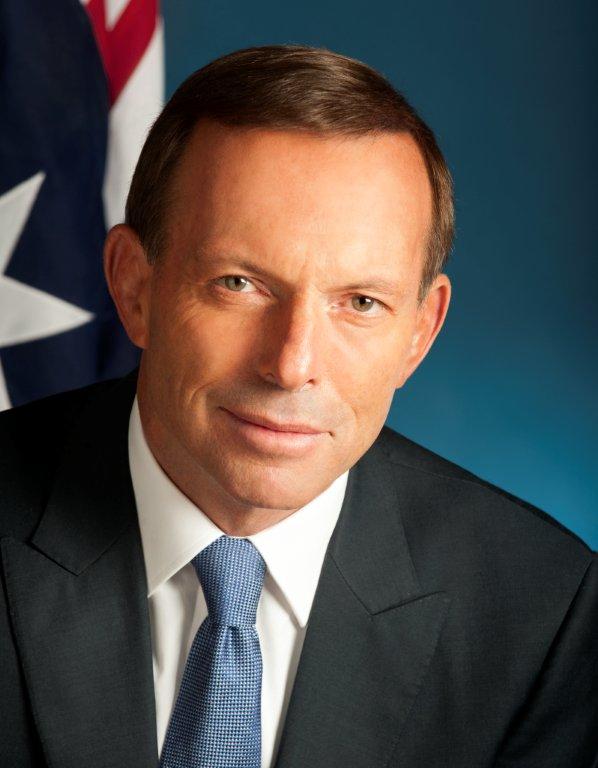
Conservative Christian Tony Abbott wins majority in Australia

Tony Abbott, future Prime Minister of Australia

Timothy Stanley of the UK Telegraph reports that Australia has elected a Stephen Harper of their own.

Excerpt:

Tony Abbott has won the Australian election – a blow not only to the Australian Labor Party but to Left-wingers everywhere who presumed that he was too “Neanderthal” to win. Well, us Neanderthals will be having a barbie tonight and sculling some beers to celebrate. “Good on yer, mate!”

Abbott won for two reasons. First, the Australian Labor Party is going through a long-term identity crisis. The ALP was once the party of the working man (and Sheila) but in recent years it’s succumbed to the worst aspects of factional politics, becoming a magnet for liberal pressure groups desperate for their slice of the taxpayers’ pie. The party contained plenty of factions in the past but it always managed to steer a sensible middle course between them – so while it was the ALP in the 1970s that established Australia as an outward-looking, Pacific power it was also the ALP in the 1980s that recognised the need for economic reform and rejected protectionism. It’s the party of both Gough Whitlam and Les Patterson.

However, in recent years the Left gained an ascendance over the Right that undid that delicate balance. Under Gillard and Rudd, the ALP “bought” off Australia’s metropolitan elites by embracing issues like gay marriage and the green agenda – the latter threatening the livelihoods of ordinary Australians trying to drill, mine and log their way through the global recession. It invested in silly, expensive projects that turned into giveaways to client companies and unions. And it displayed all of its internal bickering in public, reducing national politics to student union shenanigans. The ALP is now severed from the base that it once represented so well, leaving the ordinary blokes and blokesses looking around for something new.

[…]On the quiet, Abbott has picked up some of the politics that the ALP abandoned. He is said to be a devotee of BA Santamaria, the Catholic thinker who tried to build a Christian Democratic movement that combined social justice and social conservatism. Abbott’s conservatism is plain to see: he rejects doctrinaire environmentalism and favours a far freer and competitive market than the ALP’s clients would ever tolerate. But he also has Santamaria’s concern for social justice: Abbott wants to introduce a scheme that would pay for parental leave to encourage mothers and fathers not only to spend more time with their children but to have more of them, too. Dig beneath that hard man image and you’ll find a politician who is considerably softer and complex. Whereas some Western conservatives seem to be entirely motivated by the desire to win (Romney, Cameron), Abbott has a philosophy and – almost unique in our materialist age – a theology.

This puts him in the George W Bush, Stephen Harper compassionate conservative tradition – the tradition that tends to attract the most votes. For while British Tories might look at Abbott’s politics and language and sneer, they would do well to remember this important distinction. Tony Abbott wins elections; David Cameron has yet to do even that.

Congratulations, Conservative Coalition!

My previous post on Tony Abbott is here, if you want to know more about his policies.

Conservative coalition leader Tony Abbott leads by 6 points in latest Australia election poll

Tony Abbott, future Prime Minister of Australia

First the latest Nielsen poll results from the Australian Broadcasting Corporation (ABC).

Excerpt:

Latest opinion polls show a further drop in support for Labor two weeks out from an election, with one indicating the Prime Minister may struggle to hold his own seat.

The Nielsen poll, published on Fairfax websites, shows Labor’s primary vote has fallen two points to 35 per cent.

After preferences, that gives the Coalition a six-point lead – 53 per cent to 47 per cent.

If the results were replicated evenly across the country on election day, Labor would lose 10 seats.

The poll of 2,500 respondents has a margin of error of 2.6 per cent.

Meanwhile, a Newspoll published in The Australian newspaper, shows Prime Minister Kevin Rudd is behind the Coalition candidate, Bill Glasson, in his Brisbane seat of Griffith.

The poll of 500 voters shows Mr Rudd trails his opponent 52 per cent to 48 per cent on a two-party preferred basis. The margin of error is 4.4 per cent.

Another Newspoll of almost 1,400 voters in the Coalition’s eight most marginal seats in Queensland shows the Coalition’s primary vote has surged eight points to 54 per cent, while the ALP’s primary vote has slipped to 32 per cent.

It shows the Coalition has a commanding two-party preferred lead of 60 per cent to Labor’s 40 per cent.

Mr Rudd’s personal support has also fallen to 39 per cent, with 49 per cent of voters across the marginal seats preferring Opposition Leader Tony Abbott.

The Coalition is is composed of the Liberal party (which is actually the conservative party) and the National party (which is also conservative).

I found an interview with Tony Abbott posted on India Today, when I searched for some keywords related to his policies. I searched for a detailed policy-oriented interview in the mainstream media, but couldn’t find much. Strangely enough, the Australian media seemed to be more concerned with gaffes and fear-mongering about Abbott’s socially conservative views. It’s as if the mainstream media is aiming for some sort of Jon Stewart coverage of the election, instead of telling us about each candidate’s plans and proposals.

Here’s some of the interview:

1. What are your plans to grow the economy?
The Liberal Party understands that successful businesses generate prosperity for the entire community by creating jobs, investing in growth and earning important export income.

We will lower costs for Australian businesses by removing Labor’s carbon tax. We will take the shackles off Australian businesses by cutting $1 billion in red tape every year. And we will boost productivity by encouraging more people into the workforce with better child care and a paid parental leave scheme and we will build 21st century infrastructure.

The economy will be strengthened by a new lowered company tax rate of 28.5% from 1 July 2015. This builds on the Coalition’s track record of delivering real tax reform focussed on cutting and simplifying taxation in Australia. Our fully funded tax cut will restore confidence in the management of Australia’s economy and boost job creation and investment.

The Coalition will also build a more diverse, world-class economy – a 5 pillar economy – to unleash Australia’s real economic potential. In particular, we will build on our strengths in manufacturing innovation, agriculture exports, advanced services, world class education and research as well as boosting mining exports.

2. The cost of living has gone up in the recent years, how will the Liberals help families cope with the rising costs?
We will start reducing cost of living pressures for families by immediately scrapping Labor’s carbon tax, taking the pressure off rapidly rising electricity and gas prices.

The average family will be $500 better off next year alone and seniors will still keep their fortnightly pension and benefit increases- all without a carbon tax. We will not proceed with Labor’s FBT changes on cars. And we will restore the Private Health Insurance Rebate as soon as we responsibly can.

3. We have a lot of small businesses in our community, how will Liberals help them? 
The Liberal Party understands the small businesses are the real job creators in the economy, employing almost half of the workforce in Australia. We will reduce costs for every business by abolishing the carbon tax, directly reducing electricity, gas and transport costs. By removing $1 billion of red tape each year, small businesses will be able to put more time, effort and resources in their ‘real’ work, rather than complying with complex and unnecessary government requirements.

The Coalition’s paid parental leave scheme will mean small businesses would no longer be disadvantaged in the ‘war for talent’, attracting and keeping quality staff.

We will also ease expense pressures on small businesses by delaying the increase of compulsory superannuation contributions to 12 per cent by a further two years.

8. Do you have a view about same-sex marriage?
There are very strong feelings on both sides of this particular issue right now. I take a conservative position on it myself. I think that we should not lightly change something which has been this way since time immemorial. But I don’t believe that I can necessarily impose my view on society for all time, all I can do is candidly and honestly tell people what my view is. I support the traditional definition of marriage as between a man and a woman. Now I know that others dispute this, because I have lots of arguments inside my own family on this subject now. But my position, it’s always been clear, it’s always been consistent, and as long as I’m in the Parliament if the issue comes up that’s the way I will vote. Whether it remains for all time the Liberal Party, and the Coalition’s position, well that will be a matter for our party, for our Coalition if it were to come up in a future Parliament.

11. Everyone is talking about the Asian Century, what does this mean for the Liberals? What are your plans?
An important element of our economic plan for Australia is to strengthen our trading relationships with Asia, welcome investment from the region, boost our exports and deepen Australia’s knowledge of and engagement with countries in Asia. We recognise the rapid emergence of both China and India and the opportunities this will afford Australia in the future.

Specifically, we will take real action to increase economic activity by fast-tracking Free Trade Agreements with China and India amongst others.

We will strengthen our diplomatic relationship and trade ties with India and boost mining exports by exporting uranium to that country.

We will help Australians gain study and work experience, strengthen the ties with the region, learn to adapt behaviour to Asian contexts and work more effectively with Asian governments.

The Coalition’s new Colombo Plan would encourage and support Australian undergraduates to study for part of their degrees in a university in the Asia-Pacific region, so promoting Australia’s deeper engagement with the region to the benefit of both.

It’s nice to see what policies a conservative would propose. We haven’t had much of that around here for a long time, have we?

The Australian election will be held on September 7th. I would appreciate it if my Australian readers can keep me informed about stories related to the election campaign.