
Tag Archives: Tax the Rich

Obama’s $1.5 trillion in taxes on the rich will hurt the middle class most

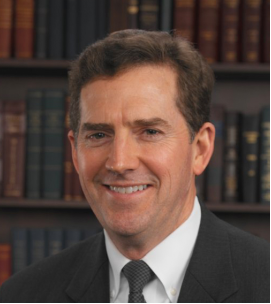
Sen. Jim Demint
Sen. Jim Demint

Consider this editorial from senator Jim DeMint.

Excerpt:

Here are the facts.

Americans who make $200,000 or more a year make up about 3 percent of the country. Those 3 percent earn roughly 30 percent of our national income and pay 52 percent of all income taxes.

Raising taxes on these top brackets would mean that nearly 40 percent of all new tax revenue would be taken from hundreds of thousands of small businesses. About half of the top 3 percent, around 750,000 Americans, report business income on their personal returns.

The president talks about Warren Buffett, but his planned tax hikes would hit Mom & Pop businesses that employ your friends and family.

It boils down to simple economics. If we want the millions of jobs that small businesses create, then we cannot confiscate an even greater share of the incomes that generate those jobs.

When politicians talk about “the rich,” they want to conjure an image in your mind of an idle, entitled elite somehow exploiting the rest of us.  (That actually sounds more like the U.S. Senate.)

But the real picture is more like that of a man or woman who owns a small, local business, who started with little but has done well, and who now has a handful of employees with decent incomes and health insurance.

The fiction behind the “tax the rich” ideology is that these folks have extra money just lying around, and that the government can take a big chunk of it without harming anyone.

What the liberals fail to recognize is that the money isn’t just lying around, stuffed in a mattress.  It’s out in the world, growing the economy.  Rich people, like everyone else, put their money to productive use.

The top 5 percent of American earners account for 37 percent of all consumer spending, about as much as the bottom 80 percent put together.

The top 10 percent of families hold 64 percent of all major investment assets. Those making over $200,000 give 36 percent of all charitable contributions.

This is the heart of the liberals’ misunderstanding.  Raising taxes on America’s job creators who spend, invest and donate will punish  the middle class, not the rich.  It will hurt the local businesses they patronize, the companies they invest in, and the charities they support.

Money that used to create jobs, wealth, and opportunity will instead be sucked into the economic black hole of the federal bureaucracy, never to return.

The Bureau of Labor Statistics estimates that it costs businesses about $63,000 to create one job.  Put another way, every $63,000 in new taxes risks an American job.  And every $100 billion in tax increases – on the rich or anyone else – could threaten nearly 1.6 million jobs.

Now, who do you think loses those jobs?  Will it be “the rich,” or will it be the clerk at their grocery store, the mechanic at their gas station, and the receptionist at their dentist’s office?

Make no mistake: When the taxman aims at “the rich,” he ends up hitting everyone else instead.

Obama keeps talking about making people pay “their fair share”, so he has plenty of money to hand out hundreds of millions of bailout dollars to solar power companies linked to his Democrat fundraisers. But nearly half the people in this country don’t pay federal taxes. Are they paying their fair share? Why isn’t Obama going after them? Well, if what DeMint says is true, he will be going after them – but most of them don’t realize it.

There’s a reason why companies are not hiring domestically, but are instead expanding operations abroad, where corporate taxes are lower and regulations are less of a burden. Companies create jobs where they can make a profit. If the Obama administration attacks their profit-making ability, they will stop creating jobs here and move their production and capital elsewhere. Obama’s rhetoric isn’t going to change the way the world works.

Republicans react to Obama’s new $447 billion borrow-and-spend stimulus

Obama Unemployment Stimulus Graph

From the conservative Weekly Standard.

Excerpt:

As they filed out of the Capitol Thursday evening, a few Republican House members told the WEEKLY STANDARD what they thought of President Obama’s address to Congress on jobs:

Ben Quayle (R-Ariz.): “For somebody who keeps saying we should get beyond politics, that was a pure political speech tonight. It was unfortunate.”

Paul Ryan (R-Wisc.): “It was, um, I didn’t hear any new ideas. The only new idea from him that I was encouraged by is corporate tax reform. Broad based, lower rates. That’s something we called for in our budget, we’ve always wanted to do. So perhaps some room for common ground there…I lost count of all the straw men up there. I mean, I was losing count at about 14 or 15. But we’re used to hearing that. I think the last third of it was pretty much straw men…All the ideas in the front that he ticked off were the same things that he put in the stimulus that he proposed earlier, which are more Keynesian-style ideas that have already sort of proven to fail. I would rather we pass ideas that have proven to work rather than double down on ones that have proven to fail.”

Tom Price (R-Ga.): “I felt it was desperate. I felt he was desperate and I though the speech was desperate…He mocked many of the proposals that we’ve put forward, and none of it was productive or constructive to the political discourse. Somehow, he’s incapable of appreciating that many of the things that he says actually thwart positive political discourse.

Diane Black (R-Tenn.): “There was something new. The president was saying we should look at Medicare, Medicaid. First time I ever heard that…What he does in there is like what my kids do. They take my credit card, they spend, and then they want me to pay for it.

Renee Ellmers (R-N.C.): “At one point, he said, some of you believe if we cut regulation and cut spending, that’s going to be enough. I couldn’t have applauded harder. I believe that very much…His approach is not very pro-business. When he talks about Warren Buffett, that’s a little far-removed from the average businessperson. If any of those guys want to send in more tax dollars to the treasury, they can. They can just write the check.”

Michael Grimm (R-N.Y.): “I thought it was a little bit of a campaign speech…Part of it was a little bit demeaning. The president sometimes can be a bit arrogant.”

Patrick McHenry (R-N.C.): “It’s a rehash. I think this is the stimulus part deux or, I guess when you’re talking about multiple stimuluses, stimuli. You could call it the stimuli speech.”

Obama is just a petulant child. One minute, he is in his ranting mood and has a tantrum against the responsible grown-ups. The next minute he wants to borrow the car keys. We elected a 14-year old to be President. One who has no experience as a job creator in the private sector. He is out of his league.

Robert Stacy McCain posts many more reactions to the President’s stimulus speech from the scholars at the Heritage Foundation.

Excerpt:

In his remarks tonight, President Obama argued that his jobs proposal would create more jobs for teachers. He went as far as to say laying off teachers…”has to stop”.

But since 1970, student enrollment in public elementary and secondary schools has increased just 7 percent, while public elementary and secondary staff hires have increased 83 percent. Moreover, in the 1950′s, there were approximately 2.36 teachers for every non-teacher in a school district. Today, in our nation’s school systems, that ratio is closer to 1 to 1. So every teacher in the classroom has an administrative counterpart in your local public school district. That is a tremendous strain on state budgets. But it is also a huge boon the education unions.

President Obama’s call to spend more precious taxpayer dollars to “prevent teacher layoffs” may do more to inflate schools’ non-teaching rosters than to retain teachers.

On a per-pupil basis, federal spending on education has nearly tripled since the 1970′s. And those who have benefited the most from this profligacy aren’t the children sitting in the nation’s classrooms. No, the increase in federal education spending (and commensurate increase in Washington’s involvement in local schools) hasn’t led to improvements in academic achievement, to increased graduation rates, or even to a narrowing of the achievement gap. It hasn’t served to improve outcomes for children, but it has propped-up the public education jobs program that too often aims to meet the needs of the adults in the system, not the children it was designed to educate.

And more:

As expected, tonight President Obama called on taxpayers to send their hard-earned money to the federal government so that Washington can pour that money into public school construction. In an attempt to boost job growth, the president suggested spending billions on school infrastructure projects to “modernize 35,000 public schools.”

Since President Obama came into office, spending on public education has skyrocketed:

Education budget in 2008: $59.2 billion
Education budget in 2011: $69.9 billion
Department of Education “stimulus” award (Spring 2009): $98 billion
“Edujobs” public education bailout (Summer 2010): $10 billion

And state and local school construction spending has also seen significant increases.

By some estimates, inflation-adjusted school construction spending has increased 150 percent in the last two decades. And unfortunately, profligacy and waste are the norm. Remember the $500 million RFK high school in Los Angeles, built last year after a California bond referendum was enacted? There are certainly schools in ill-repair, but this maintenance should be a local concern. Washington should not be in the business of school window repair, updating facilities, or repainting buildings. Schools don’t need increased federal funding for school repairs; they need more flexibility with funding to be able to use dollars for needs they consider pressing.

The president’s proposal to funnel more taxpayer dollars into school construction has both constitutional and pragmatic problems. School construction has historically been – and should remain – the job of states and localities. Federal forays into school construction have been rare and indirect. Federally-funded school construction is also a terribly expensive way to build schools: Washington-funded jobs must pay prevailing wages, increasing costs on average by 22 percent.

In calling for federally-funded school construction, President Obama is once again supporting Washington overreach in education. But he’s also behind the game in terms of the direction school policy is trending. As states and localities begin embracing online learning  – and as education shifts to a world outside of the walls of physical school buildings – President Obama is pushing to subsidize the old model. The administration might think “school construction” polls better than other government “jobs” projects, but it’s just as destined to be a waste of taxpayer money, and a public policy failure.

Robert Stacy McCain is a Herman Cain supporter. Wouldn’t it have been great to see Herman Cain debating Obama? The job creator against the community organizer?

What happened to Illinois businesses when Democrats raised taxes?

Central United States

How do Illinois businesses respond to Democrat Governor Quinn’s tax increases?

From CBS News. (H/T Marathon Pundit)

Excerpt:

The Chicago area will soon have a few hundred fewer jobs, while Northwest Indiana will have a few hundred more.

As CBS 2’s Susanna Song reports, sources say Modern Forge is moving from Blue Island across the state line to Merrillville, Ind., and the new town is rolling out the its welcome mat for the plant.

[…]On Tuesday, Indiana succeeded as Blue Island-based manufacturer Modern Forge announced it was moving across the state line. CEO Greg Heim said Illinois made it impossible to stay.

“The environment in Illinois, I would say there was no — we did not see any change coming in Illinois,” Heim said. “Illinois continues to stay on a path of not being – for us – a (pro-business) environment and the excitement and energy here in Indiana, that’s very important to us.”

That’s why, after 97 years in Blue Island, Modern Forge is picking up and moving its building and 240 jobs to Indiana.

“It’s a huge thrill for us,” Indiana Gov. Mitch Daniels said.

Daniels didn’t mince words when he said luring business is the Hoosier State’s #1 priority. And there’s no question that Illinois – and companies like Modern Forge – are main targets.

He claimed that “well over a dozen” businesses have moved from Illinois to Indiana in the past few months. “And it’s not like this just started recently,” he added.

In fact, it really ramped up last year when Illinois lawmakers hiked the state’s income tax. Since then, some businesses have bailed and others threatened to do so, citing high taxes, worker’s compensation issues, lack of incentives and an overall lack of encouragement from the Quinn administration.

[…]According to U.S. Labor Bureau statistics, Quinn needs to do something. Statistics show a steady jobs decline beginning in January, shortly after the tax hike passed.

Daniels said he sees tax concerns in Illinois as a potential Indiana win.

“We’ve had a big upsurge in contacts from businesses who want to explore an Indiana location because the arithmetic tells them it’s less expensive to hire people here,” Daniels said.

And more from the Illinois Policy Institute:

In a trend that continues to worsen, more Illinoisans found themselves unemployed in the month of July.

Illinois lost more jobs during the month of July than any other state in the nation, according to the most recent Bureau of Labor Statistics report. After losing 7,200 jobs in June, Illinois lost an additional 24,900 non-farm payroll jobs in July. The report also said Illinois’s unemployment rate climbed to 9.5 percent. This marks the third consecutive month of increases in the unemployment rate.

Illinois started to create jobs as the national economy began to recover. But just when Illinois’s economy seemed to be turning around, lawmakers passed record tax increases in January of this year. Since then, Illinois’s employment numbers have done nothing but decline.

Data released today by the bureau confirms this downward trajectory. When it comes to putting people back to work, Illinois is going backwards. Since January, Illinois has dropped 89,000 people from its employment rolls.

Democrats complain a lot about companies that outsource jobs. And now we see what causes companies to outsource jobs – Democrats.They cause the very thing that they complain about. That’s insane.