Tag Archives: Pride

Former inmate prays with the officer who arrested him eight years ago

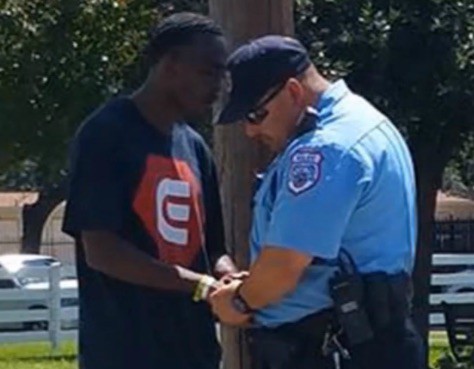
Former inmate prays with the police officer who arrested him

This story is from the Daily Caller. Let’s take a look and then I’ll link it back to Christianity and parenting.

Excerpt:

Prompted by the slew of attacks on police officers, a former inmate who turned his life around, caused a social media frenzy by praying with the officer who arrested him eight years ago, asking God to protect police from violent criminals.

Texas City patrolman Salvador “Sal” Chapa was attending a barbecue on Saturday when he was approached by Doc Amey, a man he arrested eight years ago for a gun offense. So disturbed by the attacks on police, Amey pulled Chapa to the side of the crowd, where the two joined hands and said a prayer for the officer’s safety, according to ABC13.

Fellow barbecue-goer Kevin Woods was so touched by Amey’s prayer, that he snapped a picture of the pair and shared it on Facebook saying, “We should be seeing more of this in America. There shouldn’t be race involved and this is living proof that color doesn’t matter. This is a prime example. All lives matter ONE NATION UNDER GOD!”

According to the now-viral post, Amey was arrested by Chapa on a gun charge, and received a five year sentence for the crime. While in jail, Amey devoted his time to prayer and getting his life in order. He was released from prison after serving only a year and a half, and has since graduated from Bible college with perfect attendance.

According to Chapa, he and Amey had seen each other in town before, but never talked. Moved by the recent trend of attacks on police officers in America, the reformed criminal was compelled to approach the Chapa who arrested him nearly a decade ago, and ask God to protect the officer from the rampant crimes.

The picture has received nearly 30,000 Facebook shares, including a share by the Texas City Police Department’s official page.

“After seeing the picture getting posted and all, I was overwhelmed but at the same time I was happy it happened. I hope whoever views it looks at police in a different aspect. We’re here to help everybody,” Chapa told ABC13.

I want to be friends with that man. He is a good man!

So I want to make two points, one theological and one about parenting.

First point, Christians who read the Bible carefully will develop a tolerance for God chastising them with suffering, because they know it shapes their character to be more like Christ. This is the process of sanctification, where a Christian is made more like Jesus through the process of encountering the moral law, and learning how to obey it. If a Christian makes a wrong decision, and God lets him suffer, he praises God for teaching him right and wrong. He does not turn away from God, block him out of sight, and then continue to make bad decisions as if nothing had ever happened. Christians, of all people, need to be reading the Bible practically. We need to make ourselves comfortable with being judged, and not be rebellious when it happens. We need to learn to respect God and his moral law, and not make the same mistakes over and over.

Second point, about parenting. I think that there is a lot of hostility on the secular left towards parents who want to discipline their children. This story shows how disciplining is supposed to be done, and what the right response is to being judged and having boundaries placed on you. When a child stays up late and then sleeps right through a test and fails it, the parent should ground the child so that the child associates staying up too late the night before a test with a punishment. Most parents today would be mad at the teacher and the school for bruising the ego of their child. That’s wrong. It’s much better for the child to suffer a trivial punishment now, and not make much bigger mistakes with much bigger punishments later. In computer science, it costs MUCH LESS to fix a defect when it is discovered by the project team in the early requirements elicitation phase than it does to fix it if it’s discovered by customers after the deployment to production phase. Find the mistake early and fix it. The longer you wait, the more it costs to fix it.

Here’s a good passage from the Bible about accepting the suffering God allows you to experience after making a bad decision:

2 Samuel 12:1-13:

And the Lord sent Nathan to David. He came to him and said to him,“There were two men in a certain city, the one rich and the other poor.

The rich man had very many flocks and herds,

but the poor man had nothing but one little ewe lamb, which he had bought. And he brought it up, and it grew up with him and with his children. It used to eat of his morsel and drink from his cup and lie in his arms, and it was like a daughter to him.

Now there came a traveler to the rich man, and he was unwilling to take one of his own flock or herd to prepare for the guest who had come to him, but he took the poor man’s lamb and prepared it for the man who had come to him.”

Then David’s anger was greatly kindled against the man, and he said to Nathan,“As the Lord lives, the man who has done this deserves to die,

and he shall restore the lamb fourfold, because he did this thing, and because he had no pity.”

Nathan said to David, “You are the man! Thus says the Lord, the God of Israel, ‘I anointed you king over Israel, and I delivered you out of the hand of Saul.

And I gave you your master’s house and your master’s wives into your arms and gave you the house of Israel and of Judah. And if this were too little, I would add to you as much more.

Why have you despised the word of the Lord, to do what is evil in his sight? You have struck down Uriah the Hittite with the sword and have taken his wife to be your wife and have killed him with the sword of the Ammonites.

10 Now therefore the sword shall never depart from your house, because you have despised me and have taken the wife of Uriah the Hittite to be your wife.’

11 Thus says the Lord, ‘Behold, I will raise up evil against you out of your own house. And I will take your wives before your eyes and give them to your neighbor, and he shall lie with your wives in the sight of this sun.

12 For you did it secretly, but I will do this thing before all Israel and before the sun.’”

13 David said to Nathan, “I have sinned against the Lord.” And Nathan said to David, “The Lord also has put away your sin; you shall not die.

This attitude of being grateful for judgment and boundaries is not popular on the left. The left is all about not judging, and especially about not punishing. They call it compassion – letting people who make mistakes get away with it instead of teaching people who make mistakes a lesson that will make their future decisions better. I often see Christians refuse to judge other Christians when they make mistakes. Instead of warning them, we want to pray that their mistake will “work out”. My advice for people, and especially Christians, is to not run away from being judged and having boundaries placed on you – if they come from someone who is wiser and who loves you and is looking out for you on a long-term basis. Parents are like that, most of the time.
Ronald Reagan’s 40th anniversary D-Day speech: the boys of Pointe du Hoc

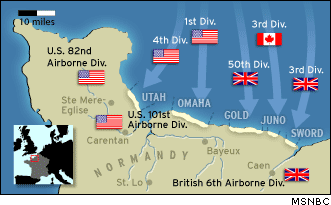
June 6, 1944 D-Day Normandy Invasion Map

It’s June 6th, today, and it’s the anniversary of D-Day: the Allied invasion of northern France – the beginning of the end of World War 2. One of the most pivotal events of that day was the assault on German gun emplacements by members of the Army Rangers at a fortified position called “Pointe du Hoc”.

President Ronald Reagan recognized the soldiers who attacked Pointe du Hoc back in 1984:

You can read the full transcript of that speech here.

Ronald Reagan also made the case for gratitude and vigilance:

Here’s the hymn that starts to play at the end:

The Boys of Pointe du Hoc

Here’s a summary of the Pointe du Hoc mission:

[Lt. Col. James Earl] Rudder took part in the D-Day landings as Commanding Officer of the United States Army’s 2nd Ranger Battalion. His U.S. Army Rangers stormed the beach at Pointe du Hoc and, under constant enemy fire, scaled 100-foot (30 meter) cliffs to reach and destroy German gun batteries. The battalion’s casualty rate for this perilous mission was greater than 50 percent. Rudder himself was wounded twice during the course of the fighting. In spite of this, they dug in and fought off German counter-attacks for two days until relieved. He and his men helped to successfully establish a beachhead for the Allied forces.

You can watch a three-clip documentary on it, too: part 1, part 2, part 3.

Although initially, the Rangers did not find the guns where they had expected them, they did find them further back behind the cliffs and destroyed them there, removing a threat to the forces that would be landing later.

What does D-Day mean to Christians in particular?

A Christian friend asked me what she should be thinking about when I sent her one of the videos above, and so I wrote her this to explain why I sent her the video:

To make you close your eyes and think in a more practical way about what it means for someone to sacrifice their lives to save you, of course. What it means to look up cliffs at machine guns, barbed wire and mortars raining death on you and to take a rope in your hands and to climb up a sheer cliff, under heavy fire, in order to save generations yet unborn and freedom itself.

To think about a concrete example helps us to be able to appreciate what Christ did for us in giving his life for us so that we could be free of sin, as well.

This is the insight that drives my entire interest in war and military history, in fact.

What does this mean: “Greater love has no man than this, that a man lay down his life for his friends.”

The more you know about D-Day, the more fearful what Jesus did appears, and the more you can be grateful.

Bullets and shrapnel are scary… and so are nails and lashes. Why on Earth would anyone endure either for me? And what should my response be to it?

I think it is helpful to explain Christianity to those who are not yet Christian, and for Christians to fully appreciate what Christianity is all about.

We were in peril. And now we have been saved. But at a cost.

I think that it’s important for Christians to look to history, art, poetry and music to help them to reflect and comprehend the sacrifice that Christ made for us in dying on the cross to protect us from peril. What must the cross have looked like to Jesus? It must have been something like what the Omaha beach looked like to the Americans landing in Normandy. Jesus saw whips, thorns and nails, and the heroes of Normandy saw 88 mm AT guns, 81 mm mortars and MG42 machine guns. How should you feel about people who face death on your behalf? Think about it.

Ronald Reagan’s 40th anniversary D-Day speech: the boys of Pointe du Hoc

June 6, 1944 D-Day Normandy Invasion Map

It’s June 6th, today, and it’s the anniversary of D-Day: the Allied invasion of northern France – the beginning of the end of World War 2. One of the most pivotal events of that day was the assault on German gun emplacements by members of the Army Rangers at a fortified position called “Pointe du Hoc”.

President Ronald Reagan recognized the soldiers who attacked Pointe du Hoc back in 1984:

You can read the full transcript of that speech here.

Ronald Reagan also made the case for gratitude and vigilance:

Here’s the hymn that starts to play at the end:

The Boys of Pointe du Hoc

Here’s a summary of the Pointe du Hoc mission:

[Lt. Col. James Earl] Rudder took part in the D-Day landings as Commanding Officer of the United States Army’s 2nd Ranger Battalion. His U.S. Army Rangers stormed the beach at Pointe du Hoc and, under constant enemy fire, scaled 100-foot (30 meter) cliffs to reach and destroy German gun batteries. The battalion’s casualty rate for this perilous mission was greater than 50 percent. Rudder himself was wounded twice during the course of the fighting. In spite of this, they dug in and fought off German counter-attacks for two days until relieved. He and his men helped to successfully establish a beachhead for the Allied forces.

You can watch a three-clip documentary on it, too: part 1, part 2, part 3.

Although initially, the Rangers did not find the guns where they had expected them, they did find them further back behind the cliffs and destroyed them there, removing a threat to the forces that would be landing later.

What does D-Day mean to Christians in particular?

A Christian friend asked me what she should be thinking about when I sent her one of the videos above, and so I wrote her this to explain why I sent her the video:

To make you close your eyes and think in a more practical way about what it means for someone to sacrifice their lives to save you, of course. What it means to look up cliffs at machine guns, barbed wire and mortars raining death on you and to take a rope in your hands and to climb up a sheer cliff, under heavy fire, in order to save generations yet unborn and freedom itself.

To think about a concrete example helps us to be able to appreciate what Christ did for us in giving his life for us so that we could be free of sin, as well.

This is the insight that drives my entire interest in war and military history, in fact.

What does this mean: “Greater love has no man than this, that a man lay down his life for his friends.”

The more you know about D-Day, the more fearful what Jesus did appears, and the more you can be grateful.

Bullets and shrapnel are scary… and so are nails and lashes. Why on Earth would anyone endure either for me? And what should my response be to it?

I think it is helpful to explain Christianity to those who are not yet Christian, and for Christians to fully appreciate what Christianity is all about.

We were in peril. And now we have been saved. But at a cost.

I think that it’s important for Christians to look to history, art, poetry and music to help them to reflect and comprehend the sacrifice that Christ made for us in dying on the cross to protect us from peril. What must the cross have looked like to Jesus? It must have been something like what the Omaha beach looked like to the Americans landing in Normandy. Jesus saw whips, thorns and nails, and the heroes of Normandy saw 88 mm AT guns, 81 mm mortars and MG42 machine guns. How should you feel about people who face death on your behalf? Think about it.