

Tag Archives: Postmodernism

Walt Russell explains how to read the Bible effectively

Bible study that hits the spot

Dr. Walt Russell’s book on the subject of interpreting the Bible is called “Playing With Fire: How the Bible Ignites Change in Your Soul“. I like that book, but I found four articles that summarize the main points of the book so people can understand how to read the Bible at a high livel.

Here is part one which talks about how postmodern relativism is at odds with discovering the original intent of an author.

Excerpt:

Twenty-four year-old “Janet” (not her real name) was angry at my emphasis on seeking to discover authors’ intentions when we read their texts. She was an evangelical Christian and a second grade teacher in a public school. She prided herself in helping her 20 students learn to love literature. She would read them a story as they gathered around her, and then ask each child, “What does the story mean to you?” She prodded them to come up with their own unique meanings. With such strong encouragement, the class of 20 would eventually have 20 different meanings for the one story. Janet sensed that I was a naysayer about such “love of literature.” Pouring a little emotional gasoline on the fire, I said, “Janet, you’re certainly doing your part to insure that these 7 year-olds will never recover from a radically relativistic view of meaning!” Now I had her full attention.

Here is part two which talks about the importance of knowing the genre of a text before you try to interpret it.

Excerpt:

“INDIANS SLAY TIGERS!” — the newspaper headline virtually screams out at you. The thought of something being slain is repulsive. You’re gripped by a mental image of southern India’s Bengal tiger. You imagine its beautiful face, its stripes and piercing eyes. Then your image is shattered by the sudden blast of a high-powered rifle. You see the exquisite creature writhe in pain, fall gracelessly in its tracks and die. Having read no further than the headline, you feel sick, as if you’ve witnessed something tragic.

But should you feel this way? The slaughter of an endangered species — especially one as magnificent as the Bengal tiger — is horrifying, no doubt. But suppose you failed to notice that the headline “INDIANS SLAY TIGERS!” appeared in the sports page of the morning paper. Clearly enough, it now refers to different Indians, different Tigers and a different manner of slaying than you originally thought. And is it really that tragic that the Cleveland Indians badly beat the Detroit Tigers in a major league baseball game last night? Not unless you’re a long-suffering Detroit Tigers’ baseball fan. But how do you now know that the headline is about baseball and not tiger-slaying in India? You look at the words “INDIANS SLAY TIGERS” and you know exactly what each word means. When you combine these words, how can they not mean exactly what you first thought they did — that Indians slay tigers? Answer: because their meanings are communicated (as the meanings of all words are) through genres!

Here is part three which talks about the importance of reading the context of a verse before you try to interpret it.

Excerpt:

“Never Read a Bible Verse!” That’s the title of a little booklet my friend and Christian radio personality, Gregory Koukl, has written to help people read the Bible well. What great advice. “That’s right, never read a Bible verse. Instead, always read a paragraph — at least.” But the current is flowing the other way in our popular sound-bite culture. Not to be left out (or left behind!), the Church has its own version of sound-bite culture: verse-bite culture. In verse-bite culture we take a sentence or sentence-fragment from a biblical paragraph, memorize it out of context, write it on a little card, put it on a billboard, a plaque, a rock, etc. Somehow we think that just because this little chunk of Scripture has a verse number in front of it, it was meant to be a free-standing unit of thought. Nothing could be further from the truth.

Apart from the fact that chapter and verse divisions weren’t added to the New Testament text until 1560 — long after the New Testament’s inspired authorship — there is a more important reason for never reading just a Bible verse, and instead reading at least the paragraph that contains it.

Here is part four which talks about the importance of applying the words of the Bible to your life.

One verse that is often misinterpreted is missing from the articles, but present in the STR lecture. It’s Philippians 1:6 that says “6 being confident of this, that he who began a good work in you will carry it on to completion until the day of Christ Jesus”. Russell says in the lecture that this promise is specifically intended for the church in Philippi, to whom Paul is writing, not necessarily to all Christians. He is giving them a promise just after directly referring to their good work in supporting him in his ministry. Some verses are just not meant for us, and the context reveals it.

William Lane Craig asks: are there objective truths about God?

A conflict of worldviews

In a lecture entitled “Are there Objective Truths About God?”, philosopher William Lane Craig discusses the problem that Christians face when they make truth claims about God to non-Christians. We think that there are objective truths about God – that there are some propositions that describe the way God really is, in reality. We think that people who don’t believe in those objective are factually wrong, in the same way that someone who thinks that Toronto is the capital of Canada is factually wrong.

But some people want to say that every statement about God is true “for each person” – so that conflicting claims about God are fine and no one is wrong. This could only be the case if everyone is just describing their own preferences, though – if they are making subjective claims about themselves, and not objective claims about God. Unfortunately, Christianity claims to be true for everyone – (e.g. – God is three persons and one being), so that Christians are committed to defending the idea that there are objective truths about God.

Here’s the link to a page containing the lecture audio. (H/T Be Thinking)

The MP3 file is here.

So what questions does Bill answer in the lecture?

What is a self-refuting statement?

The main concept in the lecture is self-refutation. A self-refuting sentence is a sentence that, if true, makes itself false or meaningless. For example, suppose someone said to you: “there are no sentences longer than 5 words” then that would be self-refuting since it falsifies itself. Bill argues that objections to the idea that there are objective truths about God are all self-refuting.

What is truth?

Craig holds that “truth” is a property of a proposition such that a proposition is true if it corresponds to the external world. For example, if I claim that there is a crocodile in your closet and we find a crocodile in your closet, then my statement was true. If there is no crocodile in your closet then my statement was false. The real objective world out there is what makes propositional claims true or false – these are not claims about an individual’s preferences, they are claims about the world. Bill is concerned with truth claims about God that are objective – whether there are propositions about God that are true regardless of what anyone thinks.

Objections to objective truth

Bill discusses 3 objections to the idea that there are objective truths about God. Each objection seeks to make religion subjective, (true for each person, like food preferences or clothing fashion).

Objection #1:The Challenge of Verificationism

The first challenge is that religious claims cannot be verified using the 5 senses, and therefore religious statements are objectively meaningless.

Consider the statement “Only propositions that can be verified with the 5 senses are meaningful”. That statement cannot be verified with the 5 senses. If the statement is true, it makes itself meaningless. It’s self-refuting.

Objection #2: The Challenge of Mystical Anti-Realism

The second challenge is that religious claims, and claims about God, are neither true nor false.

Consider the statement “Propositions about God cannot be true or false”. Craig asks – why should we accept that? Any reason given would have to assert something about God that is true or false, and those reasons would contradict the original statement. For example, “God is too great to be grasped by human categories of thought” is a proposition about God that the speaker thinks is true, which contradicts the original assertion.

Objection #3: The Challenge of Radical Pluralism

The third challenge is that each person invents an entire reality of their own, and that there is no mind-independent objective world shared by individuals.

Consider the statement “There is no objective reality shared by all individuals”. That statement is a statement that applies to all individuals, regardless of what they think.  It’s self-refuting.

Conclusion

Craig ends the lecture by arguing that it is OK for Christians to think that other people’s views are false. It does not follow that just because someone thinks other people’s views are wrong that they am going to mistreat other people. In fact, in Christianity it is objectively true that it is good for Christians to love their enemies. It is objectively true that all human beings have value, because human beings are made by God. So even if Christians disagree with others, they still treat them well, because they think that there are moral truths that they have to conform to.

My thoughts

Sometimes, non-Christians think that it is dangerous to hold beliefs too strongly. But I think what really matters is the content of the belief – some beliefs are false and some are true – you want to believe the true beliefs as strongly as you can, as long as the evidence warrants it. In Christianity, I am absolutely obligated to treat people with whom I disagree with respect and gentleness (1 Pet 3:15-16). The more convinced I am about that belief, the better my opponents will be treated. A stronger belief in Christianity means more tolerance for those who disagree.

Why do non-Christians get so offended when Christians claim to be right about there being only one way to be rightly related to God? Well, for many it’s because their worldview is a personal preference, and they feel uncomfortable having to defend it rationally and evidentially. For most people, religion is just their cultural preference – like cooking style, or favorite sport, or clothing style. That’s why they respond to your truth claims with name-calling like “you’re intolerant” and “you’re judgmental” and “you’re arrogant”. These are just shorthand ways of saying, “I’m offended that you’ve thought things through more than I have, and now I look dumb”. My family is from a non-Christian culture, so I have to talk to my relatives about this all the time. They feel judged, but it’s not my fault that they haven’t done any homework to prove out their beliefs.

I got this “you’re mean” reaction a lot from people who are raised to think that their religion is a racial, national or cultural identity. They think that if you tell them they are wrong  on matters of fact that somehow this amounts to some sort of racism or prejudice. You make factual claims, and they hear discrimination. But that’s not how Christians think of religion – we only care if it’s true or not – just like we care whether the claims of history or science are true or not. We not trying to be mean, any more than it’s mean to say things like “water boils at 100 C”. That’s just the way it is, and we’re more than happy to discuss the reasons why we think that, and to look at your reasons to see why you don’t think that.


Christian NHS worker who gave a book to Muslim co-worker loses her appeal

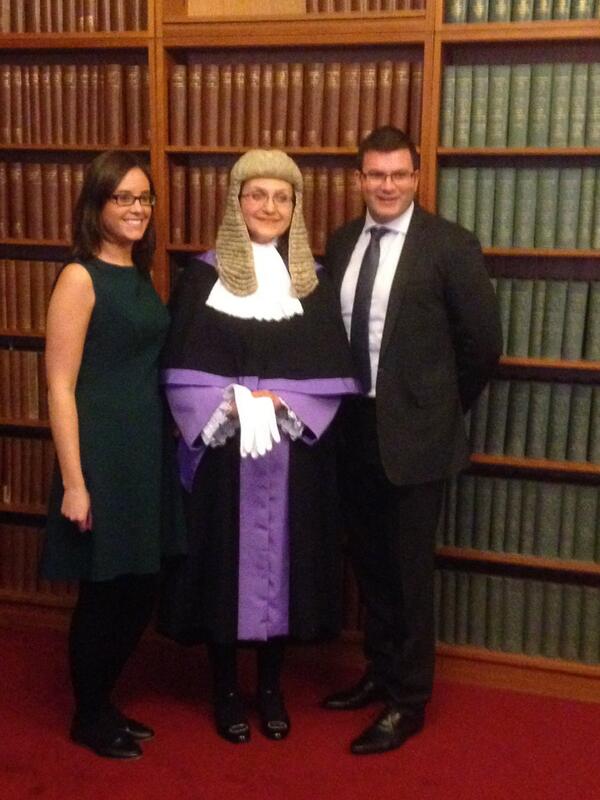
Judge Jennifer Jane Eady, Queens Counsel

The UK Telegraph reports on the state of religious liberty in the United Kingdom.

Excerpt:

A Christian NHS worker suspended for giving a religious book to a Muslim colleague has lost her appeal against a ruling that the decision to discipline her was lawful.

Victoria Wasteney, 39, was found guilty by her NHS employer in 2014 of “harassing and bullying” a work friend for giving her a book about a Muslim woman’s encounter with Christianity, praying with her and asking her to church.

She was suspended for nine months and given a written warning, even though the woman had been happy to discuss faith with her and never gave evidence about her allegations to the NHS.

Ms Wasteney, a senior occupational therapist, challenged the decision by East London NHS Foundation Trust at an employment tribunal last year, but it ruled that her employer had not discriminated against her.

A judge gave her the chance to appeal against that decision, saying it should consider whether the original ruling had correctly applied the European Convention on Human Rights’ strong protection of freedom of religion and expression.

But at a hearing in central London on Thursday, Her Honour Judge Eady QC dismissed the appeal.

Following the decision, Miss Wasteney, from Epping, Essex, said: “What the court clearly failed to do was to say how, in today’s politically correct world, any Christian can even enter into a conversation with a fellow employee on the subject of religion and not, potentially, later end up in an employment tribunal.

“If someone sends you friendly text messages, how is one to know that they are offended? I had no idea that I was upsetting her.”

[…]The woman, who quit her job shortly after making the complaints, never gave any evidence about her allegations to the NHS or later to the employment tribunal.

It sounded to me like the Muslim woman encouraged the Christian woman and the Christian woman was later surprised by the complaints. I think most Christians can take no for an answer, but Christians are caring, and they see offering to pray and offering to bring someone to church as a caring thing to do. If they don’t hear a no, then they keep right on doing what comes naturally to Christians – talking about spiritual things and trying to lead others to the Lord.

It was much easier to do this in the past, before people got more concerned about not feeling offended than they were about discussing what is or is not true. So now, even in a country like England, you can be anything you want to be as long as you’re not behaving like a Christian in public. I think this is especially the case when the people who adjudicate these cases are more focused on feelings… the person who feels the most offended seems to win all the time.

Before I had an alias, I had experience dealing with co-workers who did not much like me talking about spiritual things at work. Some types of people are more risky than others, I’ve found. That’s when I started to make rules based on my experiences, about who was and who was not safe to talk to. And that’s when I decided that to really say what I wanted to say, I’d have to get an alias, and not tell too many co-workers about it.

So who is dangerous? Obviously, people who are committed to a sinful lifestyle already are dangerous to talk to. I don’t talk to people about anything interesting if they are committed to a sinful lifestyle, because they will feel obligated to discuss issues defensively, rather than in a truth-focused way. I also avoid people who are more focused on feelings, family and community above truth. They tend to be more focused on feeling good and getting along, and they are the worst people to disagree with. The safest people are people who like to argue about what is true, and who respond to evidence.

So how to detect who is safe? Well, If the person talks about themselves a lot, and about their feelings, and happy experiences, and their vacations, their families and popular culture fluff, then I would avoid them. Don’t say a word to them. The ones who are safer are the ones who accept disagreements and don’t just rush to agree with you while hiding their own opinions in order to be liked. You also want to avoid people who take everything personally, instead of debating the outside world with a focus on what is true.

I am terrified of people who try to agree with me on everything, or who cannot explain both sides of an issue respectfully. I watch what people watch on TV in the gym – if it’s sports, housewives of beverly hills, or other shallow life enhancement fluff, then I don’t talk to them. If it’s news or business, then it’s safer to talk to them – because then you can talk about facts. Beware of people who try to jump to agreement quickly, without showing any evidence or reasons for their view. It’s always better to talk about issues in the abstract, rather than offering to pray or asking someone to church. For example, you can discuss whether the universe had a beginning, or which books of the Bible were written early. Christians need to learn how to do that – how to talk about facts.

A good question to ask to test a person is to ask where they get their news. If there is no balance there, then it’s a good sign to avoid them. Two of my leftist co-workers this week asked me why I thought that the Washington Post and the New York Times were “radically leftist”. I asked them to name conservative columnists at either paper. They couldn’t name a single one. One tried to google it right in front of me! I named Arthur Brooks, Ross Douthat, Jennifer Rubin, etc. and explained why they weren’t conservative. Then I listed off a half-dozen liberal names at the Washington Post. If the person you are talking to is in a bubble, then they are too risky to talk to. Pretty much everyone on the secular left is that way, and you should check first by seeing what they read for news. If they’re not safe, then get yourself an alias and write something online, instead.