The chief economic culprit of President Obama’s Wednesday press conference was undoubtedly “corporate jets.” He mentioned them on at least six occasions, each time offering their owners as an example of a group that should be paying more in taxes.
“I think it’s only fair to ask an oil company or a corporate jet owner that has done so well,” the president stated at one point, “to give up that tax break that no other business enjoys.”
But the corporate jet tax break to which Obama was referring – called “accelerated depreciation,” and a popular Democratic foil of late – was created by his own stimulus package.
Proponents of the tax break lauded it as a means to spur economic activity by encouraging purchases of large manufactured goods (planes). So the president’s statement today – and his call to repeal that tax break generally – is either a tacit admission that the stimulus included projects that did not, in fact, stimulate the economy, or an attempt to “soak the rich” without regard for the policy’s effects on the economy.
For many Americans, those effects could be dramatic. Cessna and Gulfstream have facilities in a combined 15 cities nationwide (and another four abroad). A significant decline in consumption of private jets would undoubtedly have adverse effects on at least some of those local economies. Given the sizable bump in consumption that the initial tax break yielded, its repeal would likely have that economic domino effect.
Rightly or wrongly, any increase in the taxes paid by any US-based business is going to result in higher prices for consumers, or layoffs, or both. Even talking badly about businesses causes them to feel uncertain about the future. And when businesses are uncertain, they don’t hire people and they don’t expand. Obama’s solution to the recession created by the Democrat housing policies was to take money from the private sector and blow it on the public sector. Private companies realize that the bill is going to come due soon, and they are sitting on their money in case Obama succeeds in his plan to raise taxes on businesses.
President Obama has failed to formulate and carry out an effective and coherent strategy in response to these events. He has been timid, slow, and too often without a clear understanding of our interests or a clear commitment to our principles.
And parts of the Republican Party now seem to be trying to out-bid the Democrats in appealing to isolationist sentiments. This is no time for uncertain leadership in either party. The stakes are simply too high, and the opportunity is simply too great.
No one in this Administration predicted the events of the Arab spring – but the freedom deficit in the Arab world was no secret. For 60 years, Western nations excused and accommodated the lack of freedom in the Middle East. That could not last. The days of comfortable private deals with dictators were coming to an end in the age of Twitter, You Tube, and Facebook. And history teaches there is no such thing as stable oppression.
President Obama has ignored that lesson of history. Instead of promoting democracy – whose fruit we see now ripening across the region – he adopted a murky policy he called “engagement.”
“Engagement” meant that in 2009, when the Iranian ayatollahs stole an election, and the people of that country rose up in protest, President Obama held his tongue. His silence validated the mullahs, despite the blood on their hands and the nuclear centrifuges in their tunnels.
While protesters were killed and tortured, Secretary Clinton said the Administration was “waiting to see the outcome of the internal Iranian processes.” She and the president waited long enough to see the Green Movement crushed.
“Engagement” meant that in his first year in office, President Obama cut democracy funding for Egyptian civil society by 74 percent. As one American democracy organization noted, this was “perceived by Egyptian democracy activists as signaling a lack of support.” They perceived correctly. It was a lack of support.
“Engagement” meant that when crisis erupted in Cairo this year, as tens of thousands of protesters gathered in Tahrir Square, Secretary Clinton declared, “the Egyptian Government is stable.” Two weeks later, Mubarak was gone. When Secretary Clinton visited Cairo after Mubarak’s fall, democratic activist groups refused to meet with her. And who can blame them?
The forces we now need to succeed in Egypt — the pro-democracy, secular political parties — these are the very people President Obama cut off, and Secretary Clinton dismissed.
The Obama “engagement” policy in Syria led the Administration to call Bashar al Assad a “reformer.” Even as Assad’s regime was shooting hundreds of protesters dead in the street, President Obama announced his plan to give Assad “an alternative vision of himself.” Does anyone outside a therapist’s office have any idea what that means? This is what passes for moral clarity in the Obama Administration.
By contrast, I called for Assad’s departure on March 29; I call for it again today. We should recall our ambassador from Damascus; and I call for that again today. The leader of the United States should never leave those willing to sacrifice their lives in the cause of freedom wondering where America stands. As President, I will not.
I blogged quite a bit about the peaceful protestors in Iran. Remember Neda Soltan who was shot down in the streets? And yet Obama had almost nothing to say about the pro-democracy movements. And Obama was on the wrong side in the Honduras election, as well – he backed Manuel Zelaya. It’s good that Tim Pawlenty has something to say about it.
And a bit more of his speech:
The third category consists of states that are directly hostile to America. They include Iran and Syria. The Arab Spring has already vastly undermined the appeal of Al Qaeda and the killing of Osama Bin Laden has significantly weakened it.
The success of peaceful protests in several Arab countries has shown the world that terror is not only evil, but will eventually be overcome by good. Peaceful protests may soon bring down the Assad regime in Syria. The 2009 protests in Iran inspired Arabs to seek their freedom. Similarly, the Arab protests of this year, and the fall of regime after broken regime, can inspire Iranians to seek their freedom once again.
We have a clear interest in seeing an end to Assad’s murderous regime. By sticking to Bashar al Assad so long, the Obama Administration has not only frustrated Syrians who are fighting for freedom—it has demonstrated strategic blindness. The governments of Iran and Syria are enemies of the United States. They are not reformers and never will be. They support each other. To weaken or replace one, is to weaken or replace the other.
The fall of the Assad mafia in Damascus would weaken Hamas, which is headquartered there. It would weaken Hezbollah, which gets its arms from Iran, through Syria. And it would weaken the Iranian regime itself.
To take advantage of this moment, we should press every diplomatic and economic channel to bring the Assad reign of terror to an end. We need more forceful sanctions to persuade Syria’s Sunni business elite that Assad is too expensive to keep backing. We need to work with Turkey and the Arab nations and the Europeans, to further isolate the regime. And we need to encourage opponents of the regime by making our own position very clear, right now: Bashar al-Assad must go.
When he does, the mullahs of Iran will find themselves isolated and vulnerable. Syria is Iran’s only Arab ally. If we peel that away, I believe it will hasten the fall of the mullahs. And that is the ultimate goal we must pursue. It’s the singular opportunity offered to the world by the brave men and women of the Arab Spring.
The march of freedom in the Middle East cuts across the region’s diversity of religious, ethnic, and political groups. But it is born of a particular unity. It is a united front against stolen elections and stolen liberty, secret police, corruption, and the state-sanctioned violence that is the essence of the Iranian regime’s tyranny.
So this is a moment to ratchet up pressure and speak with clarity. More sanctions. More and better broadcasting into Iran. More assistance to Iranians to access the Internet and satellite TV and the knowledge and freedom that comes with it. More efforts to expose the vicious repression inside that country and expose Teheran’s regime for the pariah it is.
And, very critically, we must have more clarity when it comes to Iran’s nuclear program. In 2008, candidate Barack Obama told AIPAC that he would “always keep the threat of military action on the table to defend our security and our ally Israel.” This year, he told AIPAC “we remain committed to preventing Iran from acquiring nuclear weapons.” So I have to ask: are all the options still on the table or not? If he’s not clear with us, it’s no wonder that even our closest allies are confused.
The Administration should enforce all sanctions for which legal authority already exits. We should enact and then enforce new pending legislation which strengthens sanctions particularly against the Iranian Revolutionary Guards who control much of the Iranian economy.
Here’s a clip from the discussion with CFR after the speech:
You know, I was listening to a fiscal conservative being interviewed on the radio the other day and the person was saying that he had more fear of Obama’s foreign policy than of Obama’s economic policy. This was after he had laid out a gloomy economic picture.
A group of Republican senators plan to renew their attempts at stopping the U.S. from funding International Monetary Fund loans to Greece and other countries after the Senate failed to vote on their proposal last week.
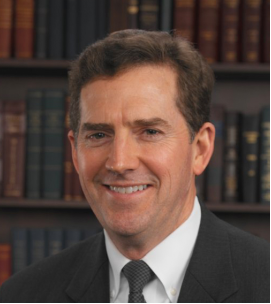
A spokesman for Sen. Jim DeMint (R., S.C.), who is leading the effort, said the GOP senators plan to soon introduce stand-alone legislation that would direct the U.S. Treasury to vote against any IMF assistance to European Union nations for the foreseeable future. If enacted into law, it could halt U.S. participation in any future IMF attempts to stabilize the sovereign debt crisis in Europe.
The proposal comes as finance ministers work towards a political agreement committing to provide financing to meet a growing gap in Greece’s funding needs beyond the current EUR110 billion, which in turn would allow the IMF to release a delayed tranche of cash in early July.
[…]Attempts by GOP lawmakers to block IMF loans failed to gain traction in Congress last year. And President Barack Obama has asserted in a signing statement after a House vote on an IMF provision that he doesn’t recognize Congress’ ability to tell the administration how to vote at the IMF.
Greece embraced socialism, and now they have to face the music.

 WINTERY KNIGHT