
Tag Archives: North Korea

Panama seizes shipment of missile guidance equipment from Cuba bound for North Korea

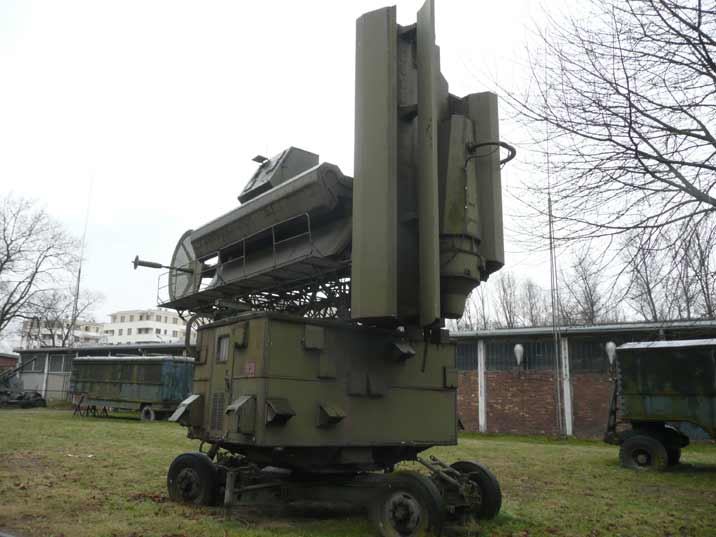
RSN-75 Radar for SA-2 SAM

From Investors Business Daily.

Excerpt:

Cuba, long derided in international policy circles as a basket case and no threat to the U.S., has been caught smuggling weapons of war to North Korea in blatant violation of U.N. sanctions. This is a wake-up call.

Sharp-eyed Panamanian authorities, watching the North Korean freighter Chong Chon Gang since June, received intelligence it might be shipping illegal drugs, something it had been caught doing before.

As the vessel lumbered into the Atlantic side of the Panama Canal from Cuba, Panamanian authorities cornered the 450-foot rust-bucket, battled a maniacally violent crew who slashed ship lines to make it hard to unload the ship, and then watched as the ship’s captain tried to kill himself before having a heart attack.

After subduing the crew, the Panamanians found no drugs buried beneath sloppily packed brown sugar, but did find defensive RSN-75 “Fan Song” fire-control radar equipment for SA-2 surface-to-air missiles.

The discovery, and the crew’s behavior, were signs of something big the North Koreans didn’t want known — weapons smuggling, a violation of both United Nations sanctions prohibiting all sales of weapons to North Korea and Panama’s own laws governing the canal.

“You cannot go around shipping undeclared weapons of war through the Panama Canal,” declared Panamanian President Ricardo Martinelli, a U.S. ally, who tweeted a photo of the illegal shipment for the world to see.

It’s significant that the enabler of this violation of international law was none other than Cuba, which has worked hard to convince the Obama administration to drop all travel and trade sanctions against it — and which is currently negotiating a migration pact with the U.S. It’s time to stop that right now, and sanction Cuba further.

The brazen shipment of Russian-made weapons through Panama signaled that little has changed in Cuba — a state sponsor of global terror that has in fact been trying to destroy the U.S. since 1962.

“This is a serious and alarming incident that reminds us that the North Korean regime continues to pursue its nuclear and ballistic programs, and will stop at nothing in that pursuit,” said House Foreign Affairs Subcommittee Chairwoman Ileana Ros-Lehtinen. “It also illustrates that the Castro tyranny continues to aid and abet America’s enemies and continues to pose a national security threat to the United States so long as the Castro apparatchik holds control over the island.”

It’s also the work of a rogue state. And at just 90 miles away, one that is as chillingly close to our shores as it is warm and friendly to North Korea.

[…]Although it’s unknown why North Korea, a major weapons exporter, is importing weapons from Cuba right now, defense analysts speculate that the weapons may be making their way back to Pyongyang for an upgrade and return to Cuba.

That would be worrisome given that North Korea has said it means to strike the U.S. on its own home turf. What better launching pad could it ask for than Cuba?

Two weeks ago, North Korea’s military commander visited Cuba to a red-carpet welcome. The visit raises questions as to what the two discussed — and, given the threat we see now, whether U.S. intelligence was aware of it.

If there is one thing that the United States definitely should not do, it’s dropping sanctions against Cuba.
What is an EMP attack and what does it mean to our national security?

From the Heritage Foundation.

Excerpt:

[Tuesday] night at The Republican National Security Debate, hosted on CNN by The Heritage Foundation and the American Enterprise Institute, an electromagnetic pulse attack (EMP) was mentioned as one of the most important national security issues that is not discussed often. This is true. Despite the gravity of the threat, the United States remains unprotected from the effects of an EMP.

An EMP is a high-intensity burst of electromagnetic energy caused by a rapid acceleration of charged particles. The EMP would disrupt all electronic devices within its zone of impact. It would burn circuits and immobilize electronic components and systems. It addition, the EMP would flow through electricity transmission lines and would damage distribution centers and power lines.

Detonating a singular nuclear weapon at a high altitude can create an EMP large enough to envelop the entire continental United States. The nuclear weapon could be delivered by a long-range ballistic missile from Iran, China, Russia, or North Korea. Even a short-range nuclear-tipped missile launched off of the U.S. shore could cause a devastating EMP effect.

[…]The effects of an EMP on today’s society would be even more devastating. According to Heritage’s James Carafano, “communications would collapse, transportation would halt, and electrical power would simply be nonexistent. Not even a global humanitarian effort would be enough to keep hundreds of millions of Americans from death by starvation, exposure, or lack of medicine.”

There are some simple steps that can be taken to prevent against the crippling effects of an EMP attack. First, the U.S. needs to build and adequately fund a robust missile defense system composed of Aegis ballistic missile capable ships, and Aegis Ashore, the land-based ballistic missile component. Second, both the public and private sectors should harden vital infrastructure to make it more resilient and resistant to the EMP—to hedge against an attack or prepare for a solar flare. Third, the U.S. should develop a national plan to respond to EMP emergencies. This would involve educating federal, state, and local officials along with the public about the risks and response options.

In case you missed the debate, you can watch the whole thing here: (and you should – it was awesome)

For the record, the consensus in the Republican debate was that there were “under-the-radar” threats, in addition to threats from Iran, Pakistan, North Korea, China, etc. These were: 1) Cyber attacks like the recent attacks that originated in China, 2) EMP attacks such as I described above and 3) terrorist attacks coordinated with actors in Latin America and South America that exploit our porous southern border.

IAEA report expected to show that Iran now has the ability to build a nuclear bomb

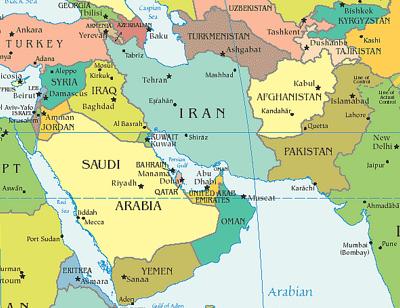
Map of the Middle East

From Fox News.

 Pakistan, North Korea and a former weapons scientist from the Soviet Union reportedly all helped Iran with its nuclear weapons quest, according to an impending U.N. nuclear watchdog report expected to show the Islamic regime has mastered the science of building a bomb.

The International Atomic Energy Agency’s report due out this week will lay out findings collected over years of intelligence gathering. It is expected to reinforce concerns that Iran didn’t actually abandon its weapons-related research in 2003, as indicated by a 2007 National Intelligence Estimate given to then-President George W. Bush.

U.S. intelligence agencies reported in 2007 that they believed Tehran halted its experiments in response to international and domestic pressures. But an ongoing investigation by the Fox News Specials Unit concludes that more than 600 entities were working inside Iran to support its program, and at least 40 sites where the work is taking place are suspected to exist across the country.

For British, French and American investigators, one of the most concerning sites is the Qom uranium enrichment construction site, hidden deep in the mountains. The latest intelligence shows that security walls have doubled around the site. Its scale cannot be explained by any known civilian nuclear energy use.

David Albright, a former IAEA official and president of the Washington-based Institute for Science and International Security who reviewed the intelligence files, told The Washington Post that Iran’s nuclear weapons program “never really stopped” and also concluded that Iran “has sufficient information to design and produce a workable implosion nuclear device.”

Western diplomats and nuclear experts briefed on the findings in the IAEA report also told the Post that foreign scientists offered assistance in overcoming key technical hurdles.

The documents reportedly show that a former Soviet weapons scientist named Vyacheslav Danilenko allegedly tutored Iranians for several years on building high-precision detonators needed to trigger a nuclear chain reaction. The Post reported that Pakistani and North Korean officials also gave to Iran mathematical formulas and codes as well as a so-called neutron initiator, which shoots a stream of atomic particles into the weapon’s fissile core at the start of the chain reaction.

There are two things to point out about this story. The first thing is that it was a strategic disaster for us to back out of Iraq, because that’s where we need to be to be able to gather intelligence, mount covert ops, run interdiction on attempts to transfer WMDs to Syria, etc. We really need to be in theater in order to deal with Iran, Syria and groups like Hezbollah, Iran’s Quds force and Muqtada Al Sadr’s Mahdi Army.

Unfortunately, I think that David Axelrod is running our national security now, which is why Obama pulled out forces out of Iraq.

Excerpt:

Three years, two abject failures. The first was the administration’s inability, at the height of American post-surge power, to broker a centrist nationalist coalition governed by the major blocs — one predominantly Shiite (Maliki’s), one predominantly Sunni (Ayad Allawi’s), one Kurdish — that among them won a large majority (69 percent) of seats in the 2010 election.

Vice President Biden was given the job. He failed utterly. The government ended up effectively being run by a narrow sectarian coalition where the balance of power is held by the relatively small (12 percent) Iranian-client Sadr faction.

The second failure was the SOFA [Status of Forces Agreement] itself. U.S. commanders recommended nearly 20,000 troops, considerably fewer than our 28,500 in Korea, 40,000 in Japan and 54,000 in Germany. The president rejected those proposals, choosing instead a level of 3,000 to 5,000 troops.

A deployment so risibly small would have to expend all its energies simply protecting itself — the fate of our tragic, missionless 1982 Lebanon deployment — with no real capability to train the Iraqis, build their U.S.-equipped air force, mediate ethnic disputes (as we have successfully done, for example, between local Arabs and Kurds), operate surveillance and special-ops bases, and establish the kind of close military-to-military relations that undergird our strongest alliances.

The Obama proposal was an unmistakable signal of unseriousness. It became clear that he simply wanted out, leaving any Iraqi foolish enough to maintain a pro-American orientation exposed to Iranian influence, now unopposed and potentially lethal. Message received. Just this past week, Massoud Barzani, leader of the Kurds — for two decades the staunchest of U.S. allies — visited Tehran to bend a knee to both President Mahmoud Ahmadinejad and Ayatollah Ali Khamenei.

The second thing to point out is the question of what we should be doing to restrain Iran’s nuclear ambitions. Click here for a run-down of some of our options. There are a lot of things we could do short of all-out war, but that would require that we had a statesman in the White House – someone who takes foreign policy seriously and treats it as more than a political issue.

A previous post I wrote showed how arms that China sells to Iran make their way to Hezbollah to be used against Israeli assets. That’s what we can expect will happen with nuclear weapons that Iran develops. Are we willing to accept that? There is also the matter of the Mexican drug cartels, the Quds force, Hugo Chavez in Venezuela and our porous border with Mexico. Are we willing to risk that?

We need to take the gloves off our national security agencies, especially the CIA, and do what has to be done.